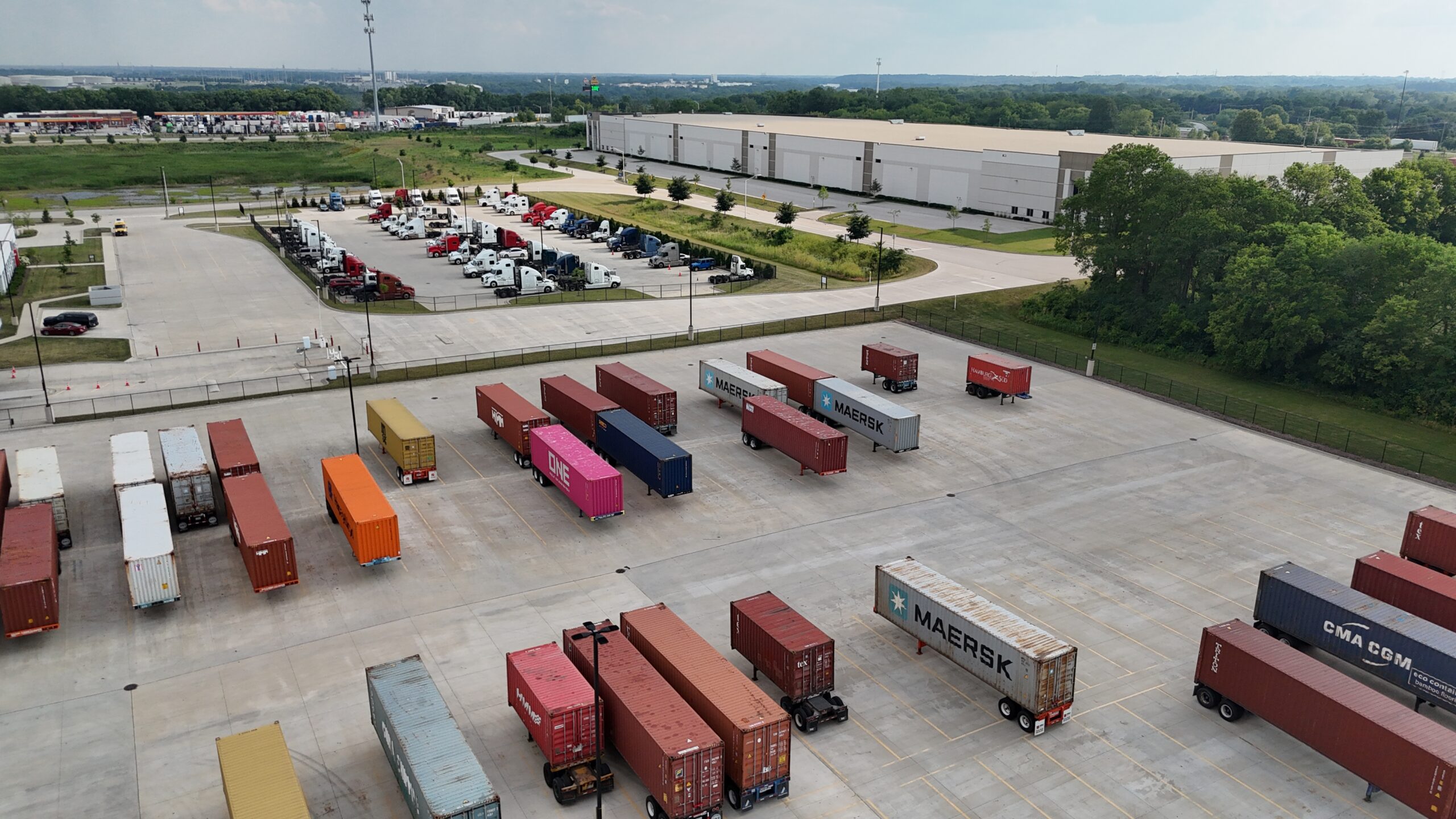
If you’ve been in trucking for any length of time, you’ve heard the term “drop yard” thrown around. But what exactly is a drop yard, how do carriers use them, and how do you find one when you need it?
This guide covers everything you need to know about drop yards—from the basics to how modern platforms are changing the way fleets access trailer storage and staging locations across the country.
What Is a Drop Yard?
A drop yard is a facility where trucking companies can temporarily store trailers, containers, or equipment. Unlike a full truck terminal, a drop yard focuses specifically on trailer storage rather than providing driver amenities, maintenance bays, or dispatch operations.
Think of it as a parking lot purpose-built for commercial trailers. Drivers drop off loaded or empty trailers, and either they or another driver picks them up later. The yard provides secure space and basic access—nothing more, nothing less.
Drop yards go by several names in the industry: drop lot, trailer yard, trailer drop lot, staging yard, or sometimes just “the yard.” They all refer to the same basic concept—a place to park trailers when you’re not actively hauling them.
Drop Yard vs. Truck Terminal: What’s the Difference?
People sometimes use “drop yard” and “truck terminal” interchangeably, but they serve different purposes:
Truck terminals are full-service facilities. They typically include driver lounges, restrooms, showers, maintenance shops, fuel, dispatch offices, and parking for both tractors and trailers. Terminals are operational hubs where drivers check in, get assignments, and handle paperwork.
Drop yards are streamlined for one thing: trailer storage. They offer secure parking, gated access, and that’s about it. No dispatch office. No maintenance bay. No driver showers. This simplicity makes drop yards significantly cheaper than terminal space.
For carriers that need a place to stage trailers—not a full operational hub—drop yards provide the space without the overhead.
How Trucking Companies Use Drop Yards
Drop yards solve several operational challenges for carriers of all sizes:
Relay Operations
In relay or “drop and hook” operations, one driver drops a loaded trailer at a yard, and a second driver picks it up to continue the haul. This keeps freight moving without requiring a single driver to cover the entire route. Drop yards positioned along major corridors make relay operations possible without owning property in every market.
Pre-Positioning Trailers
Need trailers staged near a customer before a pickup appointment? Drop yards let you position assets strategically without paying for early delivery or burning driver hours waiting. Drop the trailer the night before, send a driver to hook it in the morning.
Overflow Storage
When your home terminal is maxed out, drop yards provide overflow capacity without signing a facility lease. This is especially valuable during peak seasons when trailer counts spike.
Equipment Staging
Waiting on a warehouse appointment? Need to hold containers until delivery windows open? Drop yards give you a professional place to stage equipment instead of improvising with unauthorized parking or keeping drivers sitting.
Power-Only Operations
Carriers running power-only (tractor without trailer) need reliable places to hook trailers. Drop yards positioned in key markets let power-only operators pick up customer trailers without coordinating complicated live handoffs.
Benefits of Using Drop Yards
Reduced detention and delays: Instead of waiting at shipper or receiver facilities, drop trailers and keep tractors moving. Pick up when the freight is ready.
Lower cost than terminals: Drop yards charge for storage space only. You’re not paying for amenities you don’t need.
Geographic flexibility: Access trailer storage in markets where you don’t have your own facilities.
Improved asset utilization: Stage trailers near customers, reduce empty miles, and optimize routes around known drop points.
No long-term real estate commitment: Use space when you need it, scale back when you don’t.
How to Find a Drop Yard Near You
Historically, finding drop yard space meant one of two approaches:
The hard way: Search Google Maps for industrial areas, cold-call property owners, negotiate pricing with people who’ve never rented trailer space before, figure out payment (cash? check? Venmo?), and hope they actually hold the space.
The expensive way: Sign long-term leases for yard space in every market you operate. Commit capital, manage multiple landlord relationships, pay monthly whether you use the space or not.
Neither option works well for most carriers. The cold-calling approach burns operational hours and delivers inconsistent results. The lease approach ties up capital and limits flexibility.
The Modern Approach: On-Demand Drop Yards
Today, digital platforms connect carriers with property owners who have available yard space. Instead of cold-calling or signing leases, you can search available locations, see pricing, and book space instantly—by the day, week, or month.
This works like a marketplace: property owners (trucking companies, repair shops, storage facilities, industrial properties) list their available space. Carriers book what they need, when they need it. The platform handles payments, provides customer support, and ensures locations meet basic standards for truck access and security.
What to Look for in a Drop Yard
Not all drop yards are equal. When evaluating options, consider:
Security: Gated access, fencing, lighting, and ideally camera coverage. Your trailers and cargo need protection.
Access hours: Trucking runs 24/7. Make sure you can get in and out when you need to, not just during business hours.
Truck accessibility: Can a 53-foot trailer actually maneuver in and out? Some properties look good on a map but aren’t practical for commercial equipment.
Location: Proximity to your customers, major highways, and delivery zones matters. A cheap yard 30 miles out of position costs more than a convenient one.
Surface condition: Paved, gravel, or dirt? Will it turn into a mud pit when it rains? Surface matters for both equipment and safety.
How Much Does Drop Yard Space Cost?
Drop yard pricing varies significantly based on location, market demand, and amenities. In general:
Daily rates: Typically $15-$50 per trailer per day, depending on the market.
Weekly rates: Often discounted from daily rates, ranging from $75-$250 per trailer per week.
Monthly rates: Long-term storage typically runs $100-$300+ per trailer per month, with significant variation by metro area.
Major metros (Los Angeles, Chicago, Dallas, Atlanta) command premium pricing due to high demand and limited industrial space. Rural areas and smaller markets are generally cheaper but may have fewer options.
On-demand platforms often provide transparent pricing upfront, so you can compare options before committing.
Find Drop Yard Space Without the Hassle
Truck Parking Club connects carriers with 3,800+ property locations across 49 states. Instead of cold-calling or signing leases, you can search available drop yard space, see pricing, and book instantly—by the hour, day, week, or month.
Whether you need to drop trailers for a relay operation, stage equipment near a customer, or store overflow trailers during peak season, Truck Parking Club provides:
- 62,000+ reservable spaces nationwide
- Flexible booking from hourly to monthly
- No long-term contracts or lease agreements
- 24/7 customer support from former truck drivers
- Centralized payments for fleet accounts
Find a drop yard near you and start booking today.
Related: drop yard, drop yard near me, trailer drop lot, drop and hook locations, relay parking trucking, trailer staging area, where to drop trailers