Category: Surveys

  • Truck Drivers Save Over 90 Minutes a Week by Booking Guaranteed Parking

    Truck Drivers Save Over 90 Minutes a Week by Booking Guaranteed Parking

    Every night across America, truck drivers burn time and fuel circling truck stops, scanning rest areas, and scrolling maps looking for somewhere safe to park. It’s one of the industry’s most persistent problems, and it costs more than most people realize. But how much time do truck drivers actually waste finding parking?

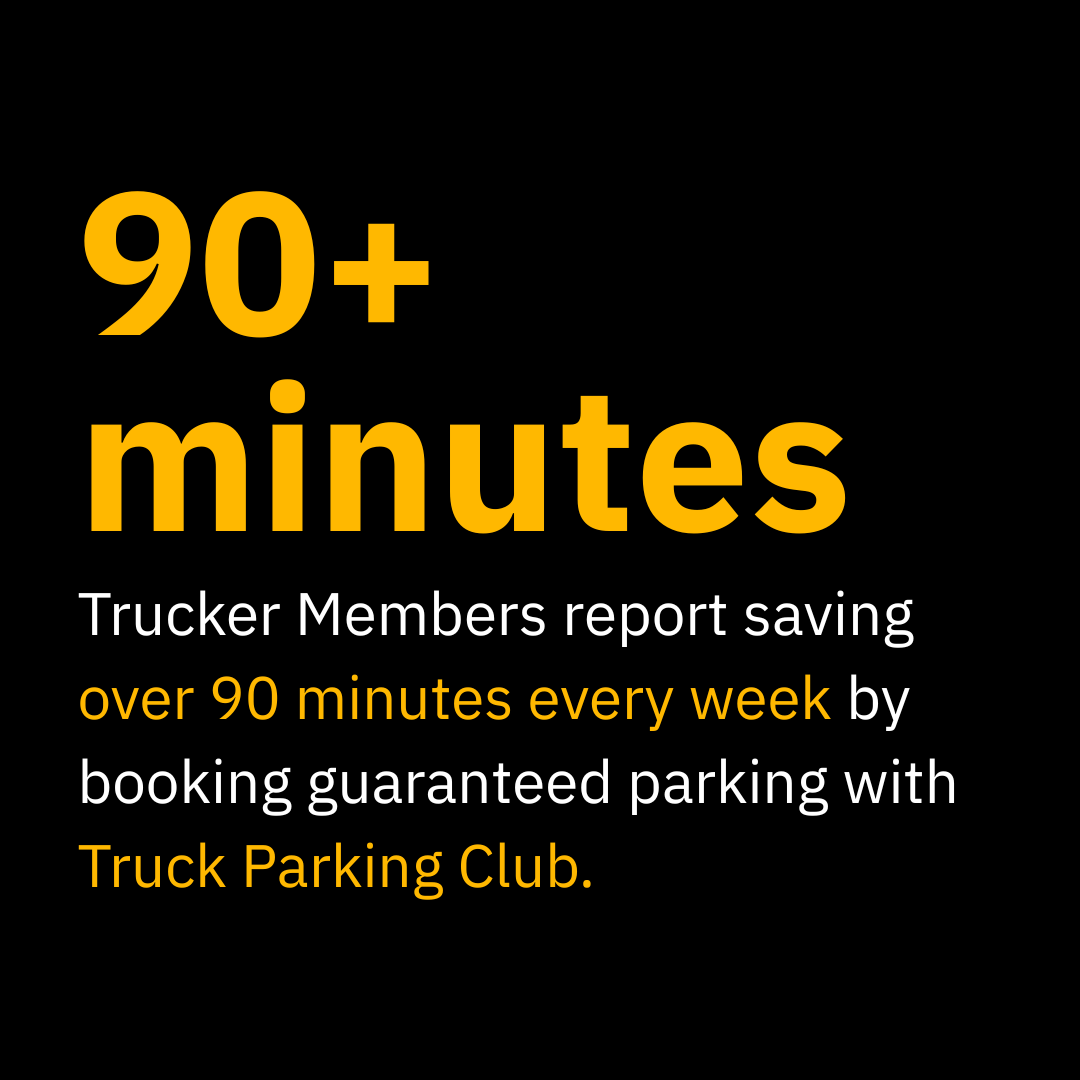
    We asked. In a recent survey, Trucker Members told us how much time they save each week by booking guaranteed parking instead of searching for open spots. The average: over 90 minutes a week.

    That’s more than an hour and a half of driving time, rest time, or personal time that drivers get back every single week when they don’t have to hunt for a spot.

    The Real Cost of Searching for Truck Parking

    The truck parking shortage in America is well documented. According to the most recent nationwide inventory under Jason’s Law, the U.S. has roughly 313,000 truck parking spaces, and demand far exceeds supply every night [1]. A 2026 study by Altitude by Geotab and HNTB found that over 2.2 million parking events occur on highway ramps annually because drivers have nowhere else to go [2]. The estimated cost to the industry: over $100 billion a year in wasted time, fuel, and lost productivity [3].

    But those are macro numbers. At the individual driver level, the cost shows up as wasted hours, wasted fuel, and wasted energy. A driver who shuts down early because they’re not confident they can find parking later loses miles. Driving 30 minutes off-route to grab the last spot at a truck stop costs fuel and time. Circling a lot for 20 minutes only to find it full adds stress on top of an already long day.

    Understanding how much time truck drivers waste finding parking isn’t just an academic exercise. It directly impacts driver productivity, earnings, and quality of life.

    What Drivers Told Us About Time Savings

    We gave our Trucker Members a simple question:
    How much time per week do you save booking guaranteed parking with Truck Parking Club?

    Here’s how they answered:

    • 4+ hours per week: 13.1%
    • 2 to 4 hours: 10.3%
    • 1 to 2 hours: 27.6%
    • 30 minutes to 1 hour: 23.1%
    • Less than 30 minutes: 26.0%

    Among Trucker Members who provided a time estimate, over half (51%) save at least one hour every week. Nearly three out of four (74%) save 30 minutes or more.

    When you average those responses using the midpoints of each range, the result is approximately 97 minutes per week. That’s where the 90-plus minute figure comes from, and it’s a conservative estimate since we capped the “4+ hours” category at 5 hours for the calculation.

    To put that in perspective: 90 minutes a week is nearly 80 hours a year. That’s two full work weeks of time that drivers get back simply by knowing where they’re going to park before they get there.

    What This Means for the Industry

    The question of how much time truck drivers waste finding parking has real economic implications. When drivers waste 90-plus minutes a week searching for spots, that lost time ripples through the entire supply chain. Loads arrive late. Drivers earn less. Carriers lose capacity. And drivers who can’t find safe parking end up on highway ramps and shoulders, creating safety risks for everyone on the road.

    Reserved, guaranteed parking directly addresses this. It’s not a convenience feature. It’s an efficiency tool that gives drivers back meaningful hours every week.

    For property owners: Every driver searching for parking near your location is a potential customer. If you have underutilized space near a freight corridor, you can turn that dead space into revenue while helping solve one of the industry’s biggest problems. List your space on Truck Parking Club to start connecting with drivers.

    For drivers: If you’re still spending your evenings circling truck stops, reserved parking can give you back over 90 minutes a week. That’s time you could spend resting, calling home, or just not stressing about where you’re going to sleep tonight. Find your spot on Truck Parking Club.


    This data comes from Truck Parking Club’s ongoing member survey program, collected April 2026. 400+ responses from active members, distributed via weekly member newsletter.

    Methodology note: Average time saved was calculated using midpoint values for each response range (15 min, 45 min, 90 min, 180 min, 300 min) among the 312 respondents who provided a time estimate. The 108 respondents who selected “I’m not sure” were excluded from the average calculation but are included in the total response count.

    [1] “Bridging the Truck Parking Gap,” Parking & Mobility Magazine, February 2026. https://parking-mobility-magazine.org/online-exclusive/bridging-the-truck-parking-gap/

    [2] “A Nationwide Study of Interstate Ramp Parking,” Altitude by Geotab and HNTB, January 2026. https://altitude.geotab.com/insights-and-customer-stories/a-nationwide-study-of-truck-parking-on-interstate-ramps/

    [3] “Truck Parking Shortage: What FMCSA’s New Study Means for Drivers,” Williams Logistics, January 2026. https://www.drivewli.com/post/truck-parking-shortage-what-fmcsas-new-study-means-for-drivers
  • Where Truck Drivers Need More Parking in 2026

    Where Truck Drivers Need More Parking in 2026

    At Truck Parking Club, we survey our members regularly to understand what’s happening on the ground. In our most recent survey of active members, we asked where truck drivers need parking, what they look for when choosing a location, and what would make them more confident booking somewhere new.

    Here’s what they told us.

    The States and Cities Where Truck Drivers Need Parking Most

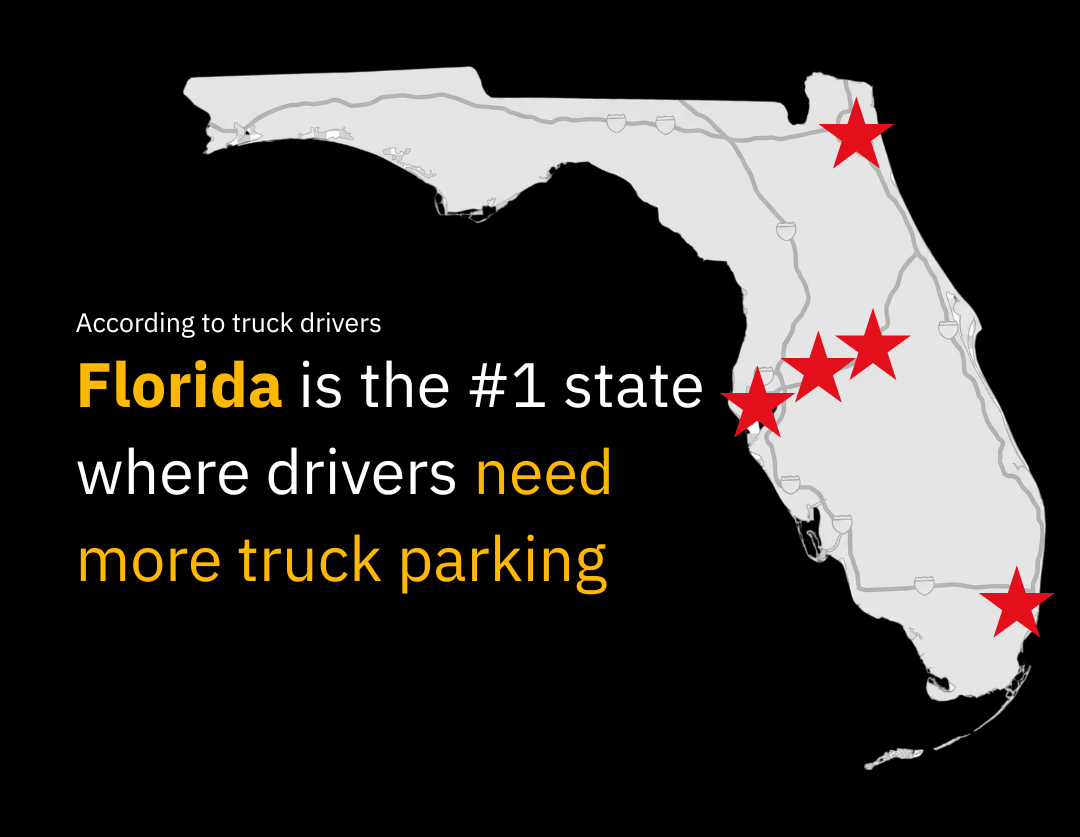
    Top States by Driver Demand (Ranked):

    1. Florida
    2. Texas
    3. Pennsylvania
    4. Georgia
    5. California
    6. Illinois
    7. New York
    8. Ohio
    9. North Carolina

    Top Metro Areas (Ranked):

    1. Atlanta
    2. Dallas-Forth Worth
    3. New York City
    4. Los Angeles
    5. Chicago
    6. Orlando
    7. Houston
    8. Newark
    9. San Franciso
    10. Tampa
    11. Minneapolis

    Find Your Spot Now → https://truckparkingclub.com

    The pattern is clear: truck drivers need parking near major distribution hubs and dense urban freight corridors. One driver put it simply:

    The biggest shortage is near massive warehouses in places like California’s Inland Empire and the Dallas-Fort Worth area.

    Drivers finish their shifts near these facilities but have nowhere safe to park nearby, forcing them to keep driving while fatigued.

    That’s not an inconvenience. That’s a safety crisis.

    What Truck Drivers Actually Look For When Choosing Where to Park

    Survey after survey, we hear the same things from drivers. Parking isn’t just about an open space. It’s about whether that space feels safe, looks legitimate, and has the basics covered.

    Here’s what our members said matters most when deciding where to book.

    Peace of Mind Is Non-Negotiable

    Physical security infrastructure was the second most common response when we asked what would make drivers more confident booking a new location. One in five drivers (20.2%) specifically mentioned wanting to know whether a location has cameras, gates, fencing, and lighting before they book.

    This is consistent across every survey we’ve run. Drivers are making decisions about where to spend the night, often arriving after dark. They want to know the property before they commit.

    For Property Members: If your location has security features, make sure they’re prominently listed and visible in photos. If you don’t have them yet, this is the single highest-impact investment you can make to attract more bookings. Lighting, fencing, and cameras consistently rank among top decision drivers for truckers choosing paid parking over free alternatives.

    Photos Are the #1 Confidence Driver for New Locations

    When asked what would make them more confident booking a location they’ve never visited, 31% of drivers said onsite photos and videos. It was the most common answer by a wide margin.

    Drivers want to see what they’re getting before they arrive. That means high-resolution images, multiple angles, entrance and exit shots, and ideally video walkthroughs. Several drivers specifically mentioned wanting to see the entrance so they know what to look for when pulling in at night.

    One driver suggested Property members film a short video tour welcoming drivers and showing off what the facility has to offer. That kind of content builds trust in ways a text description never will.

    For Property Members: Investing 15 minutes in quality photos of your lot can directly impact your booking volume. Show the entrance, the lot surface, any security features, available amenities, and the surrounding area. If you can shoot a quick walkthrough video, even better. Drivers told us this is the single biggest thing that would make them more willing to try a new location.

    Lot Quality and Accurate Descriptions Matter More Than You Think

    Nearly 6% of drivers flagged lot conditions as a concern: potholes, faded lines, debris, and tight maneuvering space.

    For Property Members: Your listing is a promise. If something changes at your property, update the listing. If you describe amenities as “nearby,” make sure they’re accessible. Drivers who feel misled don’t come back, and they tell other drivers.

    Reviews and Ratings Build Trust

    15.5% of drivers said reviews and ratings from other drivers increase their confidence in booking a new location.

    Drivers trust other drivers. Seeing that someone else parked there, felt safe, and had a good experience carries more weight than any marketing copy.

    What This Means for the Industry

    The truck parking shortage is a national infrastructure crisis that won’t be solved overnight. Federal and state agencies are investing hundreds of millions of dollars in new parking infrastructure, but building new rest areas and truck stops takes years. In the meantime, the most immediate opportunity is unlocking existing capacity: warehouses with unused yard space, trucking companies with open lots after hours, industrial properties near freight corridors that could serve double duty as overnight parking.

    Our survey data shows that drivers aren’t asking for luxury. Drivers want a safe, well-lit spot with accurate information about what to expect. They want to see photos before they book. They want to know the lot is secure. And they overwhelmingly need more options in the Southeast, Texas, California, the Northeast, and near major distribution hubs across the country.

    If you own or operate a property in any of these areas or near a freight corridor and have underutilized space, there are drivers looking for exactly what you have. The demand is real, it’s documented, and it’s growing.

    List Your Space Today → https://truckparkingclub.com/become-property-member

    This data comes from Truck Parking Club’s ongoing member survey program. Truck Parking Club is a platform connecting truck drivers with reserved parking at locations nationwide. To learn more about listing your property or finding parking, visit truckparkingclub.com.

    Survey methodology: Responses from active Truck Parking Club members, collected via weekly member newsletter. Responses to open-ended questions were multi-coded by theme.

  • Top 5 Most Popular Interstate Highways Among Trucker Members

    Top 5 Most Popular Interstate Highways Among Trucker Members

    In an industry where routes make or break a successful haul, knowing which interstates other truckers prefer is invaluable information. We recently surveyed our Trucker Members about their favorite interstate highways, and the results paint an interesting picture of preferred trucking routes across America.

    Key Findings

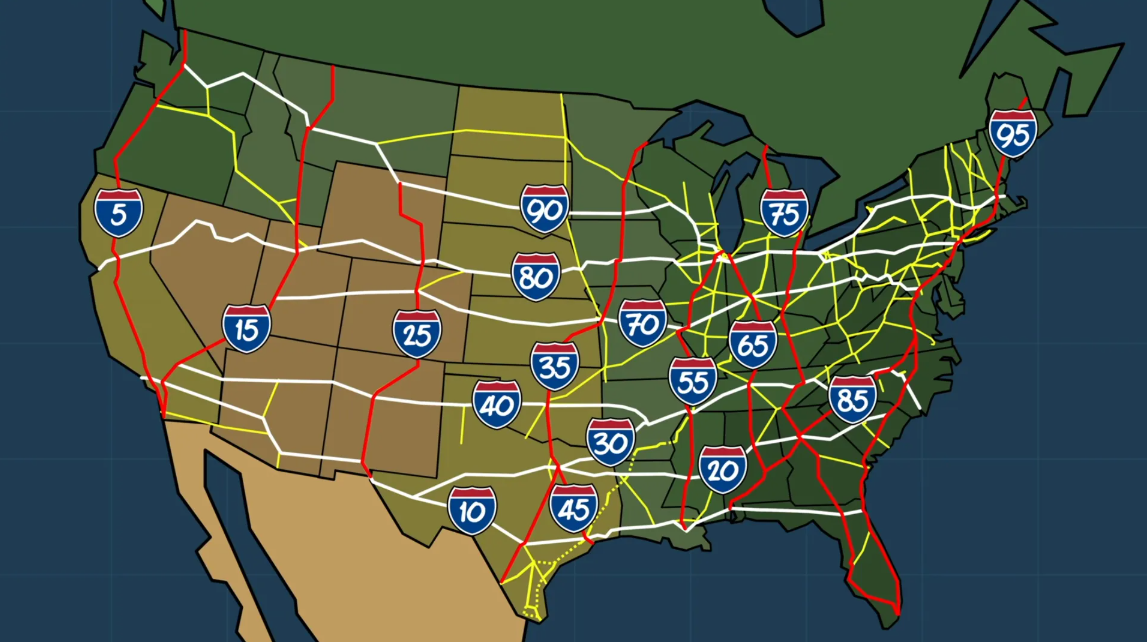
    Our survey of Trucker Members revealed strong preferences for major cross-country routes, with east-west corridors being particularly popular.

    The Top 5 Most Popular Interstates

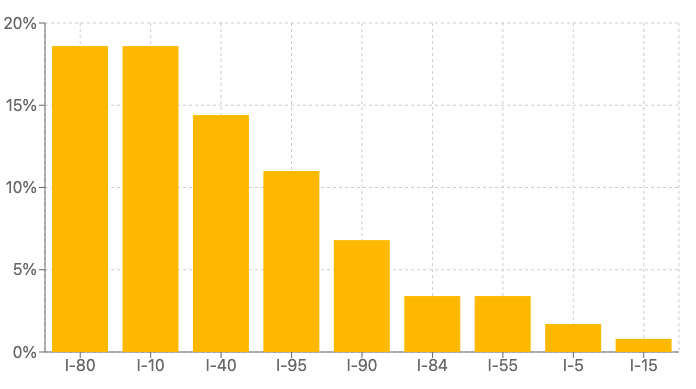
    1. Interstate 80 (18.6% of responses)

    Running east to west through:

    I-80 stands out for its crucial role in connecting major freight hubs from the San Francisco Bay Area to New York City. Drivers particularly praise its well-maintained infrastructure and strategic positioning for cross-country shipments. As one surveyed driver noted, “I travel on I-80 most of the time! I run freight from MN out to the east coast.”

    2. Interstate 10 (18.6% of responses)

    Spanning coast to coast through:

    Tying for first place, I-10 serves as the southern backbone of America’s freight network. Drivers value its year-round accessibility and multiple routing options. “I enjoy the I-10 mainly because there’s more options to get around closures and accidents,” shared one respondent.

    3. Interstate 40 (14.4% of responses)

    Crossing through:

    I-40 provides a crucial middle-America route, offering an alternative to both I-80 and I-10 for cross-country transit. Its position makes it ideal for accessing key distribution centers across the southern midwest.

    4. Interstate 95 (11% of responses)

    Running north to south through:

    As the main artery of the East Coast, I-95 serves some of the nation’s busiest freight markets and provides access to multiple major ports. Its extensive network of services and facilities makes it a crucial route for regional and long-haul operations alike.

    5. Interstate 90 (6.8% of responses)

    Stretching across:

    As America’s longest interstate highway, I-90 provides a northern alternative to I-80, particularly valuable for drivers serving the Upper Midwest and Pacific Northwest markets.

    Why These Routes Matter

    Understanding popular interstate preferences helps both new and experienced drivers make informed decisions about their routes. These major corridors typically offer:

    • Better access to parking and rest facilities
    • More frequent truck stops and service centers
    • Greater availability of loads and backhauls
    • Well-maintained roads and infrastructure
    • Reliable cell coverage and emergency services

    The Parking Challenge

    While these interstates are popular for good reason, finding safe and reliable parking along any route remains a critical challenge for drivers. The most frequent issues cited by drivers include:

    • Limited parking availability near major cities
    • Overcrowded rest areas during peak hours
    • Safety concerns at unofficial parking locations
    • Time lost searching for parking

    Finding Secure Parking Along Your Route

    Truck Parking Club offers secure, reservable parking along all of these major interstates. Our network includes:

    • 24/7 accessible locations
    • Well-lit, secure facilities
    • Guaranteed spot availability
    • Easy online booking
    • Easy payment options
    • 24/7/365 customer support staffed entirely by former drivers

    Note: Each state name links to our directory of truck parking locations in that state. Find and book secure parking along any of these routes through Truck Parking Club.

    Conclusion

    While each driver’s route preferences depend on their specific needs and regular lanes, these five interstates form the backbone of America’s trucking infrastructure. Whether you’re planning a cross-country haul or looking for reliable regional routes, understanding these major corridors – and having dependable parking options along them – is crucial for successful trips.

    This survey was conducted in January 2025 and reflects the opinions of our Trucker Members