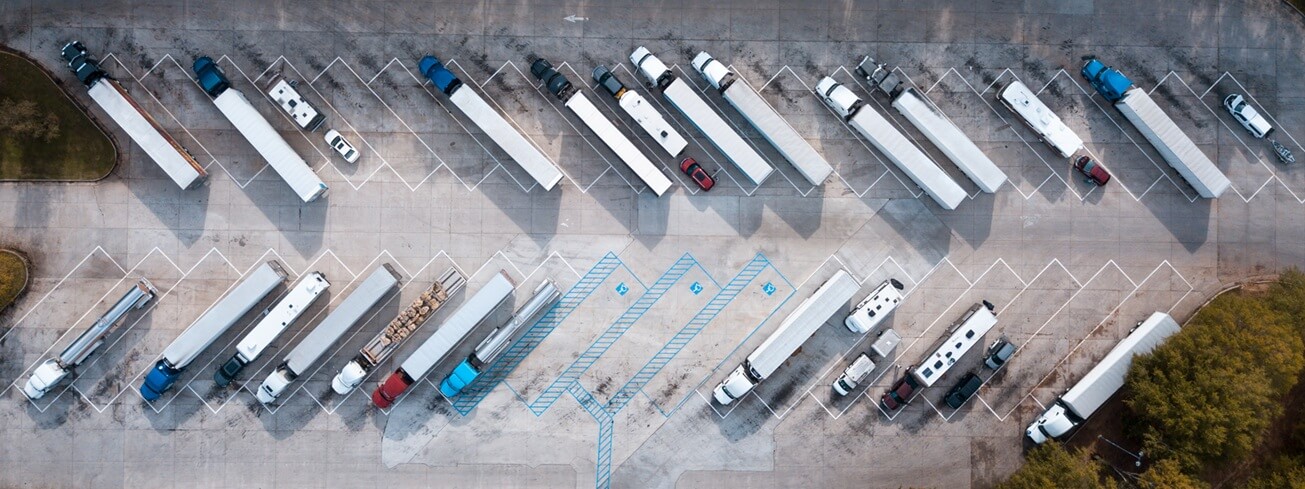
The shortage of safe parking for commercial motor vehicle (CMV) drivers is a critical issue, especially in the densely populated northeast U.S. As highways become increasingly congested and the demand for goods rises, truck drivers face significant challenges in finding parking spots that meet federal rest requirements.
Addressing this problem head-on, researchers from the Connecticut Transportation Safety Research Center (CTSRC) at UConn are working to develop a solution: a real-time app that helps truck drivers locate safe parking spots.
The Parking Shortage Crisis
The shortage of truck parking has become a national concern, impacting driver safety and road efficiency. In the northeast, this issue is compounded by limited space and high real estate costs. As highways were originally built in the 1950s, the infrastructure hasn’t kept up with the growing demands of today’s trucking industry. According to Eric Jackson, director of CTSRC, “Parking in the northeast has always been an issue because our interstates were built in more densely populated areas.”
The lack of parking forces truck drivers to either park illegally on highway shoulders or ramps or continue driving past their regulated hours in search of a safe spot. This not only poses safety risks but also puts drivers at risk of violating FMCSA hours-of-service (HOS) regulations, which are designed to ensure drivers remain well-rested and alert on the road.
UConn’s Solution: A Smart Parking App
To alleviate this issue, UConn researchers, led by Eric Jackson and Mohammad Razaur Rahman Shaon, are developing a Truck Parking Information Management System (TPIMS) app. This app, funded by a $1.46 million federal grant from the U.S. Department of Transportation (DOT) and additional funding from the Connecticut DOT, will provide real-time data on available parking spots for truckers in the northeast.
The system will collect data from a variety of sources, including video cameras, infrared sensors, and radar installed at key locations, and process it using an advanced traffic management system. The app will then disseminate parking availability information to drivers via mobile apps, in-cab electronic logging devices (ELDs), and digital message boards, allowing them to make informed decisions about where to park and rest safely.
Why Technology is Key
As the trucking industry continues to grow—72.5% of domestic goods were transported by truck in 2019—the need for smarter parking solutions has become apparent. By integrating cutting-edge technology like Dedicated Short Range Communication (DSRC) units, UConn’s app will provide real-time parking updates to truckers, reducing the time they spend searching for parking and minimizing the risk of unsafe parking practices.
As Shaon puts it, “If we can provide parking information beforehand, drivers may decide they want to take a break before they get to Connecticut. This will allow them to make more informed decisions about their itinerary, routes, and connections.” The app will not only help truckers in Connecticut but will also integrate parking information from neighboring states, making it a regional solution to a national problem.
A Critical Step Forward for Truck Parking
The development of UConn’s smart parking app is a significant step toward solving the truck parking shortage in the northeast. By providing real-time parking information, the app will enhance safety for truck drivers and help them comply with federal regulations, reducing stress and improving overall road safety.
While the UConn app is still in development, Truck Parking Club is already fully operational, providing truck drivers with convenient access to nearby parking locations. Our user-friendly, driver-focused app allows truckers to easily search for parking spots that offer the amenities they need for a comfortable rest. With just a few taps, drivers can find the perfect place to relax and recharge, making Truck Parking Club the go-to solution for on-the-road convenience.
Source: Reducing Big Rig Parking Problems
The information published herein is for general informational purposes only. Truck Parking Club does not make any representations or warranties about the completeness, reliability, legality, and accuracy of this information. Any reliance placed on such material is strictly at the user’s own risk. Truck Parking Club shall not be responsible for any losses or damages incurred in connection with the information published herein.