Category: Truck Parking News

  • Wright City Bans Truck Parking on I-70 Ramps. The Shortage Didn’t Go Anywhere.

    Wright City Bans Truck Parking on I-70 Ramps. The Shortage Didn’t Go Anywhere.

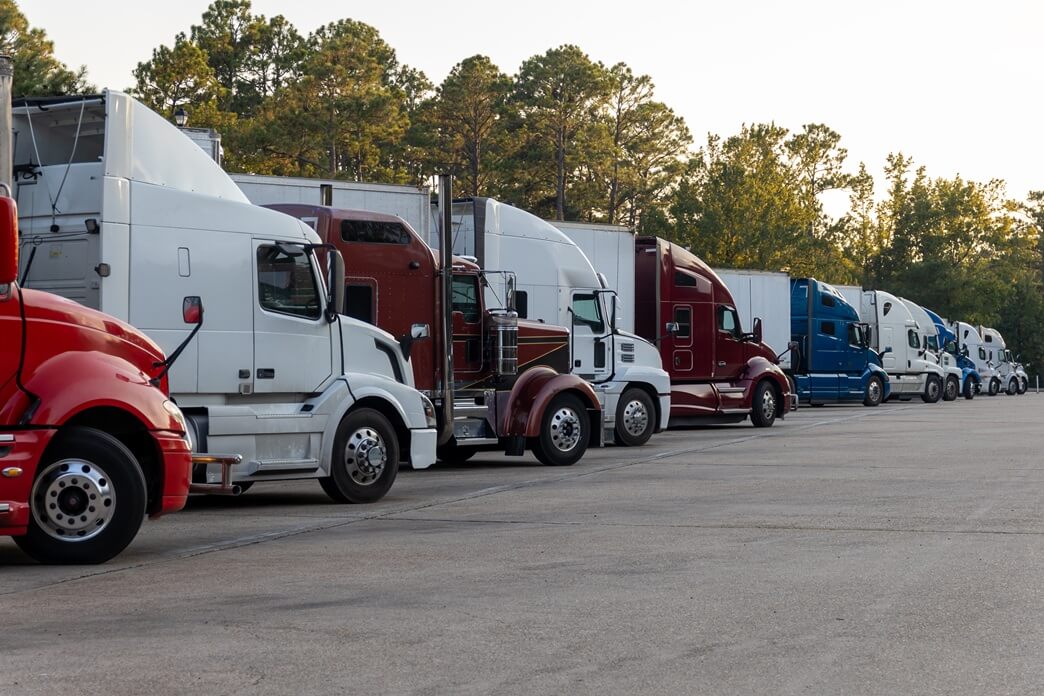
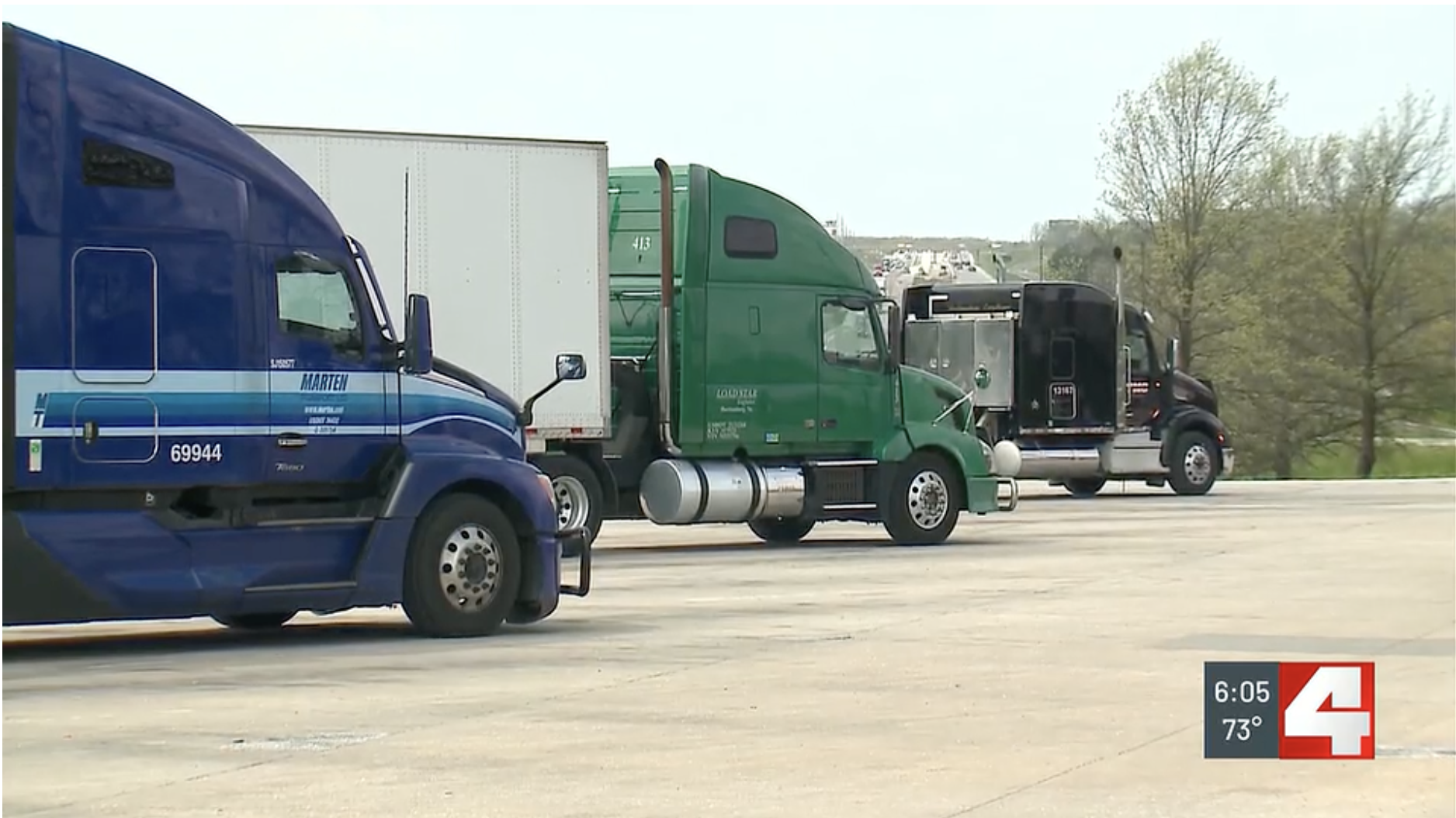
    At 4 a.m. on a Tuesday, a Wright City alderman photographed the rest area near the Wildcat overpass on I-70. Every space full. Trucks lined up along the exit ramp because there was nowhere else to go.

    Last week, the city’s response arrived. Not more spaces. Not faster permitting for private lots. An ordinance making the ramp parking illegal.

    Mayor Michelle Heiliger isn’t wrong that it’s a safety issue. Cars merging at 65 mph past parked trucks is dangerous. Nobody disputes that. The Wildcat overpass now has three lanes instead of two, with rerouted traffic from the torn-down Warrenton overpass adding to the problem.

    But you can’t ordinance your way out of a supply shortage.

    Long-time driver Charlie White said it plainly in the story: “People are still coming 65 miles per hour, if they ain’t paying attention, they’re running into the back of you.”

    Drivers don’t park on ramps because they want to. They park there because the rest area is full, the next safe option is 40 miles away, and their clock is out.

    Use Code ramp25 for Free Parking

    If you’re driving I-70 through Missouri, you shouldn’t have to choose between a ticket and a safe place to sleep.

    Use promo code ramp25 at checkout on the Truck Parking Club app for $25 off a booking at any location in our network. No catch. No membership required. We’d rather cover your parking than see another driver stuck on a ramp.

    The “Solution” Doesn’t Arrive Until 2027

    MoDOT won a $33 million federal grant to renovate five Missouri rest areas, including the one in Wright City. The expansion will add truck parking. Completion date: end of 2027.

    That’s 20 months away.

    For the next 20 months, drivers on I-70 through Warren County have an ordinance telling them where they can’t park and no one telling them where they can.

    This Is Not a New Problem

    In 2023, a Greyhound bus collided with tractor-trailers parked on an exit ramp shoulder near Highland, Illinois. Three people died. Fourteen were injured. The NTSB’s investigation sparked a nationwide conversation about trucks forced to park on ramps and shoulders because rest areas are full.

    Three years later, we’re having the same conversation. A different state. A different exit. The same cause.

    The Supply Already Exists. It Just Hasn’t Been Unlocked.

    Within 10 miles of that Wright City exit, there are trucking companies with extra yard space. Repair shops with gated lots that sit empty overnight. Warehouses with dock doors that go unused after hours. Self-storage operators, tire shops, CDL schools, empty commercial lots earning nothing.

    Every one of them could be a legal, paid, reservable parking option for drivers by next week.

    No federal grant. No two-year construction timeline. No new ordinances. No taxpayer dollars.

    At Truck Parking Club, we’ve onboarded over five thousand of these properties across 49 states. The onboarding process takes days. The listing costs the owner nothing. Drivers book through the app, payments are guaranteed, and the property owner keeps full control of pricing and availability.

    In the 20 months it will take MoDOT to finish one rest area, we will add thousands more locations nationwide. No construction required. The parking is already built. It’s just sitting behind fences at businesses that don’t yet know drivers need them.

    Drivers: Book Free Parking with Code ramp25

    Download the Truck Parking Club app, find a location on your route, and use code ramp25 at checkout. Your first booking is on us. No contracts, no membership fees, no strings.

    Get it at truckparkingclub.com.

    Property Owners: Drivers Near You Need Somewhere to Park Tonight

    If you run a trucking company, a repair shop, a warehouse, a tire shop, a CDL school, or any commercial property with extra yard space or unused dock doors, you can list it on Truck Parking Club today. No contracts. No upfront costs. Guaranteed payment. We handle the drivers, the payments,q21 and the support.

    The 2027 rest area expansion is coming. Drivers can’t wait that long.

    List your property at truckparkingclub.com

    Source: First Alert 4, “Wright City passes ordinance to ban truck parking on exit ramps”
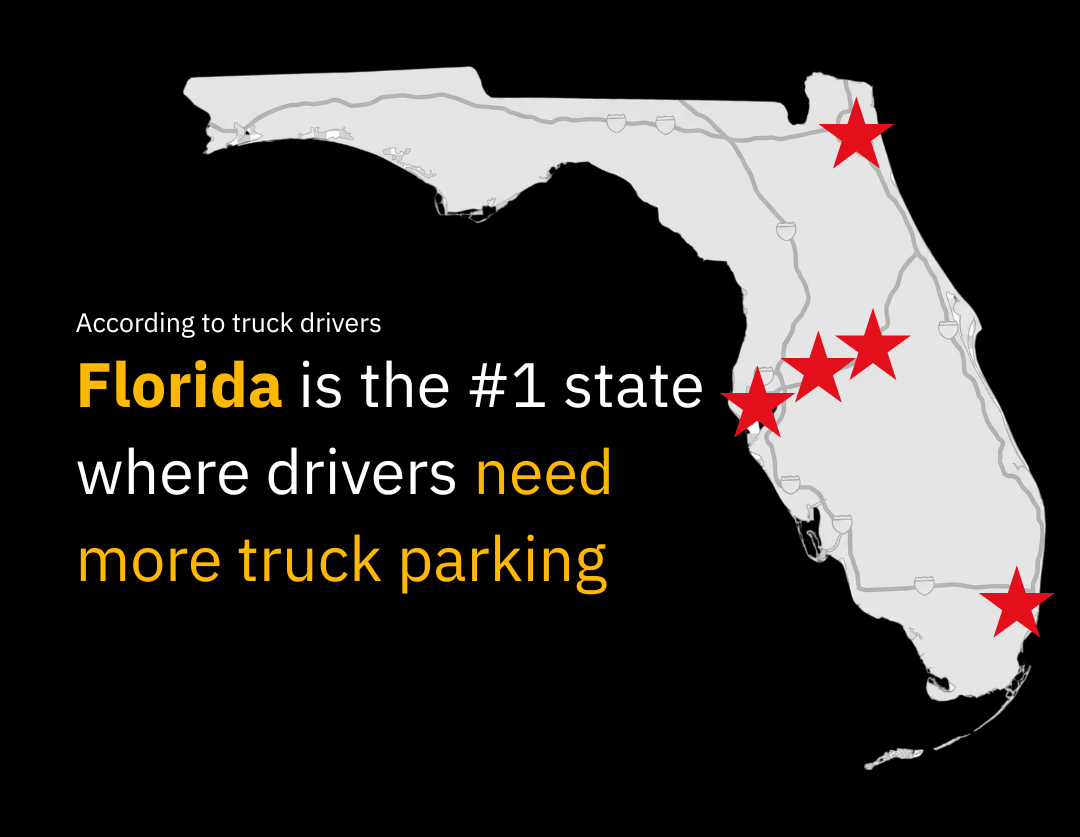
  • Where Truck Drivers Need More Parking in 2026

    Where Truck Drivers Need More Parking in 2026

    At Truck Parking Club, we survey our members regularly to understand what’s happening on the ground. In our most recent survey of active members, we asked where truck drivers need parking, what they look for when choosing a location, and what would make them more confident booking somewhere new.

    Here’s what they told us.

    The States and Cities Where Truck Drivers Need Parking Most

    Top States by Driver Demand (Ranked):

    1. Florida
    2. Texas
    3. Pennsylvania
    4. Georgia
    5. California
    6. Illinois
    7. New York
    8. Ohio
    9. North Carolina

    Top Metro Areas (Ranked):

    1. Atlanta
    2. Dallas-Forth Worth
    3. New York City
    4. Los Angeles
    5. Chicago
    6. Orlando
    7. Houston
    8. Newark
    9. San Franciso
    10. Tampa
    11. Minneapolis

    Find Your Spot Now → https://truckparkingclub.com

    The pattern is clear: truck drivers need parking near major distribution hubs and dense urban freight corridors. One driver put it simply:

    The biggest shortage is near massive warehouses in places like California’s Inland Empire and the Dallas-Fort Worth area.

    Drivers finish their shifts near these facilities but have nowhere safe to park nearby, forcing them to keep driving while fatigued.

    That’s not an inconvenience. That’s a safety crisis.

    What Truck Drivers Actually Look For When Choosing Where to Park

    Survey after survey, we hear the same things from drivers. Parking isn’t just about an open space. It’s about whether that space feels safe, looks legitimate, and has the basics covered.

    Here’s what our members said matters most when deciding where to book.

    Peace of Mind Is Non-Negotiable

    Physical security infrastructure was the second most common response when we asked what would make drivers more confident booking a new location. One in five drivers (20.2%) specifically mentioned wanting to know whether a location has cameras, gates, fencing, and lighting before they book.

    This is consistent across every survey we’ve run. Drivers are making decisions about where to spend the night, often arriving after dark. They want to know the property before they commit.

    For Property Members: If your location has security features, make sure they’re prominently listed and visible in photos. If you don’t have them yet, this is the single highest-impact investment you can make to attract more bookings. Lighting, fencing, and cameras consistently rank among top decision drivers for truckers choosing paid parking over free alternatives.

    Photos Are the #1 Confidence Driver for New Locations

    When asked what would make them more confident booking a location they’ve never visited, 31% of drivers said onsite photos and videos. It was the most common answer by a wide margin.

    Drivers want to see what they’re getting before they arrive. That means high-resolution images, multiple angles, entrance and exit shots, and ideally video walkthroughs. Several drivers specifically mentioned wanting to see the entrance so they know what to look for when pulling in at night.

    One driver suggested Property members film a short video tour welcoming drivers and showing off what the facility has to offer. That kind of content builds trust in ways a text description never will.

    For Property Members: Investing 15 minutes in quality photos of your lot can directly impact your booking volume. Show the entrance, the lot surface, any security features, available amenities, and the surrounding area. If you can shoot a quick walkthrough video, even better. Drivers told us this is the single biggest thing that would make them more willing to try a new location.

    Lot Quality and Accurate Descriptions Matter More Than You Think

    Nearly 6% of drivers flagged lot conditions as a concern: potholes, faded lines, debris, and tight maneuvering space.

    For Property Members: Your listing is a promise. If something changes at your property, update the listing. If you describe amenities as “nearby,” make sure they’re accessible. Drivers who feel misled don’t come back, and they tell other drivers.

    Reviews and Ratings Build Trust

    15.5% of drivers said reviews and ratings from other drivers increase their confidence in booking a new location.

    Drivers trust other drivers. Seeing that someone else parked there, felt safe, and had a good experience carries more weight than any marketing copy.

    What This Means for the Industry

    The truck parking shortage is a national infrastructure crisis that won’t be solved overnight. Federal and state agencies are investing hundreds of millions of dollars in new parking infrastructure, but building new rest areas and truck stops takes years. In the meantime, the most immediate opportunity is unlocking existing capacity: warehouses with unused yard space, trucking companies with open lots after hours, industrial properties near freight corridors that could serve double duty as overnight parking.

    Our survey data shows that drivers aren’t asking for luxury. Drivers want a safe, well-lit spot with accurate information about what to expect. They want to see photos before they book. They want to know the lot is secure. And they overwhelmingly need more options in the Southeast, Texas, California, the Northeast, and near major distribution hubs across the country.

    If you own or operate a property in any of these areas or near a freight corridor and have underutilized space, there are drivers looking for exactly what you have. The demand is real, it’s documented, and it’s growing.

    List Your Space Today → https://truckparkingclub.com/become-property-member

    This data comes from Truck Parking Club’s ongoing member survey program. Truck Parking Club is a platform connecting truck drivers with reserved parking at locations nationwide. To learn more about listing your property or finding parking, visit truckparkingclub.com.

    Survey methodology: Responses from active Truck Parking Club members, collected via weekly member newsletter. Responses to open-ended questions were multi-coded by theme.

  • Highway Bottlenecks Are Costing You Time and Money. Your Parking Strategy Doesn’t Have to.

    Highway Bottlenecks Are Costing You Time and Money. Your Parking Strategy Doesn’t Have to.

    Highway Bottlenecks Are Costing You Time and Money. Your Parking Strategy Doesn’t Have to.

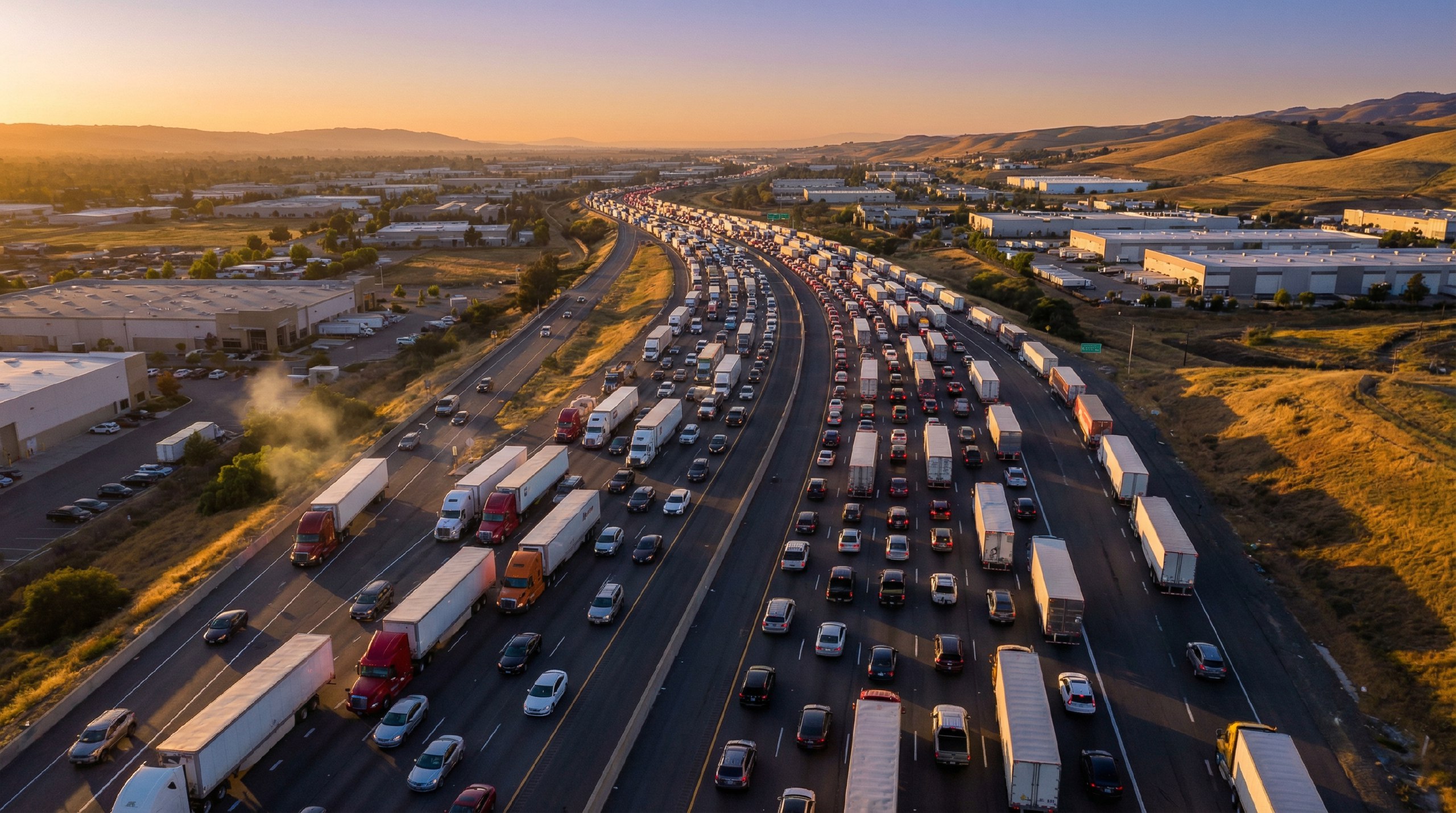
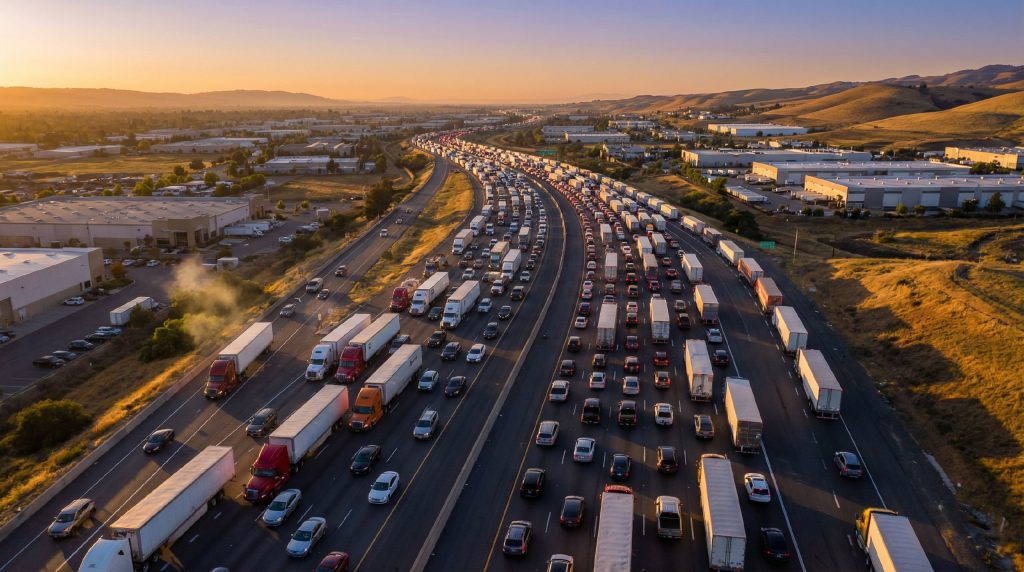
    The American Transportation Research Institute (ATRI) has released its 2026 Top 100 Truck Bottlenecks report, and the results confirm what our Trucker Members experience every day: crippling congestion is burning through your Hours-of-Service (HOS) and costing you money. While these traffic jams grind the nation’s freight to a halt, they also intensify one of the biggest challenges in the industry: the critical shortage of safe truck parking.

    America’s Traffic Chokepoints

    Using a massive database of truck GPS data, the ATRI report identifies the most severe traffic bottlenecks across the United States. For the fourth consecutive year, the intersection of I-294 and I-290/I-88 in Chicago, Illinois, holds the top spot. The top five worst congestion points highlight the daily struggle for our members:

    RankLocationStateAverage Peak Speed
    1I-294 at I-290/I-88IL33.1 mph
    2I-95 at SR 4NJ22.1 mph
    3I-285 at I-85 (North)GA25.9 mph
    4I-45 at I-69/US 59TX20.2 mph
    5I-75 at I-285 (North)GA31.1 mph

    Source: ATRI Top 100 Truck Bottlenecks – 2026

    These bottlenecks are more than just delays; they are a direct drain on your productivity. Every hour spent idling in traffic is an hour you can’t drive, cutting into your earning potential and complicating your end-of-day search for parking.

    The Vicious Cycle: How Congestion Fuels the Parking Crisis

    The time lost to traffic directly fuels the truck parking crisis. The nationwide shortage of safe and available parking already forces countless Trucker Members into unsafe situations, such as parking on shoulders or illegal ramps. When unexpected congestion eats away at your HOS, the window to find a secure spot shrinks dramatically, creating a vicious cycle:

    1. Congestion Burns HOS: Unpredictable delays at major bottlenecks reduce your available driving time.
    2. The Scramble Begins: With the clock ticking, the pressure to find any available parking leads to rushed, high-stress decisions.
    3. Unsafe Parking: Trucker Members are often forced into poorly lit, unsecured locations, making them targets for cargo theft and other dangers.
    4. Lost Productivity: The fear of not finding a spot can force an early end to the day, cutting into earnings and slowing the entire supply chain.

    This is a systemic failure. The lack of infrastructure investment in our highways directly worsens the critical safety and efficiency issue of parking scarcity.

    Break the Cycle. Take Control of Your Parking.

    While we can’t solve the nation’s infrastructure problems overnight, Trucker Members can take control of the parking challenge. Truck Parking Club provides a powerful, data-driven solution.

    Our marketplace connects you with a network of over 4,208 Property Member locations, giving you the ability to find and reserve a safe, secure parking spot hours or even days in advance. With over 50,000+ drivers searching our marketplace weekly and 92 of the top 100 trucking companies using our platform, Truck Parking Club is the trusted solution for eliminating parking uncertainty.

    • Maximize Your HOS: Knowing a spot is reserved allows you to safely maximize your driving time. Confidently bypass crowded rest areas and get closer to your destination, improving your efficiency and earnings.
    • Eliminate Stress: The end-of-day parking scramble is a leading cause of stress. Booking in advance removes that anxiety so you can focus on the road.
    • Unlock New, Secure Options: Our marketplace opens up a network of private, often underutilized properties, providing new, secure parking opportunities where traditional options are full.

    Traffic is out of your control. Your parking doesn’t have to be. It’s time to break the vicious cycle of congestion and parking scarcity.

    For our Trucker Members:

    Ready to take control of your parking? Browse and book your next spot with confidence.

    Find Your Spot Now → https://truckparkingclub.com

    For our Property Members:

    Got property? Park trucks. Get paid. Join a growing network of landowners monetizing their vacant property and supporting America’s supply chain.

    List Your Space Today → https://truckparkingclub.com/become-property-member

    References

    [1] American Transportation Research Institute. (2026, February). Top 100 Truck Bottlenecks – 2026. https://truckingresearch.org/2026/02/top-100-truck-bottlenecks-2026/

    [2] Land Line. (2026, February 3). New study shows ramp parking is a symptom of America’s truck parking crisis. https://landline.media/new-study-shows-ramp-parking-is-a-symptom-of-americas-truck-parking-crisis/

    [3] Women in Trucking Association. (2025, September 1). Truck Parking Crisis: Defining the Problem, Measuring the Impact, Driving Solutions. https://www.womenintrucking.org/blog/truck-parking-crisis-defining-the-problem-measuring-the-impact-driving-solutions

  • Congress Just Committed $200 Million to Truck Parking. Here’s What It Means for You.

    Congress Just Committed $200 Million to Truck Parking. Here’s What It Means for You.

    The truck parking crisis just got a shot in the arm.

    Last week, the U.S. House passed a bipartisan appropriations bill that includes $200 million dedicated exclusively to commercial vehicle parking projects. The bill passed with overwhelming support (341-88) and now heads to the Senate for final approval before the January 30 deadline.

    This is the largest single federal investment in truck parking we’ve seen, and it’s a direct response to a problem every driver knows too well.

    The Numbers Don’t Lie

    If you’re a truck driver, none of this will surprise you:

    • 98% of drivers regularly have trouble finding safe parking
    • 56 minutes of drive time lost per day searching for a spot
    • $6,813 in lost wages annually
    • 1.7 million parking space shortage nationwide

    Those aren’t just statistics. That’s real money out of your pocket and real hours off your clock, every single day.

    What This Funding Actually Does

    The $200 million is earmarked for projects that expand commercial vehicle parking near Interstate highways, the National Highway System, and the National Highway Freight Network.

    Here’s the part that matters most: facilities built with this funding cannot charge drivers to use them. That’s written directly into the legislation.

    Based on industry construction costs of $100,000-$200,000 per space, this funding could create roughly 1,000-2,000 new spaces. For context, the Bipartisan Infrastructure Law has already allocated funding for about 2,000 spaces, so this essentially doubles that effort.

    Is it enough to solve the 1.7 million space shortage? No. But it’s meaningful progress, and it shows that Congress is finally treating truck parking as the infrastructure priority it should be.

    Who Made This Happen

    Congressman Steve Womack (R-AR), chairman of the Transportation Appropriations Subcommittee, was instrumental in securing this funding. The American Trucking Associations has been advocating for this investment, with ATA President Chris Spear calling the parking shortage “an immense burden on truck drivers” that “creates significant roadway hazards.”

    As Spear put it: “Truckers are essential to Americans’ way of life, and the least we can do to show our support is to ensure they have a safe place to park and sleep when they take their federally mandated rest break or finish their shift.”

    What Else Is in the Bill

    The appropriations package includes several other provisions relevant to trucking:

    • A directive for USDOT to develop a strategy to respond to cargo theft
    • A study on predatory towing practices
    • Strengthened oversight of the Training Provider Registry
    • Enforcement of English language proficiency requirements
    • Reporting on technologies that could measure marijuana impairment
    • An update on establishing a national autonomous vehicle framework
    • A study on congestion pricing and its effects on trucking

    What Happens Next

    The Senate is expected to vote on the bill before January 30. If approved, it heads to the President’s desk for signature.

    We’ll be watching closely and will keep you updated as this moves forward.

    The Bigger Picture

    Federal funding helps, but it won’t solve this crisis alone. That’s exactly why Truck Parking Club exists. We’re working every day to bring more parking spaces online faster than government construction projects ever could, by connecting drivers with property owners who have space available right now.

    While we wait for new federally funded lots to be designed, approved, and built over the coming years, we’re adding 10-15 new locations to our network every single day. Currently, we have over 3,000 locations and 50,000+ spaces across the country, available for booking today.

    The parking crisis is real. But between federal investment and private solutions like Truck Parking Club, we’re making progress. One space at a time.


    Need parking now? Download the Truck Parking Club app or visit truckparkingclub.com to find and book a spot in minutes.

    Own property and want to make money parking trucks? Visit truckparkingclub.com/become-property-member to list your location on Truck Parking Club.

  • A Tragic Reminder: Why Truck Parking Is a Safety Issue

    A Tragic Reminder: Why Truck Parking Is a Safety Issue

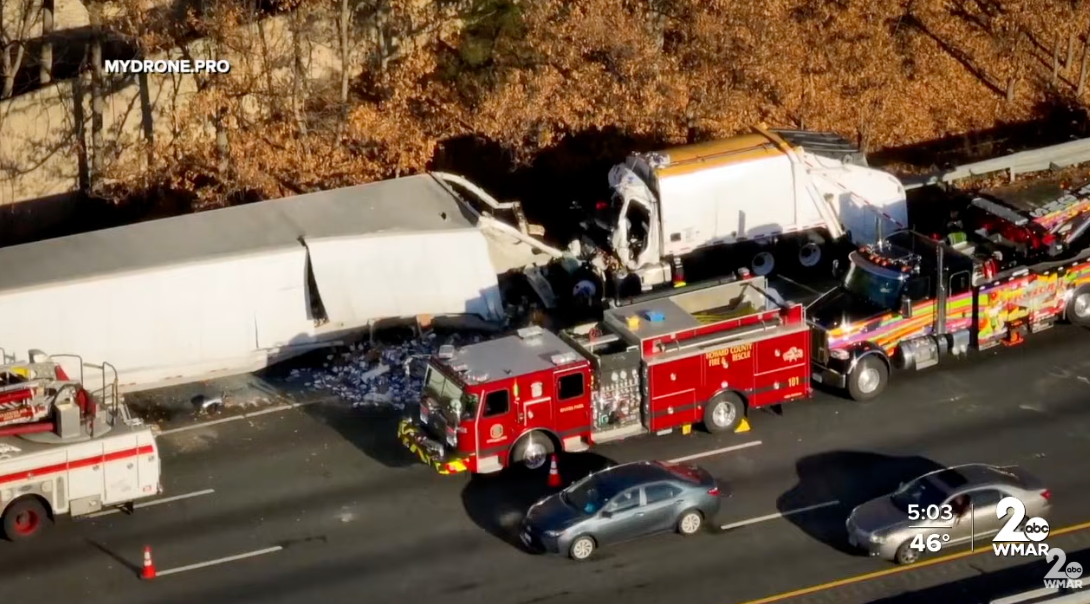
    Early Monday morning, a collision on I-95 in Maryland claimed a life and left others seriously injured.

    According to the Maryland State Police, a refuse collection truck traveling southbound struck the rear of a tractor trailer parked on the right shoulder near Route 100 in Howard County. The driver of the refuse truck was pronounced dead at the scene. Two passengers were airlifted to a trauma center, and the tractor trailer driver was transported to a local hospital.

    The cause of the crash remains under investigation.


    This isn’t just a traffic story. It’s a truck parking story.

    We don’t know why that tractor trailer was parked on the shoulder. But we do know this happens every single day across America. Drivers are forced to stop in unsafe locations because there simply isn’t enough parking available.

    The numbers tell the story:

    • Truck drivers spend an average of 56 minutes per day searching for parking
    • There’s a shortage of 1.7 million spaces nationwide.
    • Shoulder parking is illegal in most states, yet drivers are often left with no other choice

    When parking isn’t available, drivers face an impossible decision: violate hours-of-service regulations and risk their CDL, or pull over somewhere unsafe and risk their lives.


    The human cost is real.

    Behind every statistic is a driver, a family, a community. Someone left for work Monday morning and didn’t come home.

    This is why we do what we do at Truck Parking Club. Not because parking is convenient, but because it’s essential. Every new space we bring online is one less driver forced onto a shoulder, one less family waiting for a call that might not come.


    Our thoughts are with everyone affected by this tragedy.

    To the families, to the injured, and to every driver out there doing their best with limited options: we see you.

    Drivers deserve better. The industry deserves better. And we’re committed to being part of the solution.


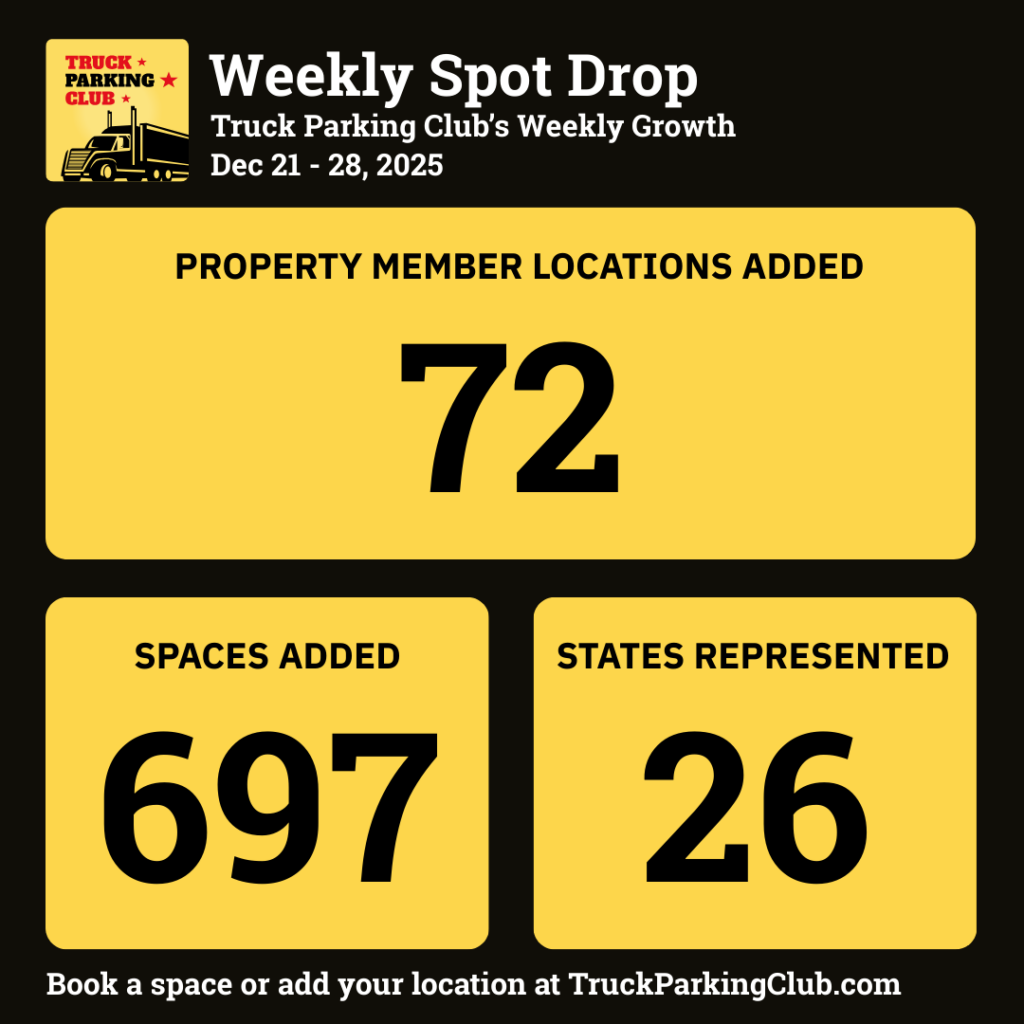
  • 72 New Truck Parking Locations Added This Week | 697 Spaces Across 26 States

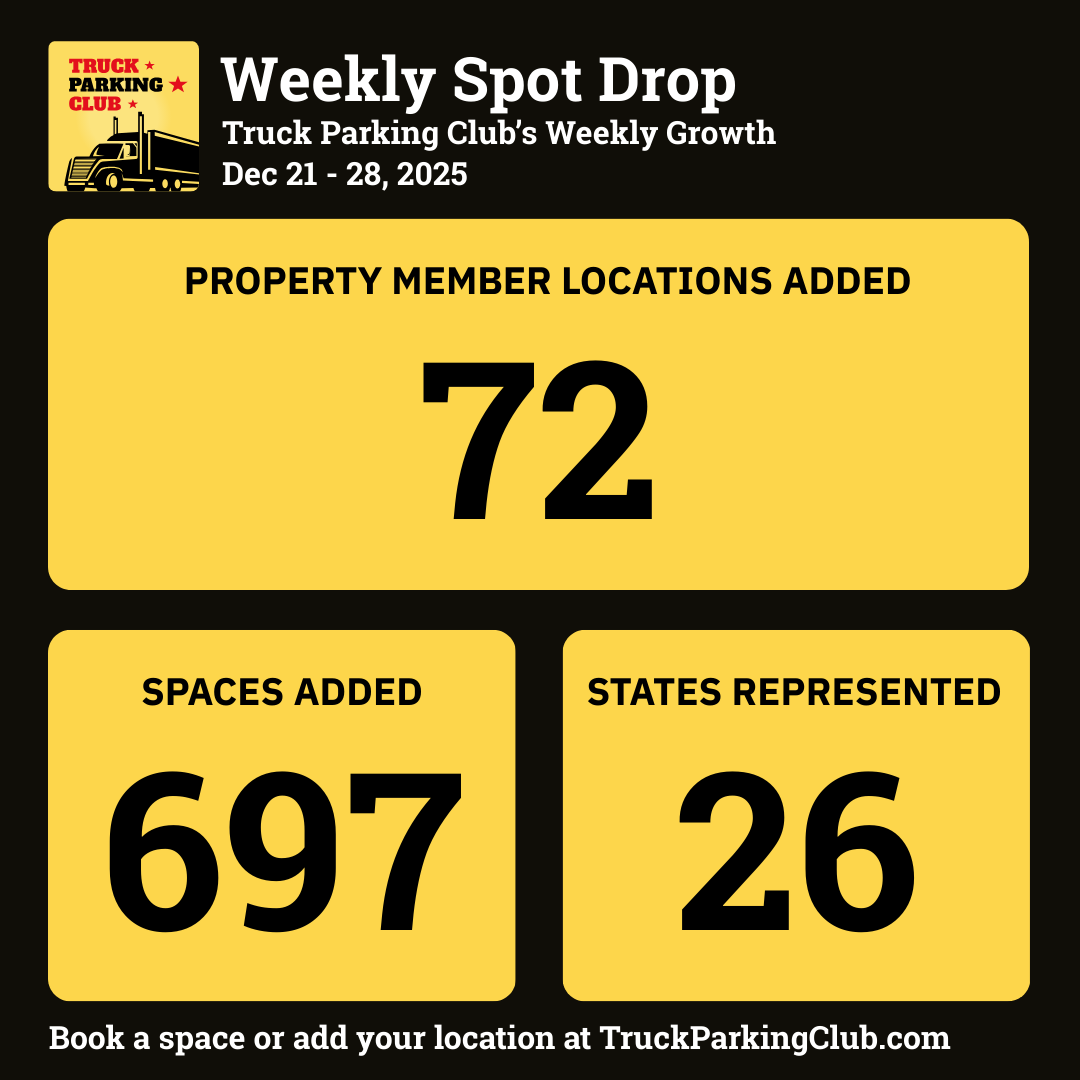
    72 New Truck Parking Locations Added This Week | 697 Spaces Across 26 States

    72 New Truck Parking Locations Added This Week

    We added 72 new truck parking locations with 697 spaces across 26 states this week. That’s nearly 700 parking spaces giving drivers more reliable options across critical routes nationwide.

    With drivers spending 56 minutes every day just looking for a place to park, these new locations continue to reduce search time and stress for drivers across the country.

    Where We Added the Most Spaces

    Texas: 8 locations, 124 spaces
    Strong week headlined by a massive 50-space facility in El Paso and 40 spaces in Gainesville. Alice added 10 spaces, Grand Prairie added 10 spaces, and Houston, Austin, Stafford, and Sierra Blanca combined for 14 more. Excellent coverage for I-10, I-20, I-35, and I-45 routes.

    Georgia: 8 locations, 95 spaces
    Outstanding growth with a 30-space facility in Eastanollee and three locations in Savannah combining for 37 spaces. Braselton added two locations totaling 20 spaces, plus 10 spaces in Conley and 8 in Thomaston. Strong support for I-75, I-85, and I-16 corridors.

    California: 4 locations, 65 spaces
    Solid expansion with 25 spaces in Lawndale, 20 spaces in Bakersfield, and 10 spaces each in Pixley and Desert Hot Springs. Critical support for I-5, I-10, and CA-99 drivers.

    Maryland: 3 locations, 59 spaces
    Major additions all in Hyattsville with a 40-space facility leading the way, plus 12 and 7-space locations. Strategic support for I-95 and the greater DC metro area.

    Wisconsin: 4 locations, 48 spaces
    Kenosha dominated this week with three locations combining for 44 spaces, plus 4 spaces in Mequon. Great coverage for I-94 and I-41 routes.

    All the New Locations by State

    What This Means for You

    The South and West dominated this week’s expansion. Texas led with 124 spaces across 8 locations, including that massive 50-space addition in El Paso—perfect for drivers running I-10 through West Texas. Combined with the 40-space Gainesville facility serving North Texas, this growth provides crucial relief for drivers throughout the state’s major corridors.

    Georgia continues strong momentum with 95 spaces across 8 locations. The Savannah area saw exceptional growth with 37 spaces combined across three locations, providing critical support for port drivers and I-16 traffic.

    California added 65 spaces across 4 locations, with solid coverage in both Southern California (Lawndale, Desert Hot Springs) and the Central Valley (Bakersfield, Pixley).

    Maryland made a concentrated impact with 59 spaces all in Hyattsville—a strategic location for drivers navigating the I-95 corridor through the DC metro area.

    Perfect for Every Parking Need

    Whether you’re a driver or carrier, these new locations support all your parking requirements:

    Overnight Parking: Secure, well-lit locations for safe rest stops. No more worrying about theft or safety issues when you need to shut down for the night.

    34-Hour Reset: Dedicated spaces for your mandatory reset periods. Book in advance to guarantee your spot and avoid scrambling to find parking when your clock runs out.

    On-Demand Drop Trailer Yards: Quick trailer drops and pickups for efficient freight operations. Perfect for carriers managing multiple loads and drivers.

    Relay Yards: Strategic locations for driver changes and equipment swaps. Keep your freight moving while ensuring driver compliance and safety.

    Long-Term Storage: Extended parking for trailers and equipment when not in active use. Cost-effective storage solutions that keep your assets secure and accessible.

    How to Book

    Download the Truck Parking Club app or go to truckparkingclub.com to reserve your location. You can book hourly, daily, weekly, or monthly. Our customer service team is available 24/7, and they’re all former truckers who get it.

    We’re now at 3,677 locations with 60,000 parking spaces in 49 states. All locations are safe, legal, and reservable.

    Got Land? Make Money

    If you own property that could work for truck parking, you can list it with us for free. No upfront costs, no long-term contracts. Property owners make passive income while helping solve the parking shortage.

    We’ll help you set competitive rates and provide up to $25,000 damage coverage.

    More Locations Coming

    We add new truck parking locations every week. This week we covered 26 states with strong growth across the South and West. Check back here or follow us for updates on where we’re expanding next.

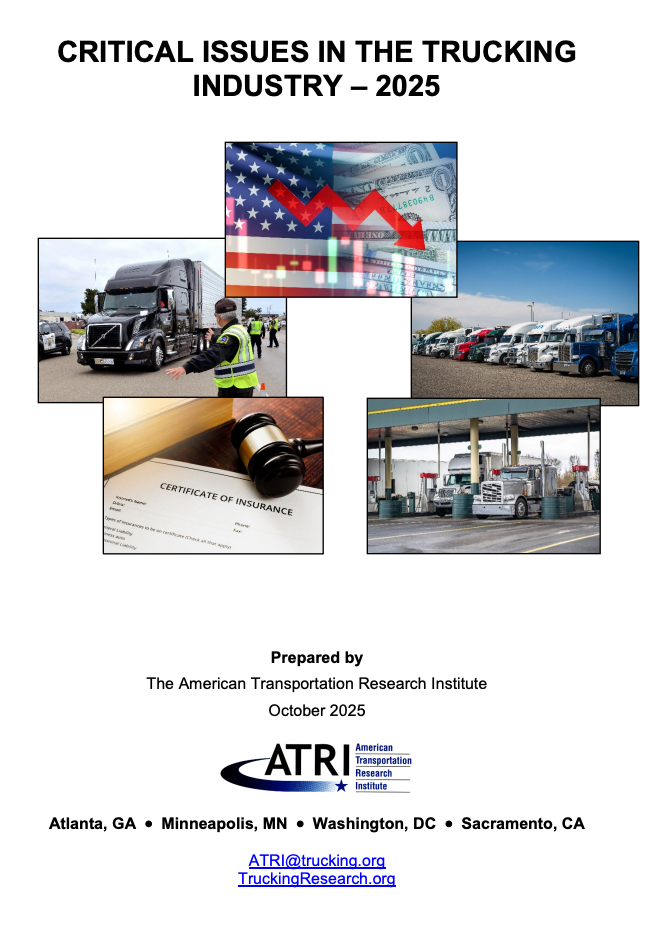
  • Truck Parking Drops to #4 on ATRI’s Top Industry Issues, But That’s No Reason to Celebrate

    Truck Parking Drops to #4 on ATRI’s Top Industry Issues, But That’s No Reason to Celebrate

    The American Transportation Research Institute just released their 2025 Critical Issues report, and truck parking landed at #4 on the overall list. This isn’t because the problem improved. It’s because other issues intensified during the ongoing freight recession.

    While truck parking dropped from #2 last year, it remains the second-biggest concern for truck drivers themselves, the people actually searching for a safe place to park every single night.

    The Economic Impact Is Staggering

    The truck parking shortage costs the industry over $100 billion annually. This isn’t just a driver inconvenience. It’s a systemic infrastructure failure that impacts supply chain efficiency, highway safety, and the cost of goods across the entire economy.

    When ATRI surveyed state DOTs, they found that 74% hadn’t acquired any land or right-of-way to expand truck parking in the past 10 years. The primary barrier? Lack of funding.

    Limited Progress on the Public Side

    Ohio and Pennsylvania are adding 1,400 and 1,200 spots respectively. This represents meaningful state-level action, but it barely makes a dent in the national shortage.

    What Truck Parking Club Is Doing About It

    While federal funding programs and state initiatives move slowly, the private sector is addressing the gap. We’re connecting drivers with property owners who have available space, turning parking scarcity into accessible solutions.

    With 3,100+ locations and 53,000+ spaces across the US, we’re building the infrastructure that government programs haven’t delivered. Every property we onboard is one less night a driver spends circling highway exits, burning fuel, and watching their available hours disappear.

    The fact that truck parking ranked #4 instead of #2 this year doesn’t mean drivers are finding parking more easily. It means they’re simultaneously dealing with concerns about compensation, legal reform, and insurance costs in a depressed freight market.

    The parking shortage remains a critical problem. We’re working to solve it.


    Download the full ATRI 2025 Critical Issues Report here

    Property owners can list their space at no cost. Drivers can find parking instantly through our app. The infrastructure gap won’t close itself, but we’re working to close it one parking space at a time.

  • Pennsylvania Adds 1,200+ Truck Parking Spaces in First Major Expansion in Decades

    Pennsylvania Adds 1,200+ Truck Parking Spaces in First Major Expansion in Decades

    State capitol capital building in Pennsylvania

    In a landmark announcement that addresses one of the trucking industry’s most pressing challenges, Pennsylvania officials have revealed plans to add 1,202 truck parking spaces across 133 locations by the end of 2026. This represents the first statewide expansion of designated truck parking in decades, marking a significant step forward in addressing the nationwide parking shortage that has plagued professional drivers.

    A Collaborative Statewide Effort

    The initiative brings together multiple Pennsylvania agencies in a coordinated approach:

    • Pennsylvania Department of Transportation (PennDOT)
    • Pennsylvania State Police (PSP)
    • Pennsylvania Turnpike Commission
    • Pennsylvania Motor Truck Association (PMTA)

    PennDOT Secretary Mike Carroll, who holds a commercial driver’s license himself, emphasized the personal understanding of the issue: “As a commercial driver’s license-holder myself, I know how important this commonsense approach is to our economy and workforce. By adding these spots – and looking at ways to add even more – we’re giving truckers many more options to safely park and meet their rest requirements.”

    Strategic Location Selection

    PennDOT’s approach focuses on maximizing impact through strategic placement:

    Designated Parking Locations Include:

    • Interstate on-ramps with no sight distance or safety concerns
    • Weigh stations used for PSP motor carrier safety enforcement
    • Various highway right-of-way locations throughout the state

    The selection process prioritized sites that could be designated quickly and cost-effectively, with PennDOT and PSP staff collaborating closely to identify optimal locations. All spots will be clearly marked with truck-parking signage installed by PennDOT.

    Pennsylvania Turnpike’s Additional Investment

    The Pennsylvania Turnpike Commission is evaluating opportunities for more than 600 additional spaces across its system, building on its existing commitment to truck parking. Over the last two decades, the PA Turnpike has invested more than $30 million to expand truck parking at numerous service plazas, including:

    • Sideling Hill
    • Lawn
    • Highspire
    • North Somerset
    • Stanton

    PA Turnpike CEO Mark Compton highlighted the system’s unique position: “Due to its role supporting regional logistical operations, the Pennsylvania Turnpike is one of the few toll roads that held – and grew – its commercial volumes from pre-pandemic levels. Systemwide, commercial traffic is 15% higher than pre-pandemic levels.”

    Enhanced Technology and Accessibility

    To complement the physical expansion, PennDOT unveiled a new “Public Truck Parking” option on www.511PA.com and the 511PA smartphone application. This digital tool will:

    • Display existing truck parking options
    • Show newly designated locations as they become available
    • Provide real-time information to drivers

    Addressing a Nationwide Crisis

    The parking expansion directly addresses findings from a 2023 study by the Pennsylvania State Transportation Advisory Committee (TAC), which recommended “repurpose select state-owned surplus properties” for truck parking. This initiative builds on PennDOT’s broader efforts, including:

    • Truck Parking Task Force establishment
    • Regional and municipal partnerships along high-priority corridors
    • Industry engagement with trucking companies and municipalities

    The Safety and Economic Impact

    Major Robert Krol, PSP bureau of patrol director, emphasized the safety benefits: “This initiative directly supports our mission to ensure motor carrier safety by reducing driver fatigue and improving the overall safety of our highways. Safe, designated parking is essential for commercial drivers, and this effort represents a significant step forward in protecting everyone who travels on Pennsylvania’s roads.”

    Rebecca Oyler, PMTA president and CEO, highlighted the broader economic context: “Truck drivers are essential to keeping our economy moving, goods on our shelves, and food in our pantries — but they need safe places to stop and rest. With only one parking space for every 11 drivers on the road, too many truckers are forced to choose between breaking hours-of-service laws or stopping in unsafe locations.”

    The National Context

    Pennsylvania’s initiative reflects the broader nationwide truck parking shortage. According to industry data, there is currently one truck parking space for every 11 trucks on the road nationwide, forcing drivers into difficult situations and potentially unsafe parking locations.

    How Truck Parking Club Complements Public Solutions

    While Pennsylvania’s public sector expansion is crucial, private solutions continue to play a vital role in addressing the parking shortage:

    For Property Owners in Pennsylvania

    Have available space near major highways or interstates?
    Learn how to list your location and start earning revenue from truck parking.

    For Truck Drivers

    Need reliable parking in Pennsylvania or anywhere else?
    Find available spots instantly at truckparkingclub.com/us/pennsylvania.

    Looking Ahead

    The implementation of this expansion represents a significant milestone in Pennsylvania’s commitment to supporting the trucking industry. As the state continues to identify additional opportunities and the PA Turnpike evaluates its 600+ potential spaces, drivers should begin to see meaningful improvements in parking availability.

    The success of this initiative will depend on:

    • Effective coordination between state agencies
    • Clear signage and accessibility of new locations
    • Ongoing evaluation and expansion opportunities
    • Partnerships between public and private sectors

    This expansion demonstrates that with proper planning, inter-agency cooperation, and industry input, even complex infrastructure challenges like truck parking can be addressed effectively at the state level.


    Read the full article: TheTrucker.com – Pennsylvania to add more than 1200 truck parking spaces; first expansion in decades

  • Converse, Texas Implements Strict New Ordinance Prohibiting Commercial Vehicle Parking in Residential Areas

    Converse, Texas Implements Strict New Ordinance Prohibiting Commercial Vehicle Parking in Residential Areas

    The City of Converse, Texas has taken decisive action to address growing concerns about commercial and oversized vehicles parking in residential areas. A new ordinance, announced by the Converse Police Department on September 18, 2025, establishes strict parking restrictions with penalties up to $500 for violations, marking a significant shift in how the city handles commercial vehicle parking.

    The New Ordinance: Comprehensive Restrictions

    The ordinance targets two specific categories of vehicles that have been causing problems in residential neighborhoods:

    Commercial Vehicles

    • Semi-trailers
    • Buses
    • Tractors
    • Delivery trucks

    Oversized Vehicles

    • Vehicles 24 feet or longer in length
    • Vehicles 8 feet or wider
    • Vehicles with trailers extending more than 7 feet

    Key Restrictions and Penalties

    The new ordinance establishes several critical restrictions:

    Private Property Restrictions

    • No parking in private driveways unless providing service to the resident (limited to 2 hours)
    • No parking in front yards or side yards except for service purposes
    • Service vehicles must not block sidewalks or extend into the street

    Public Street Restrictions

    • No parking on public streets unless actively loading/unloading or dealing with emergency repairs
    • No parking on residential streets at any time, even without posted signs
    • City can post “No Truck Park” signs on other roads if complaints arise

    Penalty Structure

    Violations can result in:

    • Fines up to $500
    • Towing and impoundment
    • Citations
    • Immediate enforcement at the owner’s expense

    Weight Limit Restrictions on Specific Streets

    The ordinance also establishes weight limits on certain roadways:

    80,000-Pound Weight Limit

    • Upper Seguin Road
    • Lower Seguin Road
    • Toepperwein Road
    • Kitty Hawk Road
    • Gibbs Sprawl Road
    • Legion Street

    20,000-Pound Weight Limit

    • Schaefer Road
    • Rocket Lane
    • Kneupper Road

    Only light trucks (pick-up trucks, panel delivery trucks, and carryall trucks under 2,000 pounds) are permitted on these restricted streets.

    Community Response: Mixed Reactions

    The ordinance has generated significant community discussion, with residents expressing both support and opposition:

    Supportive Voices

    “Finally, that U-Haul trailer will stop blocking the turn on our road!”

    “So glad to see this is finally done. No more listening to that loud idle for hours at a time, no more obstructed views causing safety issues. Residential streets just aren’t designed to handle the weight or size.”

    Concerned Property Owners

    “Wait. How does the City get to dictate what I can park in my driveway, on my property that I not only pay a mortgage on, but also pay property taxes on?”

    “When is the next town meeting? I would love the opportunity to have a vote against this policy.”

    What’s Not Affected

    The city has clarified that the ordinance does not impact:

    • Everyday vehicles such as SUVs, cars, or pickup trucks
    • Recreational vehicles (RVs) are specifically excluded from the ordinance

    The Broader Context: Texas Truck Parking Challenges

    Converse’s new ordinance reflects a growing trend across Texas communities to address truck parking issues through stricter enforcement. The state faces unique challenges due to its extensive highway network and significant commercial trucking activity.

    According to the Texas Department of Transportation, Texas has over 80,000 miles of public roads and serves as a critical corridor for interstate commerce, making truck parking management a priority for many communities.

    Implementation and Enforcement

    The Converse Police Department will be responsible for enforcing the new ordinance. The department has emphasized that violations can result in immediate enforcement, including towing and impoundment at the owner’s expense.

    How Truck Parking Club Provides Solutions

    While enforcement addresses the immediate problem, private solutions like Truck Parking Club can help provide legal parking alternatives for commercial vehicle operators:

    For Property Owners in Converse and Surrounding Areas

    Have available space that could serve truck drivers?
    Learn how to list your location and start earning revenue while helping solve the parking shortage.

    For Truck Drivers

    Need reliable parking in the San Antonio/Converse area?
    Find available spots instantly at truckparkingclub.com.

    Looking for parking near Converse specifically?
    Browse our available spaces in the San Antonio area here.

    A Model for Other Texas Communities

    Converse’s approach demonstrates how smaller Texas communities can address truck parking issues through comprehensive ordinances. The combination of:

    • Clear vehicle classifications
    • Specific weight restrictions
    • Substantial penalties for violations
    • Immediate enforcement capabilities

    Shows how local governments can take decisive action to protect residential communities while maintaining the flow of commercial traffic.

    The Path Forward

    The success of Converse’s new ordinance will depend on several factors:

    • Consistent enforcement by the Converse Police Department
    • Awareness among trucking companies about the new restrictions
    • Availability of alternative parking options for drivers
    • Ongoing community feedback to ensure the solution addresses all concerns
    • Balanced approach that protects neighborhoods while supporting commerce

    Looking Ahead

    As the ordinance takes effect, Converse residents should begin to see improvements in their neighborhoods. The key to long-term success will be:

    • Effective enforcement of the new restrictions
    • Partnerships between law enforcement, trucking companies, and local communities
    • Continued development of legitimate parking options for commercial vehicles
    • Regular review of the ordinance’s effectiveness and community impact

    This initiative represents more than just parking restrictions—it’s a commitment to maintaining the quality of life in Converse neighborhoods while ensuring that commercial trucking operations can continue safely and legally.


    Read the full article: New Converse ordinance prohibits commercial, oversized vehicles from parking in private driveways

  • Nashville Metro Council Proposes Stricter Truck Parking Regulations to Address Safety Concerns

    Nashville Metro Council Proposes Stricter Truck Parking Regulations to Address Safety Concerns

    semi trucks parked in at a truck parking facility

    Nashville’s Metro Council is taking action to address growing safety concerns from truck parking on neighborhood streets. A new ordinance proposed by Council Member Tasha Ellis would significantly tighten restrictions on commercial vehicle parking throughout the city.

    The proposal, which was deferred once for adjustments and is now on the agenda for a vote, represents Nashville’s latest effort to balance the needs of commercial vehicle operators with community safety and quality of life concerns.

    The Proposed Changes

    The ordinance would make several key changes to Nashville’s current truck parking regulations:

    • Lower weight threshold: Reduce the regulated vehicle weight from 18,000 pounds to 10,000 pounds
    • Stricter time limits: Replace the current overnight parking ban with a two-hour limit at all times of day for heavy trucks, tanker trucks, and dump trucks
    • Expanded coverage: Include box trucks, food trucks, food trailers, and semi-trailers under the new regulations

    The Safety Rationale

    Council Member Ellis emphasized that the proposal is based on community feedback and aims to address dangerous obstructions that impact both drivers and pedestrians. As she explained to WKRN News 2: “Unfortunately, right now, we have large trucks, box trucks, food trucks, food trailers, and sometimes the semi trailers that park in the right of ways, and they block lanes for traffic, and that’s just unsafe for, you know, someone to try to pass, you know, ongoing traffic to get around it.”

    The ordinance specifically supports the current requirement of keeping 12 feet of roadway clear for vehicles and emergency access, addressing concerns about blocked traffic lanes and emergency vehicle access.

    Balancing Commercial Needs with Community Safety

    While the proposed regulations are strict, Ellis noted that they still allow for essential commercial activities:

    • Loading and unloading operations remain permitted
    • Permitted food vendors can continue operating
    • The regulations focus on long-term parking rather than legitimate commercial use

    Ellis also mentioned that she has worked with residents who own trucks or trailers to develop parking solutions that work for their specific situations, suggesting a collaborative approach to implementation.

    Immediate Solutions Available

    While the Metro Council works through the regulatory process, both truckers and property owners have immediate options:

    For Truckers: Legal, safe parking is available right now in the Nashville area. Instead of risking citations and safety concerns with street parking, drivers can book confirmed truck parking spots online with instant reservations.

    For Property Owners: If you have unused space in the Nashville area – whether you’re a trucking company, storage facility, or commercial property owner – you can monetize that space while helping solve this community problem. The new regulations may actually create more opportunities for properly designated parking facilities.

    Looking Ahead

    Nashville’s approach of working with stakeholders to develop balanced regulations is commendable. The fact that the ordinance was deferred for adjustments shows the Council’s commitment to getting the details right.

    However, regulations alone won’t solve the underlying issue: the need for more designated commercial vehicle parking spaces. As Nashville continues to grow, the city will need to identify suitable locations for commercial vehicle parking and work with property owners to develop legal parking facilities.

    The success of Nashville’s new regulations will depend on effective enforcement, availability of alternative parking options, and ongoing collaboration between the city, truckers, and property owners.

    Need truck parking in Nashville?
    Book a spot instantly at truckparkingclub.com/us/tennessee/nashville.

    Own property in Nashville?
    Learn how to list your parking space at truckparkingclub.com/become-property-member.


    Source: WKRN News 2 – Metro Council to vote on truck parking restrictions