Category: Uncategorized

  • Comparing Available Truck Parking Options

    Comparing Available Truck Parking Options

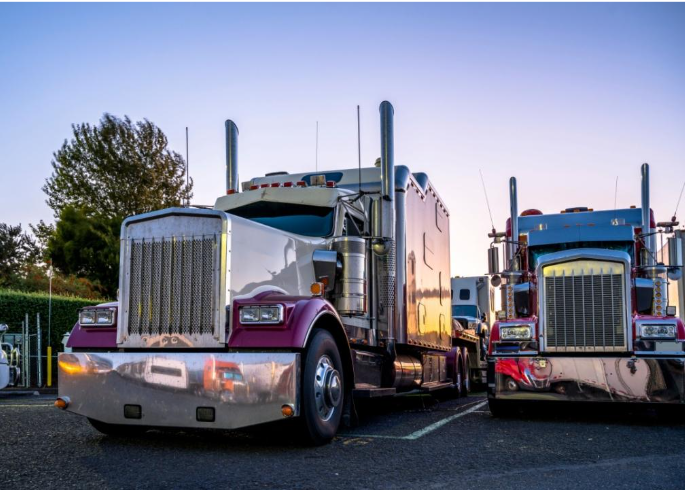
    a truck parking lot in America

    After hours on the road, the last thing any driver wants is to spend extra time endlessly circling parking lots, hunting for daily truck parking. In more recent years, the truck parking crisis has made it even harder to find truck parking.

    Despite the limited spaces, numerous parking solutions are available, from traditional truck stops to modern reservation systems. Either way, choosing the most suitable option can feel a little tiresome. 

    To that end, we’ve put together this short guide to help you find truck parking more conveniently and with as little stress as possible. From basic rest stops to the increasingly popular option of private truck parking lots, we covered it all. Let’s get to it. 

    Rest Stops

    Pull into any highway rest stop, and you’ll get the absolute basics – a spot to park without spending money. They are usually right off the main routes, which makes life a little easier when you need a quick break. Most offer bathrooms, places to grab a bite, and vending machines for those middle-of-nowhere snack cravings. 

    However, there is a caveat: come nightfall, these spots fill up incredibly fast. Plus, with spotty security at many locations and truck parking safety a growing issue, you might think twice before settling in for a long rest. While they will do the trick for a quick break, you might want to consider other options for those longer breaks.

    Truck Stops

    Love’s, Pilot, and TA are all names that will be familiar to all truck drivers who need to find truck parking. Their popularity stems from the wide-ranging amenities available, including fuel, food, showers, and repairs. Some spots even let you book parking ahead of time, which can be a real blessing when you are tired and can’t risk driving around looking for a spot to park your rig. 

    But if we are being realistic, these places can turn into parking battlegrounds, especially in busy areas. Plus while some of the aforementioned perks are free, others hit your wallet pretty hard indeed. 

    Truck Parking Lots

    When you need to find truck parking with greater security, dedicated truck parking lots are a reasonable option. With gates, cameras, and spaces big enough to maneuver without breaking a sweat, you will often spot these near industrial zones – handy when you’re hauling freight. 

    Again, the trade-off is that your wallet takes a hit with nightly or monthly fees. Plus, these spots aren’t as common as your typical truck stop, so you’ll need to plan your route with extra diligence.

    Industrial Areas and Warehouses

    Sometimes, you will spot trucks parked near warehouses or in industrial zones. Some businesses don’t usually mind, and they might even offer spots for free or cheap. While that’s perfect when you’re dropping off nearby, without proper permission, you risk a ticket or even getting towed. Security is often nonexistent, and good luck finding a bathroom at 3 AM. It’s an option but definitely not your first choice.

    Roadside Spots

    While certainly not recommended, sometimes your only option is to park on the shoulder. It costs nothing, but the risks add up extremely quickly. You are basically advertising your presence to every passing vehicle, often in spots with zero lighting. Many areas ban it outright, so you could wake up to a ticket or find your rig has been towed. There are no amenities, either. Save this one for genuine emergencies only. As for parking on highway ramps, avoid them at all costs. It simply isn’t worth the risk these days.  

    Monthly Parking

    For regular routes, monthly spots at truck parking lots make sense. You’re paying for peace of mind, including gated access, security watching your back, and a guaranteed spot waiting for you. That means no more circling busy parking lots like a vulture, praying for a spot to open up. The monthly fees stack up, but if you are running the same lanes often, the costs are not too bad (though far from ideal).

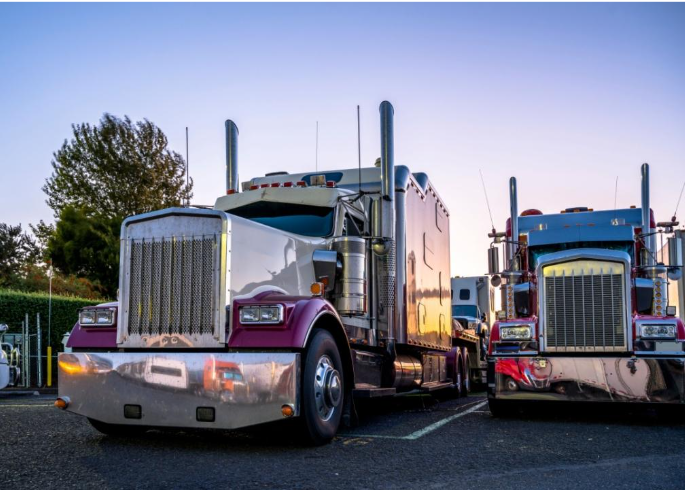
    a truck parking lot with several trailers parked in a row

    Private Truck Parking Lots

    If you are looking to find truck parking without the usual hassles, private parking is a solid option with many benefits. It seems to have caught on lately, with private property owners, sometimes referred to as property members, listing their spots through apps and websites. Instead of gambling with packed truck stops or sketchy roadside parking, you can book spots in advance.

    Platforms such as Truck Parking Club let you browse and book secure spots nationwide in real-time. You can book immediate parking or reserve weeks in advance. It definitely beats hoping you will luck into a space at the end of a long haul.

    Bottom Line

    Your perfect parking spot depends on what matters most to you. If you prefer to keep things cheap, rest stops or industrial zones might work. If you need better security, you can opt for dedicated truck parking lots or private spots through booking platforms. Just remember, a little planning goes a long way in keeping your rig safe and your mind at ease.

    Need to find truck parking? Browse our available truck parking spaces and lock in your reservation now!

    The information published herein is for general informational purposes only. Truck Parking Club does not make any representations or warranties about the completeness, reliability, legality, and accuracy of this information. Any reliance placed on such material is strictly at the user’s own risk. Truck Parking Club shall not be responsible for any losses or damages incurred in connection with the information published herein.
  • Federal mandates meant to make trucking safer, so why have fatal truck accidents increased?

    Federal mandates meant to make trucking safer, so why have fatal truck accidents increased?

    Canva

    PARK YOUR TRAILER WITH NO HASSLE

    Store your trailer in a safe place with a state-of-the-art platform that locates trailer parking near me.

    Federal mandates meant to make trucking safer, so why have fatal truck accidents increased?

    Semis, big-rigs, or tractor-trailers—whatever you call them—are ubiquitous on American roadways and are the most common means of transport for goods in the country.

    But 18-wheelers can contribute to dangerous situations. Rushed drivers, cramped roadways, a lack of parking, and large blindspots lead to accidents and fatalities.

    Federal Motor Carrier Safety Administration laws have been in place since the 1930s, and state truckers should not drive more than 11 hours in a 14-hour period. Legislators at the time reasoned that a well-rested driver was a safe driver. However, until 2018, drivers used paper logs they filled out by hand to track their hours. This practice allowed numerous drivers to fudge their records, Alex Scott, an assistant professor of supply chain management at the University of Tennessee, Knoxville, told FreightWaves.

    Say a driver is only 30 minutes from home; they may decide to push on through the night despite being technically over the legal “hours of service.” In addition, some owner-operators face the decision of either obeying the law to the tee or delivering their goods late, which could create a cascading effect on the rest of the week’s delivery and jeopardize their client’s business, logistics industry reporter Rachel Premack explained in a FreightWaves interview.

    In those cases, drivers simply jotted down hours permitted under the law to keep federal inspectors happy.

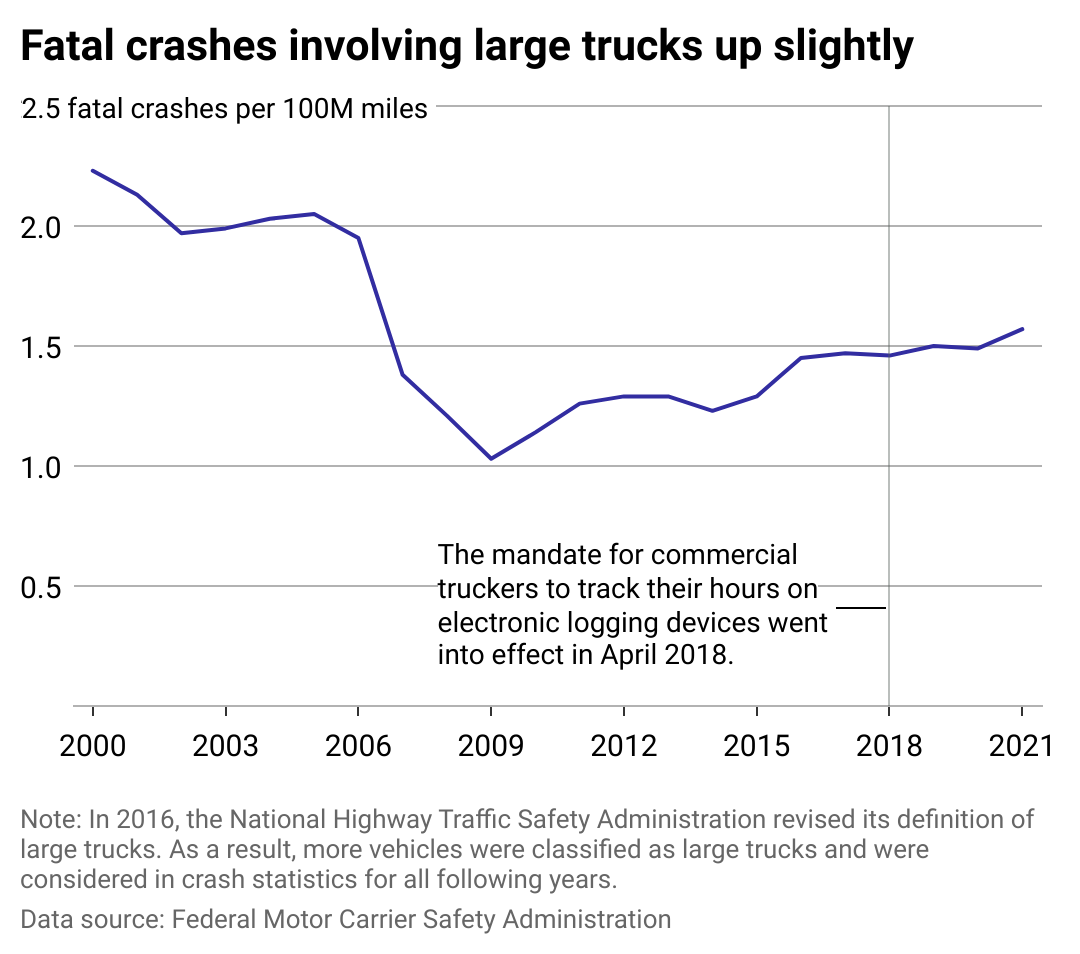
    In 2018, federal mandates requiring commercial truckers to track their working hours on electronic logging devices in their cabs went into effect. The mandates aimed to reduce accidents and fatalities, and the auto-tracking ultimately meant drivers could no longer skirt the law.

    However, enforcing ELDs may have backfired as fatalities have ticked up slightly since 2018.

    To assess whether the ELD rule has had its intended impact, Truck Parking Club visualized data from the Federal Motor Carrier Safety Administration to see how rates of fatal truck accidents have changed since it went into effect. The analysis also examines other factors affecting truck safety and the inherent complications in measuring the success of individual policies.

    A line chart titled, fatal crashes involving large trucks upticks slightly, showing the rate of fatal crashes involving large trucks from 2000 to 2021.

    FIND DAILY, WEEKLY, AND MONTHLY TRUCK PARKING

    On the road and looking for a daily truck parking space? Operated by truckers, we source the best parking spots across the nation to ease your trip planning.

    Truck-involved fatal crashes up slightly since ELD mandate

    Following the enforcement of ELDs on April 1, 2018, federal data shows a decrease in hours of service citations but an increase in accidents for solo drivers or carriers with up to six trucks. For larger companies with more trucks, citations for exceeding the hour limit remained roughly the same, but accidents initially spiked before rising and falling over the following months.

    There are a few explanations for this disparity. According to a 2019 report in the S&P Global Market Intelligence Research Paper Series, larger companies were more likely to have implemented ELDs ahead of the mandate—and they had a chance to adapt to the new monitoring technology, while owner-operators and smaller carriers had a steeper learning curve.

    Smaller companies also had more skin in the game. With fewer drivers to substitute when they reach a time limit, drivers for smaller companies may take a larger hit for a missed delivery. The ELDs force them to obey hour-of-service limitations. Drivers may, in turn, drive more dangerously by speeding or rapidly changing lanes to dodge traffic.

    Remember, drivers are compensated per mile, not hours in the cab; a fast truck is a profitable truck.

    “Workers may compensate for this lost income by driving more intensively, namely, covering more miles per hour,” according to the authors of the paper. “Unfortunately, this may also incentivize an increase in unsafe driving behavior, which is more tightly correlated to accident rates than hours of service violations.”

    The researchers cited an increase in unsafe driving violations by owner-operators, which increased between 23% and 33%, and speeding violations, which increased between 23% and 31%, following the mandate.

    Other aggravating factors include truck drivers not being paid overtime and going unpaid any time the truck isn’t moving toward its end goal, including during fuel and meal breaks, driving miles out of the way to look for parking, which is in scarce supply, and during the lengthy “detention” time when they are waiting to unload their goods.

    Additionally, the industry faces a labor shortage, with high attrition among its ranks. According to the Department of Transportation, truck driver turnover rates exceed 90% for large, long-haul carriers and 72% for smaller carriers. That means many in the workforce are new to driving a semi-truck, and a 2020 study by Virginia Tech Transportation Institute shows that inexperienced drivers are more likely to be involved in an accident.

    All these factors may have contributed to slightly more fatalities despite regulators’ best intentions.

    PREVIOUSLY INACCESSIBLE TRUCK PARKING

    Take care of your truck and trailer parking needs with new locations added daily. 

    Story editing by Mary Reardon. Additional editing by Kelly Glass. Copy editing by Kristen Wegrzyn.

    Written by: Cassidy Grom, Data Work By Paxtyn Merten

  • Is the solution to the truck parking shortage as simple as an app?

    Is the solution to the truck parking shortage as simple as an app?

    Vitpho // Shutterstock

    PARK YOUR TRAILER WITH NO HASSLE

    Store your trailer in a safe place with a state-of-the-art platform that locates trailer parking near me.

    With trucks carrying more than 70% of America’s freight by weight, they’re an essential part of the nation’s transportation of goods. The long-haul drivers behind the wheel, who are responsible for getting those goods from point A to point B, are also essential. They often have grueling routes that require them to sleep in their cabs while driving cross-country—if, that is, they can find a place to park.

    Confronted with strict work and rest hours regulations, many truckers, unable to find safe parking, resort to parking on the side of highways. Those who choose not to do so are forced to continue driving with the risk of fatigue and drowsiness-related accidents.

    The nation’s truck parking shortage has become a severe problem, with 98% of drivers reporting difficulty in finding safe parking spots, according to the Department of Transportation. But truck parking isn’t just an industry issue. Providing ample parking for truck drivers can ease congestion, improve safety for all motorists, and help communities comply with zoning ordinances as e-commerce and the transportation of goods becomes an increasingly important part of the economy.

    To help tackle parking challenges for truck drivers, Truck Parking Club compiled examples of technology solutions for safe semitruck parking in the United States.

    Awareness of the shortage of truck parking was raised in 2012 by “Jason’s Law”, enacted and named in honor of a driver who was murdered while spending the night at an abandoned gas station. The law prompted a national survey and assessment for truck parking while expanding federal funding potentially devoted to truck parking. Parking issues still persist—but high-tech solutions are on the horizon.

    So far, industry leaders and state transportation departments have proposed innovative solutions. Adding parking spots along busy trucking corridors such as I-90, taking advantage of existing parking infrastructure that isn’t being utilized 24/7, and using vacant land along mountain passes for truck parking are among some of the current proposals from the Washington State DOT.

    A trucker consults his smartphone inside his truck.
    Hakase 420 // Shutterstock

    FIND DAILY TRUCK PARKING IN NEARLY EVERY STATE

    On the road and looking for a daily truck parking space? Find the closest daily parking spot in a

    matter of seconds.

    Technology presents real-time solutions for truckers

    Both federal and state governments are offering grants to help researchers develop solutions for truck parking shortages. These initiatives are often driven by new technology and data-driven insights, giving commercial truck drivers greater visibility into available parking spots.

    Researchers at the University of Connecticut’s Transportation Safety Research Center are developing an app to help truckers find a spot for their vehicles while they rest. The project is backed by a $1.46 million federal grant. If successful, this app could significantly reduce the number of truckers parking in unsafe conditions along the shoulder and on highway entrance and exit ramps, improving safety for all motorists.

    Researchers hope the application will offer users real-time information on the availability of commercial vehicle parking through data gathered from in-ground and infrared sensors, video cameras, radar, and laser scanners.

    The National Center for Sustainable Transportation at the University of California, Davis, under a DOT grant, has been working on a series of algorithms that will aid trucking industry planners with planning trips to better ensure that truck drivers are more evenly distributed across available rest areas, alleviating competition for parking.

    The algorithms operate as a coordinating system, allowing planners to proceed with their choice of parking spots should supply meet demand. Should supply not meet demand, the system would use dynamic pricing to incentivize planners to opt for other low-priced parking spots, easing demand for popular parking spots and encouraging better planning.

    The system relies on on-demand information from industry planners and parking availability information from parking spot managers to function.

    The Center for Transportation Studies at the University of Minnesota has developed a comprehensive multiview camera-based system for assessing truck parking availability 24/7. The nonintrusive detection system is complemented by a notification infrastructure that notifies parking facility managers and other stakeholders of traffic upstream, with a reported accuracy of more than 90%. Drivers are notified of parking availability down the routes they’re traveling.

    As part of the Bipartisan Infrastructure Law, the Biden administration announced in 2023 the earmarking of $80 million in grant awards toward research to mitigate issues caused by truck parking shortages.

    While technology-based solutions can bridge information gaps between supply and demand, they only ease the symptoms of the problem—a lack of available parking spots in areas with high truck parking demand (such as the Northeast). Industry officials and regulators must also push for supply-side changes to finance the construction of more parking facilities.

    PREVIOUSLY INACCESSIBLE TRUCK PARKING

    Take care of your truck and trailer parking needs with new locations added daily. 

    Story editing by Alizah Salario. Additional editing by Kelly Glass. Copy editing by Tim Bruns.

    Written by Andrew Jose

  • Trucker Member Interview

    Trucker Member Interview

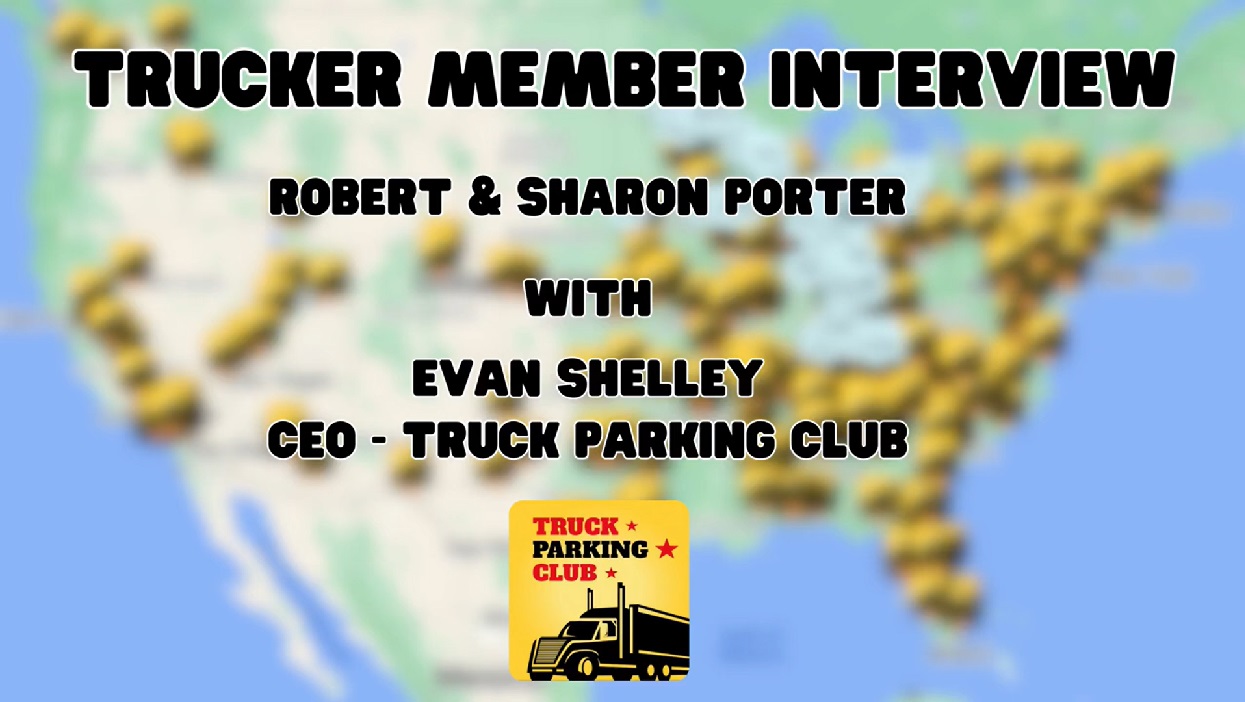
    In today’s episode of our Truck Parking Club Interview series, Evan sits down with Robert and Sharon Porter, a trucking power couple who have been in the trucking industry for 40 years combined! The conversation focuses on their experiences with Truck Parking Club, its benefits, and potential improvements.

    What’s Today’s Episode About?

    In the third episode of our Interview Series, Evan, Robert, and Sharon talk about:

    • The origins of Truck Parking Club and the role it plays in helping truckers find reliable parking.
    • The Truck Parking Club offers exceptional customer support, and the company’s approach to customer service ensures that customers have the best experience. 
    • Robert and Sharon share some of their suggestions for the app, such as Google Earth integration, adding nearby amenities like restaurants and showers, and possibly incorporating a routing feature within the app.
    • Robert and Sharon also mention the potential benefits of including shuttle services and partnerships with food trucks for additional convenience.
    • Evan, Robert, and Sharon discuss the possibility of adding free parking locations to the app, with a focus on setting clear guidelines to prevent misuse. 
    • Evan shares plans for integrating more free parking locations and user-updated availability.

    BECOME A TRUCKER MEMBER TODAY

  • A closer look at how heavy electric trucks are gaining a foothold in the US transportation industry—and how we got here

    A closer look at how heavy electric trucks are gaining a foothold in the US transportation industry—and how we got here

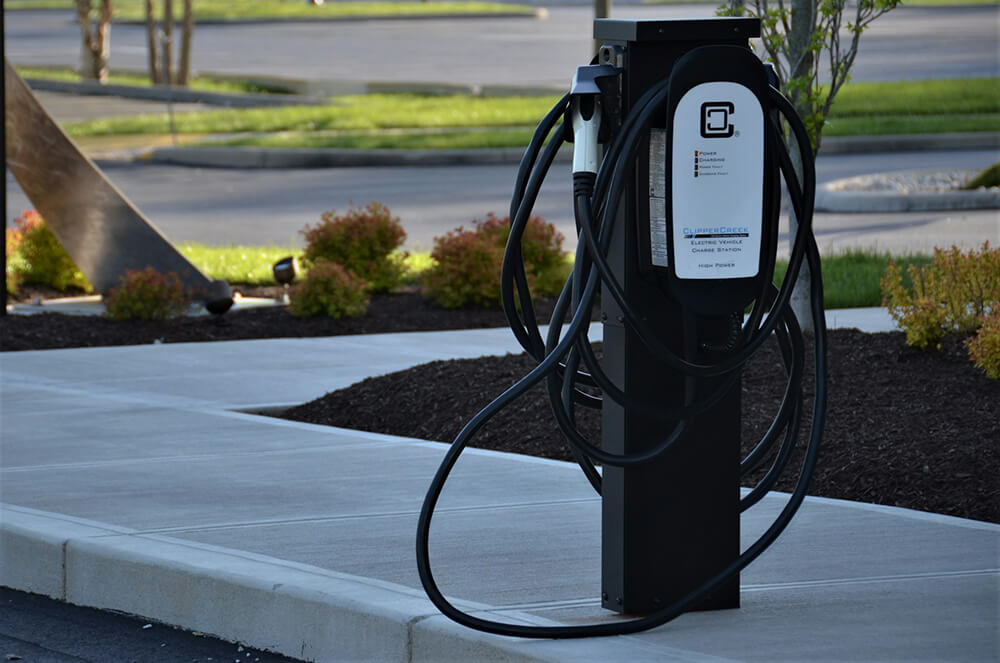
    electric charging station
    electric charging station
    Scharfsinn // Shutterstock

    FIND DAILY TRUCK PARKING IN NEARLY EVERY STATE

    On the road and looking for a daily truck parking space? Find the closest daily parking spot in a matter of seconds.

    A closer look at how heavy electric trucks are gaining a foothold in the US transportation industry—and how we got here

    As cities worldwide implement zero-emission zones for freight, transportation businesses and local authorities have increasingly looked for ways to electrify heavy-duty vehicles.

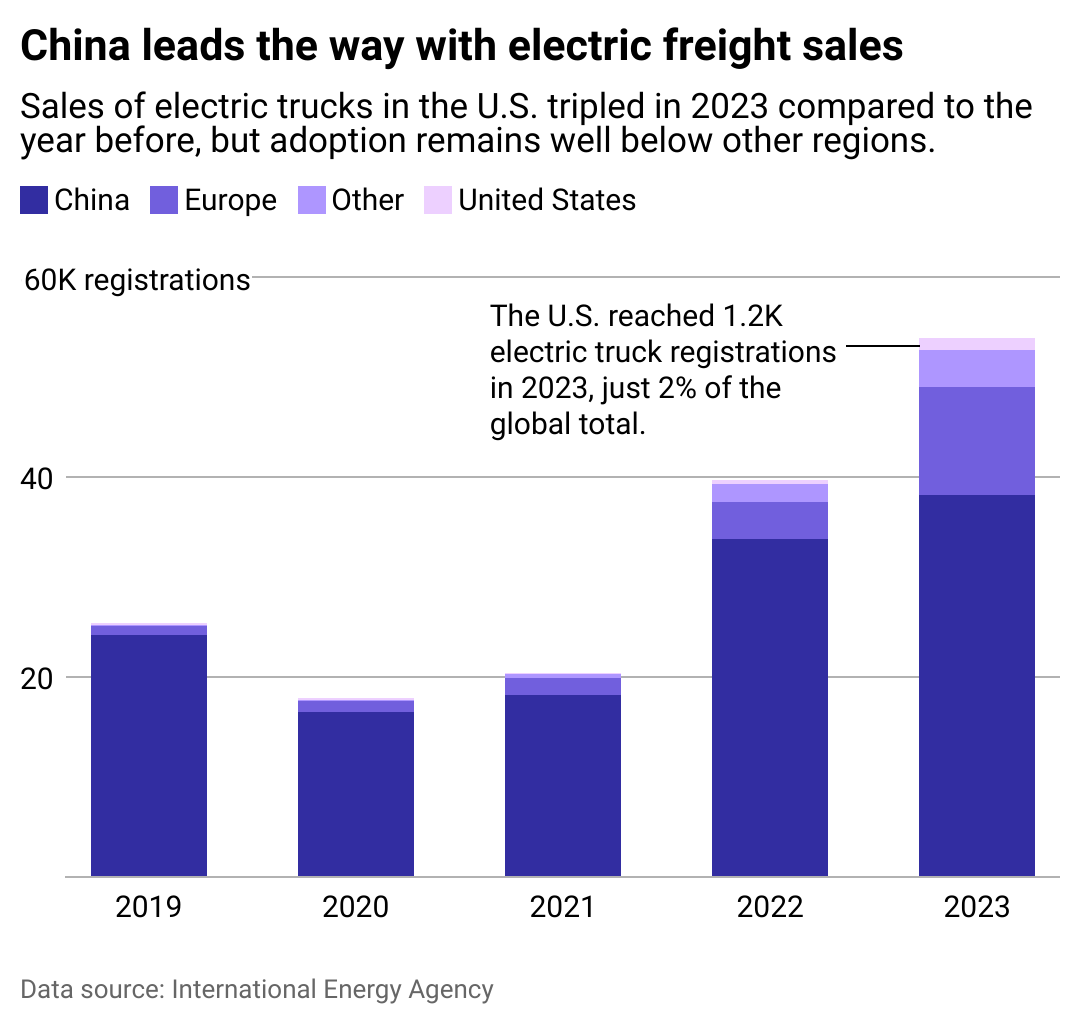
    Global sales of heavy-duty electric trucks between 2022-2023 climbed by more than one-third, according to the International Energy Agency. The United States occupied just 0.1% of the 54,000 total reported global sales in 2022. Truck Parking Club looked at the growing adoption of heavy electric trucks in the U.S. and compared that growth with other countries embracing medium- and heavy-duty electric freight trucks. Historical data comes from the International Energy Agency

    Heavy-electric truck adoption in the U.S. is growing, albeit slowly. Charging infrastructure rollout is lagging, truck-model recalls slowed market launches, and two battery makers—Romeo Power and Proterra—liquidated assets and entered Chapter 11 bankruptcy, respectively. 

    China leads the electric truck market, comprising 70% of 2023 sales worldwide, according to the IEA, marking a sharp decrease from the 85% it occupied in 2022. European Union countries saw a significant increase in electric truck purchases, tripling sales in just a year. Growth was similar in the United States, although total sales lagged behind at 1,200.

    In the U.S., the electric trucking industry didn’t begin to really catch on until 2019, when German-based manufacturer Daimler shipped its electric Freightliner semi-truck. In 2022, smaller delivery trucks manufactured by EV startup Rivian began hitting the pavement as part of Amazon’s fleet. 

    That same year, Tesla launched the first electric Class 8 semi-truck outside of its warehouse in Sparks, Nevada, giving the U.S. a stake in the global market. The futuristic Tesla Semi promised a longer range, safer braking, and a better driving experience. By 2023, other manufacturers followed suit with their own hulking Class 8 electric semis, including Volvo’s VNR Electric. 

    Electric trucks are still relatively uncommon on the road. As of January 2024, of a fleet of 12.2 million trucks, just 13,000 were electric, according to the Environmental Defense Fund analysis. That analysis defined these trucks as Class 2B to Class 8 vehicles, ranging from step-up vans to tractor-trailers.

    Tesla and Daimler will remain industry leaders in 2024 as electric trucks continue to gain momentum, notably because of their cost-effectiveness compared to diesel trucks. The lower cost of electricity compared to fossil fuels, stable electricity rates, and simpler drivetrains or transmission systems all contribute to the price difference. Additionally, electric trucks designed with batteries and motors at the bottom provide a lower center of gravity, enhancing stability and reducing rollover risk, according to EESI. 

    Electric trucks are not without their disadvantages, however. High initial costs and uneven charging infrastructure raise significant questions about the long-term payoff of the investment.

    Even as battery technology for electric trucks continues to evolve, manufacturers will face formidable challenges on the path to widespread adoption. 

    Despite the potential to increase the range of electric trucks by 30%, the large size and hefty weight of Daimler Trucks’ lithium iron phosphate batteries—plus their lower energy density and poor performance in extreme temperatures—make them less than ideal for cross-country treks in varied conditions. Nissan projects exclusive use of lighter-density solid-state batteries by 2028; but drawbacks remain, including the high price of lithium, a lack of viable recycling options, and the risks of lithium electrodes shorting out as batteries age. 

    The push for greener freight remains strong despite obstacles. Organizations in the U.S.—notably the North American Council for Freight Efficiency and the Rocky Mountain Institute—are working to identify elements of the trucking industry that could be electrified by conducting trials. So far, they’ve deployed nearly 300 electric trucks of different sizes to collect data on their performance and challenges in the market.  

    Proponents of the technology argue that electric HDVs emit significantly lower greenhouse gases than their conventional counterparts, making them a powerful tool in the fight against climate change. The potential public health benefits would be worth hundreds of billions of dollars, according to the Environmental and Energy Study Institute

    A bar chart showing how China leads the way with electric freight sales compared to other countries, including European countries and the U.S. The U.S. reached 1,200 electric truck registrations in 2023, just 2% of the global total.

    PARK YOUR TRAILER WITH NO HASSLE

    Store your trailer in a safe place with a state-of-the-art platform that locates trailer parking near me.

    How the rest of the world is investing in EV technology

    As a manufacturer of goods exported worldwide, China dominates the electric truck market in part due to its large customer base and high demand for such vehicles. 

    This is particularly the case in light of recent Chinese government policymaking, which zeroes in on commercial vehicles like freight trucks as part of the country’s overall electrification strategy, according to the International Council on Clean Transportation.

    China has aimed to incentivize greater electric truck use by supporting battery-swapping technology. At charging stations, drivers can replace their battery with a fully charged one in minutes rather than waiting up to several hours to charge their vehicle. 

    Roughly half of electric trucks in China had swappable batteries in 2020, according to the council. Technologies such as battery-swapping significantly alleviate range anxiety—a barrier to electrifying—by delivering an experience similar to fueling at a gas station. 

    European regulators have also attempted to nudge the HDV industry toward electrification through strict regulations. In April 2024, the European Parliament overwhelmingly voted to require CO2 emissions from large trucks and buses to be slashed incrementally from 2030, reaching a 90% reduction in emissions by 2040. Europe is home to many electric vehicle manufacturers, and these regulations could bring similar changes to other jurisdictions where European-built HDVs are sold.

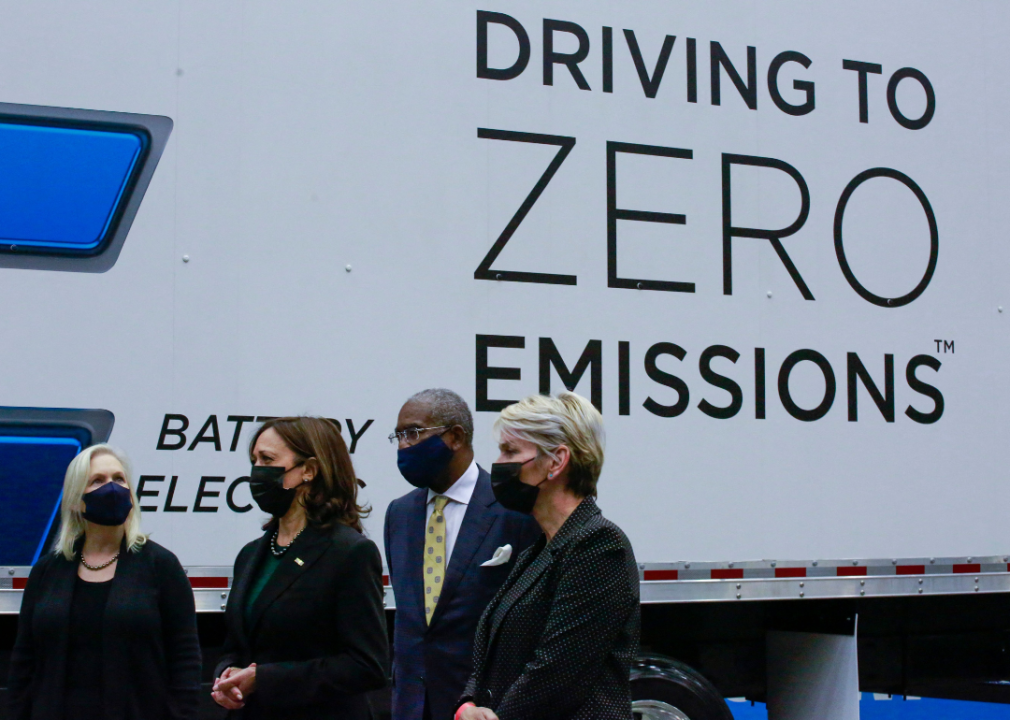
    Senator Kirsten Gillibrand, Vice President Kamala Harris, Representative Gregory Meeks, and Secretary of Energy Jennifer Granholm, standing next to a heavy-duty electric truck with the words, driving to zero emissions.
    KENA BETANCUR/AFP // Getty Images

    How the US is investing in electric freight adoption

    HDVs aren’t the only mode of transportation undergoing electrification. Under the Biden administration, the U.S. is promoting EV freight adoption through the National Zero-Emission Freight Corridor Strategy. This long-term plan aims to broaden the zero-emission vehicle charging and hydrogen fueling infrastructure along approximately 12,000 miles of major freight routes nationwide. 

    At the state level, at least 17 states and Washington D.C. agreed to an action plan to work toward 100% electric medium and heavy-duty vehicle sales by 2050. The Joint Office of Energy and Transportation and the Department of Energy developed the strategy with the Department of Transportation and the Environmental Protection Agency.

    Disparities in charging infrastructure in rural areas remain a significant barrier to electrification. Another common concern in the passenger vehicle market is charging time, which could impact truckers operating on tight schedules. This, however, can be mitigated by improving charging technology and exploring the use of China’s battery swap technology in the American market. 

    PREVIOUSLY INACCESSIBLE TRUCK PARKING

    Take care of your truck and trailer parking needs with new locations added daily. 

    Story editing and additional writing by Alizah Salario. Copy editing by Kristen Wegrzyn.

    Written by: Andrew Jose

  • Trucker Member Interview (Episode 1)

    Trucker Member Interview (Episode 1)

    In our first episode of the Interview series, the Truck Parking Club owner, Evan Shelley, meets with Mitchel Hopper, our long-time trucker member, to discuss the Truck Parking Club app.

    What’s This Episode About

    In this episode, Evan and Mitchell discuss:

    • How Mitchell found out about Truck Parking Club (TikTok);
    • What has been Mitchell’s experience with the app so far, and whether he has encountered any issues using the app;
    • What Mitchell likes about the app and whether he thinks there are more features it could include to improve it;
    • Truck Parking Club’s strategy toward top-quality service;
    • How Truck Parking Club has grown over the years, adding more spaces and its efforts to expand to major cities to provide more parking options for truckers;
    • Truck Parking Club’s values and commitment to providing the best possible experience for its members.

    BECOME A TRUCKER MEMBER TODAY

  • Property Member Interview

    Property Member Interview

    In the second episode of Property Member Interview, Evan sits down with one of Truck Parking Club property members, Erdin Zukic, to discuss how our app has helped his truck parking business grow. 

    What’s Today’s Episode About

    In this episode of Property Member Interview, Evan and Erdin talk about:

    • How Truck Parking Club has helped Erdin increase his sales. 
    • Erdin’s experience with the app and his ideas on how it can be improved. Evan also provides some insights into recent updates, emphasising Truck Parking Club’s emphasis on continuous improvement. 
    • Evan’s plan to continuously expand locations available through the app and how Truck Parking Club has already received incredibly positive feedback from the trucking community. 
    • How Truck Parking Club enhances Erdin’s marketing efforts as guys discuss the effectiveness of organic content creation over paid advertisements in driving engagement and business growth.
    • Social media marketing and its effectiveness in promoting your brand. 
    • The potential for future collaborations and feedback exchanges. 

    BECOME A PROPERTY MEMBER TODAY