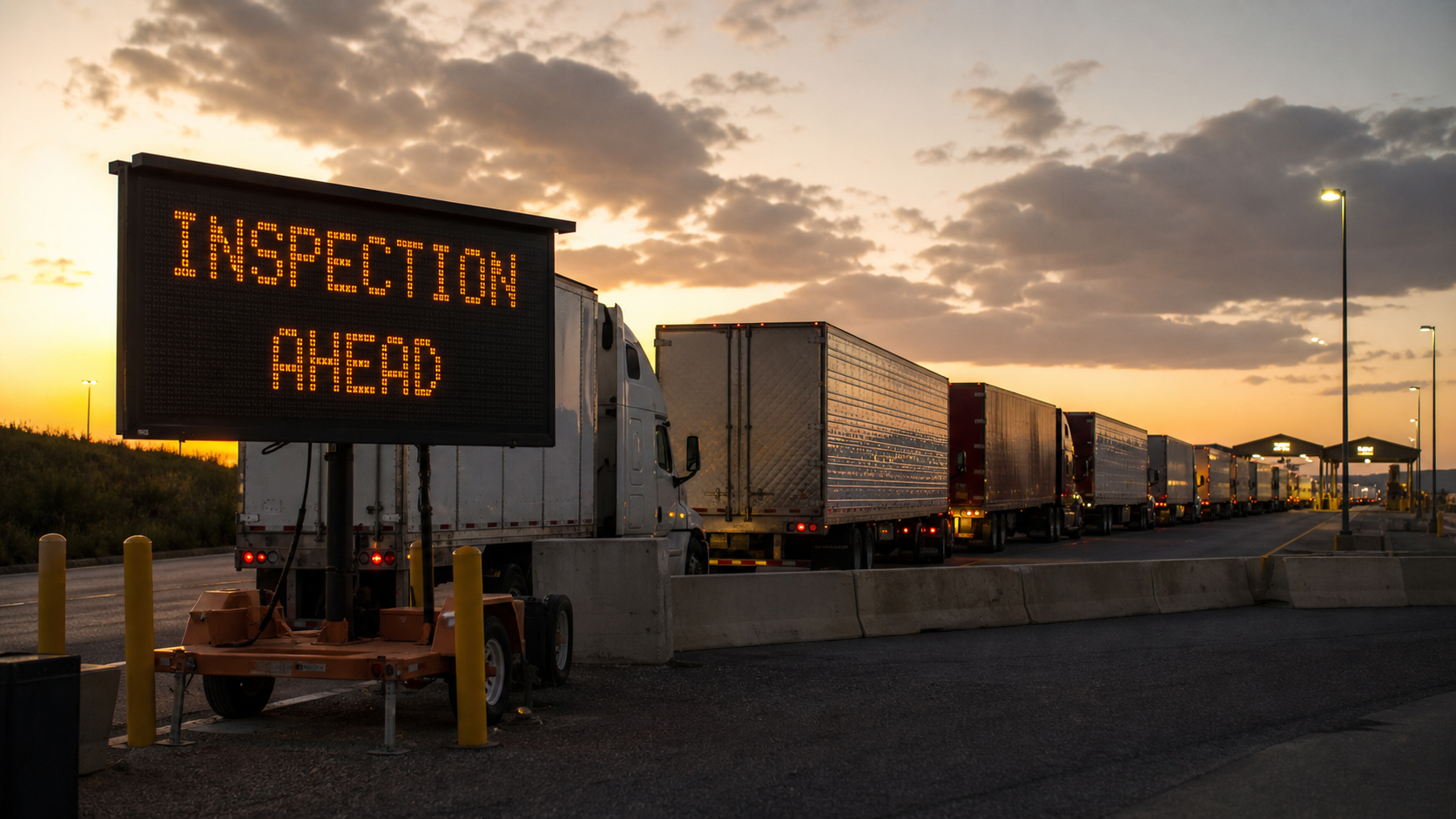
The Commercial Vehicle Safety Alliance announced that this year’s International Roadcheck will run May 12 through 14, a 72-hour enforcement push across the United States, Canada, and Mexico. Known across the industry as Blitz Week, it is the largest targeted commercial vehicle enforcement program in the world.
During the 72-hour window, CVSA-certified inspectors at weigh stations, permanent inspection sites, and temporary pop-up locations will primarily run the North American Standard Level I Inspection. That’s a 37-step procedure covering both the driver and the vehicle. On average, nearly 15 commercial vehicles are inspected every minute across North America during Roadcheck. Since the program launched in 1988, more than 1.8 million inspections have been logged.
Each year CVSA highlights one driver violation category and one vehicle violation category. For 2026, the driver focus is ELD tampering, falsification, or manipulation. Inspectors will be reviewing records of duty status with closer attention than usual, looking for false entries, manipulated logs, edits without proper notation, and anything that suggests driving time was concealed. They can review up to eight days of logs, and drivers using a revoked ELD will be placed out of service. Last year, falsification of record of duty status was the second most-cited driver violation, with over 58,000 violations issued.
The 2026 vehicle focus is cargo securement. Improperly secured cargo is a major roadway hazard, and CVSA is putting it under the microscope this year. In 2025, more than 18,000 violations were issued for cargo not being secured to prevent leaking, spilling, blowing, or falling, and another 16,000+ for vehicle components or dunnage not being secured. Inspectors will check that cargo is contained, immobilized, and secured. The general rule: your securement system needs to meet at least half the total weight of the load in working load limit. That applies to flatbeds, but also to dry vans, tankers, and equipment hauls.
Whatever your plan is for next week, plan ahead. Inspections take time. Even a clean Level I can eat an hour or more of your clock, and stacked across three days the HOS math gets tight fast. Wait times at scales spike. Out-of-service violations carry downstream costs beyond the immediate downtime, affecting CSA scores and insurance. And parking demand spikes across major freight corridors as drivers and small fleets adjust their schedules around the 72-hour window.
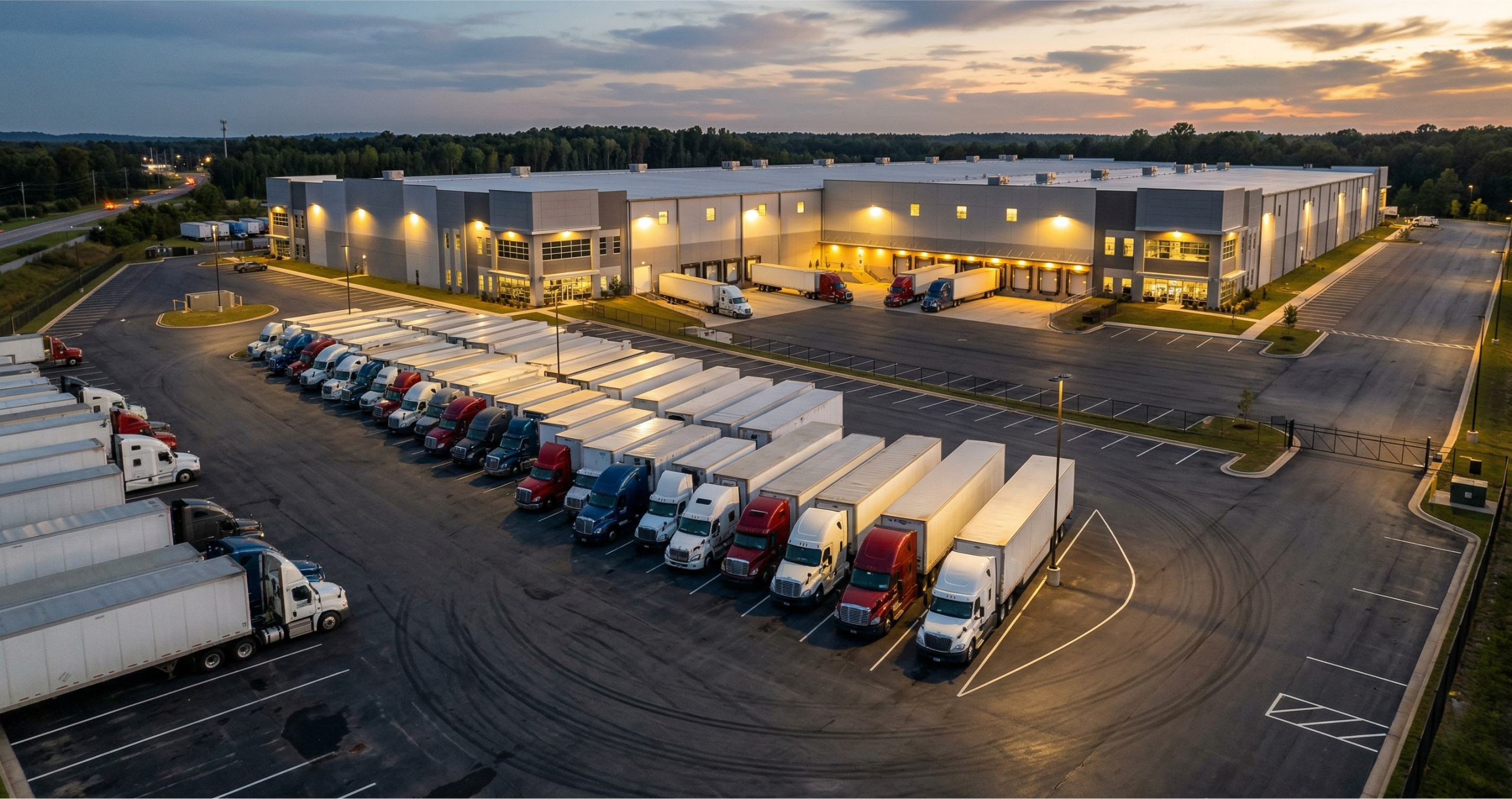
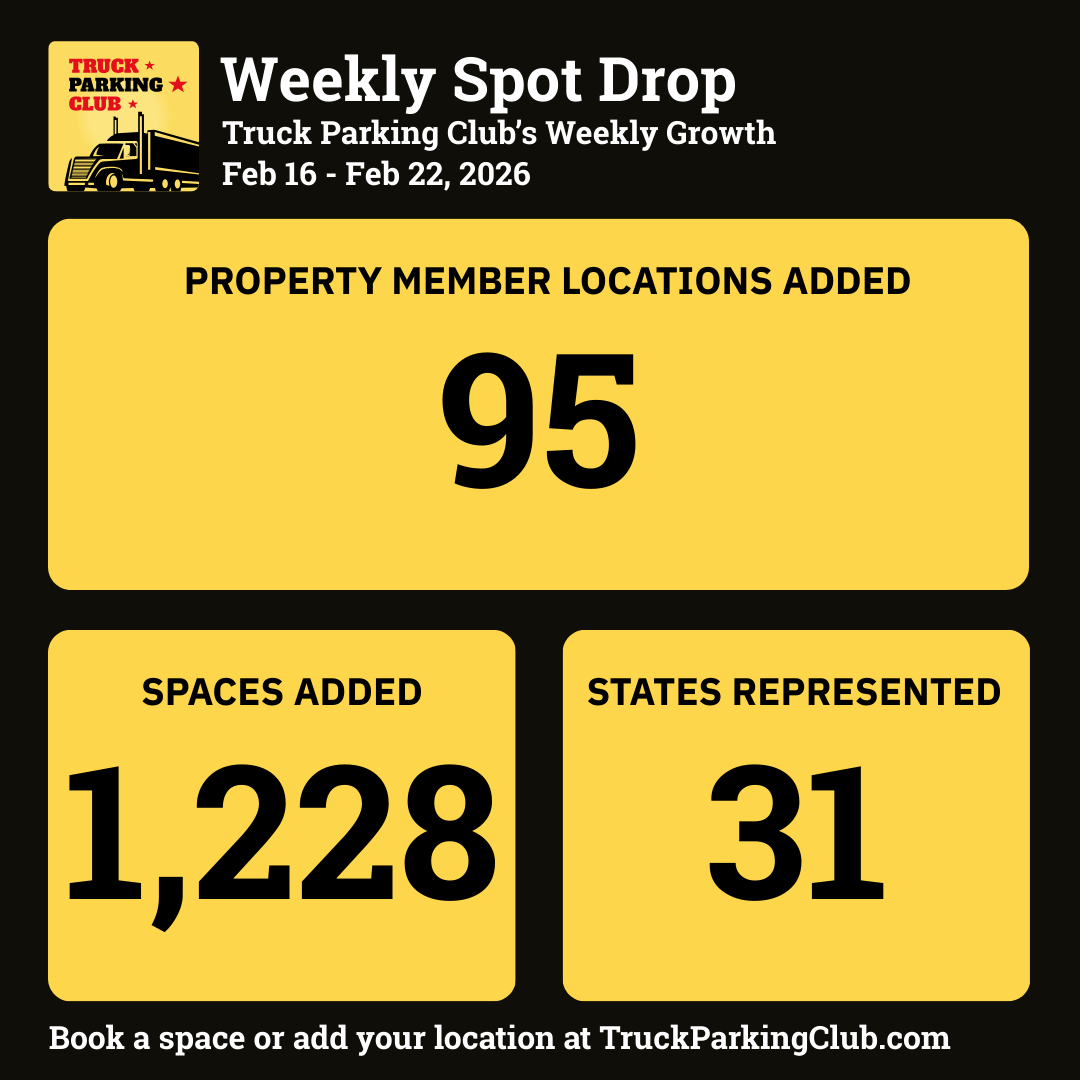
Whether you’re running through it, parking it out, or want a backup spot in case you get pulled in for a long inspection, parking should be part of the plan. Truck Parking Club has 82,000+ spaces across 5,200+ locations in 49 states, with hourly, daily, weekly, and monthly bookings reservable in seconds. Code blitz26 takes $20 off any booking through May 17.
Blitz Week is 72 hours, but the issues inspectors are focused on get enforced every day of the year. The smart play isn’t to prepare for Blitz Week, it’s to operate Blitz-ready year-round. For the next three days, just expect the volume and the stakes to be higher than usual.
Plan your routes, plan your hours, and plan your parking.
America has a truck parking problem. Drivers need 2.4 million parking spots for federally mandated rest breaks every day. There are only 697,000 available. That 1.7 million space gap costs the trucking industry $100 billion a year in wasted fuel, lost productivity, and supply chain disruption.
But here’s what most people miss: this isn’t a capacity problem. There are over 23 million parking spaces across the country that could accommodate a commercial truck. 98% of them sit on private property, closed off to the drivers who need them most.
The solution isn’t building more truck stops. It’s unlocking the spaces that already exist. And the single best place to start? Warehouses.
Drivers Want to Park Where They Pick Up and Deliver
Every driver knows the routine. You pick up a load at a warehouse, drive it across the state or across the country, and deliver it to another warehouse. The shipper and receiver are almost always operating out of warehouse and distribution facilities.
Drivers want to park as close to those locations as possible. If they’re picking up a load at 6 AM, they want to be parked nearby the night before, not 30 miles away at a truck stop hoping their alarm gets them there on time. If they deliver early and have hours left on their clock, they want to shut down close to where they just dropped, not burn fuel and HOS hours hunting for a spot.
That’s why parking at or near warehouses isn’t just convenient. It’s operationally optimal. It eliminates the single biggest source of wasted time and money in a driver’s day.
The Positioning Advantage
Warehouses sit where the freight is. Some are the shippers and receivers themselves, with drivers coming directly to their docks every day. Others are in the same industrial parks, logistics corridors, and distribution zones where that freight activity is concentrated.
Either way, a warehouse that lists truck parking has a massive positioning advantage. Drivers picking up or delivering nearby don’t want to park 30 miles away at a truck stop. They want to park where they already are. A warehouse with available spaces in a logistics district instantly becomes the most desirable parking option for every driver operating within a few miles.
These properties are already built for truck traffic. The roads handle 80,000-pound vehicles. The lots are paved or graveled for heavy equipment. The turning radii accommodate 53-foot trailers. New dedicated truck parking construction runs $100,000 to $200,000 per space and takes years to build. Warehouses skip all of that. Just existing space, put to productive use.
Hundreds of Warehouses Already List With Truck Parking Club
This isn’t theoretical. Hundreds of warehouse operators across the country already list parking with Truck Parking Club. Some list a single extra dock door or a strip of unused yard space. Others list hundreds of spaces across multiple facilities. There’s no minimum size requirement. If you have room for one truck, that’s enough to get started.
The Revenue Opportunity for Warehouse Owners
Empty yard space earns nothing. Every night it sits unused is revenue that’s gone forever. You can’t sell last night’s parking the way you can’t sell yesterday’s hotel room.
Warehouse owners who list with Truck Parking Club turn dead space into a consistent revenue stream with zero upfront cost, no long-term contracts, and no operational burden. Truck Parking Club handles everything: marketing, bookings, payments, customer service, even free signage and app-based gate access.
We have warehouse locations on the platform earning six figures per year. Your results will depend on where you’re located, how many spaces you list, and the demand in your area, but the opportunity is real and the earnings are proven. Warehouses in high-traffic freight corridors and near major distribution hubs consistently perform among the top-earning locations on the platform.
Logistics Parks Are Ground Zero
The highest-value warehouse parking locations sit inside logistics parks and distribution clusters. These are the zones where Amazon, Walmart, FedEx, UPS, and thousands of regional distributors concentrate their operations. Hundreds or thousands of trucks flow through these areas daily. Drivers delivering to one facility and picking up at another need somewhere to park between appointments.
A single warehouse listing inside a logistics park doesn’t just serve the drivers coming to that property. It serves every driver operating within that entire cluster. The demand density in these zones is enormous, and the supply of safe, legal, reservable parking is almost nonexistent.
Truck Parking Club Provides Everything Warehouses Need
You own the property. You have the space. Truck Parking Club handles literally everything else.
Member Services. 24/7/365 support with a 100% response rate. No late-night phone calls from drivers. Our customer care team gathers and shares driver feedback so you can continuously improve your location.
Marketing. We market your property nationwide across our app, website, Google, industry sites, social media, and trade shows. You get free Platform Science and Trimble listings. We provide free premium signage, banners, and even billboards at your location, materials and labor covered. You earn a 5% bonus on bookings from your shareable link that you can post on Google Maps, Facebook, your website, Craigslist, wherever.
Technology. Our driver app and website are constantly improved through feedback from tens of thousands of driver members, driving more bookings to your location. You get a customer and booking management dashboard for all hourly, daily, weekly, and monthly reservations. We provide app-based gate access controls at no cost. And we fund a wallet and rewards program that keeps drivers coming back.
Payments. We handle all payments including failed payments, refunds, and disputes. We guarantee you get paid and chase down late payments on your behalf. Choose daily, weekly, or monthly payouts. Reconcile your books instantly with our spreadsheet exporting tool.
Insurance. Up to $25,000 in damage coverage for bookings made through Truck Parking Club, conditions apply.
Fleet Sales. Our dedicated fleet sales department manages large fleet deals so you don’t have to handle those time-consuming negotiations yourself.
No upfront costs. No long-term contracts. Full control over your availability and pricing. We do everything except own, lease, and manage the location. That part is yours. The rest is on us.
Truck Parking Club is the largest network of reservable truck parking in the United States, operating 4,266 locations with 69,909 parking spaces across 49 states. The platform connects truck drivers with property owners who have available parking, solving America’s truck parking shortage through a two-sided marketplace.
Drivers can instantly reserve hourly, daily, weekly, or monthly parking through the Truck Parking Club app or website. Property owners earn passive income by listing available spaces with no upfront costs or long-term contracts.
In the competitive landscape of self-storage investment, owners are constantly searching for ways to increase Net Operating Income (NOI) and compress cap rates. While climate-controlled units and packing supplies are reliable revenue streams, a massive opportunity is hiding in plain sight: your unused pavement.
Integrating truck parking into your facility isn’t just a convenience for local businesses; it’s a high-margin ancillary income strategy that can transform your bottom line.
The Massive Demand for Secure Truck Parking
The logistics industry is facing a national crisis. There is currently only one parking spot for every 11 trucks on the road. For self-storage operators, this gap in the market is a goldmine. By offering commercial vehicle storage or overnight semi-truck parking, you are solving a critical pain point while utilizing land that is already fenced, gated, and monitored.
Partner with Truck Parking Club to Automate Your Revenue
If you are looking for the easiest way to manage this new revenue stream, Truck Parking Club is the industry leader in connecting storage operators with verified truckers. Instead of managing manual bookings and paper receipts, storage owners use Truck Parking Club to:
Instantly List Unused Space: Turn vacant land or wide drive aisles into a “digital storefront” for truckers.
Automate Bookings: Handle hourly, daily, weekly, and monthly reservations without extra work for your on-site manager.
Zero Marketing Cost: Leverage a ready-made base of hundreds of thousands of truckers and 92 of the top 100 fleets who already use the platform to find secure storage locations.
Why Truck Parking Outperforms Other Ancillary Services
Most self-storage add-ons require significant upfront capital. Truck parking offers a “low-cost, high-reward” model:
Low Maintenance, High Reward: No “make-ready” process between tenants—just a designated spot on the pavement.
Increased Property Value: Adding a separate, consistent revenue stream directly increases the valuation of your Industrial Outdoor Storage (IOS) assets.
Staff Efficiency: Platforms like Truck Parking Club handle the customer service and payment processing, so your staff can focus on renting units.
Turn Your Pavement into Profits Today
The window of opportunity for self-storage diversification has never been wider. As the logistics industry continues to struggle with a lack of infrastructure, the owners who pivot to include industrial outdoor storage (IOS) will see the most significant gains in property valuation. By leveraging your existing security and space, you can stop leaving money on the table and start capturing high-margin ancillary revenue. Whether you have space for two rigs or an entire fleet, the demand is already there—all you need to do is open the gate.
Ready to Boost Your Facility’s NOI?
Don’t let your vacant land sit idle. Join Truck Parking Club today to start connecting with hundreds of thousands of drivers searching for secure truck storage in your area. Our platform handles the bookings, payments, and marketing so you can focus on running your business.
One of the most important ideas behind Truck Parking Club is flexibility. Drivers and fleets do not all need the same setup—and truck parking should reflect that reality.
Rather than forcing every location to offer identical features, Truck Parking Club allows amenities to be selected and filtered based on operational needs. This is especially critical for use cases like drop yards and trailer storage, where security expectations are often higher and more specific than standard overnight parking.
Drivers and fleets can filter locations based on what matters most to them
Property owners can list locations that match their actual infrastructure
This approach creates transparency and efficiency. A local overnight driver may prioritize lighting and cameras, while a fleet storing trailers long-term may require fencing, gates, and controlled access.
Why Security Matters for Drop Yards and Trailer Storage
Drop yards and trailer storage locations typically support:
Relay operations
Drop-and-hook freight
Long-term trailer staging
Dedicated fleet parking
These use cases often involve unattended equipment for extended periods. As a result, fleets place a premium on controlled access, monitoring, and deterrence—all of which are addressed through selectable security amenities on the platform.
Top Security Amenities on Truck Parking Club (By Adoption)
Below is a breakdown of the most common security-related amenities across the Truck Parking Club network and the percentage of locations that offer each one:
Security Amenity
% of Locations
Lights
70.76%
Cameras
64.27%
Fenced
42.85%
Full-time Secured Gate
26.92%
Roaming Security
14.41%
Security at Gate
4.96%
Limited Entry / Exit Times
3.31%
This distribution highlights an important reality: security is layered, and different locations emphasize different controls.
Cameras: Visibility and Asset Protection
With over 64% of locations offering cameras, surveillance is one of the most common security features on the platform.
Cameras are especially valuable for:
Trailer storage yards
Drop yards with overnight dwell time
High-volume industrial areas
They provide both deterrence and documentation, helping protect assets and reduce disputes if incidents occur.
Gates and Controlled Access for Fleet Operations
Gated access—particularly full-time secured gates—is a defining feature for many drop yards.
These locations often support:
Dedicated fleet parking
Long-term trailer storage
Drop-and-hook operations
Controlled access limits entry to authorized drivers only and is frequently paired with access codes or scheduled entry windows.
Fencing: Perimeter Control for Trailer Storage
Nearly 43% of locations are fenced, making fencing one of the most important baseline security features for trailer storage.
Fenced yards help:
Define parking boundaries
Deter unauthorized entry
Support insurance and compliance requirements
For fleets leaving trailers for days or weeks at a time, fencing is often a non-negotiable requirement.
Lighting: The Foundation of Safe Truck Parking
Lighting is the most common security amenity on the platform, present at over 70% of locations.
Good lighting improves:
Driver safety during arrivals and departures
Camera effectiveness
Overall visibility and comfort
For overnight drop yards and trailer storage, lighting is often the first layer of security.
Matching the Right Yard to the Right Use Case
The key advantage of Truck Parking Club is choice. Fleets can source:
Lighted, camera-monitored yards for short-term staging
Fully fenced, gated facilities for long-term trailer storage
Drop yards with layered security for relay operations
Drivers and fleet managers can evaluate these features upfront, reducing uncertainty and improving operational planning.
Security That Scales With Your Operation
From basic lighting and cameras to fully gated, access-controlled drop yards, Truck Parking Club supports a wide range of security configurations across thousands of locations nationwide.
By treating security as a selectable amenity, the platform enables smarter decisions—for drivers, fleets, and property owners alike.
Looking for secure drop yards or trailer storage? Browse locations and filter by security amenities at truckparkingclub.com.
Finding safe, accessible, and affordable truck parking is a persistent challenge for the logistics industry. For property owners and fleet managers, managing these spaces manually is often a logistical nightmare involving endless phone calls, multiple contracts, paper logs, and payment headaches.
This is where truck parking management software becomes essential. By automating the reservation and payment process, technology is transforming truck parking into profitable, high-efficiency parking hubs. Here is an in-depth look at how this software works and why Truck Parking Club is the premier choice for modern parking management.
What is Truck Parking Management Software?
Truck parking management software is a digital solution designed to streamline the operations of truck parking facilities. Instead of relying on “first-come, first-served” chaos, these platforms provide a structured ecosystem where drivers can reserve spots and owners can manage their inventory in real-time.
Key Features of Modern Solutions:
Real-Time Availability: Instant updates on how many spots are open.
Automated Payments: Secure, in-app transactions that eliminate the need for cash or on-site attendants.
Reservation Systems: The ability for drivers to book daily, weekly, or monthly parking in advance.
Access Control & Security: Integration with gated entry systems and surveillance monitoring.
Dashboard Analytics: Data-driven insights into revenue, and occupancy rates.
Why Truck Parking Club is the Ultimate Management Partner
While many general parking apps exist, Truck Parking Club is purpose-built for the trucking industry. It serves as a comprehensive management layer for property owners, effectively functioning as a “hands-off” software and marketplace solution.
Whether you have a single empty space, a massive industrial yard with hundreds of spaces, or hundreds of locations the software scales with you.
1. Turn-Key Operational Automation
Truck Parking Club removes the administrative burden of running a parking lot. Once a property is listed, the platform handles:
Customer Support: Their 24/7/365 customer care team, staffed by former truckers, handles all driver inquiries and disputes.
Mobile App and Website: An easy-to-use app and website are included. Constantly being updated and improved through member feedback.
Booking Notifications: Owners receive instant alerts via text and email when a spot is reserved.
Payment Collection: All financial transactions are processed through the platform, with daily payouts.
Access Controls: Proprietary gate control software allowing drivers to enter and exit with an active booking.
Wallet + Rewards Program: Wallet and rewards program is included, that Truck Parking Club covers, to help you increase retention.
Payouts: Daily payouts for bookings. Allowing you to get your money fast.
Billing/Collections: They have a team to recover money owed so you don’t have to waste time collecting. Guaranteeing payment when a truck parks on your lot.
Reporting: Review and reconcile your books instantly with their spreadsheet exporting tool.
2. Zero Upfront Costs for Property Owners
Traditional truck parking management software often requires expensive monthly subscriptions or licensing fees. Truck Parking Club operates on a performance-based model:
Free to Join: There are no sign-up fees or long-term contracts.
No Monthly Fee: There is no monthly fee for the Truck Parking Club suite of tools.
Revenue Share: The platform only makes money when you do, taking a percentage of each successful booking.
Marketing Included: Your location is instantly visible to a network of 100,000’s of active truckers, saving you thousands in advertising costs.
Access Controls Included: No additional fees for using the Truck Parking Club proprietary access control system, automating yard management.
3. Scalability for Fleets = More Money For You
For carriers, fleet managers, dispatchers: Truck Parking Club offers a dedicated portal to manage multiple vehicles, book daily parking, secure monthly “home base” parking, store multiple trailers for months, and reduce deadhead miles by finding spots along active routes.
Resulting in an abundance of Fleets parking with Truck Parking Club, equaling more revenue at your property.
4. Added Security and Protection
One of the biggest hurdles in parking management is liability. Truck Parking Club provides damage protection (up to $25,000 for qualifying incidents), giving property owners peace of mind that their assets are protected while they generate passive income.
The Benefits of Digital Parking Management
Benefit
Impact on Property Owners
Impact on Drivers
Efficiency
Eliminates manual paperwork and “gate-watching.”
Saves an average of 56 minutes of search time daily.
Revenue
Maximizes occupancy through high-visibility listings.
Provides transparent, predictable pricing.
Safety
Digital trails of every booking.
Guaranteed spots in suitable locations.
Sustainability
Reduces idle land and optimizes site usage.
Lowers fuel consumption by eliminating “hunting” for spots.
Conclusion: The Future of Truck Parking
As the industry moves toward a more digitized supply chain, the demand for truck parking will only grow. Utilizing a platform like Truck Parking Club allows property owners to stay ahead of the curve, providing a vital service to the trucking community while enjoying a seamless, automated revenue stream.
(Insights from Supply Chain Leaders, Truck Parking Club, & American Chain of Warehouses)
America is facing a truck parking crisis—one that affects every part of the supply chain, including warehouses, shippers, and recievers. Drivers lose nearly an hour every day searching for safe parking, costing the industry an estimated $125 billion per year in lost productivity, fuel, delays, and turnover.
But what most warehouse leaders don’t realize is this:
Warehouses collectively hold the key to solving the parking shortage—while generating meaningful passive income from underutilized yard space.
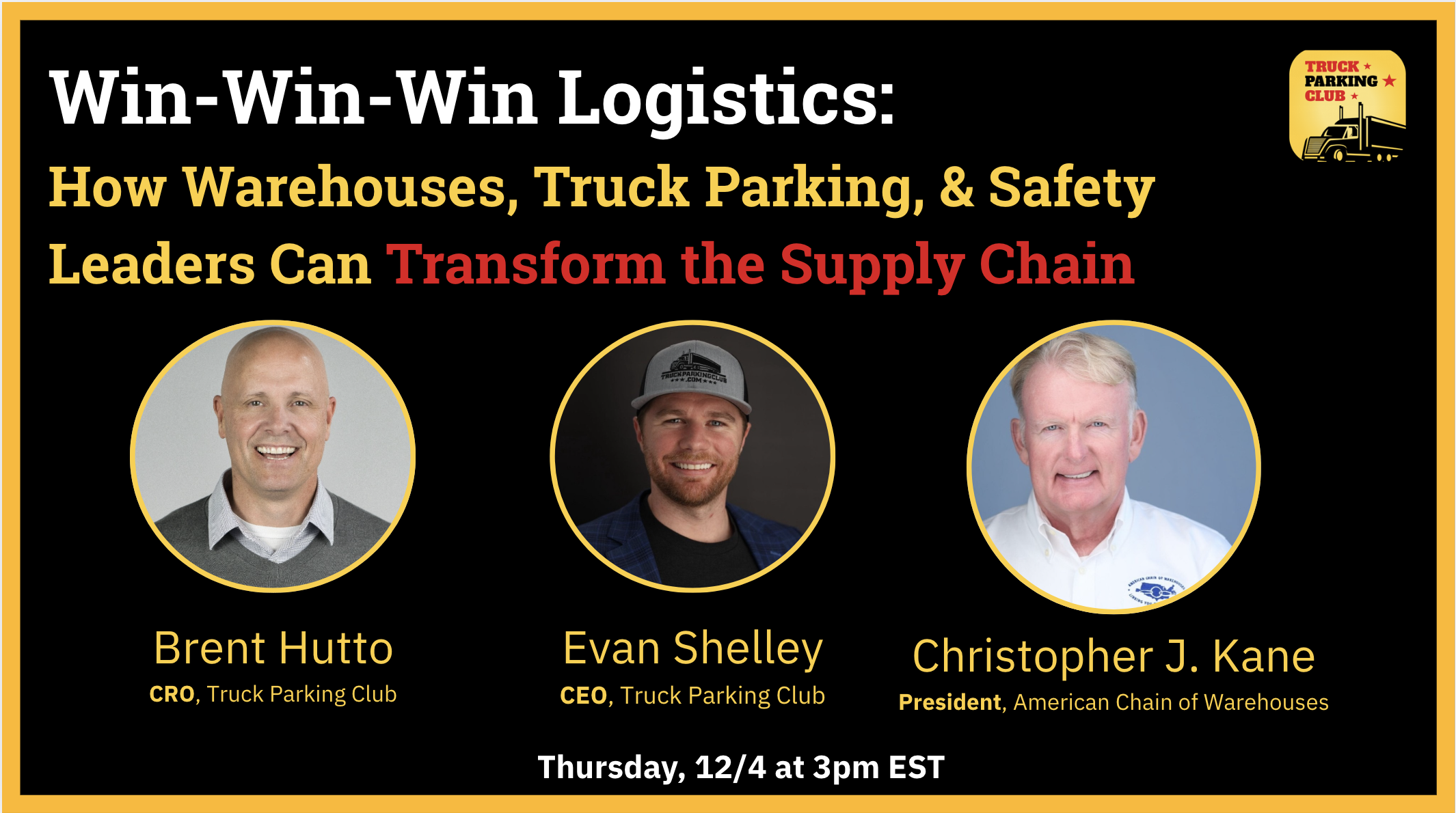
That was the takeaway from a recent industry webinar hosted by Truck Parking Club’s Chief Relationship Officer Brent Hutto, featuring CEO & Co-Founder Evan Shelley and Chris Kane, President of the American Chain of Warehouses (ACW).
This blog summarizes the biggest learnings, revenue opportunities, and operational benefits discussed in that session—so warehouse operators can fully understand why truck parking is emerging as one of the easiest new income streams available today.
The State of Truck Parking: A Growing Crisis
Truck parking has become one of the top 2 concerns for U.S. truck drivers according to ATRI. The causes are well known:
1.7 million additional truck parking spaces are needed nationwide.
Municipal zoning often blocks new truck parking developments.
Construction costs make dedicated parking financially unviable for many operators.
Drivers burn 56 minutes a day searching for a spot—wasting fuel and HOS time.
Two-thirds of drivers resort to illegal or unsafe parking on shoulders, ramps, and residential areas.
These inefficiencies ripple into your warehouse operations:
No-shows rise due to drivers unable to find legal parking near the facility.
Appointment windows tighten.
Detention charges increase.
Loads arrive late, stressed, or unexpectedly early.
As Chris Kane noted during the webinar:
“We used to see 20% no-show rates. A rested driver is a safe driver—and without parking, it’s nearly impossible for them to stay compliant.”
Why Warehouses Hold the Solution
U.S. warehouses and distribution centers collectively control millions of acres of industrial-zoned space—much of it underutilized or unused overnight.
Truck Parking Club’s research uncovered a striking insight:
Over 15 million potential truck parking spaces exist on shipper and warehouse lots. Yet only ~2% are currently accessible to drivers.
That unused concrete is a goldmine.
Warehouses already operate in industrial zones, where parking is usually permitted. They already have:
Level ground
Lighting
Camera systems
Controlled gates
Staff onsite
Dock space empty after hours
As Evan Shelley explained:
“If warehouses unlocked even 10% of their available capacity, the truck parking shortage would be drastically reduced.”
Truck Parking Club operates a two-sided marketplace connecting warehouse owners with hundreds of thousands of drivers, dispatchers, brokers, and fleet managers.
The model is simple:
List your available spaces (yard spots, dock doors, overflow areas).
Drivers book them on-demand via app or website.
You earn passive revenue with no operational burden.
What makes it especially appealing for warehouses is the flexibility:
No leases
No long-term commitments
Adjust your available spaces anytime
Turn the program on and off as operations shift
“Every day looks different for a warehouse,” Kane added. “The ability to update availability in real time is invaluable.”
The Revenue Opportunity for Warehouses
This is the question every warehouse leader asks:
How much money can we make from truck parking?
Across Truck Parking Club’s 206 warehouse partners:
Spaces generate hundreds of dollars per month each.
One top-performing warehouse earned over $12,000 in 30 days.
Another operator, Logistics Plus, earned $13,000 in their first 60 days across nine locations.
And remember: These dollars come from assets currently making $0.
As Shelley put it:
“You’re earning net new revenue on space that’s sitting unused. This is pure margin.”
Operational Benefits for Warehouses
Paid parking isn’t just a revenue play. It also improves warehouse performance.
1. More On-Time Arrivals & Fewer No-Shows
Drivers can stage near your location, making morning appointments far more reliable.
2. Reduced Congestion & Unauthorized Parking
Instead of lining industrial parks or road shoulders, drivers have a legal, safe spot.
3. Fewer Detention Disputes
Drivers staged early aren’t rushing from across town to make a window.
4. Improved Safety & Lower Liability
Illegal parking around your facility often becomes your problem.
5. Protect Your Property
Truck Parking Club includes:
24/7 customer service from former drivers
A two-way rating system for accountability
Up to $25,000 in damage protection
Incidents are extremely rare—but the protection is there.
How Pricing Works
Warehouse partners set their own prices. The market naturally determines demand.
Typical rates:
$10–$15/day in Midwest and low-density markets
$20–$40/day in high-demand regions
$150–$400/month for dedicated monthly spaces
Premium rates for secure or gated yards
Truck Parking Club provides market guidance, but owners stay in control.
Case Study: Logistics Plus
A large 3PL with nationwide facilities, Logistics Plus approached Truck Parking Club with excess yard space.
Results within 60 days:
100+ bookings
$13,000 earned
Zero operational lift from staff
Full visibility of who is parking and when
If a sophisticated national operator can easily deploy this model, so can any regional or local warehouse.
What About Safety, Trash, or Damage?
This is the most common concern among warehouse operators.
Truck Parking Club addresses it head-on:
24/7 staffed support line
Marketplace reviews for drivers and property owners
Why Monthly Truck Parking Matters More Than Fleets Realize
For many carriers, parking is treated as a fixed cost — but scattered yards, street parking, and inconsistent capacity quietly drain thousands of dollars every month. As freight becomes more dynamic, fleets need predictable, secure monthly truck parking that scales with their operations and reduces waste.
In this guide, we break down how fleets overspend today, and how shifting to a national monthly truck parking network can dramatically cut costs.
The Hidden Costs of Disorganized Fleet Parking
Fleets operating without a structured parking strategy end up paying more across multiple areas of their business.
1. Scattered Yards Drive Up Costs
Many fleets spread equipment across random yards, pay different landlords, or rely on inconsistent month-to-month availability.
This leads to:
Higher monthly parking rates
Multiple vendor relationships
Extra deadhead miles between yards
Driver inefficiency caused by unpredictable access
A consolidated fleet parking solution eliminates this fragmentation and reduces total cost.
2. Street Parking Creates Fines, Risk, and Downtime
Street parking feels “free,” but it’s actually a major liability:
Towing & impound fees
City fines
Cargo theft exposure
Unmonitored trailer access
Poor driver safety
Compared to secure truck storage, street parking is one of the highest-risk and most expensive “free” choices a fleet can make.
3. Lack of Drop Trailer Yards Increases Detention
Without dedicated drop trailer yards, fleets pay in:
Detention fees
Idle driver time
Longer trailer turn cycles
Congested shipper yards
The cost impact compounds as freight volume grows.
Why Fleets Are Switching to Monthly Truck Parking Networks
A structured, centralized approach to monthly truck parking unlocks operational and financial benefits that ad-hoc solutions can’t match.
1. Predictable Monthly Fleet Costs
With one network providing all parking:
Bills are consolidated
Costs are stable
Forecasting becomes easier
Administrative overhead drops
This is especially important for fleets expanding rapidly or operating in multiple states.
2. Guaranteed, Reserved Spaces for Tractors & Trailers
With the rise in cargo theft—especially in California, Florida, Illinois, and New Jersey—fleets need parking locations with:
Gates
Cameras
Fencing
On-site / roaming security
Truck Parking Club’s network reports that 76% of locations have at least one major security feature, making it one of the most secure truck storage options available.
How Monthly Truck Parking Lowers Total Operational Costs
When fleets transition to structured monthly parking, savings appear across the entire operation:
Lower parking rates with network pricing
Reduced losses due to theft or damage
Elimination of fines and towing fees
Reduced fuel and deadhead miles
Higher trailer turn efficiency
Less driver downtime
Monthly parking isn’t just cheaper — it’s more efficient.
Fleet Parking Solutions Built for Modern Operations
Truck Parking Club provides fleets with a nationwide network of monthly truck parking, drop trailer yards, and secure truck storage designed to scale with their needs.
A Nationwide Parking Network
Fleets gain access to:
Thousands of locations across 49 states
Long-term & short-term monthly parking
Dedicated tractor + trailer capacity
Flexible options for 5–500+ spaces
Whether a fleet needs a single drop lot or multi-state coverage, the network adapts.
Primary Fleet Use Cases We Solve
1. Dedicated Fleet Parking
Reserve guaranteed monthly parking for recurring lanes and predictable operations.
2. Drop Trailer Yards for Relay & Transfer Operations
Create regional drop yards without leases, infrastructure investment, or long-term commitments.
3. Expanding into New Markets
Use monthly truck parking as a low-risk, fast way to enter new service regions.
Instead of signing an industrial lease, fleets place a trailer and start serving customers immediately.
Real-World Applications (SEO-Boosting Local Examples)
Fleets commonly use monthly parking in:
Houston monthly truck parking to support port drayage routes
Atlanta secure truck storage for drop-and-hook distribution
Los Angeles monthly trailer parking to protect against rising cargo theft
New Jersey fleet drop yards for port of Newark/Elizabeth operations
These examples help Google rank the article for local-intent searches.
The Bottom Line: Strategic Monthly Parking Cuts Waste
Fleets that transition from scattered yards and ad-hoc parking to a single structured monthly parking network consistently reduce:
Parking overhead
Fuel spend
Theft risk
Detention
Administrative complexity
Driver downtime
Monthly truck parking has become a competitive advantage, not just a place to park.
If your fleet needs scalable, secure, and cost-efficient monthly truck parking solutions, explore our network today:
It’s National Truck Driver Appreciation Week (September 14-20), and we’re putting our money where our mouth is.
Use code thanks2025 (all lowercase) for $50 off truck parking at any of our 47,000+ spaces nationwide.
What We’re Doing
We’re working hard to add more locations every day to support drivers. With 2,800+ Property Member locations already live across the US, you can book instantly—no membership fees, no BS.
Truck Parking Club: 47,000+ reservable spaces at 2,800+ locations. No membership fees. Real support from real truckers. Find parking at truckparkingclub.com/truck-parking
Every night across America, millions of truck drivers face an impossible choice: where to safely park their 70-foot rigs for federally mandated rest breaks when there simply aren’t enough legal spaces available. New research reveals this overlooked infrastructure crisis is costing the U.S. economy over $100 billion annually—and driving up prices for virtually every product consumers buy.
The comprehensive study (download at truckparkingclub.com/research), commissioned by Truck Parking Club, a truck parking marketplace, and conducted by transportation economist Noël Perry using publicly available data from the American Transportation Research Institute, as well as proprietary Truck Parking Club & Transport Futures data, attempts to quantify the true economic impact of America’s truck parking shortage.
The Numbers Don’t Add Up
Each day, 2.4 million commercial trucks need parking spaces for drivers to take their required 10-hour rest breaks. But across the entire United States, only 697,000 official parking spaces exist—creating a shortage of 1.7 million spaces, or roughly 70% of daily demand.
This shortage forces drivers to park on highway shoulders, in abandoned lots, or anywhere else they can squeeze their massive vehicles. The consequences ripple through the entire economy.
The Hidden Costs
The research reveals that the struggle arising from the truck parking shortage costs individual drivers approximately $380 per day. The breakdown shows drivers spending 56 minutes daily searching for spaces, driving an extra 15 miles per day circling for parking, and frequently being forced to park hours away from their next pickup or delivery.
Across the industry, these inefficiencies translate to staggering annual costs: $37.7 billion in extra miles searching for parking and over $82 billion in lost productivity from drivers being parked in the wrong place at the wrong time, unable to maximize their federally allowed driving hours.
The cumulative effect: These seemingly small daily inefficiencies create a massive economic burden that ripples through the entire supply chain.
A Problem Hiding in Plain Sight
Perhaps most surprising is how this massive crisis has remained largely invisible. The research found that America actually has 23.4 million parking spaces suitable for heavy trucks. The problem? A staggering 98% of spaces are private property suitable for truck parking but not offered to the public, leaving the entire industry to compete for just 2% of available capacity.
Market Solutions Emerging
Despite the massive scale of the problem, innovative solutions are making a difference. Marketplace platforms that connect drivers with property owners who have unused parking capacity have added over 44,000 new spaces—a 20% increase in available capacity—without building a single new facility.
“America doesn’t need to build 1.7 million new parking spaces,” Perry argues. “We need to unlock the capacity that already exists.”
The Consumer Connection
The over $100 billion in annual costs ultimately gets passed through to consumers in the form of higher prices. Every product that moves by truck carries a hidden tax from parking inefficiencies.
The problem is worsening as e-commerce growth continues to increase truck traffic on roads that are already struggling with capacity.
Looking Forward
The research identifies market-based solutions as the most promising approach for immediate relief. As trucking companies recognize the hidden costs of suboptimal parking, private investment in parking capacity should increase.
“The truck parking crisis represents both a massive problem and a massive opportunity,” Perry concludes. “The $100+ billion in annual costs represents waste that could be eliminated through better information, smarter technology, and more efficient use of existing resources.”
For an economy that depends on trucks to move goods coast to coast, solving the parking crisis isn’t just about driver comfort—it’s about keeping America’s supply chain running efficiently.