In an industry where time is money, fleets are rethinking how they move freight. One of the most effective, yet often underutilized, methods is the relay point model, supported by flexible trailer parking and drop lot networks.
By leveraging this system, carriers can move freight faster, reduce idle time, and give drivers a better quality of life — all while cutting costs and emissions.
What Are Relay Points and How Do They Work?
Relay points are strategic locations where one driver drops a trailer and another driver picks it up to continue the trip. This “handoff” model, sometimes called relay trucking, allows freight to move almost continuously while keeping each driver within legal Hours-of-Service (HOS) limits.
Relay trucking can deliver goods 40–70% faster than traditional long-haul methods, thanks to its non-stop, multi-driver system.
In practice, this means:
- Driver A hauls the load from City 1 to a relay point or drop lot.
- Driver B picks up the trailer and continues to City 2.
- The trailer moves 24/7 — even while individual drivers rest.
Why Fleets Are Turning to Trailer Parking Networks for Relay Operations
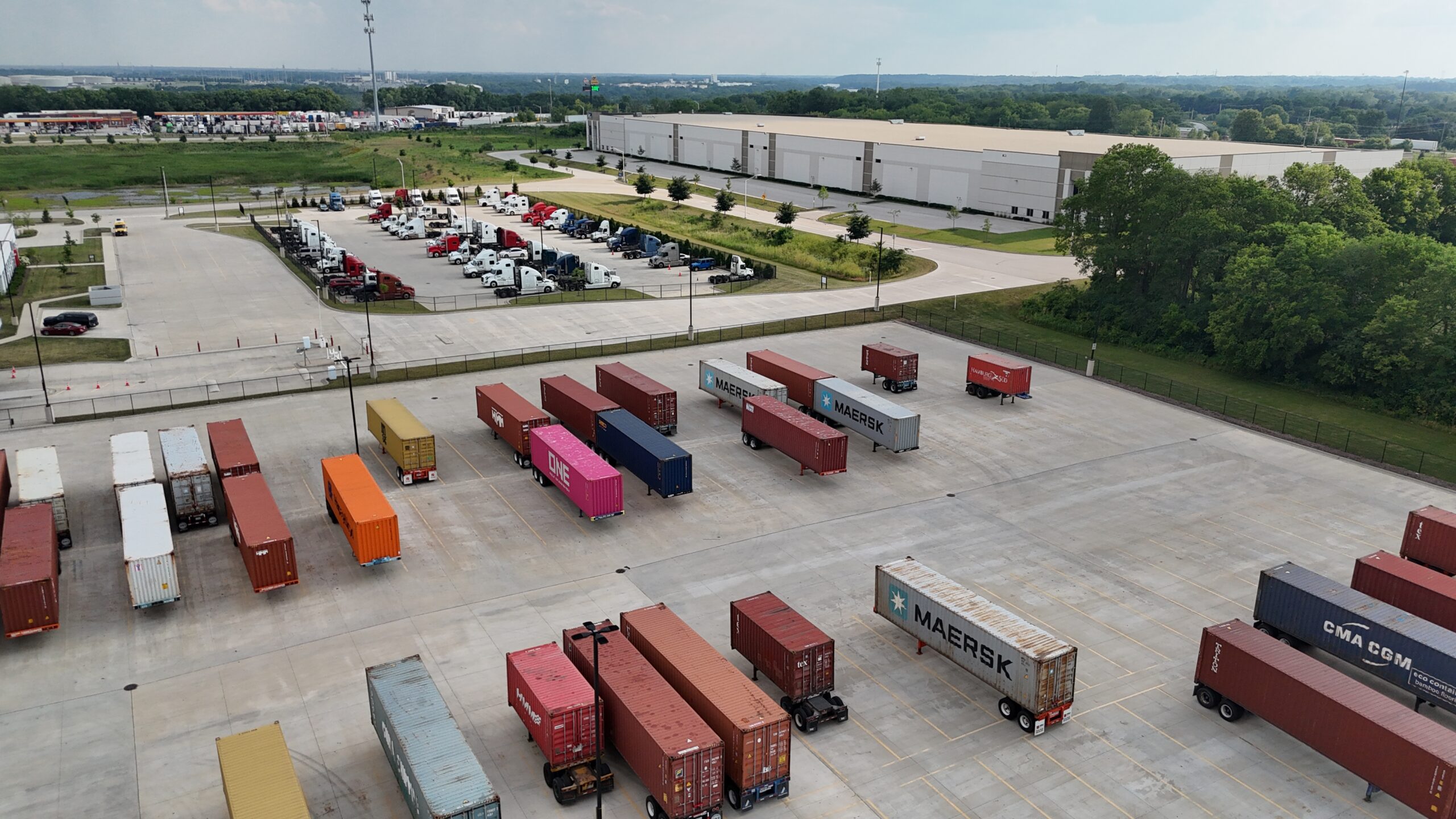
Relay trucking only works if carriers have reliable, safe, and strategically located trailer parking and drop lots for handoffs. That’s where platforms like Truck Parking Club come in — offering hourly, daily, weekly, and monthly reservable parking that can serve as flexible relay nodes across the country.
These parking networks allow fleets to:
- Book short-term trailer parking for time-sensitive relays
- Establish long-term drop lots through monthly leases
- Secure consistent relay hubs without the overhead of property ownership
By transforming underutilized land into functional relay yards, Truck Parking Club enables fleets to scale their relay operations wherever freight demand shifts — seamlessly connecting drivers, trailers, and routes.
The Data Behind Relay Systems and Fleet Efficiency
The numbers behind relay trucking are hard to ignore:
- 40–70% Faster Delivery: Baton Transport reports that non-stop relay operations cut transit times nearly in half.
- Up to 50% Shorter Travel Times: MIT’s Center for Transportation & Logistics found that relay systems can reduce total trip duration by up to 50%.
- 25–40% Higher Driver Productivity: Implementing relay strategies boosts driver productivity by 25–40%, especially in markets with tight scheduling or appointment gaps.
- Reduced Idling and Emissions: The American Transportation Research Institute (ATRI) estimates that long-haul trucks idle up to 40% of their operating time, burning excess fuel and increasing emissions. By reducing idle periods through relays and drop lots, fleets save fuel and reduce environmental impact.
In short — relay points powered by flexible trailer parking create measurable efficiency gains in time, cost, and sustainability.
Maximizing Driver Utilization
Federal Hours-of-Service (HOS) rules cap how long a driver can operate each day. Relay systems are one of the few ways to keep freight moving around the clock while staying compliant.
Instead of one driver hauling a load across the country, several regional drivers each handle a segment, handing off at designated relay points or drop lots.
This model keeps trailers rolling continuously and drivers productive within their legal daily limits — helping fleets move more freight with the same driver base.
Creating Regional Route Balance
Relay systems naturally divide the country into manageable regional zones, giving drivers a better work-life balance and fleets greater scheduling control.
Drivers stay closer to home, which:
- Reduces turnover and improves retention
- Cuts hotel and lodging costs
- Minimizes fatigue and improves safety
For carriers, this creates a hybrid network that combines long-haul efficiency with regional reliability, powered by strategically placed trailer parking locations and drop lots across key freight corridors.
Reducing Idle and Dwell Time
Traditional trucking often involves hours of waiting at docks or distribution centers. Relay systems change that.
At a relay point, one driver drops an inbound trailer while another hooks a preloaded outbound one — keeping trucks moving in minutes instead of hours.
This drop-and-hook efficiency not only minimizes dwell time but also dramatically improves asset utilization, ensuring that trailers, tractors, and drivers stay productive instead of parked.
The Role of Trailer Parking Networks in Modern Relay Operations
Truck Parking Club plays a vital role. As fleets embrace relay operations and drop-and-hook strategies, having access to reliable, reservable trailer parking becomes a critical piece of the puzzle.
Truck Parking Club’s nationwide network of hourly, daily, and weekly reservable parking locations provides fleets with flexible relay points wherever freight moves. Whether crossing state lines or balancing short regional hauls, these locations function as temporary drop lots that enable seamless trailer swaps.
For fleets seeking more consistency, monthly truck and trailer parking can transform specific lots into permanent relay hubs — offering:
- Predictable locations for driver handoffs
- Secure, gated areas for drop trailers
- Simplified route planning
- Lower overhead compared to maintaining a dedicated yard
Rather than investing in real estate or managing multiple lease agreements, fleets can use Truck Parking Club’s network to scale relay capacity dynamically — wherever demand shifts.
Real-World Example: Atlanta to Dallas
Consider a carrier moving freight from Atlanta, GA → Dallas, TX:
- Driver A hauls to Birmingham, AL (Relay Point 1).
- Driver B continues to Shreveport, LA (Relay Point 2).
- Driver C completes the route to Dallas.
Each driver operates regionally and returns home daily — while the trailer arrives in under 24 hours.
By using Truck Parking Club locations as relay points, fleets gain predictable, reservable, and secure handoff sites that keep freight moving 24/7.
Final Thoughts
Relay points, trailer parking, and drop lots are redefining how freight moves across America.
Instead of being constrained by fixed terminals or inconsistent parking, fleets can now use Truck Parking Club’s network to establish scalable, cost-effective relay systems nationwide.
By combining operational flexibility with modern infrastructure, Truck Parking Club is powering a new era of 24/7, data-driven trucking — one where freight never stops moving, drivers stay productive, and sustainability is built into the journey.
For more information, head over to truckparkingclub.com/trailer-parking to learn more and get started parking.