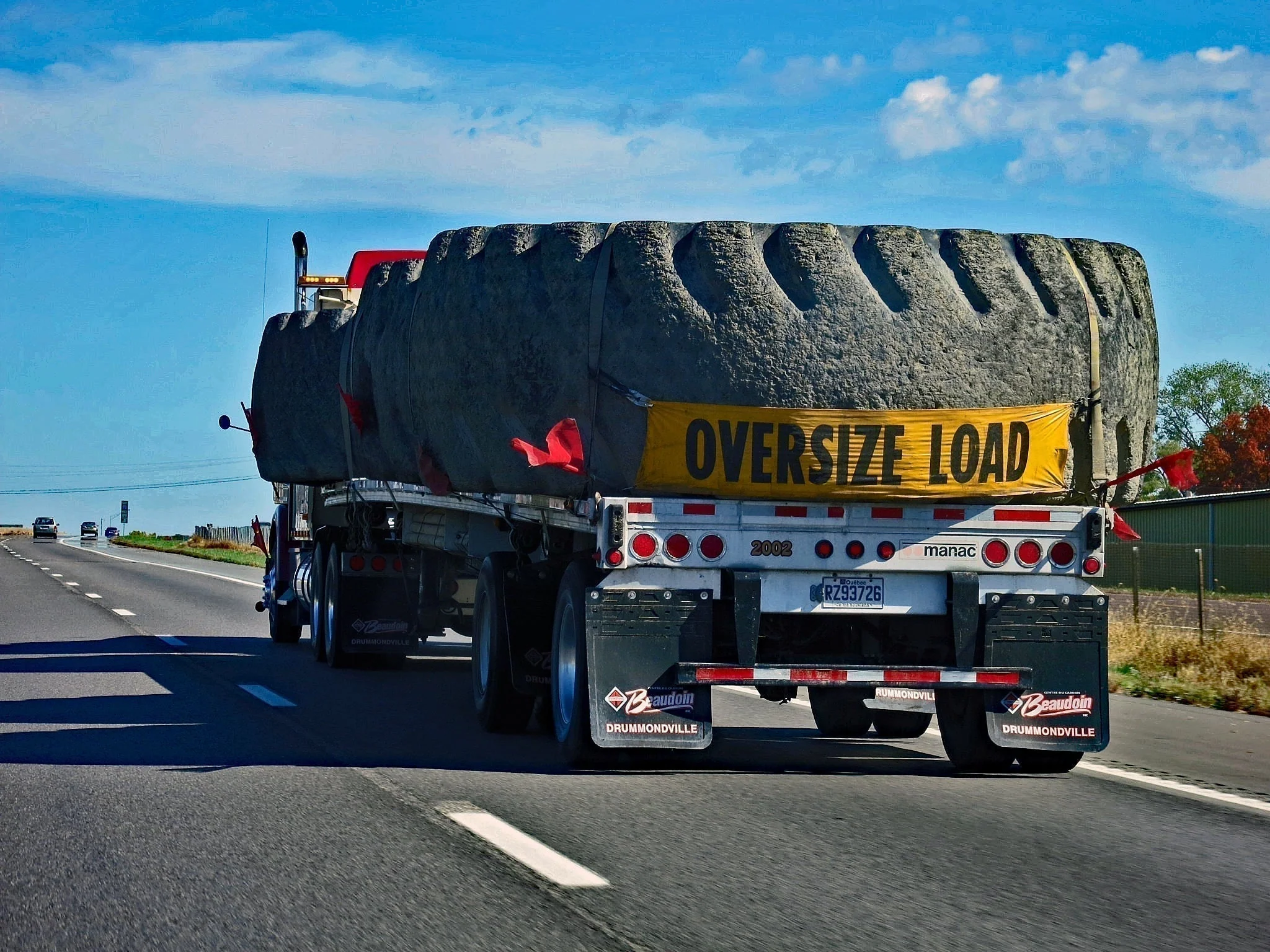
If you run a standard 53-foot dry van, finding parking is already a nightmare. Now imagine you’re 14 feet wide, 150 feet long, and hauling 180,000 pounds of construction equipment through three states on a permitted route with escort vehicles and daylight-only travel restrictions.
You don’t get to figure it out when you get there. You don’t get to circle a truck stop hoping a spot opens up. And you definitely don’t get to park on a ramp.
For oversize and heavy haul carriers, every parking stop has to be planned, verified, and locked in before the truck ever leaves the yard. There is no Plan B when your load doesn’t fit.
The Scale of Oversize Freight in America
This isn’t a niche corner of the industry. Oversize and overweight loads account for roughly 6% of all truck freight tonnage in the United States, about 600 million tons every year. That freight includes wind turbine blades, industrial transformers, mining equipment, prefabricated building modules, military vehicles, and heavy construction machinery.
The market is growing fast. The global oversized cargo transportation sector hit $300 billion in 2025, with about a third of U.S. oversized shipments tied directly to construction and energy infrastructure projects. Renewable energy alone is driving massive demand, with wind turbine components and offshore foundations pushing the size and weight envelope further every year.
Every one of those loads needs somewhere to park. And the standard truck parking infrastructure was never built for them.
Why Standard Truck Parking Doesn’t Work for Oversize Loads
A typical truck stop parking space is designed for a standard tractor-trailer: roughly 12 feet wide and 75 feet long. An oversize load can easily exceed that in every dimension. Here’s what heavy haul drivers are dealing with:
Clearance restrictions. Low-hanging signs, canopies, power lines, and fuel island overhangs can make it physically impossible to enter a facility, let alone park.
Weight limits. Many parking surfaces, especially older lots, aren’t engineered to support 120,000+ pound loads sitting stationary for 10 hours. Cracked asphalt and damaged drainage systems aren’t just a property owner’s problem. They’re a liability issue for the carrier.
Maneuvering space. An oversize load needs wide turns, clear sight lines, and enough room to enter and exit without getting boxed in by other trucks. Standard truck stop layouts don’t account for this. One driver parks too close, and you’re stuck until morning.
Legal restrictions. Many states have specific parking regulations for oversize loads, including where they can stop, for how long, and whether the load must remain attended. Violating these can mean fines, permit revocations, or worse.
Travel time windows. Most oversize permits restrict travel to daylight hours only and prohibit movement on weekends and holidays. When the sun goes down, you need to be parked somewhere legal and safe. No exceptions.
The Planning Problem Heavy Haul Dispatchers Face
Here’s what the logistics team at a heavy haul carrier actually has to do before a load moves:
Pull the permitted route. Calculate drive time within the daylight travel window. Identify every required overnight stop. Then find parking at each stop that can physically accommodate the load, that’s accessible from the permitted route, that won’t create a liability issue, and that’s actually available on the dates they need it.
And they need backups. Because if a primary stop falls through, pulling a 16-foot-wide load off a highway and circling the block isn’t an option.
“I have 2-3 contingency parking spots for every stop, on every load. Take your time to find those backups throughout the day for the next day.” — Heavy Haul Owner Operator
This is where most carriers have historically relied on phone calls, personal relationships with property owners, and institutional knowledge passed down between dispatchers. It works until it doesn’t. And when it doesn’t work at 6 PM on a Tuesday with an oversize load sitting on the shoulder of I-10, the consequences are serious.
How Truck Parking Club Solves Heavy Haul Parking
We’ve been hearing from oversize and heavy haul carriers more and more over the past year. The conversations all start the same way: “We need guaranteed parking, and we need to know it’ll actually fit our equipment before we show up.”
That’s exactly what Truck Parking Club delivers.
Our network includes over 1,400 Property Member locations that can accommodate oversize loads, across 5,000+ total locations in 49 states. Here’s why that matters for heavy haul operations:
Reserve in advance. Lock in your parking days or weeks before the load moves. No more hoping for the best. For oversize carriers, a confirmed reservation isn’t a convenience. It’s a requirement.
Verify dimensions before arrival. Our Property Member listings include details on lot size, surface type, and entrance and exit configuration. Carriers can confirm that their specific load will fit before committing to a stop. Several Property Members have provided walkthrough photos and videos of their entrances specifically so oversize drivers know exactly what to expect when they pull in after dark.
Plan the full route. With locations in 49 states, carriers can map out every overnight stop along a permitted route and build in backup options at nearby properties. The days of scrambling at sundown are over.
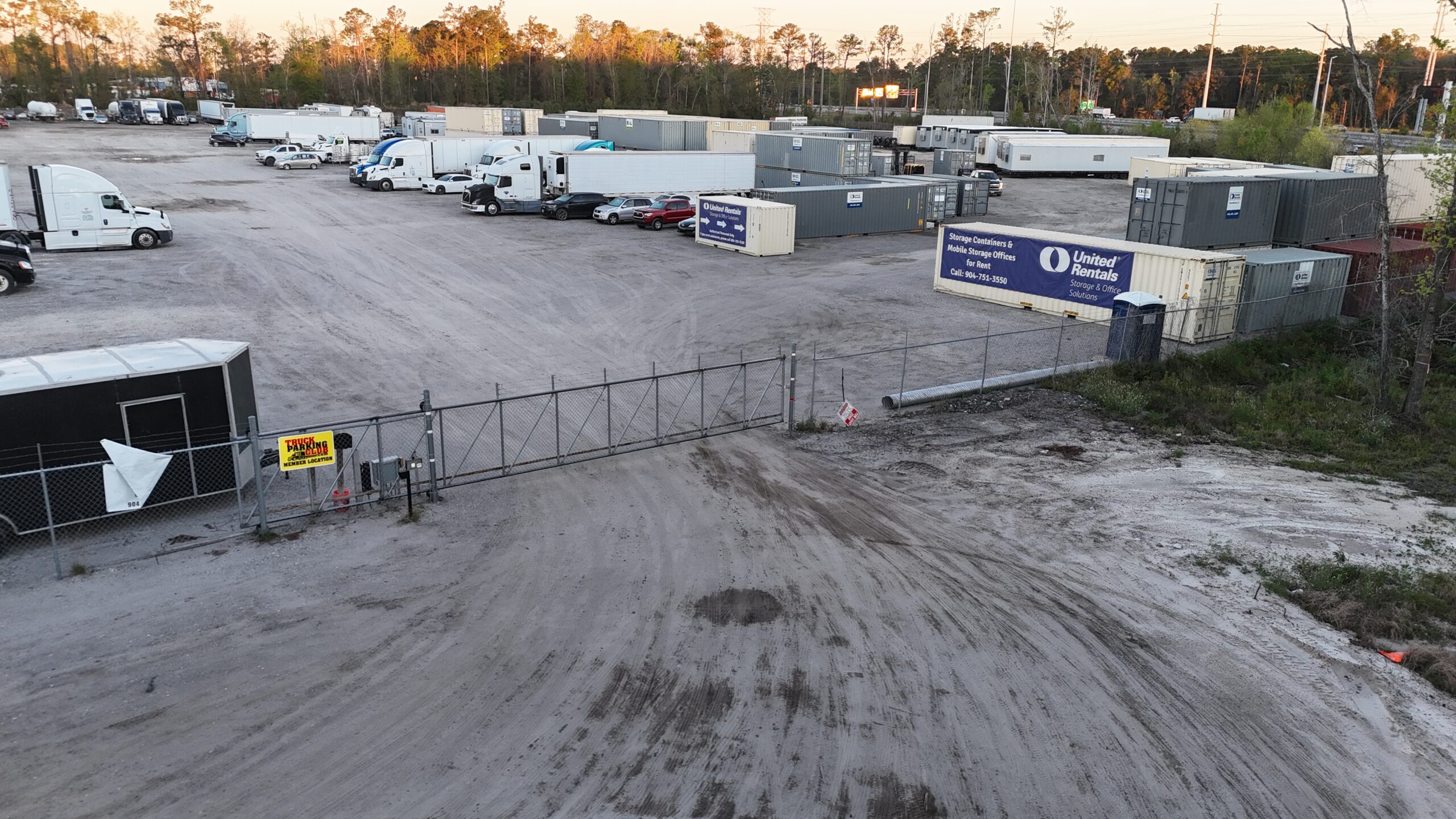
Private, uncrowded properties. Many of our Property Member locations are industrial yards, warehouse lots, and private commercial properties. Not packed truck stops. These are properties with open space, room to maneuver, and no risk of getting blocked in by other vehicles. (See why warehouses are the best locations for truck parking.)
“I reached out, asked if they could accommodate my 17ft wide load, they verified for me, and once I got here I just backed into my spot.” — Chuck Hinton, Canadian Flatbed
The Parking Crisis Hits Oversize Carriers Hardest
The national truck parking shortage affects everyone. But for oversize carriers, the margin for error is zero. A standard trucker who can’t find a spot might end up on a ramp or in an overflow area. An oversize load that can’t find a spot is a highway safety incident.
When highway bottlenecks burn through your HOS, the scramble at sundown gets even worse for oversize loads that can’t just duck into any open space. With 92 of the top 100 trucking companies already using our platform and over 50,000 drivers searching our marketplace every week, Truck Parking Club is the largest and most trusted truck parking network in the country. And for the heavy haul segment, we’re building out our oversize-capable inventory every single day.
If you’re a heavy haul carrier, fleet manager, or logistics planner who’s tired of the phone call shuffle and the stress of hoping a spot works out, it’s time to try a better approach.
For Heavy Haul Carriers and Fleet Managers
Stop guessing. Start reserving. Browse oversize-capable locations and lock in your parking before the load leaves the yard.
If your property can accommodate oversize loads, make sure your listing reflects it. Update your lot dimensions, entrance details, and clearance information. Heavy haul carriers are actively searching for properties like yours, and they’re willing to pay a premium for guaranteed space.
As the holidays approach, carriers hauling high value trailers face one of the riskiest times of the year. Thanksgiving through Christmas consistently brings a surge in cargo theft—especially in hot-spot states like California, Florida, Illinois, and New Jersey, where organized theft rings intensify operations around high-demand consumer freight.
For fleets relying on drop lots, relay operations, and short-term secure trailer storage, finding safe, reservable parking isn’t optional—it’s essential. That’s where Truck Parking Club provides a critical operational advantage.
Why the Holidays Pose a Major Threat for High Value Loads
Every holiday season, freight theft spikes for three reasons:
Higher volume of retail freight—electronics, consumer goods, apparel, alcohol, tools, and other high-value commodities.
More unattended trailers—drivers taking holiday breaks or parking overnight in unfamiliar areas.
Organized cargo-theft operations—thieves targeting predictable parking patterns in major freight hubs.
High-value loads are most vulnerable when trailers are left idle—even for short periods—making secure drop yards and secure trailer storage a non-negotiable part of your holiday operating plan.
Truck Parking Club: A Nationwide Network of Secure Drop Lots
Today, 76% of all Truck Parking Club locations include security amenities such as:
Security at Gate
Surveillance Cameras
Roaming Security
Secure Fencing
Full-Time Staffed Gates
This makes it the largest, most accessible network of secure trailer parking in the country—available to book instantly online or through the app.
Security Coverage in Key High-Risk States
State
% of Secure Locations
% of Secure Parking Spaces
California
90%
92%
Florida
81%
85%
Illinois
80%
91%
New Jersey
95%
95%
These states represent the areas where fleets hauling high value loads most urgently need secure drop yards, especially for holiday relay points and multi-day trailer storage.
Reserve Parking Based on the Security Features You Need
Truck Parking Club makes it simple for:
Drivers needing a safe place to park a loaded trailer
Dispatchers looking for holiday relay points
Fleets staging equipment or storing high-value trailers
You can search by:
Fencing
Cameras
Roaming security
Full-time staffed security
Lighting
24/7 access
With filters built around the amenities that matter most, you can instantly locate secure drop lots designed to protect high-value freight during peak theft periods.
Why Secure Trailer Parking Matters Even More During the Holidays
1. Reduce Idle-Time Theft Risk
Most theft occurs when a trailer is left unattended at an unsecured or publicly accessible location. Reserving a vetted, secure drop yard dramatically cuts exposure.
2. Avoid “Emergent” Parking Decisions
Holidays mean tighter delivery windows and unpredictable delays. With Truck Parking Club, drivers can reserve secure parking in advance, preventing risky last-minute parking decisions.
3. Safeguard High Value Trailers During Layovers
If a trailer must sit for hours—or even days—between legs of a relay, secure trailer storage ensures it stays protected until the next driver arrives.
4. Minimize Losses & Operational Disruption
Cargo theft doesn’t just cost fleets the value of the trailer’s contents—it disrupts loads, damages carrier reputations, and increases insurance costs.
Make Holiday Operations Safer With Secure Drop Yards
This holiday season, don’t rely on chance. With rising cargo theft risks and higher volumes of high-value freight, carriers need a simple way to book secure trailer parking anywhere in the country.
Truck Parking Club offers:
The largest network of secure drop yards in the U.S.
Locations across 49 states
A platform built for drivers, dispatchers, and fleets
The ability to reserve based on specific security amenities
Thousands of secure parking spaces, available instantly
Whether you’re protecting a high value trailer, staging freight for a drop-and-hook, or storing equipment over the holidays—you’re covered.
Book Secure Trailer Parking for the Holidays
Ensure your high-value loads stay protected this season.
In an industry where time is money, fleets are rethinking how they move freight. One of the most effective, yet often underutilized, methods is the relay point model, supported by flexible trailer parking and drop lot networks.
By leveraging this system, carriers can move freight faster, reduce idle time, and give drivers a better quality of life — all while cutting costs and emissions.
What Are Relay Points and How Do They Work?
Relay points are strategic locations where one driver drops a trailer and another driver picks it up to continue the trip. This “handoff” model, sometimes called relay trucking, allows freight to move almost continuously while keeping each driver within legal Hours-of-Service (HOS) limits.
Relay trucking can deliver goods 40–70% faster than traditional long-haul methods, thanks to its non-stop, multi-driver system.
In practice, this means:
Driver A hauls the load from City 1 to a relay point or drop lot.
Driver B picks up the trailer and continues to City 2.
The trailer moves 24/7 — even while individual drivers rest.
Why Fleets Are Turning to Trailer Parking Networks for Relay Operations
Relay trucking only works if carriers have reliable, safe, and strategically located trailer parking and drop lots for handoffs. That’s where platforms like Truck Parking Club come in — offering hourly, daily, weekly, and monthly reservable parking that can serve as flexible relay nodes across the country.
These parking networks allow fleets to:
Book short-term trailer parking for time-sensitive relays
Establish long-term drop lots through monthly leases
Secure consistent relay hubs without the overhead of property ownership
By transforming underutilized land into functional relay yards, Truck Parking Club enables fleets to scale their relay operations wherever freight demand shifts — seamlessly connecting drivers, trailers, and routes.
The Data Behind Relay Systems and Fleet Efficiency
The numbers behind relay trucking are hard to ignore:
40–70% Faster Delivery: Baton Transport reports that non-stop relay operations cut transit times nearly in half.
25–40% Higher Driver Productivity: Implementing relay strategies boosts driver productivity by 25–40%, especially in markets with tight scheduling or appointment gaps.
Reduced Idling and Emissions: The American Transportation Research Institute (ATRI) estimates that long-haul trucks idle up to 40% of their operating time, burning excess fuel and increasing emissions. By reducing idle periods through relays and drop lots, fleets save fuel and reduce environmental impact.
In short — relay points powered by flexible trailer parking create measurable efficiency gains in time, cost, and sustainability.
Maximizing Driver Utilization
Federal Hours-of-Service (HOS) rules cap how long a driver can operate each day. Relay systems are one of the few ways to keep freight moving around the clock while staying compliant.
Instead of one driver hauling a load across the country, several regional drivers each handle a segment, handing off at designated relay points or drop lots. This model keeps trailers rolling continuously and drivers productive within their legal daily limits — helping fleets move more freight with the same driver base.
Creating Regional Route Balance
Relay systems naturally divide the country into manageable regional zones, giving drivers a better work-life balance and fleets greater scheduling control.
Drivers stay closer to home, which:
Reduces turnover and improves retention
Cuts hotel and lodging costs
Minimizes fatigue and improves safety
For carriers, this creates a hybrid network that combines long-haul efficiency with regional reliability, powered by strategically placed trailer parking locations and drop lots across key freight corridors.
Reducing Idle and Dwell Time
Traditional trucking often involves hours of waiting at docks or distribution centers. Relay systems change that.
At a relay point, one driver drops an inbound trailer while another hooks a preloaded outbound one — keeping trucks moving in minutes instead of hours.
This drop-and-hook efficiency not only minimizes dwell time but also dramatically improves asset utilization, ensuring that trailers, tractors, and drivers stay productive instead of parked.
The Role of Trailer Parking Networks in Modern Relay Operations
Truck Parking Club plays a vital role. As fleets embrace relay operations and drop-and-hook strategies, having access to reliable, reservable trailer parking becomes a critical piece of the puzzle.
Truck Parking Club’s nationwide network of hourly, daily, and weekly reservable parking locations provides fleets with flexible relay points wherever freight moves. Whether crossing state lines or balancing short regional hauls, these locations function as temporary drop lots that enable seamless trailer swaps.
For fleets seeking more consistency, monthly truck and trailer parking can transform specific lots into permanent relay hubs — offering:
Predictable locations for driver handoffs
Secure, gated areas for drop trailers
Simplified route planning
Lower overhead compared to maintaining a dedicated yard
Rather than investing in real estate or managing multiple lease agreements, fleets can use Truck Parking Club’s network to scale relay capacity dynamically — wherever demand shifts.
Real-World Example: Atlanta to Dallas
Consider a carrier moving freight from Atlanta, GA → Dallas, TX:
Driver A hauls to Birmingham, AL (Relay Point 1).
Driver B continues to Shreveport, LA (Relay Point 2).
Driver C completes the route to Dallas.
Each driver operates regionally and returns home daily — while the trailer arrives in under 24 hours. By using Truck Parking Club locations as relay points, fleets gain predictable, reservable, and secure handoff sites that keep freight moving 24/7.
Final Thoughts
Relay points, trailer parking, and drop lots are redefining how freight moves across America. Instead of being constrained by fixed terminals or inconsistent parking, fleets can now use Truck Parking Club’s network to establish scalable, cost-effective relay systems nationwide.
By combining operational flexibility with modern infrastructure, Truck Parking Club is powering a new era of 24/7, data-driven trucking — one where freight never stops moving, drivers stay productive, and sustainability is built into the journey.
As the logistics and transportation industry evolves, the importance of trailer parking and drop lots has never been greater. With more trailers on the road than ever before and efficiency becoming the cornerstone of supply chain operations, secure, public, and readily accessible parking for trailers is a critical piece of infrastructure that many fleets are still struggling to find.
This article explores why demand for trailer parking continues to rise, how drop lots are reshaping fleet operations, and the substantial productivity gains that come from nationwide access to trailer parking solutions.
Why Trailer Parking Demand is Growing
One little-known fact about the trucking industry: there are more trailers than tractors. Current estimates show that the industry has 1.1 to 1.6 trailers for every truck on the road. The primary reason? Trailers aren’t just for hauling—they’re also a cheaper alternative for short-term storage compared to expensive warehouse space.
Additionally, modern supply chain practices like drop-and-hook operations rely heavily on this surplus of trailers. In these operations, a truck driver can unload a trailer, drop it, and immediately hook onto another pre-loaded trailer—all in a fraction of the time it would take for a traditional live load.
But here’s the catch: all of these trailers require secure space to park.
The Rise of Drop Lots and Their Operational Benefits
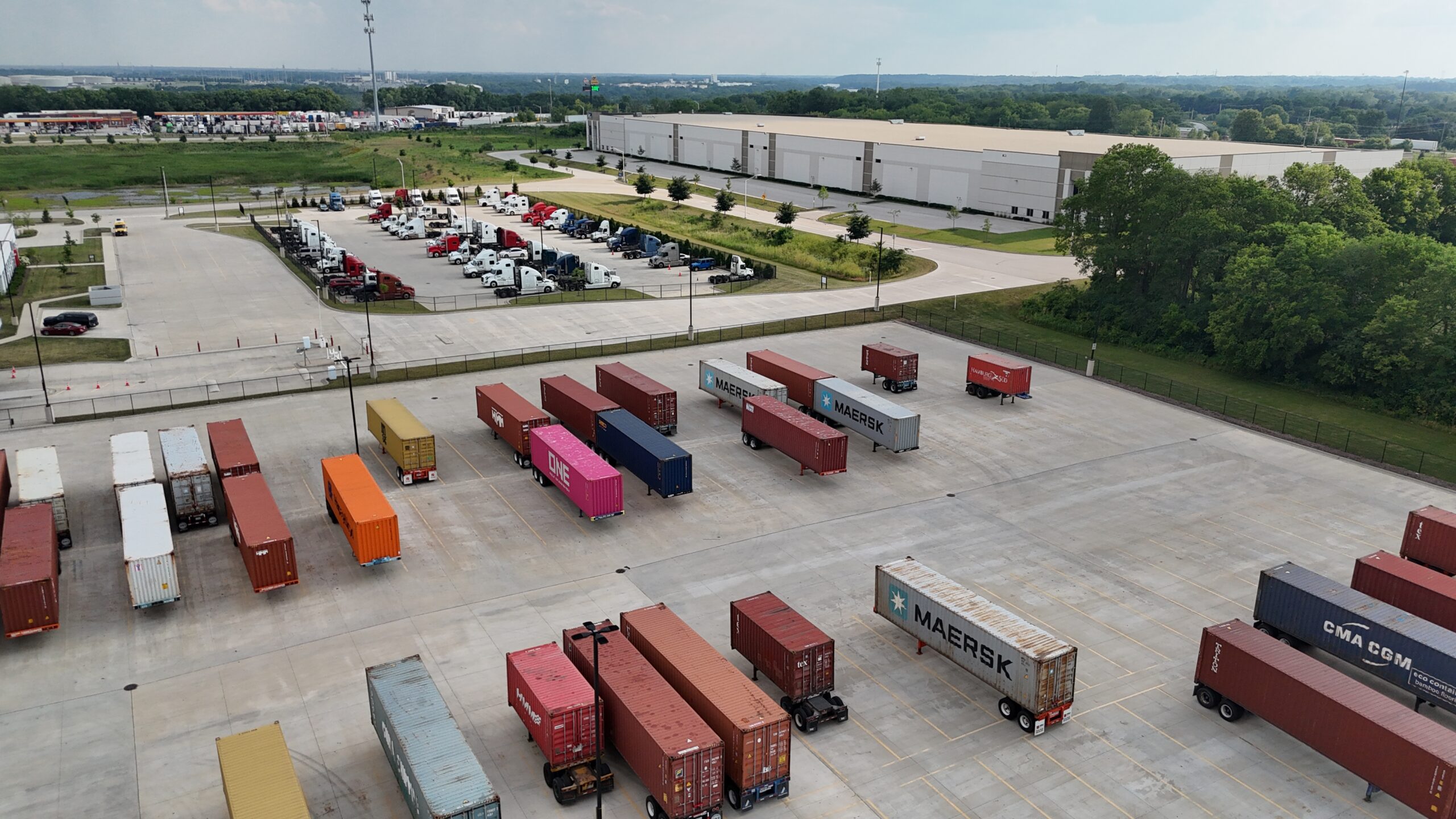
At the heart of today’s efficiency gains is the drop lot—a secure, often fenced area where unattached trailers can sit waiting for a tractor. These drop lots allow for:
Rapid turnarounds: Instead of waiting hours at a dock, drivers can disconnect an empty trailer and be back on the road with a loaded one in minutes.
Pre-loaded flexibility: Shippers can load trailers at their convenience, well before the truck arrives.
Driver relief: With drop-and-hook operations, drivers avoid long detention times and get paid for driving—not waiting.
And while shippers and receivers often provide on-site trailer parking, carriers increasingly use publicly available trailer parking spaces and drop lots to execute these efficiencies—especially when coordinating handoffs between local and long-haul tractors.
En Route Trailer Parking: A Critical Component for Relays
Carriers also rely on trailer parking for relay operations, where two drivers meet halfway to exchange trailers. This allows drivers to return home more frequently while keeping freight moving around the clock. However, it requires reliable mid-route drop lots where these swaps can safely occur.
Unfortunately, despite substantial increases in demand, publicly accessible trailer parking remains severely limited. Drivers and fleets struggle to find secure spaces—especially at key transit points—creating operational bottlenecks and unnecessary delays.
How Trailer Parking Impacts Supply Chain Efficiency
Efficient trailer parking and drop lot availability deliver measurable benefits:
Reduced detention and dwell time
Lower fuel and deadhead miles
Faster turnaround times
Improved driver retention and safety
Higher asset utilization across tractors and trailers
With more companies adopting drop-and-hook and relay models, the ability to park trailers at scale becomes a competitive advantage. Yet until now, fleets have had to piece together ad hoc solutions or rely on long-term leases—both of which lack the flexibility and coverage needed for modern freight operations.
Bridging the Gap: Public Trailer Parking with Truck Parking Club
To solve this growing challenge, Truck Parking Club is expanding a nationwide network of trailer parking and drop lots—providing fleets with:
Secure, gated locations suited for high-value loads
Options for bulk trailer drops
Real-time availability and transparent pricing
With thousands of parking spaces across 49 states, we’re partnering with property owners, carriers, and logistics operators to create the first scalable solution for trailer parking.
As demand for drop lots surges, we’re committed to building the infrastructure required to keep America’s supply chain moving—one trailer, one location at a time.
Final Thoughts
The rise of trailer parking and drop lots is not a fad—it’s a structural shift in how freight is moved. As carriers push for faster turnarounds and greater operational efficiency, safely storing unattached trailers becomes mission-critical. By making trailer parking public, accessible, and reservation-based, platforms like Truck Parking Club are helping fleets reclaim time, improve margins, and reduce driver frustration.
Ready to explore trailer parking solutions? Visit truckparkingclub.comto browse drop lots and secure space today.
Fleet managers face a persistent challenge that drains budgets and complicates operations: trailer parking.
Industry data shows fleets waste an average of $47,000 annually on underutilized parking contracts. Dispatchers spend 3-5 hours per week coordinating drop lot access across multiple vendors. And when routes change or seasonal volumes shift, fleets remain locked into contracts for spaces they no longer need.
The traditional approach—long-term contracts, fragmented vendors, limited visibility—is increasingly incompatible with modern logistics demands.
This guide explores how flexible, on-demand trailer parking and drop lot solutions are reshaping fleet operations, along with practical frameworks for evaluating providers and calculating potential savings.
What Is Trailer Parking and Drop Lot Access?
On-demand trailer parking provides fleets with instant access to secure drop lots and trailer storage facilities without contracts or long-term commitments.
Instead of locking into monthly agreements with multiple vendors, dispatchers book trailer parking spaces or drop yards near key freight corridors as needed—paying only for actual usage.
This flexible approach addresses several critical operational challenges:
Seasonal capacity fluctuations without paying for year-round overhead
Route optimization and new lane expansion without infrastructure investments
Real-time trailer and equipment tracking from centralized platforms
Budget control with usage-based pricing instead of fixed contracts
Emergency parking solutions when regular yards reach capacity
Whether called a drop lot, drop yard, trailer storage facility, or equipment parking, the fundamental value proposition remains consistent: safe, flexible, and scalable space that adapts to actual fleet requirements.
The True Cost of Traditional Drop Yard Contracts
Most fleets significantly overpay for trailer parking—often without visibility into the actual waste.
A typical mid-sized fleet maintains 3-5 monthly parking contracts across different locations, each averaging $800-$2,000 per month. During off-peak periods or after route adjustments, utilization rates frequently drop to 40-60%. Those empty spaces represent pure waste.
Hidden Costs Beyond the Monthly Invoice
Unused capacity: During slow seasons, fleets often pay $6,000-$15,000 monthly for spaces that sit empty. Unlike on-demand solutions, contracted space can’t be scaled down without penalties or lengthy negotiations.
Vendor management overhead: Coordinating with multiple drop yard operators—each with different billing cycles, policies, and communication preferences—consumes significant administrative resources.
Accounting complexity: Finance teams process separate invoices, reconcile driver reimbursements, and track parking expenses across disparate systems. This administrative burden often goes unquantified in total cost analyses.
Equipment visibility gaps: Traditional drop yards rarely provide digital tracking or integration with fleet management systems, leaving dispatchers without real-time visibility into trailer locations.
Route inflexibility: When customer needs shift or new lanes open, existing contracts create friction. Fleets either maintain unused capacity at old locations while paying for new spaces, or navigate complex early termination negotiations.
Driver productivity loss: Without centralized booking systems, drivers call facilities individually to check availability, especially during peak periods or in unfamiliar territories.
Industry research indicates fleets typically waste 30-40% of their contract parking budget on unused capacity and administrative overhead. For a mid-sized operation, this translates to $18,000-$28,000 in annual waste.
Key Benefits of Flexible Drop Lot and Trailer Parking Solutions
Immediate Cost Reduction
Usage-based pricing eliminates payment for empty spaces during slow periods or after route changes. Fleets only pay for the trailer parking and drop lot capacity they actually use.
Data from fleets that have transitioned to flexible parking models shows average cost reductions of 35-50%, or $1,200-$3,500 monthly for typical operations. Savings vary based on current utilization rates and seasonal fluctuations.
Operational Efficiency
Modern platforms enable dispatchers to book trailer parking or drop lot space in under 30 seconds—no phone calls, no waiting for callbacks, no coordinating with multiple vendors.
This efficiency translates to meaningful time savings. Dispatchers report recovering 10-15 hours per week previously spent on parking coordination, allowing them to focus on route optimization and customer service.
Complete Fleet Visibility
Centralized platforms provide real-time visibility into every trailer’s location, which drivers booked which spaces, and total parking expenditure across all locations.
This visibility proves valuable for:
Asset management and equipment utilization analysis
Theft prevention and security
Financial reporting and budget forecasting
Compliance documentation and audit trails
Scalability Without Commitment
Flexible models enable fleets to expand into new markets, test shipping lanes, or add seasonal capacity without long-term infrastructure commitments.
This de-risks expansion significantly. Need 20 extra trailer storage spots for Q4 peak season? Book them October-December only. Testing a new customer route? Reserve drop lot access for 30-60 days to validate economics before scaling.
How Modern Trailer Parking Platforms Work
While specific features vary by provider, most flexible trailer parking platforms share common operational elements:
Network-Based Approach
Modern solutions aggregate thousands of parking locations—from dedicated truck parking operators to property owners with excess space—into searchable networks accessible through mobile apps and web platforms.
Leading platforms now offer 2,000-5,000+ vetted locations across major freight corridors, industrial hubs, and metro markets nationwide.
Digital Booking and Access
Drivers search available spaces by location, filter by needed amenities (gating, cameras, reefer plugs), and complete bookings in seconds. Access codes or gate credentials arrive instantly via text and email.
This digital-first approach eliminates phone tag and provides documentation of every transaction.
Centralized Fleet Management
Fleet accounts aggregate all drivers under unified billing. Dispatchers gain dashboard visibility into bookings, spending, and trailer locations. Finance teams receive consolidated invoicing instead of reconciling dozens of separate vendors.
Flexible Pricing Models
Most platforms offer multiple pricing tiers:
Hourly rates for short-term drops
Daily rates for overnight parking
Weekly rates for relay points or temporary storage
Monthly rates for consistent needs (but without traditional contracts)
This flexibility allows fleets to optimize costs based on actual usage patterns rather than over-provisioning for peak capacity.
Types of Trailer Parking and Drop Lots Available
Flexible parking networks typically include diverse facility types to meet varying operational requirements:
Drop and Hook Yards: Dedicated facilities designed for relay operations and trailer swaps between drivers. Often located near interstate junctions for efficient team operations.
Overnight Trailer Parking: Short-term secure parking for trailers between loads or during driver rest periods.
Long-Term Trailer Storage: Monthly options for overflow equipment, seasonal trailers, or extra capacity—but without traditional long-term lease commitments.
Bobtail Parking: Separate spaces for tractors after dropping trailers, enabling drivers to return home or access rest areas independently.
Distribution Center Overflow: Expanded capacity near customer facilities, warehouses, and shipping hubs during peak seasons.
Secure Equipment Storage: Enhanced-security facilities for high-value loads, temperature-controlled trailers, or specialized equipment requiring additional protection.
Evaluating Drop Lot Providers: Key Considerations
When assessing trailer parking solutions—whether traditional or flexible—consider these critical factors:
Network Coverage and Density
Evaluate whether available locations align with your actual routes and freight lanes. A provider with 5,000 locations is less valuable if most fall outside your operating territory than one with 500 locations precisely where your fleet operates.
Security Standards and Vetting
Understand how providers vet and monitor facilities. Key security elements include:
Gated access with controlled entry
Surveillance camera systems
Adequate lighting
Secure fencing and perimeters
Regular facility inspections
Insurance and Liability Coverage
Review what damage protection or liability coverage comes standard with bookings. This proves especially important for high-value loads or expensive equipment.
Traditional drop yards often provide minimal or no coverage, leaving fleets exposed. Some modern platforms include up to $25,000 damage coverage per booking.
Customer Support Structure
Consider when and how support is available. Fleet operations don’t stop at 5 PM, so parking support shouldn’t either.
Evaluate:
Support hours (24/7 vs. business hours only)
Response time commitments
Communication channels (phone, text, app, email)
Industry experience of support staff
Technology and Integration
Assess how well the platform integrates with existing fleet management systems, accounting software, and driver workflows. Look for:
Mobile app quality and reliability
Real-time availability accuracy
Booking modification flexibility
Reporting and data export capabilities
Pricing Transparency
Understand the complete fee structure beyond headline rates. Some providers add:
Booking fees or transaction charges
Monthly platform fees
Payment processing fees
Cancellation penalties
Calculate total cost including all fees for accurate comparisons.
Common Fleet Use Cases for Flexible Drop Lot Solutions
Relay Operations and Driver Handoffs
Regional and long-haul fleets utilize drop lots near major interstates as efficient relay points where drivers swap trailers without route deviations.
Example: A national LTL carrier running Memphis-Oklahoma City relays previously maintained a dedicated facility contract in Little Rock at $2,400 monthly. By switching to on-demand booking at the same location, they reduced costs to $600-800 monthly average—saving approximately $19,200 annually while maintaining identical operations.
Seasonal Overflow and Peak Capacity
Flexible parking enables fleets to handle Q4 holiday surges, harvest season volume, or summer construction peaks without maintaining year-round overcapacity.
Example: A refrigerated carrier hauling California produce needs 30% more trailer storage near distribution centers during harvest season (June-October). Using flexible drop lots prevents paying for unused capacity November-May—approximately $42,000 in annual savings while still meeting peak demand.
New Lane Development and Market Testing
Testing new shipping lanes or customer routes with flexible parking bookings eliminates infrastructure risk before validating lane profitability.
Example: A dedicated carrier landed a new customer requiring Phoenix deliveries. Rather than immediately signing a 12-month drop yard lease, they used on-demand parking for 90 days to validate economics. When the route proved profitable, they scaled gradually—completely de-risking the expansion.
Emergency Parking and Backup Capacity
When primary yards reach capacity, equipment needs emergency repairs, or drivers face unexpected delays, flexible platforms provide immediate alternatives.
Example: A Midwest fleet experienced unexpected facility maintenance closing their primary drop yard for 5 days. Dispatchers immediately booked backup trailer storage at nearby locations through an on-demand platform—maintaining operations without disruption.
Strategic Equipment Positioning
Positioning trailers near customer facilities, distribution centers, or high-demand freight areas reduces deadhead miles and improves load efficiency.
Example: An intermodal drayage company strategically parks empty containers near rail terminals using flexible access, reducing repositioning costs by 25% while improving driver utilization rates.
Real Fleet Results: What Savings Look Like
Understanding actual implementation results helps set realistic expectations:
Regional LTL Carrier (75 Trucks)
Starting situation: $6,400 monthly across contracted drop lots in Chicago, Indianapolis, and Columbus. January-March utilization dropped to 40% during slow season.
Approach: Transitioned to flexible parking while maintaining one core facility for highest-volume location.
12-month results:
Average monthly parking costs: $3,800 (41% reduction)
Access to 50+ additional locations for route flexibility
Annual savings: $31,200
Administrative time recovered: ~8 hours per month
Dedicated Contract Carrier (120 Trucks)
Starting situation: Expanding into Southeast markets but hesitant to commit to long-term drop yard leases before validating customer demand and route profitability.
Approach: Used flexible booking to test Atlanta, Charlotte, and Jacksonville lanes for 90 days.
Results:
Validated profitability of two lanes before infrastructure commitment
Avoided $60,000+ in lease costs for third lane that proved unprofitable
Scaled successful lanes gradually with on-demand capacity
Reduced market entry risk substantially
Refrigerated Carrier (200+ Trucks)
Starting situation: Required 35% additional trailer storage during harvest season (June-October) but couldn’t justify paying for unused capacity seven months annually.
Approach: Maintained baseline contracts for core capacity, added seasonal overflow through flexible parking.
Results:
Handled peak season without infrastructure investment
Annual savings: $48,000 from avoiding year-round overcapacity
Improved customer service during critical harvest periods
Precise capacity scaling matching actual demand
Calculating Your Potential Drop Lot Savings
Use this framework to estimate savings from transitioning to flexible trailer parking:
Step 1: Calculate Total Current Costs
Add up all monthly contract parking fees across locations:
This represents conservative estimation. Additional savings often come from:
Reduced deadhead miles (more parking location options)
Fewer driver reimbursements and expense reports
Improved trailer utilization and asset management
Eliminated vendor negotiation and management time
Implementation: Transitioning to Flexible Parking
Successful transitions typically follow a phased approach rather than immediate replacement of all existing contracts:
Phase 1: Test with Overflow (Month 1)
Begin with overflow capacity or seasonal needs rather than replacing core contracts. This low-risk approach validates the platform while maintaining familiar arrangements.
Phase 2: Deploy on New Lanes (Months 2-3)
Use flexible booking for new customer routes, lane testing, or market expansion before committing to permanent infrastructure. Prove economics before scaling.
Analyze utilization data from existing contracts. Replace lowest-performing locations (typically under 60% utilization) with on-demand alternatives. Begin realizing direct cost savings.
Phase 4: Scale Based on Results (Months 6-12)
After validating savings and operational efficiency, expand platform usage across more routes and locations. Most fleets report 35-50% cost reduction within the first year.
Frequently Asked Questions About Fleet Trailer Parking
How quickly can drop lot or trailer parking be booked?
Most modern platforms enable booking in under 30 seconds. Users select locations on maps, choose dates/times, and receive access details instantly via text and email with gate codes or entry instructions.
Can trailer parking be reserved in advance?
Yes—advance booking (days, weeks, or months ahead) locks in spaces for dedicated lanes and regular routes, ensuring availability during peak periods and improving dispatch planning visibility.
How does fleet billing typically work?
Consolidated platforms roll all driver bookings across locations into unified invoicing on chosen billing cycles (daily, weekly, monthly). Detailed reporting shows each booking with driver, location, dates, and costs. Many systems enable direct export to accounting software.
What if drivers need to extend trailer parking reservations?
Most apps allow one-tap extensions. If the original space remains available, extension processes automatically. If unavailable, systems display nearby alternatives. This typically requires no dispatcher or facility contact.
Are monthly rates available for consistent long-term needs?
Yes. Monthly pricing exists at most locations for fleets needing regular long-term trailer parking—but without traditional contract requirements or commitments. These arrangements typically offer cancellation or adjustment flexibility as needs change.
What security and insurance coverage should fleets expect?
This varies significantly by provider. Leading platforms include up to $25,000 damage coverage for equipment parked at network locations. Most facilities feature gated access, surveillance cameras, lighting, and secure entry systems. Evaluate providers based on their vetting standards and included coverage.
Major Market Coverage and Network Considerations
When evaluating flexible parking networks, assess coverage depth in your critical markets:
High-density requirements: Chicago, Atlanta, Dallas-Fort Worth, Los Angeles, Houston, Phoenix, Philadelphia, Memphis, Kansas City, Indianapolis, Columbus, Charlotte, Nashville
Border crossing proximity: Laredo, El Paso, San Diego, Detroit, Buffalo
Port access: Los Angeles/Long Beach, Savannah, Houston, New York/New Jersey, Charleston
Network size matters less than network relevance to your actual operations. A provider with locations precisely matching your routes and freight lanes delivers more value than one with massive coverage in areas you don’t operate.
The Evolution of Fleet Parking Management
As logistics margins tighten and operational demands accelerate, flexibility increasingly determines competitive advantage. Fixed infrastructure and fragmented vendor relationships struggle to match the adaptability modern supply chains require.
The emergence of technology-enabled, on-demand trailer parking platforms represents a fundamental shift—enabling fleets to access traditional parking benefits (security, reliability, coverage) while eliminating traditional drawbacks (long-term commitments, inflexibility, administrative complexity).
This doesn’t mean every fleet should immediately eliminate all parking contracts. Rather, the optimal approach for most operations combines strategic permanent capacity in highest-volume locations with flexible on-demand access everywhere else—creating a hybrid model that maximizes both cost-efficiency and operational flexibility.
Resources for Fleet Managers
Several resources can help evaluate whether flexible trailer parking makes sense for your operation:
Utilization analysis: Review 12 months of parking usage to identify underperforming contracts and seasonal patterns
Route mapping: Overlay current and planned routes against available parking networks to assess coverage fit
Cost modeling: Compare total costs (including administrative overhead) between current approach and flexible alternatives
Pilot programs: Test flexible platforms on one lane or region before broader implementation
Getting Started: Next Steps
For fleets interested in exploring flexible trailer parking solutions:
Evaluate your current state: Calculate total parking costs, utilization rates, and administrative overhead to establish a baseline.
Research available platforms: Compare network coverage in your key markets, security standards, pricing structures, and technology capabilities.
Start small: Test with overflow capacity or new lanes before replacing existing core contracts.
Measure and iterate: Track costs, utilization, and operational efficiency over 90 days, then expand based on proven results.
The logistics industry continues evolving toward greater flexibility and efficiency. Trailer parking and drop lot management—historically resistant to innovation—now offers fleets meaningful opportunities to reduce costs while improving operational agility.
Whether through comprehensive replacement of traditional contracts or strategic hybrid approaches, flexible parking solutions provide fleet managers with powerful tools to optimize one of their largest recurring expenses.
Want to explore how flexible trailer parking could work for your fleet?
Learn more about on-demand drop lot solutions at TruckParkingClub.com or call 888-899-PARK to discuss your specific operational needs.
Regular truck parking is tough enough, especially in light of the truck parking crisis currently gripping America, but oversized load trucks need even greater consideration. Your standard spots won’t suffice when you’re hauling extra-long, wide, or tall cargo. These loads require careful planning to ensure you’re not just legal but also able to maneuver safely in and out when you’re ready to move.
Not every parking lot is built to handle an oversized load truck. Some are too cramped, others have weight restrictions, and a good number simply don’t allow parking for anything larger than a standard 53-foot trailer.
Even if you do manage to squeeze into a space, the real question is: will you be able to get back out? A bad parking job for an oversized load can lead to blocking access points, frustrating lot owners, or, worst of all – the frustration of getting boxed in by other trucks.
Planning Ahead: The Key to Avoiding Parking Nightmares
The best way to avoid trouble is to plan your parking stops ahead of time. Truckers hauling oversized loads don’t have the luxury of pulling into just any lot.
Some key considerations include:
Clearance Restrictions – Overhead obstructions like low bridges, signs, or power lines can create problems.
Weight Limits – Not all lots are reinforced to handle heavy loads, and some have strict weight limits.
Space to Maneuver – Parking with a load that extends beyond standard dimensions means you need plenty of space to turn, back up, and reposition.
Legal Restrictions – Some states have stricter parking laws for oversized loads, especially near major highways and urban centers.
Checking ahead for proper oversized load truck parking helps avoid last-minute turmoil. Many drivers these days rely on trucker apps such as Truck Parking Club that list verified parking spots so they aren’t left gambling on availability.
Finding the Right Parking Spot
While some truck stops and rest areas accommodate oversized loads, their spaces tend to be quite limited. Dedicated oversized load truck parking lots, industrial zones, and large commercial properties with extra space are often far better options.
These locations provide:
Extra-wide parking spaces – Prevents unnecessary squeezing into a spot that isn’t built for your load.
Security features – Many dedicated lots have cameras, fencing, and controlled access to reduce the risk of theft or vandalism.
Easy access to highways – The last thing you want is to battle through tight streets just to get back on the road.
Private property owners – known as Property Members – who list parking through Truck Parking Club provide another alternative. Instead of dealing with overfilled truck stops, drivers can reserve secure spaces designed for oversized loads.
Parking on the Road: What to Avoid
Desperation truck parking is a real thing. When no official spaces are available, truckers sometimes resort to:
Side-of-the-road parking – Dangerous and often illegal, especially for oversized loads that extend beyond normal lane widths.
Abandoned lots or fields – Unpredictable terrain can lead to getting stuck or damaged cargo.
Urban side streets – Risk of citations, towing, or causing a major traffic headache.
Exit ramps – Highway ramp truck parking is known for being extremely dangerous and usually illegal, even for smaller trucks.
While truck parking shortages exist, taking the risk of improper parking can result in far more trouble than it’s worth. The trick is to plan ahead and use reliable platforms to find oversized-load truck parking.
How Truck Parking Club Makes Oversized Load Parking Easier
Truck Parking Club connects truckers with property owners who have available space for rent. This means larger parking lots, enclosed facilities, and properties designed just for oversized truck parking.
Instead of scrambling for parking after a long drive, truckers can reserve a spot in advance and avoid the stress of endlessly circling parking lots.
With Truck Parking Club, drivers gain access to:
Established parking locations designed for large loads.
Secure lots with controlled access.
Real-time updates, ensuring a spot is ready upon arrival.
Bottom Line
Parking an oversized load truck doesn’t have to be a headache. With proper planning, the right resources, and reliable oversized-load truck parking, drivers can focus on the road instead of worrying about where they will park next.
Truck Parking Club makes it easier than ever to locate and reserve suitable parking, so truckers hauling heavy, wide, or extra-long loads can park with confidence.
Need a reliable space for your oversized load? Browse Truck Parking Club for real-time listings and secure your spot today!
The information published herein is for general informational purposes only. Truck Parking Club does not make any representations or warranties about the completeness, reliability, legality, and accuracy of this information. Any reliance placed on such material is strictly at the user’s own risk. Truck Parking Club shall not be responsible for any losses or damages incurred in connection with the information published herein.
Fleet owners face a relentless ordeal when it comes to finding good commercial vehicle storage. Leaving vehicles in undesirable locations or turning to makeshift solutions can easily result in theft and vandalism – not to mention a whole host of compliance issues.
To that end, many fleet operators use commercial vehicle storage as a convenient, practical solution instead. Renting space in a dedicated facility provides much-needed security, legal compliance, and a broad range of logistical benefits that can make fleet management far more efficient.
Interested in learning more? Let’s take a look at why commercial truck storage may be a good option for you.
Secure and Protected Storage
Trucks and trailers are sizable investments. Leaving them in open lots or unsecured locations increases the risk of damage and theft, a fate deemed unacceptable to most operators. Commercial truck storage facilities offer greater security features such as gated access, surveillance cameras, and on-site personnel, ensuring that vehicles remain protected when not in use.
The well-lit and controlled environment of commercial vehicle storage facilities is a much better alternative to parking on public streets or industrial lots, where break-ins are more likely and truck safety is compromised.
For fleet owners, the risk of theft isn’t the sole priority; reducing potential downtime is also a prerequisite. A stolen or vandalized vehicle means delays, lost revenue, and lots of insurance headaches. By renting space in a secured commercial trailer storage facility, fleet operators can rest easy knowing their valuable assets are more protected around the clock.
Legal and Compliance Benefits
Parking restrictions, truck parking zoning, and increasingly strict homeowners’ association (HOA) rules often make it hard for fleet owners to store their trucks legally. Many urban and suburban areas forbid commercial vehicles from being parked on residential streets or in driveways, and as a result, fleet owners are usually scrambling for alternatives.
Commercial vehicle storage facilities afford a legal and compliant solution, meaning trucks and trailers are parked in locations that meet all local regulations.
Ultimately, the last thing a fleet operator needs is a parking violation or a towed vehicle due to non-compliance.
Renting commercial truck storage completely eliminates this risk and helps businesses stay within legal requirements without constantly worrying about fines or the drama of forced relocations.
With commercial vehicle storage facilities specifically zoned for large vehicle parking, fleet managers all over America can focus on what matters – operations rather than logistics headaches.
Less Wear and Tear
Parking your trucks on rough, unpaved lots takes a toll on your equipment. From potholes ripping up your suspension to weather damage from lack of coverage, these makeshift truck parking spots can turn minor maintenance issues into costly repairs. Conversely, commercial trailer storage facilities are designed with proper pavement and drainage systems to protect vehicles from unnecessary damage.
Storing trucks in a controlled environment also helps maintain the life of a trailer. While it may not be an obvious consideration, parking in designated storage areas prevents exposure to road salt, standing water, and extreme temperatures that can degrade vehicle components. For fleet owners, this results in fewer maintenance costs and a longer lifespan of their assets.
Flexibility for Growing Fleets
Business needs go up and down, and so do fleet numbers. That’s why renting storage space makes sense – you can scale up when things get busy or cut back during slow periods. Maybe you need extra parking spots during the holiday rush, or perhaps your fleet’s growing steadily. Either way, commercial lots let you rent exactly what you need.
With commercial trailer storage, you can forget being stuck in a years-long contract – most storage lots now offer monthly rentals. Just park for as long as you need, then switch things up when your business changes. That equates to zero hassles and no binding agreements.
Of course, having access to reliable storage space also means that fleet operators can expand their business without worrying about where to park additional trucks.
Convenient Access and Amenities
Fleet operations require efficiency, and commercial truck storage facilities are designed to encourage that. With many storage locations now strategically placed near major highways and distribution centers, it is relatively simple for drivers to pick up and drop off vehicles without the hassle of detours. With HOS regulations tight enough, drivers do not need further reasons to spend more time on the road, racing against the clock.
Some (but certainly not all) facilities offer broader amenities, including maintenance services, fueling stations, and truck washing areas, all of which allow fleet operators to streamline their operations by handling multiple tasks in one location. Operators can save money and reduce stress by maintaining all vehicles in a single, dedicated parking facility rather than spreading them across scattered locations.
A Smarter Solution for Fleet Owners
Finding a great storage solution is not just about convenience. Protecting company assets, adhering to compliance, and improving logistics are also important factors. Renting commercial trailer storage provides a secure, legal, and efficient way to manage truck parking needs, reducing virtually all risks and instantly improving overall operations.
Bottom Line
Managing fleet parking doesn’t always have to be a grind. With commercial vehicle storage, fleet owners gain instant access to convenient, legal, and well-maintained spaces that simplify logistics and protect valuable assets.
If you are looking for a flexible and reliable commercial truck storage solution, Truck Parking Club makes it easy to find available spaces designed for truckers all over America. With thousands of private parking spots and many commercial truck storage options available, you can easily secure the right parking for your fleet.
You would expect overnight truck parking to be one of the least challenging aspects of OTR driving, but finding a convenient spot overnight is becoming increasingly hard. With the truck parking crisis showing no signs of abating anytime soon, good spots are at a premium.
With limited spaces and growing truck traffic, securing a safe spot to rest has turned into a nightly puzzle for drivers all over America. Endlessly circling parking lots, desperate for a spot to open up, has become a familiar occurrence for many.
Ticking Clock
When your hours are running low, the last thing you want is to burn precious drive time hunting for overnight truck parking, but that’s exactly what many OTR truckers face. Between strict HOS regulations and packed truck stops, drivers often spend up to an hour or more searching for a spot each day – and that’s time that could be better spent resting.
Some drivers report starting their parking search two hours before their planned stop time just to play it safe. In busy corridors like I-95 or around major cities, the competition for an OTR truck parking spot can turn fierce as daylight fades.
Location Matters
Pulling over on highway shoulders or empty lots might seem like a reasonable idea when OTR truck parking gets scarce, but these spots put both driver and cargo at risk. Poor lighting, zero security, and dangerous traffic conditions make these last-resort options a gamble no trucker should have to take.
Crime rates against parked trucks have jumped significantly in recent years. Cargo theft, fuel siphoning, and vandalism are most prevalent in unsecured locations. Smart OTR truckers know that saving a few bucks on parking isn’t worth risking their personal safety or a $50,000 load.
Overnight Truck Parking Tips
If you have ever found yourself desperately searching for good OTR truck parking spots, use the following tips and tricks to help find overnight truck parking easier, quicker, and more conveniently.
Plan Multiple Options
Map out at least three potential overnight truck parking spots for each stop. When lot A fills up, you’ll already know exactly where lots B and C are, cutting down search time and stress.
Time Your Arrival
Most truck stops start filling up between 4 PM and 6 PM. To that end, try and plan your breaks earlier or later than this rush. Many drivers report better luck finding spots between 2 PM and 4 PM or after 8 PM when some early arrivals have moved on.
Build a Spot Network
Keep a detailed notebook of reliable parking locations along your regular routes. Note which days and times they’re usually full, what security features they offer, and any special rules or time limits. You might also want to share this info with other drivers and ask them to do the same.
Work With Shippers
If you are delivering first thing in the morning, talk to your shipper about overnight truck parking options. Many facilities allow early arrival and parking for next-day deliveries, you just need to ask. If you can, try and get this permission in writing, or at least make sure it’s noted on your paperwork.
Use Industrial Parks Smartly
While many industrial areas ban overnight parking, some welcome trucks, especially if you are delivering there. Call ahead to property management companies – they often have designated truck parking areas they don’t always advertise.
Master Urban Deliveries
For city stops, research truck-friendly hotels along your route. Many offer secure overnight truck parking for a reasonable fee, and some even give discounts if you book a room. It’s cheaper than a ticket and far safer than street or ramp parking.
Join Driver Groups
Local trucking groups on social media often share updates about parking availability, new locations, and areas to avoid. This real-time information about good OTR truck parking spots can save your fellow truckers hours of searching.
Bottom Line
Finding good overnight truck parking doesn’t have to mean endless circling or dangerous roadside stops. Armed with a few tricks and tips – and a reasonable amount of patience – it is possible to find OTR truck parking without pulling your hair out.
Alternatively, you can register with Truck Parking Club to open up a world of convenient OTR truck parking options. With thousands of spots listed nationwide, all updated in real-time and at affordable rates, you can secure a great last-minute spot or book in advance.
Ready to make the stress of overnight truck parking a thing of the past? Browse our listings now and find your next spot.
The information published herein is for general informational purposes only. Truck Parking Club does not make any representations or warranties about the completeness, reliability, legality, and accuracy of this information. Any reliance placed on such material is strictly at the user’s own risk. Truck Parking Club shall not be responsible for any losses or damages incurred in connection with the information published herein.
Finding the right place to park a truck or trailer is one matter, but knowing how long you will need the space is another. While some fleet owners only need short-term truck parking for a quick turnaround, others may need long-term truck parking for weeks or months at a time.
Each approach has its own set of pros and cons, with the right choice depending on your budget, the fleet size, and a whole host of operational needs. Through this short article, we shall break down the differences so you arrive at the most suitable decision for yourself.
Short-Term Truck Parking
When a truck is stuck between hauls or waiting for its next pick-up, short-term truck parking makes more sense. This type of truck parking space is ideal for a few hours, overnight stays, or quick layovers. Many truck stops, rest areas, and designated parking lots provide short-term options, affording a practical choice for drivers needing a quick stop before hitting the road again.
Short-term parking is flexible and easy to find in some areas, but that’s not always the case. As the truck parking crisis shows no signs of calming, many lots fill up fast, especially near major freight corridors.
Drivers who arrive late will struggle to find a good spot, leading to wasted time and unnecessary stress as they endlessly circle around, waiting for something to open up. Security can also be a factor, as not all locations offer lighted, gated, or monitored parking.
Ultimately, for fleet owners looking for reliability, short-term parking alone may not be enough.
Long-Term Truck Parking: Consistency Comes at a Cost
Long-term truck parking provides far greater stability for fleet owners who need a steady, reliable solution. From storing extra trailers between hauls or parking rigs during the off-season, long-term options give fleet managers greater peace of mind knowing there’s always a truck parking space available.
Many facilities offering long-term semi-truck parking include added security, gated access, and reservation systems to guarantee availability, and for many fleet owners, that is a prerequisite.
But with those benefits comes a caveat: long-term parking demands planning and often, if not always, comes with a higher upfront cost. While it certainly eliminates the stress of daily parking hunts, it may not always be cost-effective for smaller fleets or owner-operators with unpredictable schedules.
Either way, for fleet owners who are running multiple rigs, the reliability of long-term truck parking usually outweighs the expense.
Which One Is Better for Fleet Owners?
There is no standard answer to that question. Essentially, every fleet has different needs. If flexibility is the main concern, short-term truck parking usually works quite well, especially for drivers on the go. But if parking shortages and security concerns are an issue, long-term semi-truck parking offers a more reliable solution.
Large fleets with dedicated routes often mix both options, using short-term spaces for active trucks while keeping extra trailers in long-term truck parking facilities.
How Truck Parking Club Provides Both
Finding reliable short-term truck parking or long-term semi-truck parking doesn’t have to be a source of added stress. Truck Parking Club makes it incredibly simple and convenient to locate and reserve short—and long-term semi-truck parking spaces in real-time.
That means you have options and plenty of them. We can provide last-minute spaces for a single night or secure spaces for months by connecting fleet owners and drivers with hassle-free truck parking across the country.
Instead of taking a gamble on crowded lots or unreliable locations, fleet owners can plan ahead and secure their spaces without stress with Truck Parking Club.
Bottom Line
Your parking options depend entirely on the needs and demands of your fleet. Short-term truck parking is great for flexibility but can be a little unpredictable. Long-term truck parking affords much better security and reliability but requires more planning.
By using Truck Parking Club, fleet owners can access both options in real-time, making it easier than ever to keep trucks and trailers where they belong.
Need a reliable parking solution? Browse our listings now to find the best spot for your fleet.
Interested in becoming a property member? If you have private land available, you can create your own lucrative truck parking business. Click here to find out more.
The information published herein is for general informational purposes only. Truck Parking Club does not make any representations or warranties about the completeness, reliability, legality, and accuracy of this information. Any reliance placed on such material is strictly at the user’s own risk. Truck Parking Club shall not be responsible for any losses or damages incurred in connection with the information published herein.
Paving your truck parking lot might not be the most exciting investment you’ll make, but getting it right matters. When you’re dealing with 80,000-pound rigs day after day, not all surfaces are created equal. Poor paving choices can turn profitable parking spots into money pits faster than you’d think.
Choosing the right paving material impacts every aspect of your operation – from daily maintenance to long-term durability.
We’ve broken down the options that actually work for truck parking lots, looking at real-world performance rather than sales brochures. Here’s what property owners need to know about creating a surface that holds up under heavy loads.
Understanding a Truck Parking Lot’s Demands
A truck parking lot faces challenges that regular parking surfaces rarely encounter. Heavy commercial traffic brings specific demands that directly affect your paving choices.
Commercial trucks put intense pressure on parking surfaces. Factor in the turning forces from wide radiuses, constant brake drag, and regular fluid drips, and you’re looking at serious wear and tear. Your paving choice needs to handle this daily punishment without breaking down.
Your lot doesn’t just battle trucks – it fights weather too. Temperature swings, freeze-thaw cycles, and drainage issues all affect how different paving materials perform. What works in Florida might fail in Minnesota, and vice versa.
Essentially your lot needs to:
Provide reliable traction in all weather
Resist rutting and cracking
Handle chemical spills
Maintain proper drainage
Stand up to constant use
Asphalt vs. Concrete
Looking for paving options? The list is shorter than you might think. If you’re considering gravel, save yourself some time and cross it off your list. While gravel might work for temporary or low-traffic areas, it’s no match for regular truck traffic. Loose stones, poor drainage, and constant maintenance make gravel a false economy for serious truck parking.
That leaves us with two real contenders: asphalt and concrete. Each brings its own strengths to the table, and both can work well for truck parking – when properly installed and maintained.
Let’s look at what either option offers and where they might fall short.
Concrete: The Heavy Hitter
When it comes to sheer strength, concrete stands out. A properly installed concrete lot can last 20-30 years under heavy truck traffic. It handles extreme weights without developing ruts and stays cooler than asphalt in hot weather. Those oil and fuel drips that plague other surfaces? Concrete shrugs them off.
The catch? Cost and cure time. Concrete costs more upfront – sometimes twice what you’d pay for asphalt. It also needs proper time to cure before trucks can roll on it. But many property owners find the longer lifespan and lower maintenance needs worth the initial investment.
Asphalt: Flexible Performance
Asphalt brings its own advantages to the table. It costs less upfront, and trucks can usually start using it sooner after installation. Good quality asphalt handles heavy loads well, though it may need more frequent maintenance than concrete. It performs particularly well in cold climates because it’s more flexible than concrete during freeze-thaw cycles.
The downside to asphalt is it can soften in extreme heat, leading to rutting under heavy loads. It’s also more susceptible to chemical damage from fuel and oil spills. Expect to seal coat every few years and potentially resurface after 10-15 years of heavy use.
Weighing Your Installation Options
Concrete Installation
Installing concrete for truck parking demands precision. You’ll need:
A properly compacted base
Thicker slabs than regular parking lots (usually 6-8 inches minimum)
Steel reinforcement to handle heavy loads
Proper joint spacing to prevent cracking
Careful attention to cure times
Asphalt
Laying Asphalt installation might be quicker, but it’s not necessarily simpler:
Base preparation is crucial
Multiple layers for proper strength
Careful compaction at each stage
Professional grading for drainage
Regional Factors Matter
Your location also plays a major role in material choice. Northern climates deal with freeze-thaw cycles that can crack concrete, while southern states face heat that can soften asphalt.
Take Minnesota, where winter temperatures can swing 30 degrees in a day – concrete’s rigid nature makes it more prone to cracking under these conditions.
In Florida, where summer temperatures regularly hit 95°F, asphalt needs special mixes to prevent softening and rutting.
Coastal areas might need special mixes to handle salt exposure, and areas with high rainfall need excellent drainage systems built in. For example, properties near Seattle’s ports often choose concrete for its superior resistance to constant rain and salt spray, while Texas lots might need lighter-colored surfaces to reflect heat and prevent softening.
Initial Costs vs. Long-Term Value
Material
Initial Cost (per sq ft)
Expected Lifespan
Long-Term Value
Concrete
$12 to $15
25 to 50 years,
Higher initial cost but longer life
Asphalt
$6 to $8
15 to 25 years
Lower upfront cost but more maintenance
These ranges are ballpark figures to help guide initial budgeting and comparisons. For accurate pricing, it’s best to consult local contractors or paving specialists who can assess the site conditions, load requirements, and project specifications in detail.
Making Your Choice
The right paving choice depends on your specific situation – your location, budget, and how quickly you need the lot operational. While concrete costs more upfront, its durability might make it more economical over time. Asphalt offers faster installation and lower initial costs but needs more frequent attention.
Turn Your Lot Into Revenue
Ready to put your newly paved lot to work?
Truck Parking Club makes it simple to connect with drivers looking for reliable parking. List your property for free, choose when to host trucks, and get paid daily. Join property owners nationwide who are earning income from their parking lots
The information published herein is for general informational purposes only. Truck Parking Club does not make any representations or warranties about the completeness, reliability, legality, and accuracy of this information. Any reliance placed on such material is strictly at the user’s own risk. Truck Parking Club shall not be responsible for any losses or damages incurred in connection with the information published herein.