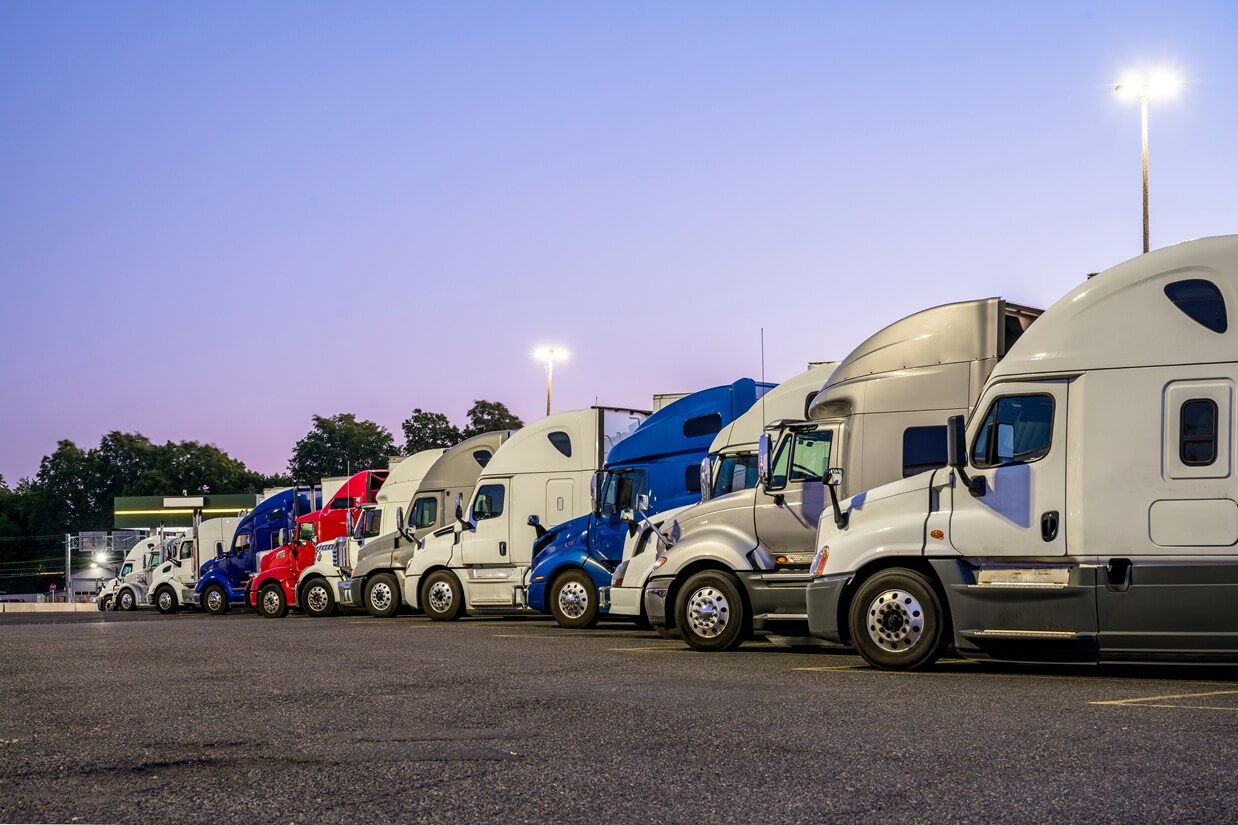
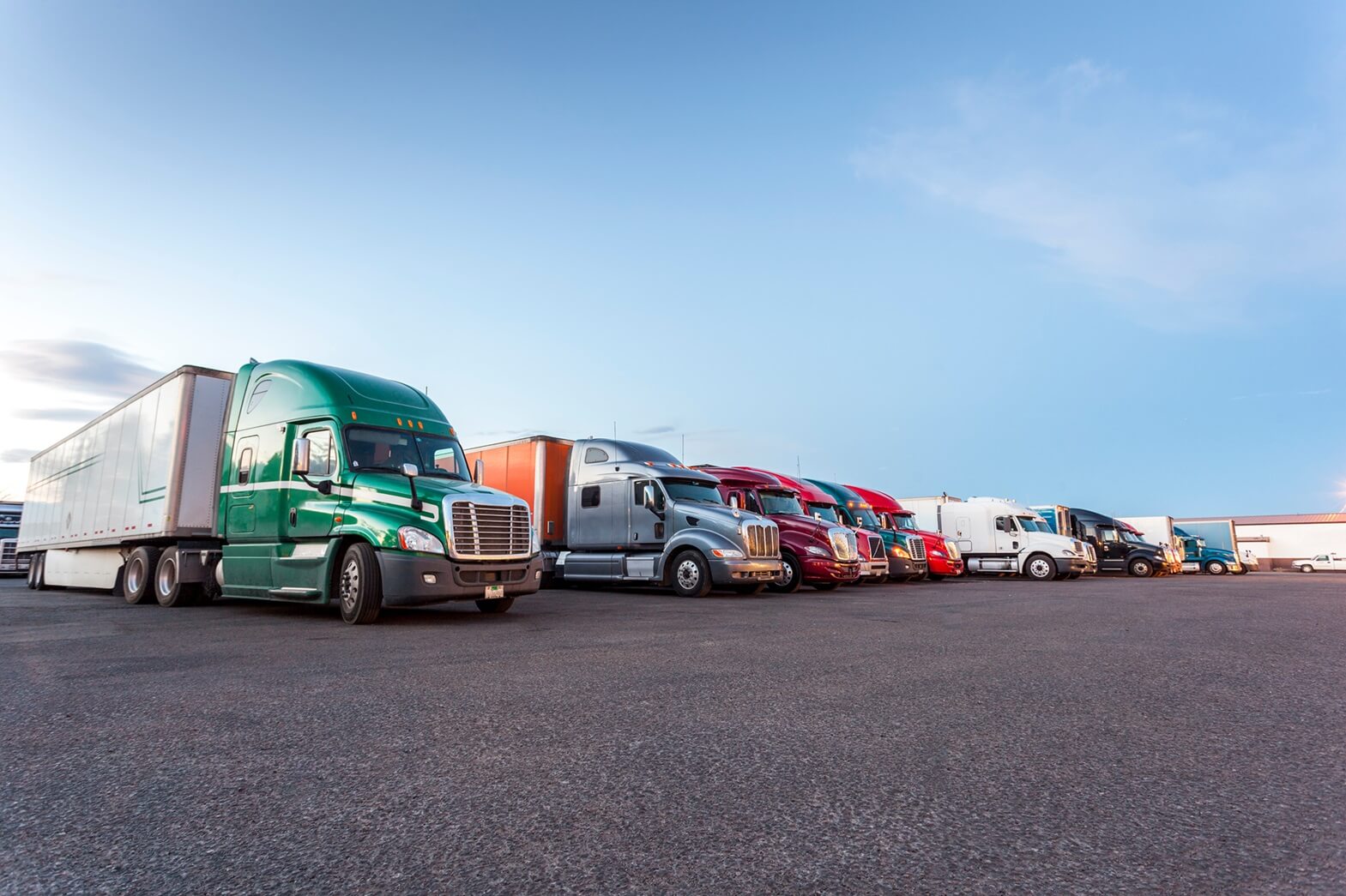
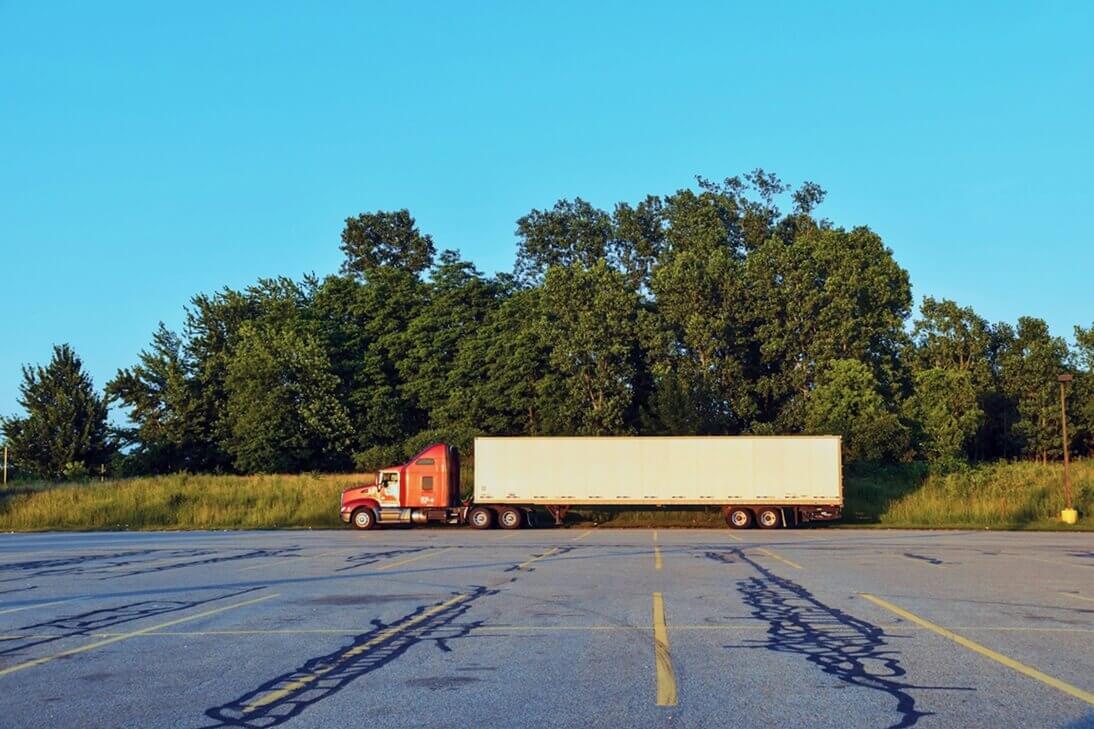
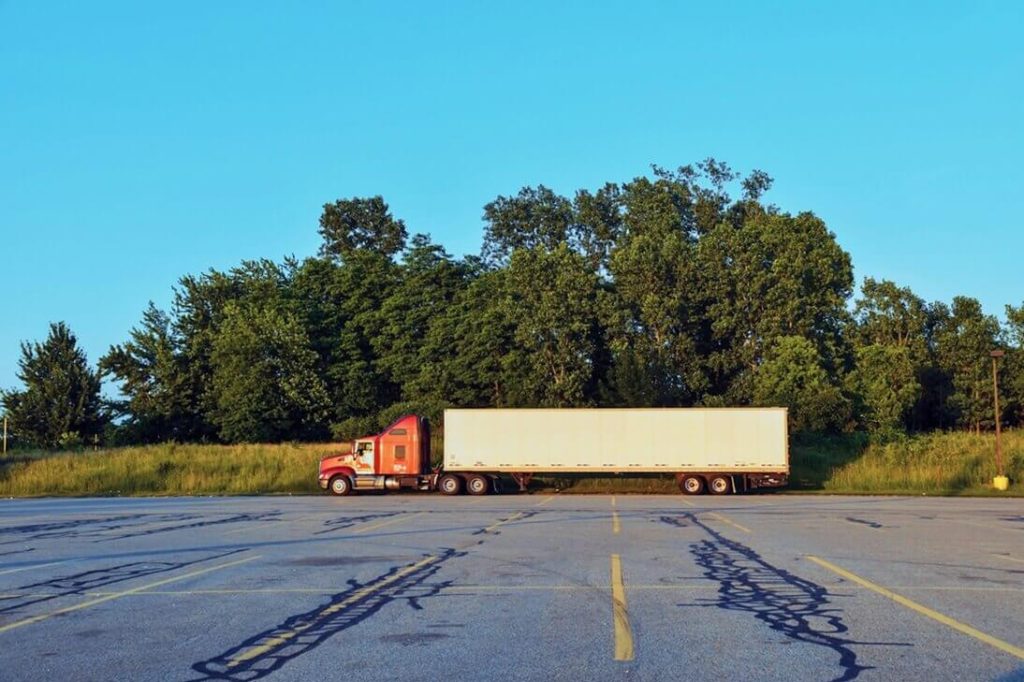
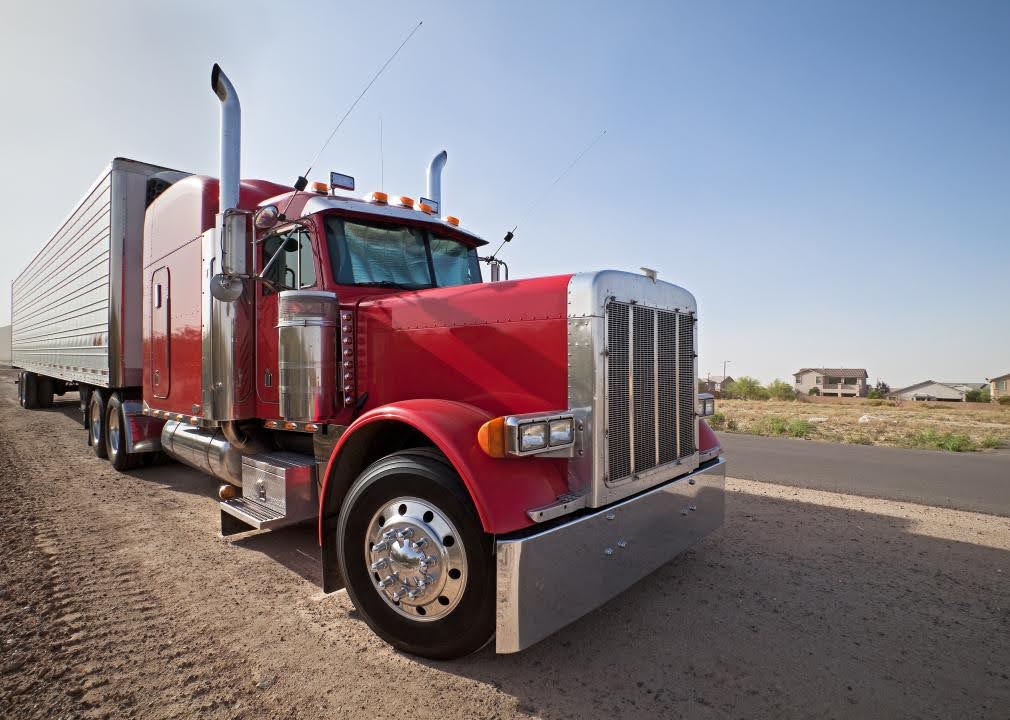
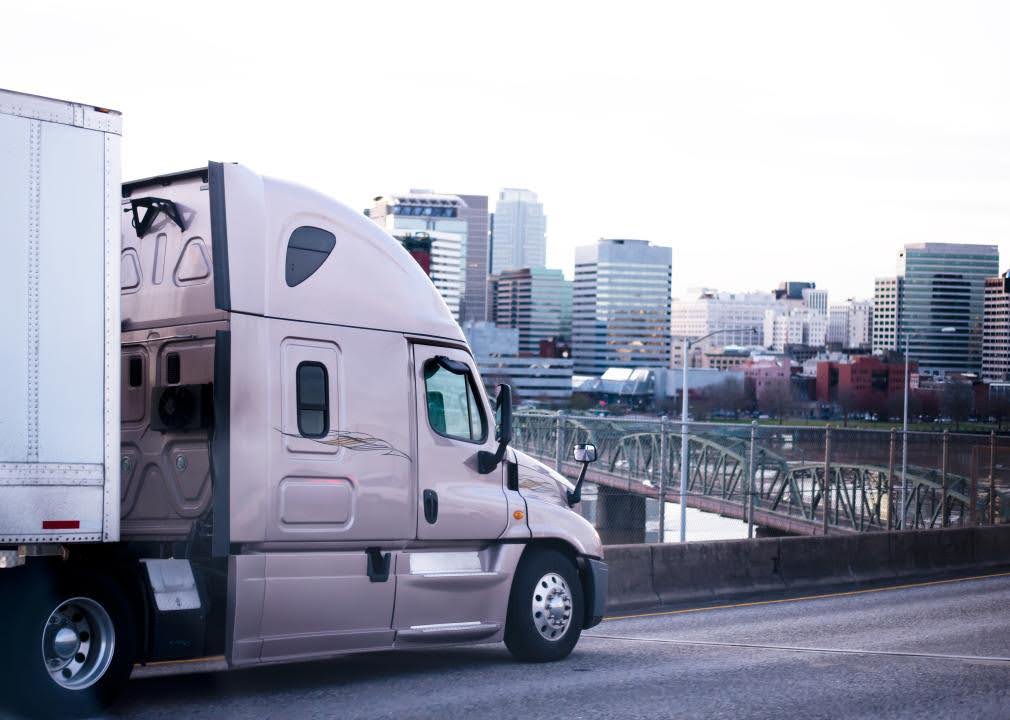
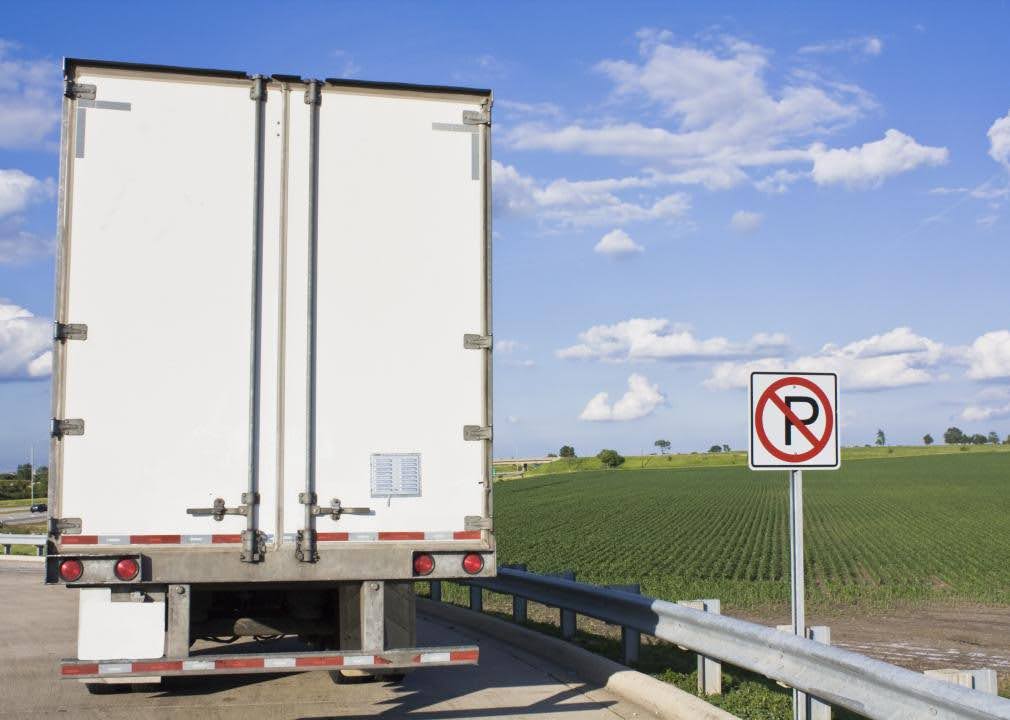
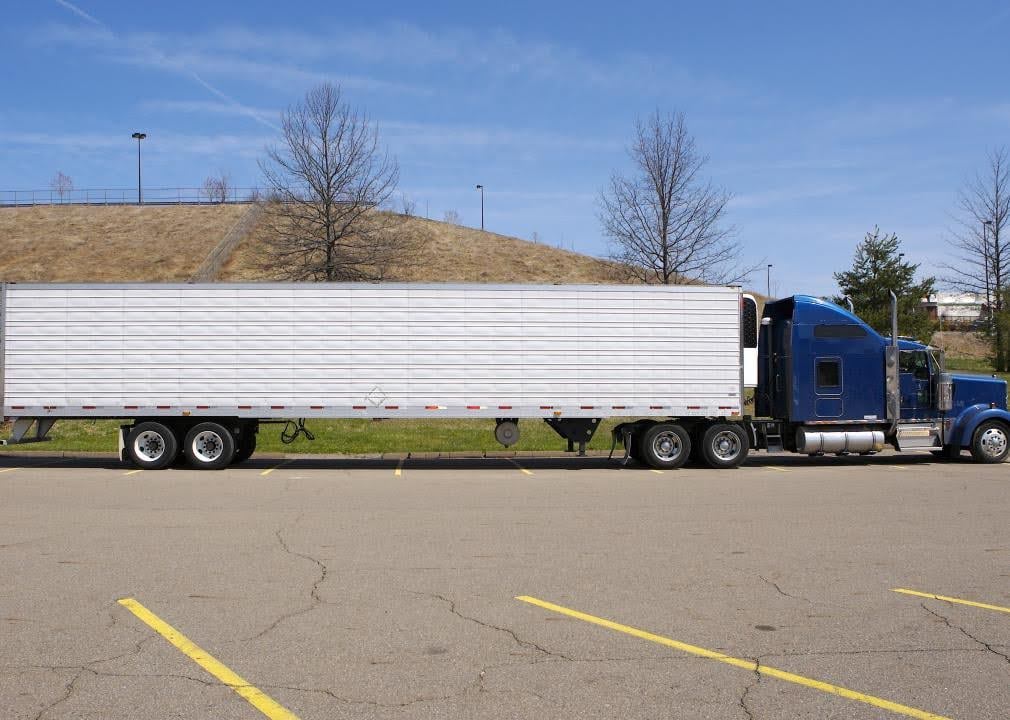
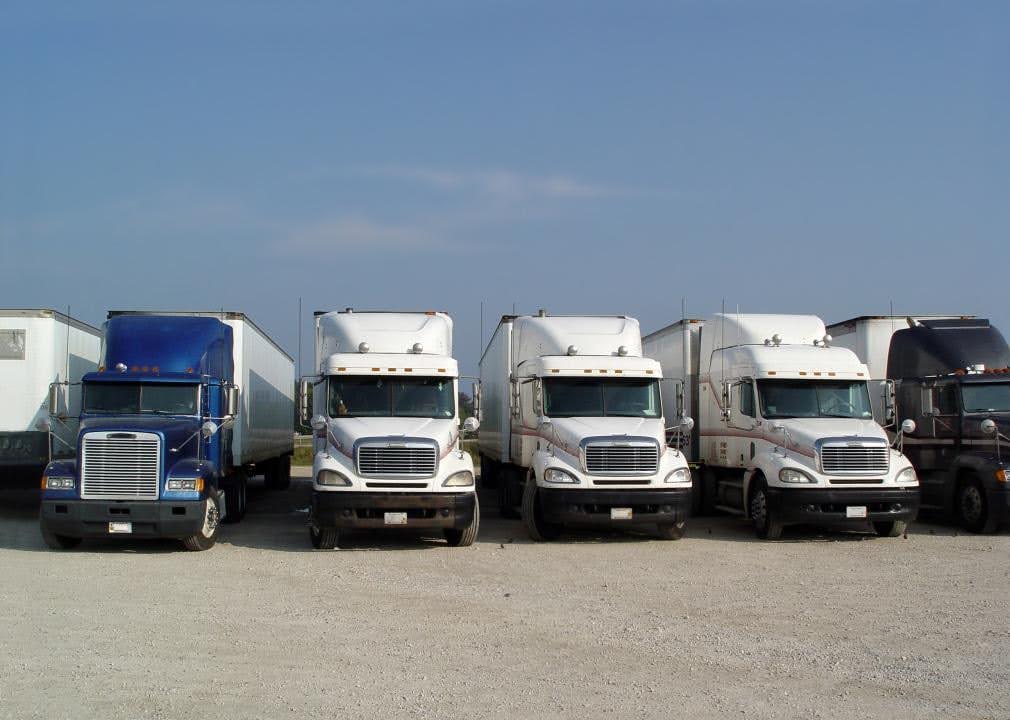
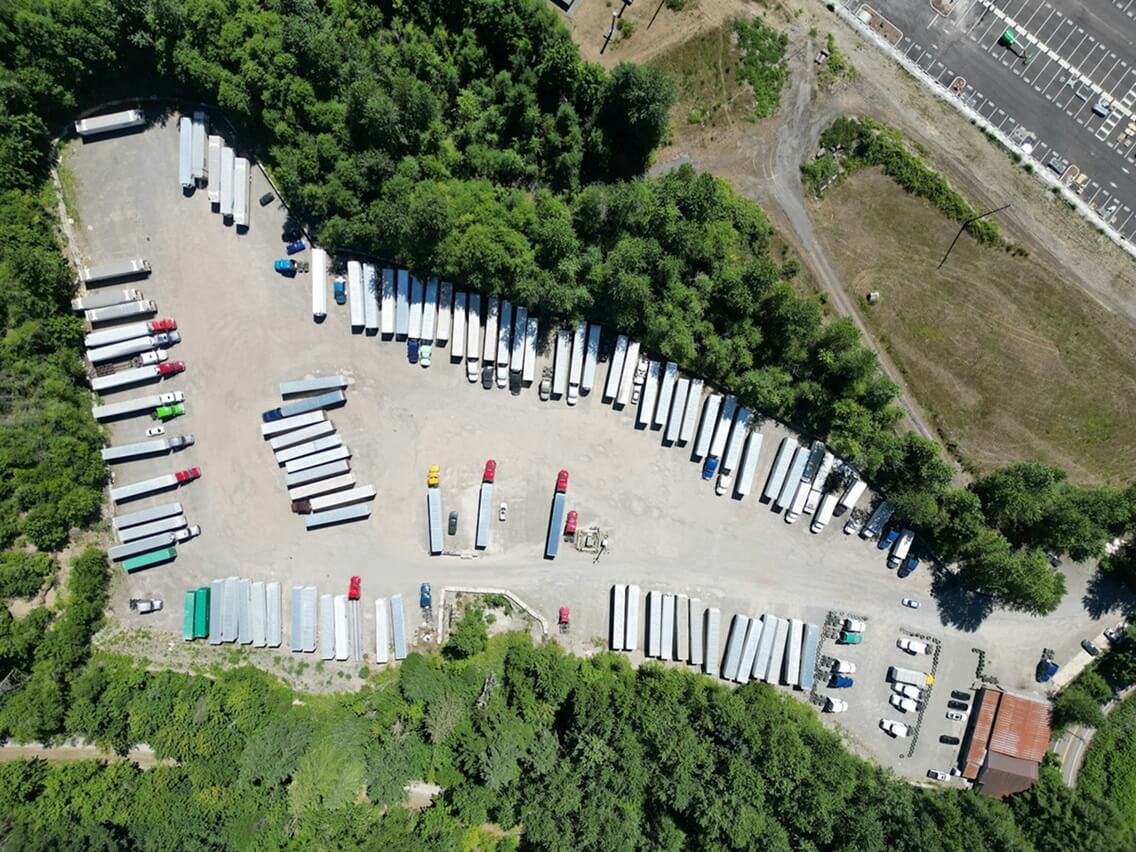
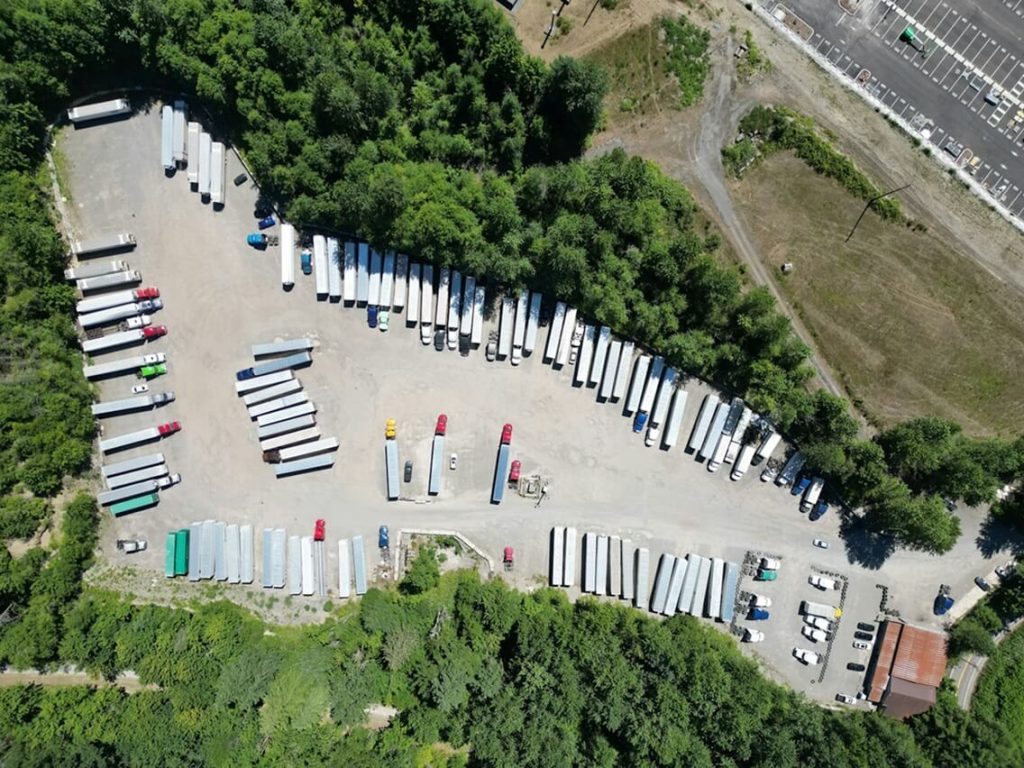
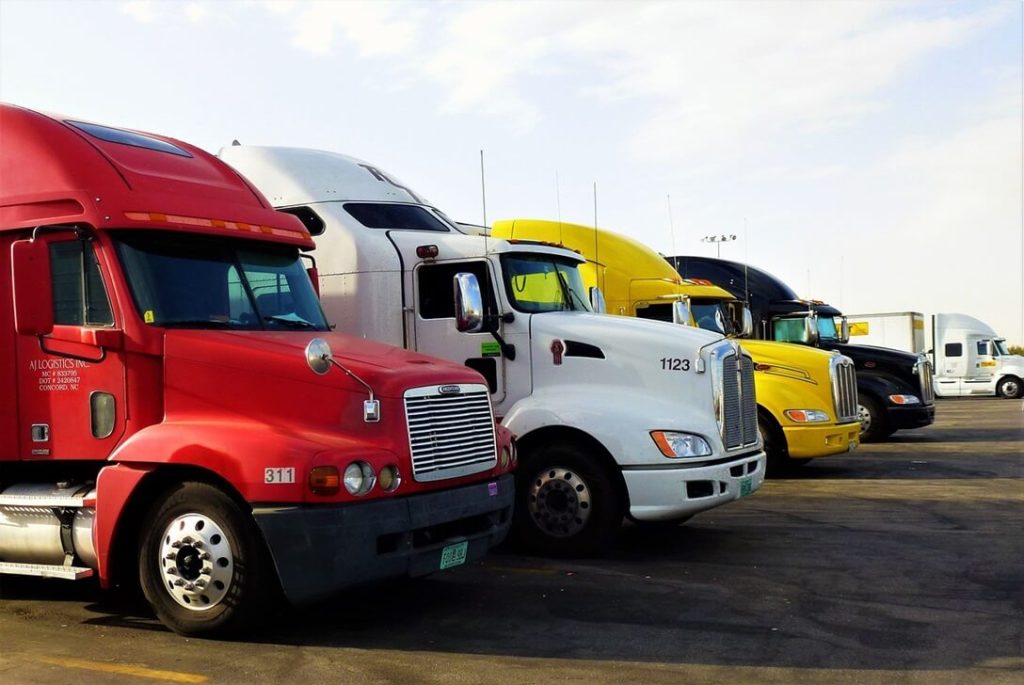
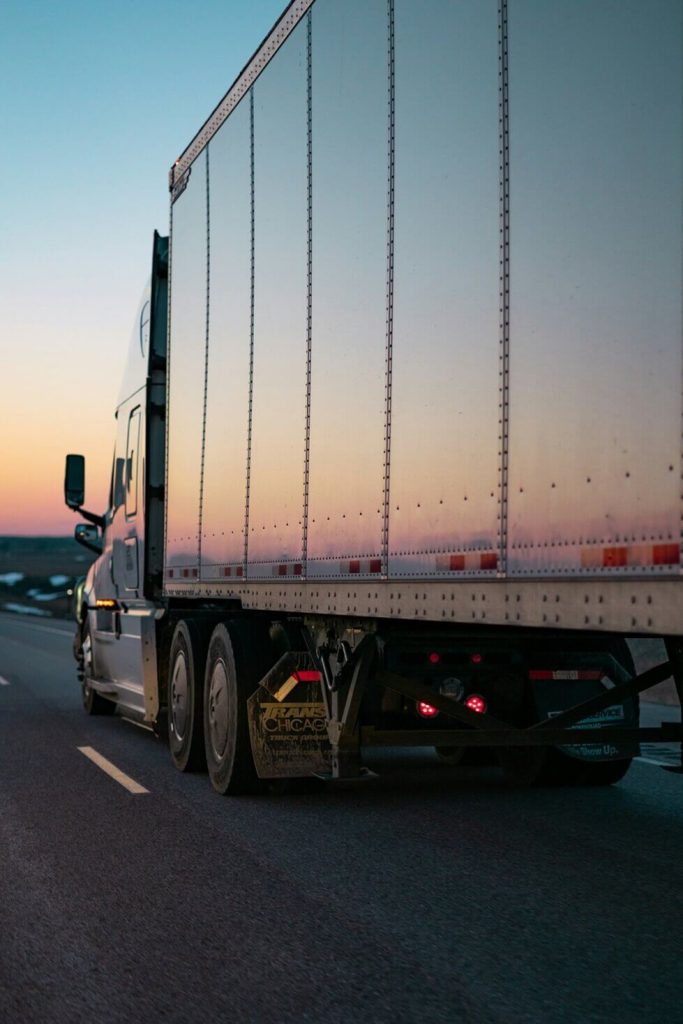
Truck drivers are the backbone of the supply chain, and without them, the transportation industry wouldn’t have thrived as much as it does today. Hence, it only makes sense to provide them with good working conditions that include semi-truck parking lots.
More often than not, this responsibility falls onto the drivers’ shoulders to find a place of temporary respite up to their standards.
If finding a convenient semi-truck parking lot has been a challenge for you, this article explores what key factors you should look for before staying a night.
5 Key Factors of a Good Semi-Truck Parking Lot
Every truck driver plans a route ahead of embarking on the road, and taking a few hours of rest is surely one of them for long-haul trips. These 5 key factors will help you locate a parking lot that matches your needs without taking you far from the highway.
Location
It’s no surprise that location is a nr 1 factor to pay attention to when choosing a semi-truck parking lot. Nobody wants to leave the main road and wander away just to take a 20-minute nap.
However, proximity shouldn’t be your only concern. Safety, on the other hand, is what comes first. The location of your parking lot should be well-maintained and illuminated so that you have ample space to park and leave the lot without a struggle.
If the parking lot you’re considering is also designed to welcome private vehicles, make sure there is dedicated parking for semi-trucks to avoid accidents and congestion.
Security
Staying in a secure semi-truck parking lot provides protection not only for the valuables you’re carrying but for yourself as well. For the sake of your peace of mind, you should consider resting in fenced and monitored parking lots.
The presence of CCTV cameras might scare off potential thieves and provide evidence in case of an unfortunate situation.
Amenities
Being on the road for days, if not weeks, shouldn’t prevent you from stretching your legs, doing laundry, and taking care of your hygiene. Some truck parking lots offer facilities to make the stay as comfortable as possible for truck drivers.
The amount of amenities will vary depending on where you stay, but you can always check for those providing basic needs like showers and restrooms, vending machines, laundry machines, etc.
Some semi-truck parking lots will go beyond that and have a 24/7 motel, restaurant, and other amenities where you can relax and recharge your batteries before returning to the road.
Accessibility
In the ideal world, truck parking lots would always be located with easy access to the highway. Unfortunately, that’s not always the case. However, with proper planning of your route, you can arrange your trip so that you don’t detour much and still can stop at a parking lot to rest.
Additionally, you can check whether the chosen parking lot has 24/7 access or staff and whether it has adequate space to accommodate your vehicle with easy exit to the highway.
Cost
As you may have suspected, fenced and monitored parking lots with amenities come at a price. If you don’t want to break the bank, you can stay in parking places with basic facilities and pay little to nothing.
At the same time, Truck Parking Club has a nice solution for finding a parking lot for trucks of all sizes.
Find the Right Truck Parking Lot with a Few Clicks
Our easy-to-use platform allows you to effortlessly find available spaces and book them right away with a few clicks. Whether you are looking for a last-minute stop or want to secure a slot in advance, you can arrange your parking time all in one place.
Become a member and access parking lots all over the US at an affordable price.
The information published herein is for general informational purposes only. Truck Parking Club does not make any representations or warranties about the completeness, reliability, legality, and accuracy of this information. Any reliance placed on such material is strictly at the user’s own risk. Truck Parking Club shall not be responsible for any losses or damages incurred in connection with the information published herein.
A recent survey by Trucker Path has shed some light on the specific amenities truckers want at truck stops. Unsurprisingly, abundant truck parking spaces remain the key priority, with over 86% of truckers stating it as their #1 issue.
Survey Results
According to the Trucker Path survey, 86% of respondents prioritize abundant truck parking, followed by clean showers and on-site restaurants.
Overall, the top-desired amenities are:
Large truck parking lot (86%)
Clean showers (67.5%)
On-site restaurant (47%)
Fresh and healthy food selection (41%)
24/7 truck repair and maintenance services (29%)
High-speed diesel pumps (27%)
Wi-Fi access (22%)
Laundry facilities (20%)
Driver lounge area (15%)
Pet-friendly options (13.5%)
Challenges in Implementing Amenities
In its survey, Trucker Path emphasizes the need for more investment in private-sector truck parking as public-funded facilities often lack these amenities.
The private sector, however, faces significant hurdles, particularly from local zoning laws and public opposition. Local resistance is commonly fueled by NIMBY (Not In My Back Yard) attitudes, which make it challenging to expand or develop new truck parking facilities.
Despite these challenges, there are examples of successful parking facility approvals. In Greenfield, Indiana, a proposal for a gated lot with 240 truck parking spaces was approved, though it faced resistance and lacked additional amenities.
Government Initiatives
On a governmental level, there has been progress in addressing the truck parking shortage, driven by increased federal funding.
However, federal regulations prohibit commercial services at publicly funded rest areas, which also generally offer fewer parking spaces compared to private truck stops. According to the Jason’s Law Survey, there are significantly more private truck stop parking spaces available compared to public rest area spaces.
What Does This Survey Tell Us?
Long story short, while truckers clearly articulate their needs in truck stop amenities, significant challenges remain in meeting these demands due to local regulatory hurdles and public opposition.
Efforts by both private enterprises and the government at various levels are ongoing to address these issues. But are they enough?
That’s a tale of the future. For now, we can do everything we can to try and improve truckers’ lives and help them find reliable truck parking spots.
This is where Truck Parking Club comes in, offering property owners and truckers a platform where they can connect. Whether you’re a trucker looking for available parking or a truck parking owner who wants to drive business, Truck Parking Club can help with both.
Become a trucker member today and browse available spaces, or become a property member and list your available truck parking.
The information published herein is for general informational purposes only. Truck Parking Club does not make any representations or warranties about the completeness, reliability, legality, and accuracy of this information. Any reliance placed on such material is strictly at the user’s own risk. Truck Parking Club shall not be responsible for any losses or damages incurred in connection with the information published herein.
Being a trucker is already a tiring profession, but looking for a hotel that accommodates semi-trucks is a whole different story. Most companies don’t cover the cost of taxis to take you to the nearest lodge, so the responsibility of finding a place to sleep often becomes the drivers’ responsibility.
If you’re one of the truckers wondering how to find the right hotel with semi-truck parking, this article is for you. We will explore what makes hotels truck-friendly and what you need to check before taking your time to detour to reach the place.
What Makes Hotels Truck-Friendly?
The very first factor that makes hotels available to truck drivers is, no doubt, an ample parking space. If the parking lot is poorly maintained, chances are you won’t be willing to leave your semi-truck there.
Hotels or motels with semi-truck parking are the most important criteria, yet there are a few more things to look out for.
Truck-friendly accommodations are usually the ones closely located to markets and fuel stations and offer easy access to the highway. Moreover, knowing the nature of work, some hotels offer breakfast to truckers who must return to the road before the regular breakfast time.
Finally, hotels with must-have amenities like laundry facilities and security are also considered suitable for truckers.
What to Consider When Booking Hotels with Semi-Truck Parking?
There is a difference between booking a parking lot and a hotel for truck drivers. Although some criteria may overlap, the details you need to pay attention to vary. This is because most semi-truck parking lots are dedicated to truck drivers, while hotels’ main clientele is anyone looking for a room to spend a night at.
Location
When planning your route, you should look for hotels with semi-truck parking as close to the highway as possible so that the detour won’t steal a lot of your time. When you find the right option, don’t be shy to ring them and confirm they are indeed truck-friendly and have the facilities you need for your comfort. Otherwise, you risk reaching the destination and returning to the highway after discovering the parking load is not equipped to accommodate your semi-truck.
We also suggest truck drivers check the reviews left by previous guests, specifically truck drivers. There, you are sure to find useful information and things you should know about before booking a room in the hotel.
Next, take your time to check the satellite view of the map and, specifically, the parking section to see where you can leave your truck.
Parking Space
A few things you need to know about hotels with semi-truck parking lots are the number of available spaces and the condition of the parking surface.
Even though you book a room in a hotel with a semi-truck parking lot, when you arrive there, you may not even find an available parking space to leave your truck. Surely, you can’t leave your truck unattended and sleep a night in a room, but there may not even be a refund for such an inconvenience.
When calling the hotel, ask about power lines. We agree it may be a strange question to ask, but low-hanging power lines may prevent you from safely reaching the parking lot.
It may sound strange, but some motels with semi-truck parking lots with gravel surfaces may forget to plow the area. So, it makes sense to double-check whether the parking surface is appropriate for a semi-truck not to get stuck and be winched out.
Quality of Amenities
Once you find a hotel with semi-truck parking, naturally, you would check for amenities. The first thing you should check is whether a cafe or restaurant is located within the premises or walking distance and you don’t have to take a taxi to get food.
By reading the reviews, you will also get a good idea of whether the place is clean and all amenities are working properly to avoid surprises, especially the laundry facility.
Check Reviews
We’ve mentioned a few times throughout the article that checking reviews will help you understand if the hotel is worth booking or not first-hand. Especially those left by truck drivers. Truck drivers will mention the details you wouldn’t find in any hotel description, from lack of black-out curtains to loud noises and level of dirtiness in the rooms – basically, anything that could compromise your stay.
Check for Discounts for Truckers
Staying in motels with semi-truck parking means they may have special discounts for truckers. It’s always a good idea to call and ask because these promotions may not be visible on the websites. By taking advantage of these deals, you’ll not only save on accommodation costs but also free up funds for other essential trucking expenses. Whether it’s upgrading equipment, investing in maintenance, or simply treating yourself on the road, every dollar saved adds up to smoother journeys ahead.
Loyalty Programs
If possible, you can also enroll in a loyalty program if you often manage to stay in the same hotel. The points you collect can be later spent on all sorts of things like a free night, food, and other benefits.
You only need to find the right tool to help you organize your stay whenever you hit the road. This is something the Trucking Parking Club can help with.
Bottom Line
Finding a place to sleep and rest has become easy with Truck Parking Club. Our platform was designed to help truckers find a place that lives up to their expectations and helps find a secure and comfortable place for them and their semi-trucks.
The app is easy to navigate and has a map where you can see all of the parking lots with or without amenities that you could use. You can filter by what you wish to have in your parking lot and find paid and free parking places.
To browse available locations, you only need to register and automatically, you get access to all semi-truck parking lots as a Truck Member. You can always conveniently book a place last minute or secure a slot in advance.
With Truck Parking Club, you can drastically reduce planning time and secure a secure lot with a few clicks.
The information published herein is for general informational purposes only. Truck Parking Club does not make any representations or warranties about the completeness, reliability, legality, and accuracy of this information. Any reliance placed on such material is strictly at the user’s own risk. Truck Parking Club shall not be responsible for any losses or damages incurred in connection with the information published herein.
Throughout the year, there’s always a degree of demand for semi-truck parking. However, there’s a significant variation in how much demand there is in different parts of the year. Below, we’ll take a closer look at how seasonality affects the demand for truck parking.
Is Trucking Seasonal?
To a certain degree, trucking is seasonal. Before looking at the peaks and low points of the trucking industry, let’s discuss how and why trucking is seasonal.
Throughout the year, there are different aspects that may affect the demand for trucking and, therefore, semi-truck parking. Some of the different factors that may have an influence include the following:
Weather conditions – In certain areas, like Alaska, extreme weather conditions may affect the demand for trucking. Typically, during the harsh winters, the demand for truck parking will be lower as many roads are impassable.
Industry demand – In many industries, industry demand is highest during particular seasons and lower or non-existent in other seasons.
Holidays – In certain industries, various holidays and feast days can have a significant effect. In some of them, several weeks or months around certain holidays may be accompanied by low demand.
Semi-Truck Parking Demand Cheat Sheet
We’ll discuss the seasonality of trucking (and truck parking) as well as the reasoning behind it, in just a moment. For now, here’s a cheat sheet in case you’re in a hurry.
Season
Semi-truck Parking Demand
Winter (January-March)
Low
Spring (April- June)
Average
Summer (July-September)
High
Fall (October-December)
Very High
Noteworthy Trucking Seasonality
There are several different ways that you can look at the seasonality of semi-truck parking. But one significant way is in terms of the peak months and the low-volume months.
Let’s take a closer look at which months show generally higher demand for truck drivers and which tend to be low-demand.
January to March
From January to March is generally the season with the lowest demand for trucking services. Naturally, this also translates to a lower demand for truck parking.
There are several reasons for this, including the following:
Post-Holiday Inventory Adjustments – In preparation for the peak season, which is in November and December, many companies and businesses order a large amount of stock and supplies. After the festive season, from January to March, businesses take the time to evaluate and adjust their inventory again.
Weather – In many places, the first three months of the year are the coldest months. Thanks to the accompanying snow, ice, and unpleasant driving conditions, places may delay non-urgent orders till later. Otherwise, inclement weather can cause severe disruptions and lead to less truck traffic on the road.
Harvest Season – Specifically for truck companies transporting produce, these three months lie outside the harvest season, meaning there’s nothing to transport.
This is the time when you’re likely to do the least and see the least demand for semi-truck parking. However, most trucking companies work it so that all their drivers get a chance to drive.
April to June
These three months demonstrate a fairly standard level of demand. They’re not the most demanding months, but nor are they as quiet as the preceding three. This is the time of year when truck drivers can look forward to easing back into their schedules.
Some of the factors affecting demand during this time include:
Harvest Season for Early Crops – Unlike the winter months, the spring season will manifest in the harvesting of fast-producing and early crops. During this time, drivers may expect to carry early-season and fast-growing veg like leafy greens and beans.
Equalized Inventories – At this point, most businesses have adjusted their inventories and know exactly what they need. They’re starting to buy standard and seasonal items in moderate amounts.
Comfortable Weather – The roads are mostly ice-free in the spring season, allowing for free transportation of items. Most weather-induced disruptions and delays are a thing of the past.
During this season, you’ll see increased demand for semi-truck parking. However, it won’t be too high. You’ll also earn better money than during winter.
July to September
During these three months, truck drivers go through the start of their peak season. This is one of the times when you’ll likely earn the best.
Some of the reasons for the rise in demand include:
Preparation to Return to School – Many outfitters are ordering in school supplies as parents and college students prepare to return to their studies.
Stock Hoarding for the Festive Season – Although it’s still early in the year, many retailers start stockpiling for the festive season from August to September. That way, they ensure that they’re ready for the season.
This season is both advantageous and stressful for truckers. For one, there’s the opportunity to maximize earnings in preparation for the quiet season. However, the demand for semi-truck parking is high, and this season can be stressful.
October to December
These three months are, without a doubt, the busiest part of the truck driver’s year. During this time, the demand for semi-truck parking is ludicrous, with most truck drivers earning some of their highest fees for the year.
This is largely due to merchants buying in last-minute stock or trying to sell large amounts of merchandise quickly during the festive season. Many temperate fruits also come into season in the fall months, adding agricultural burdens to the list. Finally, most carriers are trying to find high-value loads to carry as a bonus before the quiet season rolls around.
Don’t Succumb to the Pressures of Peak Season: Try Truck Parking Club
Whether it’s the quiet season or the peak season, Truck Parking Club never sleeps. Thanks to our unique approach that connects property owners and truck drivers, you have access to year-round semi-truck parking with us.
Simply register for a free account, select parking in the area where you’ll need to rest, and make your booking. You’ll have access to hundreds of parking spots that aren’t generally available to truck drivers, and account sign-up is free and easy.
The information published herein is for general informational purposes only. Truck Parking Club does not make any representations or warranties about the completeness, reliability, legality, and accuracy of this information. Any reliance placed on such material is strictly at the user’s own risk. Truck Parking Club shall not be responsible for any losses or damages incurred in connection with the information published herein.
If you’re in the trucking or logistics industry, you can’t help but be aware of the truck parking shortage in the US. But this is a much larger issue than simply a lack of truck parking. This problem affects many other industries and businesses in one way or another.
Below, we’ll take a look at, specifically, how the truck parking shortage disrupts supply chains.
It Makes Driver Recruitment Harder
While the trucking industry is always looking for new truck drivers, the truck parking shortage makes it more difficult for companies to recruit drivers. This is largely because even aspiring truck drivers don’t want to deal with the pressures and complications of not having access to parking when they need it.
This is further complicated by the Hours of Service (HoS) requirements mandated by the Federal Motor Carrier Safety Association (FMCSA). The FMCSA demands that drivers drive for no more than 11 hours at a time. While this is a reasonable safety precaution to ensure that drivers don’t drive when fatigued, the truck parking shortage can make it difficult to adhere to these requirements.
In fact, this recruitment problem is significant enough to have ranked third in the top five trucking industry challenges of 2022 (as stated in a report by the American Transport Research Institute). At the time, it had already been an issue of significant concern since 2005.
As you can see, the truck parking shortage directly correlates to having a limited number of available truck drivers. Naturally, insufficient driving staff can lead to problems with supply since there aren’t always enough drivers to drive all the loads.
It Compromises Road and Driver Safety
When there’s a serious truck parking shortage, it makes it harder for drivers to practice safe driving.
Some of the ways this may affect drivers and driver safety include the following:
Fatigued Driving
Fatigue is just one of the ways in which this is true. When there isn’t an available space to stop and take a rest, drivers often have to keep going longer than is advisable. Fatigue is a serious problem and can result in fatalities.
According to estimations by the AAA Foundation for Traffic Safety, approximately 328,000 drowsy driving accidents occur every year. Of those, more than 6,000 are fatal. While this may not be strictly related to the truck driving industry, it does show the dangers of driving while fatigued.
While the loss of life is already devastating, there’s a secondary element to this. Since truck drivers play an integral part in the supply chain when they get into an accident, it also results in damage to, or loss of, the merchandise they’re transporting. This can severely affect the supply chain, especially in the case of rare or valuable items.
Speeding to Reach Safe Parking Areas in Time
The other side of the truck parking shortage is that truck drivers may try to drive faster to reach their destination. They may also attempt to reach a certain space where they know they’re likely to get parking before reaching the end of their Hours of Service.
Again, speeding leads to accidents. In the trucking industry, accidents translate to lost merchandise.
Having to Park in Unsafe Locations
Due to the truck parking shortage, there’s often not enough safe parking for all the trucks on the road. This means that some drivers will, by necessity, have to park in areas that aren’t as safe.
This not only places the drivers in danger but is a risk to the supply chain. When drivers are forced to park in unsafe areas, the merchandise is at a greater risk of being stolen or damaged.
It Causes Delays
Another side of the truck parking shortage is that it can cause supply delays.
As stated earlier, truck drivers have to adhere to Hours of Service regulations. Failure to do so can result in fines or even the suspension of their commercial driving license.
When a truck driver arrives at a designated truck parking area, and there isn’t another nearby, but they’ve reached the end of their 11-hour drive time, they may be forced to wait for a space to open. This can result in delays to the merchandise reaching its destination.
Truck drivers may also have to wait in line at distribution centers, resulting in frustration and longer wait times.
While minor delays may not be serious in some industries, they can be devastating in others. For instance, where just-in-time inventory is concerned, on-time delivery is essential. Companies relying on this type of logistics rely on their deliveries to be well-coordinated and perfectly on time.
The truck parking shortage can lead to significant delays in this industry. Since Just-in-Time services play a part in most supply chains, this can lead to further disruptions and delays for companies and services relying on the affected companies.
How Truck Parking Club Can Help
Truck parking shortages can be a significant factor in many ways, and there’s no denying that they exist. However, there are ways to mitigate its effects. For example, you can use Truck Parking Club.
When you use the Truck Parking Club app on mobile devices or the desktop site, you get access to hundreds of parking spaces that aren’t generally available to truck drivers.
Since you can book your space in advance, you can rest assured that you’ll have a parking space when you get there. Through our unique approach, we connect truck drivers to parking spaces that are typically overlooked.
Find an available parking space in your area of interest.
Book your space as far as days in advance.
Drive with an easy heart.
From the East Coast to the West Coast, if you need a place to park your truck, we can help you. Thus far, we’ve connected truckers to parking spaces all around the country. So, what are you waiting for?
The information published herein is for general informational purposes only. Truck Parking Club does not make any representations or warranties about the completeness, reliability, legality, and accuracy of this information. Any reliance placed on such material is strictly at the user’s own risk. Truck Parking Club shall not be responsible for any losses or damages incurred in connection with the information published herein.
Store your trailer in a safe place with a state-of-the-art platform that locates any size trailer parking.
Truck-safe city parking: 4 innovations to protect cars and pedestrians
If you drive a car regularly, you’ve probably faced the frustration of arriving at your destination, searching for a parking spot, and coming up dry.
Big-rig truck drivers across the U.S. face that reality daily. In a survey of 11,000 drivers conducted in 2020 by the Federal Highway Administration, nearly all (98%) truckers said they have problems finding parking, with most saying they encounter this once or more a week. The lack of truck parking spots causes more than a minor inconvenience: It forces truck drivers to park in precarious situations along roads, exit ramps, and vacant lots.
Precariously parked trucks have been linked to numerous car accidents and deaths. The Federal Motor Carrier Safety Administration reports that 673 fatal crashes involving parked or working vehicles occurred between 2018 and 2020, with multiple other crashes causing injuries.
Last year, a Greyhound bus carrying 21 passengers slammed into three tractor-trailers parked along the shoulder of a ramp in Madison County, Illinois. Three passengers died, and the others had serious injuries.
Just two days later, Texan resident Mario Gonzalez died when he drove his pickup truck into a semitruck that was parked overnight on the side of a service road near San Antonio.
Truck drivers understand the danger of parking in unofficial locations but are often caught in an impossible situation: Federal laws mandate they take breaks after driving more than eight to 10 hours, but there is usually nowhere to safely and legally park.
One former truck driver, Vindal Ogletree, recounted a “no-win situation” to Axios Charlotte. He parked on a ramp during one of his required breaks, but an officer came by and ordered him to leave. Then, as he was moving the truck, a second officer stopped him, checked the electronic device that tracks his trips, and told him he was violating the law by not taking a proper break.
“They’ve got a federally mandated maximum amount of time that they could drive, but they don’t have a federally guaranteed safe place to park,” Ben Greenberg, president and CEO of the North Carolina Trucking Association, told Axios.
Charlotte, North Carolina, is just one of many cities addressing the parking problem with increased regulation; according to Axios, city leaders raised parking fines from $25 to $100. Yet other cities are outright banning overnight truck parking. Since 2021, Minneapolis has banned trucks weighing more than 26,000 pounds from parking on any street, and neighboring city St. Paul followed suit in 2023.
If parking bans don’t fix the underlying problem, what will? TruckParkingClub explored five potential solutions to help mediate the national truck parking shortage.
Improved information management
While many truck parking lots are overrun, others boast empty spots. Technology such as the Truck Parking Availability System in Florida seeks to inform drivers of what parking is available and where.
The federally funded Truck Parking Information Management System provides a similar solution. TPIMS collects information about availability in truck parking lots in eight states and sends it to electronic roadside signs, websites, and navigation apps to help drivers find a spot in real time.
FIND DAILY TRUCK PARKING IN NEARLY EVERY STATE
On the road and looking for truck parking for your rig? Find the closest daily parking spot in a matter of seconds.
Updating zoning
An obvious, yet often unpopular, solution is building more truck parking lots.
In most areas, local zoning laws require parking lots to be built in an industrial zone. Even when business owners can build in an industry zone or obtain a variance, locals may worry about noise, pollution, or additional traffic. Many prospective business owners find themselves fighting the local municipality’s zoning board to be able to build their parking lot.
Taking advantage of excess parking
Instead of building new parking spaces, industry and government leaders can consider repurposing underutilized spaces. Stadiums, malls, and warehouses are all examples of places with ample parking footprints that aren’t always in use.
The National League of Cities recommends city leaders explore unused lots as an option, and some entrepreneurs are working to connect truck-friendly lots with truckers. Tra Williams, a truck driving school CEO, is partnering with large venues like Amerant Bank Arena outside Miami to make spots available for mandatory breaks.
“America has more parking availability than the rest of the world combined,” he told Business Observer. “There are eight parking spaces in America for every car. We do not have a parking shortage; we have a shortage of connections between those who have available parking and those who need available parking.”
Renovating existing parking and rest stops
While it seems straightforward, faded parking lines and unenforced time limits can exasperate the parking shortage. A research report from the Institute of Transportation Studies at the University of California, Berkeley, recommends restriping parking spaces at public rest areas to ensure drivers can clearly see each spot and utilize a parking lot efficiently.In other cases, states are transforming excess car parking spots into much-needed truck spots. Missouri officials, for example, noticed the need for more commercial parking in the northwest region of the state and are working toward converting two commuter rest stops into truck parking.
We should start this handy little guide by making one thing extremely clear: the vast majority of truck drivers are perfectly well-mannered and respectable when it comes to truck stop etiquette. We know that, because rarely do we receive negative feedback from our vast network of truck parking property members.
Truckers, for the most part, are absolutely great when it comes to etiquette.
If you could sense a “but” coming after that statement, here it is: there is a small minority of drivers who, according to other trucker drivers, are not conforming to the same truck parking etiquette and might be described as a little inconsiderate at best. There, we said it.
We don’t blame them, though. Trucking is a stressful job with long hours away from home and busy schedules. Truckers are also faced with a terrible parking shortage, causing them to race against the HOS clock as they scramble from parking lot to rest area, hoping to find a spot.
As a result, polished courtesy is the last thing on the minds of many truckers. They are simply too busy trying to meet their drops and stay safe on the road.
Gentle Reminder
Having said that, we thought it might be useful to remind the least experienced drivers of the basic ‘bro code’ when it comes to truck parking manners, general conduct, and respect.
As you will see, most of it is nothing more than basic common sense, but a quick blast through the basics never hurts, so let’s do that.
Ready to level up your truck stop etiquette game? Join us as we offer a few basic pointers on truck stop etiquette. The general do’s and don’ts, if you will.
Good Truck Stop Etiquette
We reached out to several Truck Parking Club members and inquired about the main truck parking etiquette rules that they would like other drivers to be more mindful of.
Here is what they came up with.
Keep the Restrooms & Showers Clean
Truck stop restrooms and showers are used by a ton of drivers daily – It’s only fair that everyone contributes to their cleanliness. It’s pretty simple, really: after washing your hands, make certain that used towels end up in the bin, not on the floor. Try not to cover the sink area in floods of water, and please, for the love of god, flush the toilet after use!
Park in a Designated Space
We know most truck stops are pretty busy these days, forcing drivers to park in areas they probably shouldn’t, but it’s important to use the designated areas only. Avoid parking at fuel islands or spots that could hinder others, make the most of marked parking bays, and adhere to the common practice of backing in and pulling out smoothly. Do this, and you will help to maintain order and safety in the parking lot.
Help Fellow Truckers Out
Solidarity is important in our community! Experienced drivers can often spot a rookie in need of guidance. Offering advice or assistance at truck stops not only creates a sense of community but also helps maintain a smooth flow of operations.
Be Friendly & Treat People with Respect
The Golden Rule of treating others as you wish to be treated is particularly applicable at truck stops. A friendly greeting, a respectful attitude, and small acts of kindness can greatly improve the general atmosphere.
Respect the Queue at Fuel Islands
Nothing annoys truck drivers quite as much as dilly-dallying at fuel islands. Just like a drive-thru, being quick and considerate is the best approach. Refuel, perform any quick checks on your vehicle, and then move along to allow others to use the facilities. If more extensive work on your truck is needed, just go ahead and park elsewhere – a fuel island is not the place to be changing wiper blades or topping up oil, although many do!
Bad Truck Stop Etiquette
We asked the same drivers what bugs them out the most when it comes to a lack of truck parking etiquette. Let’s take a look.
Not Driving Carefully in Confined Spaces
Ease off the accelerator and stay alert in those tight spaces. Truck stops are buzzing hives of activity with vehicles of all sizes and people moving about, so your vigilance is extra important. A cautious approach not only keeps you safe but also protects everyone in your path.
Not Respecting Personal Boundaries
Truck stops can be great places to chew the fat with fellow drivers, but remember, not everyone wants to. Some drivers need a little alone time after a brutal day – a chance to kick back, relax, and retreat into a bubble. Try and gauge whether your fellow trucker is up for a chat before doing so. Remember, a friendly nod goes a long way, and sometimes, so does giving someone their space.
Being Unprofessional
When others flout the rules of etiquette, it’s tempting to respond in kind. However, always aim to take the higher ground. Encountering unprofessional behavior can be frustrating, but escalating the situation rarely helps. Lead by example instead, and if a situation worsens, it’s better to inform the truck stop staff if necessary.
Be Indiscreet About Cargo
Chitchat is part of the truck stop culture, but some things are better left unsaid – like what you’re hauling. Cargo theft is a real danger in this day and age, so discretion is your ally. Keep the conversation light and general, especially if you’re staying overnight. Discretion is about protecting both your load and your livelihood.
Bottom Line
Again, most truck parking etiquette boils down to basic common sense. Just show a little respect, be mindful of others using the truck stop facilities, and you will be fine… That’s really all there is to it!
If you are looking for more convenient truck parking – away from the hustle and bustle of the megas – we have the answer right here at Truck Parking Club.
With thousands of private parking spots all over America, our truck parking app offers a wide range of parking with a sense of peace and order that’s sometimes hard to find in the busier public stops.
Nothing beats the feeling of pulling into a spot that’s reserved just for you, away from the stress of the big lots, where the facilities are well-maintained, and the atmosphere is calm!
Interested in securing more convenient parking? Just register with Truck Parking Club, browse our listings for private truck parking, and book your affordable spot. After all, why jostle for space at a crowded truck stop when you can book a private spot with just a few taps on your phone?
Visit Truck Parking Club today and change your truck parking game!
The information published herein is for general informational purposes only. Truck Parking Club does not make any representations or warranties about the completeness, reliability, legality, and accuracy of this information. Any reliance placed on such material is strictly at the user’s own risk. Truck Parking Club shall not be responsible for any losses or damages incurred in connection with the information published herein.
Every trucker knows that a good day on the road is as much about the journey as it is about finding the right place to rest. But with truck parking spaces in such woefully short supply, this essential need can often go unmet.
More truckers than ever are resorting to dangerous truck parking on exit ramps, abandoned properties, and even shoulders for parking, affecting not just their rest, but also their safety.
Through this article, we shall take things back to basics, and explore the two different parking options of truck parking lots and rest areas, comparing their benefits and differences and offering a little advice on the best parking solutions available at the moment.
We shall also guide you on how to conveniently find these spaces. Hopefully, we can help you to find the rest you deserve.
Rest Areas
Rest areas offer truckers a much-needed break on their long hauls. Scattered along most busy routes in one form or another, they provide a very basic but essential service: a spot to pause, refresh, and recalibrate.
Unlike a semi-truck parking lot, rest areas are typically quite minimalistic, focusing on the absolute bare-bone necessities. They usually feature a few parking spaces, a handful of restrooms, and the occasional picnic tables or vending machines thrown in for basic convenience.
What they lack in amenities, however, they make up for in accessibility and simplicity. Rest areas tend to be strategically placed to offer ease of access for drivers looking to take a short break from the monotony of driving or to adhere to HOS regulations. While they might not have the extensive services of larger semi-truck stops, their convenience for a quick stop and stretch can be a huge relief for a trucker needing a brief moment of respite.
In short, rest areas are incredibly straightforward, but they serve a good purpose in supporting driver alertness and road safety.
Truck Parking Lot
Semi-truck parking lots cater specifically to the needs of commercial truck drivers, usually with facilities tailored for longer stays. These lots often feature amenities like secure fencing, lighting for safety, and sometimes even electrical hookups for trucks. While they generally don’t offer the wide range of services found at full-service truck stops, most of them do provide basic necessities, at the very least.
The focus of a semi-truck parking lot is less about facilities and more about providing a secure, accessible, convenient, and quiet place for truckers to park. This is especially useful in areas where traditional rest areas might be full or scarce.
Semi-truck parking lots are usually located strategically near industrial and commercial centers, coming in particularly handy for drivers who have reached the limit of their driving hours and need a reliable place to rest.
In comparison to rest areas, semi-truck parking lots are usually far less crowded and offer a more controlled environment: this is especially appealing for drivers who carry valuable cargo and need an assured level of security.
They might lack the convenience of on-site dining or shower facilities available at larger truck stops, but their simplicity, cost-effectiveness, and availability make them a much-needed part of the trucking infrastructure.
Which Is Best for Truckers?
When it comes to choosing between a semi-truck parking lot and a rest area, the best option for truckers often boils down to their specific needs at the moment in question. Truck parking lots offer more security and are ideal for longer stops or overnight rests, especially for those carrying valuable cargo.
Rest areas, on the other hand, are more suited for short breaks, offering a quick respite from the road. Both serve a purpose; however, for extended rest and a higher degree of security, truck parking lots generally edge out rest areas.
Ultimately, the choice depends on the trucker’s route, cargo, and personal preferences for convenience and amenities, but it really boils down to the length of stay. Longer break periods? Go for a truck parking lot. Short 30 minute stays? Rest stops are better.
Bottom Line
Searching for the perfect truck parking spot just got far easier with Truck Parking Club. Our clever platform is designed to take the guesswork out of finding and securing parking spaces by offering thousands of private parking spaces all over America.
Our user-friendly platform allows for quick searches and effortless booking at affordable rates. The process is simple: simply register, log in, then browse for your truck parking spot, and book.
You can secure your spot days in advance or find something last-minute, all with a few clicks, and our direct communication line with property members ensures you have all the details for a smooth parking experience.
Say goodbye to the days of endlessly circling truck stops, praying for a space to appear. With Truck Parking Club, reliable, convenient, affordable truck parking is just a few clicks away whenever and wherever you need it!
The information published herein is for general informational purposes only. Truck Parking Club does not make any representations or warranties about the completeness, reliability, legality, and accuracy of this information. Any reliance placed on such material is strictly at the user’s own risk. Truck Parking Club shall not be responsible for any losses or damages incurred in connection with the information published herein.
The lack of truck parking spaces remains a significant issue nationwide. For many years, the government neglected this issue, leading to a nationwide truck parking shortage that disrupted supply chains and decreased road safety.
The past few years have seen a change, though, with more and more states introducing bills and solutions aimed at resolving the truck parking issue. The latest of such states is Georgia.
New Truck Parking Legislation in Georgia
A bill has reached the governor’s desk in Georgia proposing a statewide freight and logistics implementation plan. This 20-year plan requires annual legislative updates, focusing on projects like road widening, intermodal capacity improvements, and commercial vehicle parking and safety enhancements.
This legislation hasn’t come from anywhere, though. In 2023, the Georgia Senate formed a study committee recommending expanding truck parking facilities and managing unauthorized parking.
These recommendations were shaped by hearings that examined the broader economic impacts of trucking issues.
The new truck parking bill directly results from these recommendations, receiving overwhelming support in the Georgia Senate (45-1) and unanimous consent in the House.
OOIDA Support
The Owner-Operator Independent Drivers Association (OOIDA) supports the bill, emphasizing the need for safe truck parking to improve road safety.
They point out the current practice of truck drivers parking on road shoulders and ramps due to a lack of regulated parking spaces.
Doug Morris, the OOIDA Director of State Government Affairs, emphasized that it’s time for states such as Georgia to create more space and pavement to accommodate additional truck parking.
New York and New Jersey to Follow Georgia’s Example
New Jersey is considering a bill to require adequate onsite parking for tractor-trailers at large warehouse developments. New York has bills proposing increased fines for unauthorized truck parking in the city, aiming to manage the scarcity and misuse of parking spaces.
Will This Be Enough?
Are these bills enough to solve the ongoing truck parking crisis? Only time will tell, but it’s definitely a step in the right direction. It shows that the government has finally noticed this issue, which is undoubtedly a positive change.
For now, though, truck parking remains the #1 issue for drivers. And whether you’re looking for truck parking in Georgia or any other state, Truck Parking Club is here to help.
Focused on helping provide truckers with more parking spots, Truck Parking Club connects drivers with landowners seeking an effective way to monetize their vacant properties.
*The information published herein is for general informational purposes only. Truck Parking Club does not make any representations or warranties about the completeness, reliability, legality, and accuracy of this information. Any reliance placed on such material is strictly at the user’s own risk. Truck Parking Club shall not be responsible for any losses or damages incurred in connection with the information published herein.
Commercial truck parking aims to ensure rest and safety for drivers and is a commonly overlooked aspect of America’s commerce. Without adequate truck parking, the supply chain would literally grind to a halt.
The problem is that there simplyisn’t enough truck parking to meet demand. With an estimated one truck parking space for every ten trucks on the road, the basic premise of truck parking has been seriously neglected in recent years. As a result, many savvy entrepreneurs are launching truck parking businesses to help satisfy the demand (if only a little) and reap the benefits.
One of the most important aspects of launching a truck parking business pertains to the zoning requirements enforced by the local government. Through this article, we are going to take an overview of the main requirements.
Essential Part of Trucking
Zoning regulations are an important aspect of truck parking, helping to avoid common problems like noise and traffic congestion. The rules set specific areas for truck-based activities relating to aspects and challenges like vehicle size and safety.
The lack of sufficient truck parking has become a severe issue of late. Drivers’ welfare has been put at risk as they often face long, demanding hours without suitable parking provisions. The widespread lack of facilities has created a spurt of illegal parking in unsuitable areas, creating a safety risk to truck drivers and, in some cases, widespread residential communities.
If you are thinking of launching a truck parking business, the zoning requirements for truck parking are a subject you will need to address at some point. Through this article, we shall look at the various aspects of the regulations, including what kind of zoning for truck parking is required, aiming to serve a general picture of what is involved.
Overview of Truck Parking Regulations
Knowing what zoning is required for truck parking is an important aspect of planning for local authorities to manage land in their areas effectively. They divide land into different zones, each one designated for specific uses like residential, commercial, or industrial activities. This division ensures that differing land uses coexist without any conflicts, hopefully preventing issues like industrial facilities being set up near residential homes.
The main goal of zoning is to support orderly community development, focusing on health, safety, and overall well-being. It helps manage factors such as noise, traffic, and environmental effects, keeping incompatible land uses separate and establishing important standards.
Zoning’s role also relates to controlling urban and regional growth, determining exactly where and how development occurs while also ensuring necessary infrastructure and services meet with land uses. The regulations also help preserve property values by preventing harmful developments that would probably devalue neighboring properties.
Different Zoning Designations and Their Relevance to Truck Parking
For commercial truck parking, it helps to understand what zoning is required for semi-truck parking in areas dedicated to transportation. Zoning classifications dictate where truck and semi-truck parking is allowed. Typically, the most relevant classifications for truck parking include industrial, transportation, or mixed-use areas. These categories generally support activities like warehousing and transportation services.
Known for their focus on manufacturing, logistics, and transport, industrial areas are often the most suitable for truck parking. This suitability stems from their ample space for large vehicles, strong infrastructure, and minimal nearby residential areas that might be disrupted by truck presence.
For commercial truck parking (especially semi-trucks), zones dedicated to transportation are the most relevant. Positioned close to major highways or transit hubs, these zones support facilities like truck terminals and distribution centers, offering specific parking areas for commercial vehicles.
Mixed-use zones are another option for truck parking, particularly when considering what kind of zoning is needed. These areas blend residential, commercial, and industrial uses.
Key Zoning Rules for Truck and Semi-Truck Parking
As an entrepreneur, when thinking about what kind of zoning is required for truck parking, it’s important to focus on the specific zoning rules designed to maintain safety and functionality. These rules often cover vital aspects like the size of parking spaces, how trucks maneuver within the area, entry and exit points, lighting conditions, and even green elements, to some degree.
The general intent is to address the unique needs of commercial trucks while also considering their impact on the nearby areas.
For commercial truck parking, including semi-truck parking, one critical rule is defining the minimum size for each parking spot. This ensures trucks have adequate space to maneuver, helping to avoid traffic blockages or encroachment on adjacent properties.
By the same token, designated areas for truck movement are essential, as these spaces allow trucks to move in and out of parking spots with ease, avoiding disruptions or potential property damage.
Entry and exit locations in truck parking zones are strategically placed to reduce conflicts with local roadways or junctions. This careful placement eases the movement of trucks into and out of parking areas, contributing to smoother overall traffic flow.
Lighting is also a consideration in truck parking zoning – proper illumination is necessary for the safety and security of both drivers and their vehicles, particularly during nighttime.
In addition, incorporating greenery like trees and shrubs can not only improve the visual appeal of truck parking areas but can also act as natural barriers when needed.
Key Factors for Truck Parking Zoning Requirements
Understanding what zoning is required for truck parking involves considering several relevant factors, although different localities will have their own specific needs based on available land and transportation infrastructures.
Here are some common considerations: (check with your local authorities for specific details)
High Truck Traffic: In areas with frequent truck traffic, there’s often a need for larger and more accessible truck parking facilities. This ensures trucks can park and maneuver efficiently without causing congestion.
Land Availability: The ownership of land with the right zoning is important for establishing truck parking areas. When land is scarce, more innovative or alternative solutions might be necessary to meet parking needs.
Proximity to Major Routes: Truck parking zones should be placed near major highways or arterial roads, ideally. This proximity increases accessibility and reduces unnecessary detours for truck drivers.
Attracting Stakeholders: Working closely with trucking companies, logistics firms, and other relevant parties can provide insights into the industry’s needs. This collaboration can help shape effective and practical zoning requirements for truck and semi-truck parking.
Local authorities should weigh these factors when defining zoning regulations for truck parking. The goal is to create rules that are realistic, meet truck parking demands, and conform with the community’s broader land use objectives.
Common Issues With Establishing Zoning for Truck Parking
The main challenge in setting up zoning for truck and semi-truck parking is finding large and suitable land areas, especially in densely populated urban regions. Local governments might need to look at alternative solutions like transforming underused or empty spaces, considering shared parking options, or integrating truck parking into larger, mixed-use projects.
Another hurdle is the strategic placement of these parking areas, as truck drivers require easily reachable parking spots that don’t deviate greatly from their planned routes. Locating these facilities close to major transport pathways or distribution centers is a prerequisite for reducing drivers’ travel time and increasing operational productivity.
Enforcing parking regulations is also a key aspect. Regular monitoring and consistent enforcement are important to make sure that truck parking follows set regulations. Authorities should implement measures like clear signage, reporting processes, and a system of fines or penalties to maintain order and prevent non-compliant parking practices.
Addressing Truck Parking Demand
Addressing the need for truck and semi-truck parking, local authorities can adopt various tactics, including:
Partnerships with the Private Sector: Working with private businesses like truck stops and logistics companies can create additional parking spaces.
Enhancing Existing Facilities: Upgrading current truck parking areas can boost their capacity and reduce overcrowding.
Technology Utilization: Implementing systems to provide real-time information on parking space availability, possibly through truck parking apps, can guide drivers to open spots swiftly.
Encouraging Private Development: Offering benefits such as tax breaks or fast-tracked permits to developers who include truck parking in their projects can contribute to a greater availability of parking spaces.
Innovative Parking Solutions: Exploring creative options like off-site parking with shuttle services or time-managed parking spaces can maximize land use and accommodate high-demand periods.
Case Studies
Let’s examine two examples that better illustrate successful truck parking zoning regulations, highlighting the methods used and the insights gained.
City of Denver, Colorado
Denver has introduced progressive zoning regulations to meet truck parking requirements while also ensuring a balance with other land uses. A huge step in achieving this is the truck parking design guidelines within industrial zones, setting specific standards for these facilities.
These guidelines focus on integrating truck parking with the urban environment, including architectural design, buffering strategies, and accommodation for greenery. They also place a high priority on pedestrian safety and access, making sure that truck parking areas do not obstruct pedestrian paths.
Outcomes Learned:
Integrating truck parking within urban areas can improve aesthetics and improve community appeal.
Prioritizing pedestrian safety encourages walkability and inclusivity in industrial areas.
Georgia has adopted a comprehensive strategy to tackle truck parking demand, including forming partnerships with private companies and using technology. The Georgia Department of Transportation worked with private truck stop operators to increase parking availability statewide.
They also launched a digital system offering live data on available truck parking spots, allowing drivers to more efficiently plan their routes, reducing time spent looking for parking, and easing congestion at busy stops.
Outcomes Learned:
Collaboration with the private sector is useful in improving truck parking capacity.
Digital systems providing live parking data can streamline truck parking and improve route planning for drivers.
Cooperation between government bodies and private companies is needed for an effective and unified approach to truck parking needs.
These case studies, while brief, demonstrate the need for forward-thinking tactics, collaborative efforts, and an understanding of local requirements in implementing truck parking zoning regulations. A wide-ranging approach relating to the transportation sector, land use, technology, and partnerships is needed to optimize parking solutions.
In Summary
Good zoning for truck and semi-truck parking is essential for providing suitable and secure spaces for commercial vehicles. Through appropriate zoning categories and detailed regulations, local authorities can easily meet the specific demands and challenges of truck parking.
Truck parking rules are also essential for ensuring driver safety, reducing traffic congestion, maintaining the look and feel of communities, and even improving the supply chain. Proper facilities not only offer badly needed rest areas for drivers but also decrease the risk of fatigue-related incidents – thereby improving overall road safety.
Regulation of truck parking also helps in reducing illegal parking, traffic infractions, and safety hazards due to incorrect parking.
Challenges in implementing truck parking zoning include finding suitable land, ensuring easy access, and effective enforcement. Balancing the trucking industry’s needs with other land uses – such as residential areas and community aesthetics – is critical.
Wrap Up
In short, effective zoning regulations for truck parking should never be overlooked for the sake of providing sufficient spaces for commercial trucks – spaces that are needed now more than ever, currently.
Good zoning contributes to the safety and smooth running of the transportation industry. By recognizing the unique requirements of trucking, balancing various land uses, and employing creative strategies, local authorities can improve truck parking solutions.
In turn, both the drivers and the communities they serve will benefit greatly.
The information published herein is for general informational purposes only. Truck Parking Club does not make any representations or warranties about the completeness, reliability, legality, and accuracy of this information. Any reliance placed on such material is strictly at the user’s own risk. Truck Parking Club shall not be responsible for any losses or damages incurred in connection with the information published herein.