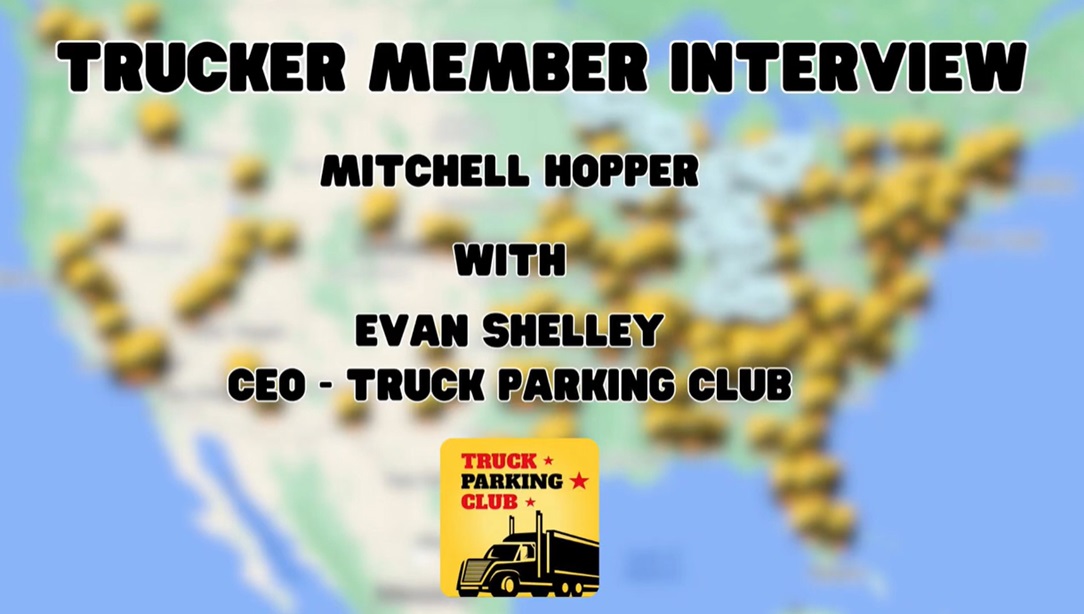
In our first episode of the Interview series, the Truck Parking Club owner, Evan Shelley, meets with Mitchel Hopper, our long-time trucker member, to discuss the Truck Parking Club app.
What’s This Episode About
In this episode, Evan and Mitchell discuss:
How Mitchell found out about Truck Parking Club (TikTok);
What has been Mitchell’s experience with the app so far, and whether he has encountered any issues using the app;
What Mitchell likes about the app and whether he thinks there are more features it could include to improve it;
How Truck Parking Club has grown over the years, adding more spaces and its efforts to expand to major cities to provide more parking options for truckers;
Truck Parking Club’s values and commitment to providing the best possible experience for its members.
In November 2022, the Indiana Department of Transportation (INDOT) announced its ambitious 10-year plan to nearly double the state’s rest and truck parking areas. Named the Rest Area & Welcome Center Improvement Plan, this initiative is designed to significantly enhance the availability of truck parking spaces across the state, particularly along vital interstate corridors.
Current Status and Progress
As of 2024, Indiana has made commendable strides in this extensive project. With 1,400 truck parking spaces already designated across the state’s 26 rest areas, the plan’s impact is becoming tangible.
One of the major milestones achieved under this initiative is the completion of the Kankakee rest area conversion on I-65. This project not only added 113 new truck parking spaces but also introduced upgraded facilities, including restrooms and vending areas, enhancing comfort and convenience for drivers.
Ongoing and Upcoming Projects
The focus now shifts to other key projects within the plan. The Lebanon rest areas conversion, which began in June 2023, is anticipated to conclude by fall, adding an impressive 109 spaces.
Furthermore, although there have been slight delays, the Lizton and Nancy Hanks rest area projects are expected to provide new timelines this summer, with an estimated addition of 61 spaces.
Meanwhile, the Taylorsville rest areas are on schedule, with completion aimed for the coming years, promising to add 69 spaces.
The Project’s Impact on Truckers and Interstate Commerce
This proactive approach by Indiana aims to address the chronic shortage of reliable truck parking, which is a significant issue for the trucking industry nationwide.
By nearly doubling the parking capacity, INDOT not only aims to improve the safety and efficiency of truck operations but also to support the well-being of truck drivers by providing them with more accessible and secure resting options.
This, in turn, contributes to smoother interstate commerce and enhances supply chain reliability.
Final Thoughts
Indiana’s investment in improving truck parking facilities is a testament to the state’s commitment to supporting the trucking industry and ensuring the safety of its highways.
As these projects progress, they are set to offer substantial benefits not just to truck drivers but also to the broader logistics and transportation sectors.
With strategic planning and continued execution, Indiana sets a benchmark for other states wrestling with similar challenges, potentially inspiring a nationwide enhancement of truck parking infrastructure.
The information published herein is for general informational purposes only. Truck Parking Club does not make any representations or warranties about the completeness, reliability, legality, and accuracy of this information. Any reliance placed on such material is strictly at the user’s own risk. Truck Parking Club shall not be responsible for any losses or damages incurred in connection with the information published herein.
Life on the open road is a dream for some, but the reality for truck drivers often involves long hours of sitting, irregular schedules, and limited access to traditional gyms. This can lead to a number of health concerns, including obesity, back pain, and fatigue. However, staying active on the road doesn’t have to be a challenge. With a little creativity and resourcefulness, even a truck parking lot can be transformed into your own truck stop gym.
The Benefits of Exercise for Truck Drivers
While physical activity is one of the best ways to pass the time while on the road, its main goal is to keep you fit and healthy. Before we delve into the specifics of parking lot workouts, let’s explore why exercise is so important for truck drivers. Here are just a few of the benefits:
Improved Physical Health: Regular exercise strengthens muscles and bones, increases cardiovascular health, and reduces the risk of chronic diseases like diabetes and heart disease.
Enhanced Mental Well-being: Physical activity is a powerful tool for managing stress, improving mood, and boosting energy levels.
Reduced Back Pain: Sitting for extended periods can put a strain on your back. Strengthening core muscles and improving flexibility can significantly reduce back pain.
Better Sleep: Exercise can help you fall asleep faster and sleep more soundly, leading to more alertness during the day.
Increased Focus and Alertness: Physical activity has been shown to improve cognitive function and concentration, which is crucial for safe driving.
Getting Started with Your Truck Stop Workout
The key to staying active on the road is consistency. Aim for at least 30 minutes of moderate-intensity exercise most days of the week. You can even break this down into shorter, 10-minute sessions throughout the day. Here are some tips for getting started:
Warm Up and Cool Down: Always begin your workout with a few minutes of light cardio and dynamic stretches to prepare your body for exercise. Similarly, cool down with static stretches to improve flexibility and prevent injury.
Listen to Your Body: Don’t push yourself too hard, especially when you’re first starting out. Gradually increase the intensity and duration of your workouts as your fitness level improves.
Stay Hydrated: Drink plenty of water before, during, and after your workout to stay hydrated and prevent fatigue.
Pack Smart: Consider investing in a small workout bag with resistance bands, jump ropes, and a yoga mat. These lightweight tools offer a variety of exercise options and take up minimal space in your truck.
Your Truck Stop Workout Arsenal: Bodyweight Exercises for Truck Drivers
The beauty of bodyweight exercises is that they require no equipment, making them perfect for any truck parking lot. Here are some exercises you can incorporate into your routine:
Squats: This simple yet effective exercise strengthens your legs, core, and glutes. Stand with your feet shoulder-width apart and lower yourself down as if you’re going to sit in a chair. Keep your back straight and core engaged, and push through your heels to stand back up.
Lunges: Lunges target your quads, hamstrings, and glutes. Step forward with one leg and lower your body down until both knees are bent at 90-degree angles. Push through your front heel to return to the starting position. Repeat with the other leg.
Push-ups: Modify push-ups to fit your fitness level. Start by doing them on your knees or against a wall for less impact. As you get stronger, try traditional push-ups on the ground.
Plank: This exercise strengthens your core, shoulders, and back. Lie face down on the floor with your forearms on the ground and elbows shoulder-width apart. Keep your body in a straight line from head to toe and hold for as long as you can.
Jumping Jacks: A classic cardio exercise that gets your heart rate up.
Best Cardio Options
Don’t limit yourself to bodyweight exercises. Here are some cardio options you can do in a truck stop parking lot:
Walking/Jogging: Take a brisk walk or jog around the perimeter of the parking lot. You can even incorporate walking lunges or high knees for an extra challenge.
Stair Climbing: If the truck stop has stairs, use them for some stair climbing intervals.
Jumping Rope: Jumping rope is a fun and efficient way to get your heart rate up. It improves coordination and burns serious calories.
Strength Exercises for Truckers with Minimal Equipment
Resistance bands add an extra dimension to your workout by increasing the intensity. Here are some exercises you can do with resistance bands:
Squats with Band: Loop the band around your thighs just above the knees. Perform a regular squat, feeling the extra resistance on the way up.
Overhead Press: Stand on the band and hold an end in each hand, palms facing forward. Press your arms straight up overhead, squeezing your shoulders.
Rows: Sit on the ground with the band looped under your feet. Lean back slightly with a straight back, holding the band ends at chest level. Pull your elbows back, squeezing your shoulder blades together.
Advanced Techniques and Specialized Exercises
As your fitness level improves, you can incorporate more advanced techniques and exercises into your truck stop workout routine. Here are some ideas:
Circuit Training: Combine multiple exercises into a circuit, with minimal rest between each. This is a time-efficient way to get a full-body workout in a short amount of time.
High-Intensity Interval Training (HIIT): HIIT involves alternating between short bursts of intense exercise and periods of rest. This style of training is excellent for burning calories and boosting metabolism.
Plyometrics: Plyometrics are jump training exercises that improve power and explosiveness. Examples include jump squats, box jumps, and jumping lunges. Be sure to master the basic exercises before progressing to plyometrics.
Use Your Truck for Fitness
Your truck can also be a surprisingly useful tool for exercise. Here’s how:
In-Cab Exercises: While parked, you can perform isometric exercises like isometric holds (tensing specific muscle groups without movement) and neck stretches to combat stiffness from long hours on the road.
Truck Bed Workouts: The bed of your truck can be used for exercises like step-ups, dips using the tailgate, and even yoga poses if you have enough space.
Find Safe and Secure Parking for Your Workout with Truck Parking Club
Staying active on the road shouldn’t come at the expense of your truck’s safety. At Truck Parking Club, we offer a convenient solution for truckers looking for secure parking while they get their exercise fix. With our network of reservable parking locations across the US, you can find a well-lit, safe space to park your truck and enjoy your workout with peace of mind.
Join our club today and eliminate the stress of circling endlessly for a parking space to allow yourself to focus on your health and well-being. So, fuel your body with exercise and fuel your truck with peace of mind – all thanks to Truck Parking Club.
The information published herein is for general informational purposes only. Truck Parking Club does not make any representations or warranties about the completeness, reliability, legality, and accuracy of this information. Any reliance placed on such material is strictly at the user’s own risk. Truck Parking Club shall not be responsible for any losses or damages incurred in connection with the information published herein.
Public-private partnerships (PPPs) have become an increasingly popular approach to addressing public infrastructure challenges. These collaborations between government entities and private sector companies can effectively pool resources, expertise, and innovation to tackle complex issues.
One such issue is the growing need for truck parking facilities across the United States. PPPs offer a promising solution to the nationwide truck parking shortage, ensuring that truck drivers have access to safe, secure, and convenient parking options.
Understanding the Challenge
The scarcity of truck parking in urban and semi-urban areas poses significant safety and logistical challenges for truck drivers. Finding a place to rest, use amenities, and comply with hours-of-service regulations can be difficult, especially in high-traffic regions. There’s a real mismatch between truck parking demand and availability, and the projected growth in truck traffic may further strain the limited supply of parking facilities.
Public and Private Contributions
PPPs allow the public and private sectors to contribute their unique strengths to address the truck parking shortage. Governments can provide land, regulatory support, and initial funding for parking projects. Meanwhile, private companies bring innovation, management expertise, and additional capital to the table.
By combining these resources, PPPs can develop and operate truck parking facilities more efficiently and effectively than either sector could alone.
Underutilized City-Managed Parking
Cities often have parking assets that could be repurposed for truck parking. These may include excess airport parking, city-owned staging areas, stadium parking, government building parking lots, transit or maintenance yards, major shopping malls, government-owned sites awaiting development, warehouses, or other shipping/receiving points. By reviewing their available parking inventory, cities can identify opportunities to create truck parking through PPPs.
Characteristics of Good Truck Parking
Well-designed truck parking facilities should be strategically located to support efficient goods movement. They should offer amenities such as restrooms, food options, and safe, secure environments for drivers to rest. Parking solutions must accommodate both short-term needs, such as staging for deliveries, and longer-term requirements for mandated breaks and overnight stays. Inadequate parking can lead to illegal or unofficial parking on shoulders, ramps, and local streets, compromising safety and community relations.
Benefits of PPPs in Truck Parking
PPPs have the potential to transform underutilized public spaces into profitable and efficient truck parking facilities. By leveraging the strengths of both the public and private sectors, these partnerships can improve safety, generate revenue for cities, and provide better services for truckers. PPPs can also foster innovation in parking management, such as the use of technology to optimize utilization and improve the driver experience.
Economic Impact of Improved Truck Parking Facilities
Public-private truck parking partnerships also contribute to the local and national economy.
Improved Logistics Efficiency
Strategically located truck parking facilities streamline supply chain operations, allowing for more efficient route management and reduced operational costs.
Reducing Cargo Theft
Well-equipped truck parking facilities with security measures like surveillance and lighting decrease the risk of cargo theft. Secure parking spots protect goods and lower insurance claims, maintaining the integrity of the supply chain.
Decreasing Idle Time for Truck Drivers
Improved parking facilities reduce idle time by providing ample and accessible spaces, which helps drivers comply with hours-of-service regulations more efficiently. This reduction in idle time decreases fuel consumption and vehicle wear, enhancing operational efficiency.
Impact on Local Economies
Truck parking can generate direct employment in construction, maintenance, and security and promote local business through additional services like dining and retail.
Truck Parking Club as a Solution
Truck Parking Club exemplifies an innovative approach to addressing truck parking shortages. This platform connects drivers seeking parking with property owners who have available space.
Features
Property members can list their available spaces on our online platform making it visible to truck drivers in need of parking.
The platform automates the reservation, booking, customer service, and payment processes, simplifying the experience for both drivers and property owners.
Owners have the autonomy to set and modify pricing based on demand and other factors, allowing them to maximize their revenue.
Benefits for Property Members
Property Members can generate additional income by monetizing their unused spaces for truck parking.
They can control the availability and pricing of their property.
The process to become a member and list a property can be completed in 15 minutes or less, making it very accessible.
Benefits for Trucker Members
Drivers can easily search for and book parking spots in advance, ensuring they have a safe and secure place to rest.
The platform offers a wide range of locations across the United States, providing options near major highways, urban centers, and other strategic locations.
With customer support and an easy-to-use platform, drivers can rely on Truck Parking Club for consistent service.
How It Works For Property Owners
Sign Up – Create an account to list your property.
List Your Space – Add details about the space, set the pricing, and publish your listing.
Manage Bookings – Receive notifications of bookings, manage your listings, and interact with customers directly if needed.
Wrapping Up
Public-private partnerships (PPPs)can greatly impact addressing infrastructure challenges within the trucking industry, particularly in solving the truck parking crisis.
By combining public resources and private sector innovation, these partnerships can deliver effective truck parking solutions that benefit truck drivers and individuals or organizations with unused spaces.
Truck parking partnerships, facilitated through platforms like Truck Parking Club, illustrate the transformative potential of PPPs. These types of partnerships utilize underused public and private properties and ensure that truck drivers have access to safe, secure, and strategically located parking facilities.
The information published herein is for general informational purposes only. Truck Parking Club does not make any representations or warranties about the completeness, reliability, legality, and accuracy of this information. Any reliance placed on such material is strictly at the user’s own risk. Truck Parking Club shall not be responsible for any losses or damages incurred in connection with the information published herein.
For truck drivers, maintaining a healthy diet can be a constant challenge. Long hours on the road, limited access to fresh ingredients, and the convenience of truck stop fare often lead to unhealthy choices. However, prioritizing good nutrition is crucial for truckers’ well-being. It boosts energy levels, improves focus, and reduces the risk of chronic diseases often associated with a sedentary lifestyle.
Let’s explore some practical tips for making healthy choices when parked at truck stops.
Eating Healthy as a Truck Driver – Plan Your Meals
The key to healthy eating on the road is to be proactive. Here are some steps to take before you hit the road:
Pack snacks: Stock your truck with non-perishable, healthy snacks like nuts, dried fruit, granola bars, and dark chocolate. Opt for raw, unsalted nuts to control sodium intake.
Invest in a cooler: A small cooler allows you to pack pre-cut vegetables, yogurt, hard-boiled eggs, and pre-portioned meals to enjoy throughout your trip.
Consider a mini fridge/microwave: If your truck has the space, a portable fridge and microwave can significantly expand your healthy food options. You can pack pre-cooked meals like grilled chicken or fish, brown rice, and steamed vegetables.
Truck Driver Healthy Eating Tips – Make Smart Choices at Truck Stops
Truck stops often get a bad rap for unhealthy food. While it’s true that greasy burgers and fries are readily available, with a little planning, you can find healthy options, too. Here’s how:
Scan the menu: Most truck stop restaurants offer grilled chicken or fish options. Look for salads with grilled protein and light dressings. Skip creamy dressings loaded with hidden sugars and fats.
Go for the “build-your-own” salad bars: These allow you to customize your salad with fresh greens, vegetables, lean protein like grilled chicken or tofu, and healthy fats like avocado or nuts.
Don’t underestimate the deli: Most truck stops have deli sections offering pre-packaged sliced meats and cheeses. Pair these with whole-wheat crackers or wraps for a protein-packed snack or meal.
Check out the frozen food section: Look for frozen steamer bags of vegetables or frozen lean protein options like salmon or chicken breasts. You can heat them in your truck’s microwave and have a quick, healthy meal.
Fresh fruit is your friend: Grab apples, bananas, oranges, or berries for a refreshing and healthy snack.
Hydration is key: Don’t underestimate the importance of staying hydrated. Avoid sugary sodas and juices. Opt for water, unsweetened tea, or black coffee.
Bonus Tip: Invest in a reusable water bottle and carry it with you throughout the day. This will help you stay hydrated and avoid sugary drinks while saving money on bottled water.
Grocery Shopping on the Road
While truck stops offer convenient options, consider incorporating grocery shopping into your routine. Look for grocery stores near major truck stops or rest areas. Here are a few tips:
Stock up on staples: Purchase non-perishables like whole-wheat bread, canned tuna, pre-cooked brown rice, and canned beans.
Fresh produce: Grab fresh fruits and vegetables like apples, bananas, carrots, and celery for a dose of vitamins and fiber.
Healthy fats: Pack heart-healthy fats like avocados, nuts, or nut butter for added satiety and energy.
Sample Healthy Meals for Truckers
Breakfast: Greek yogurt with berries and granola, oatmeal with nut butter and banana slices, hard-boiled eggs with whole-wheat toast.
Lunch: Grilled chicken salad with a light vinaigrette, tuna salad sandwich on whole-wheat bread with avocado slices, veggie wrap with hummus, and roasted vegetables.
Dinner: Salmon with steamed broccoli and brown rice, grilled chicken breast with mixed vegetables and quinoa, lentil soup with whole-wheat bread.
Snacks: Nuts, dried fruit, fresh fruit, yogurt parfaits with granola, vegetable sticks with hummus, dark chocolate.
Remember: Even with careful planning, there will be times when healthy choices are limited. Don’t beat yourself up if you have to grab a less-than-ideal meal occasionally.
Maintain a Healthy Lifestyle on the Road
Eating healthy is a crucial part of staying well on the road, but it’s not the only factor. Here are some additional tips for truckers to maintain a healthy lifestyle:
Stay Active: Sitting for long periods can lead to health problems. Take advantage of rest stops to get out and exercise. Walk around your truck, do some stretches, or even consider a short jog. Aim for at least 30 minutes of moderate-intensity exercise most days of the week.
Get Enough Sleep: Aim for 7-8 hours of sleep each night. Develop a consistent sleep schedule, even if your route or deliveries require adjustments. A good night’s sleep is crucial for focus, energy, and overall health.
Manage Stress: Trucking can be a stressful job. Find healthy ways to manage stress, such as listening to calming music, practicing deep breathing exercises, or spending time reading a book, which is a great way to pass the time while on the road.
Schedule Regular Checkups: Don’t neglect your health. Schedule regular checkups with your doctor to monitor your blood pressure, cholesterol, and overall health.
The Bottom Line
Eating healthy on the road may seem challenging, but with a little planning, you can still make healthy choices. Remember, prioritizing your health is an investment in your long-term well-being and allows you to perform your job at your best.
Truck Parking Club membership not only helps you find safe and secure parking, but it can also be a valuable resource for healthy eating options. How? Our Truck Parking Club app allows you to search for truck stops based on various criteria, including amenities like restaurants and bars that offer healthy food alternatives.
The information published herein is for general informational purposes only. Truck Parking Club does not make any representations or warranties about the completeness, reliability, legality, and accuracy of this information. Any reliance placed on such material is strictly at the user’s own risk. Truck Parking Club shall not be responsible for any losses or damages incurred in connection with the information published herein.
Over the last few decades, the reality of climate change and global warming has sunk in. People and businesses everywhere are slowly realizing that they need to contribute towards positive environmental change.
The trucking industry is no exception, and efforts to make it more green have led to terms like “eco-friendly parking lot” and “sustainable truck parking lot.” In this article, we’ll discuss some of the steps you can take to make your lot a greener place. Let’s take a look at how to create a green and sustainable parking lot.
How to Create an Eco-Friendly Truck Parking Lot
Choose Your Paint Wisely
Painting your truck parking lot is essential. WIthout appropriate markings and demarcations, you’d have chaos and likely see a fair number of accidents.
However, if you use the wrong type of paint, it can have a disastrous effect on the environment. That’s why it’s so important to choose an environmentally conscious paint brand.
Paints are some of the most common types of air pollutants, and may contain an array of different atoxic gases. Some of the most common include Volatile Organic Compounds (which have a fairly disastrous effect on the environment). Glycol, ammonia, and xylene are just a few examples of VOCs.
The best way to paint a sustainable parking lot for trucks is to use biodegradable paint. These paints typically contain little to no VOCs and exclude most other noxious gases. They’re typically also non-toxic, meaning they won’t poison any nearby habitats or water sources.
These paints usually consist of natural materials, so they may need to be applied more regularly. Alternatively, you can seal them with a safe, non-toxic sealant to ensure that they give you the longevity you need.
Incorporate Vegetation Into Your Truck Parking Lot
One of the big problems with unsustainable truck parking lots is that they consist almost entirely of concrete, cement, and tarmac. As a result, they are unable to process any of the greenhouse gases produced by the trucks.
They also become “heat sinks,” where the heat becomes trapped and doesn’t easily go through the natural cycle of heating and cooling.
One way to alleviate these effects is to incorporate trees and other vegetation into the parking lot design. For instance, you could plant a tree every 15 meters or so. Not only will the trees help process and eliminate some of the carbon dioxide created by the trucks, but they’ll also sequester carbon in the soil.
Of course, the design for the tree planters has to be well-planned to ensure that tree roots don’t lift your tarmac. Alternatively, you can opt for small tree species or large bushes instead.
Another idea is to separate different areas of your sustainable parking lot with large planters, which you can fill with small bushes, shrubs, or flowers.
Water Management is Key
People often don’t put much thought into water management when planning a commercial space, but water is one of our most valuable commodities. If you want to have a sustainable truck parking lot, having a thorough plan for managing water is essential.
Rainfall may be severe in some areas, and badly planned water flow may lead to erosion, standing water, and other undesirable outcomes. For this reason, you need to pay careful attention to water management. There are key ways of doing this in an eco-friendly truck parking lot.
The first is directing stormwater runoff well. Knowing where to send stormwater is vital. You want to avoid erosion and preferably avoid directing water away from natural watercourses. Consider speaking to a consultant in your area who can tell you which way is best to direct the water.
The second is using a permeable driving surface. There are two possibilities in this regard.
The first is to use pervious or permeable concrete. This material is suitable even for the heavy use encountered in truck parking lots, but it doesn’t keep all the water in one place. Instead, it allows water to slowly filter through into the soil below. This helps to ensure that groundwater aquifers get fed with rainwater and keeps your parking lot nice and dry.
Permeable pavers are another option with similar benefits. The only difference is that your sustainable truck parking lot will then consist of thousands of individual pavers rather than one sheet of material.
Final Thoughts
It is entirely possible to have a positive impact on the environment, even as the owner of a truck parking lot. Eco-friendly truck parking lots are an excellent way to lower your carbon footprint while still earning an income through the trucking industry.
And you don’t have to break the bank either. Many of the steps highlighted in this article are fairly cost-effective, making it easier to go green.
Do you already have a sustainable truck parking lot? Are you looking for more clientele? Consider registering with Truck Parking Club to make your lot accessible to thousands of truck drivers nationwide.
The information published herein is for general informational purposes only. Truck Parking Club does not make any representations or warranties about the completeness, reliability, legality, and accuracy of this information. Any reliance placed on such material is strictly at the user’s own risk. Truck Parking Club shall not be responsible for any losses or damages incurred in connection with the information published herein.
While trucking with dogs and other pets may seem unusual, surveys have shown that roughly 50% of truck drivers take their furry friends with them. The reasoning behind this is easy to understand since truck drivers spend so much time on their own.
Having a dog or other pet in the car can help them to feel less alone, and make the hours on the road more tolerable.
But which considerations come into play when trucking with these pets? In this article, we’ll take a closer look at what it takes to take your dog on the road with you.
Advantages of Trucking with Dogs
Studies have shown that owning pets offers a range of benefits, and trucking with dogs is no different. Some of the advantages you may expect when you take your furry friend on the road with you include the following:
Additional Security – Dogs often stay alert while their owners are asleep. So, having your furry friend on the road with you will add an extra layer of security to your trucking experience. They’ll bark and wake you up when confronted by intruders or attempted burglary.
Health Benefits – Research has shown that owning and interacting with pets can have significant positive impacts on your health. It can help to lower cholesterol and blood pressure, for instance. It may also lead to a decreased heart rate and lower triglyceride levels.
Improved Mental and Emotional Health – Pet ownership can lead to better mental health and improve your emotional state. Trucking with dogs may reduce stress and anxiety and reduce the risk of depression. Petting your dog also leads to an increase in positive hormones like serotonin and dopamine.
Reduced Risk of Drowsy Driving – Because dogs need to get out of the cab regularly, they help to keep their owners more active. Regular stops for your pet mean that you’ll move around more, cutting down on driver fatigue and the potential for drowsy driving.
Better HoS Cooperation – Many drivers struggle to adhere to their Hours of Service. However, truck drivers with pets may find it easier to stop and take some of their breaks. The presence of their pet will encourage them to take breaks, even if it’s only for the sake of their furry friend.
Trucking with Dogs: Training
Unless your dog is already used to being in a vehicle for extended periods, there will be a vital training period where you prepare your dog for life on the road.
They’ll need to get used to restrictions and restraints, for example. Pet crates, harnesses, leashes, and any other control devices need to become customary to your pet before you take them in the truck.
You’ll also need to ensure that your dog has all the behavioral training it needs to not put itself in harm’s way. For instance, learning not to jump out of the cab as soon as the door opens. Also, not running away from you, but obeying your commands.
Let’s take a closer look at some vital training areas for trucking dogs.
1- Cab Exit Behavior
One of the first and most important things that your dog needs to learn about the truck is that it should only get out when you give the command.
Exit the cab with the leash and some treats. Reward your canine companion for calm behavior and patient obedience while you’re clipping on the leash. However, if they don’t comply, stop what you’re doing and force them to wait. As soon as they’re calm, start the process again.
Once the leash is in place, give a verbal cue and lift your dog out of the cab. Next, spend some time keeping the dog calm and in place before you leave. Reward positive behavior with treats.
For your pet’s safety, it’s vital that you remain in control every step of the way. A well-controlled dog is a safe dog, and they’ll quickly learn that being calm, patient, and obeying your verbal cues gets them where they want to be faster.
Bathroom Manners
If your dog isn’t used to it yet, you may need to potty train them on the road. Fortunately, this is usually a relatively quick process.
Start by lining your passenger seat with puppy pads, towels, or other absorptive materials. Then, place the pet carrier or crate on the seat for your puppy or dog.
Stop regularly and take your dog for walks on a leash, rewarding them when they do their business outdoors. Whether you have a puppy or an older dog, this may be necessary to get them used to the truck rules.
There may be a few accidents at first, but sooner or later, they’ll get the hang of it.
Legal Requirements and Other Considerations
As with many other things, there are some legal requirements to consider when driving with a dog, as well as some professional ones.
The first thing you’ll need to look into is whether your particular trucking company makes allowance for driving with pets. Not every truck company approves of driving with pets, though many make room for it. As long as your company doesn’t mind and you keep the truck clean, you’re off to a good start.
That said, many companies may require a damage payment, just in case the dog damages something. There may also be restrictions about the size and breed of dog you can have with you.
Legally, you’ll need to ensure that your dog’s vaccinations are up-to-date. For certain areas, you may also need to get your pet special vaccinations. Pay special attention to rabies vaccinations, and ensure that you have the dog’s vaccination record with you.
You may also need to get a Certificate of Veterinary Inspection from a licensed vet to say that your pet is 100% healthy and fit to travel with you.
The Federal Motor Carrier Safety Administration doesn’t have specific guidelines for driving with pets but does demand that a safe driving environment is maintained at all times.
The final consideration is in terms of stops. Whether it’s rest areas, customers, or hotels, ensure that these facilities are pet-friendly. For some customers, animals may not be allowed on the premises, or they may have to stay in the truck.
Tips for Trucking with Dogs
Driving around with your dog can be a full-time job under normal circumstances. The challenges and requirements are amplified when driving really is your full-time employment. Below, we’ll share some hints and tips on how to keep your dog safe and happy on the road.
Ensure That They Have Their Own Space
To ensure that your dog is happy and healthy, it’s important that they have their own space. A good way to do this is to have a crate or carrier that they can get accustomed to at home before you ever take them in the truck.
This will help to give them a sense of belonging, and make it easier to control their movements. Ensure that they have some prized possessions as well, such as favorite chew toys or a comfy blanket that they love.
Ensure That They’re Restricted to Safe Spaces
It’s vital, when trucking with dogs, to ensure that they can’t go places where they don’t belong. You can use crates, pet barriers, and other techniques to ensure that they can’t get to the door on your side of the cab.
Also, try to ensure that they’re either in the back of the truck or on the floor, where the airbags won’t be able to reach them.
Ensure That They Have a Collar With All Their Details
If your pet ever gets away from you, you need to ensure that anyone who finds them will be able to return them to you. For this reason, they should always wear a collar with a tag that has all your pet’s details on it.
As a minimum, it should have their name, your name, and your contact number on it. You may also want to consider microchipping your pet so that they can be identified by any vet or animal control facility.
Ensure Your Dog is Leash Trained, and Use the Leash
For your dog’s safety, it needs to be fully leash-trained. Trucking with dogs is a lot simpler when your pet is properly trained. Unless you’re in a dog park or another safe, designated area, your dog should always be on the leash when you take it out of the truck.
What to Look For in Dogs for Truckers
While many people love large-breed dogs, they’re not particularly well suited to the small confines of a truck cab. The same can be said for dogs with extreme energy levels. These types of breeds may find life on the road to be too sedentary for their liking since they won’t get a lot of exercise.
So, what should you look for in a breed when you’re trucking with your pets?
First, you should look for a small breed dog. They’ll be a lot easier to control, won’t require as much space, and won’t find the truck as confining.
Second, you should look for a breed that is easy to train and responds well to commands. Obedience training is an essential part of trucking with dogs, and you want a breed that will make it easier rather than harder.
Finally, you want to choose a breed that will thrive on short breaks with lots of exercise rather than needing hours of exercise and play every day.
Here’s our shortlist of ideal breeds to accompany you on the road:
Boston Terriers
Bulldogs
Chihuahuas
Dachshunds
Miniature Pinschers
Miniature Poodles
Miniature Schnauzers
Pugs
Shih Tzus
Yorkshire Terriers
You probably want to avoid small breeds bred for hunting or herding, like corgis, jack russells, and rat terriers. These types of breeds tend to have high energy and while adorable, they require far more exercise.
Final Thoughts About Trucking with Dogs
Having a dog on the road with you can be a wonderful experience. It can help make the road seem shorter, diminish feelings of loneliness, and generally brighten your routes.
However, it’s important to understand that trucking with a dog is a major responsibility. You need to ensure that all of the legal, professional, and safety requirements are met so you can travel in safety and comfort with your canine companion.
If you’re looking for pet-friendly truck parking spaces where you can take your dog, take a look at the options on Truck Parking Club. This platform has access to hundreds of spaces that most people don’t even know about.
The information published herein is for general informational purposes only. Truck Parking Club does not make any representations or warranties about the completeness, reliability, legality, and accuracy of this information. Any reliance placed on such material is strictly at the user’s own risk. Truck Parking Club shall not be responsible for any losses or damages incurred in connection with the information published herein.
Imagine you’ve been driving for hours, your stomach is growling, and all you can think about is sinking your teeth into a juicy burger or a hearty plate of pancakes. You spot a promising restaurant just off the highway, but as you approach, your heart sinks. There’s no way your semi-truck will fit in their tiny parking lot. Sound familiar? It’s a scenario that plays out all too often for long-haul truck drivers.
While many restaurants can provide you with a delicious meal and friendly service, not all of them have adequate parking for semi-trucks. This can lead to frustration and wasted time as drivers search for a suitable spot to take a break and refuel.
But thanks to innovative platforms like Truck Parking Club, finding a truck parking solution with easy access to food and refreshments is becoming easier than ever. We’ll discuss how our platform works in detail later, but let’s start by addressing some of the issues that truck drivers face when it comes to finding suitable restaurants with truck parking.
The Challenge of Truck Parking and Dining on the Road
For truck drivers, finding a safe and convenient place to park their rig is a daily struggle. Many rest stops and parking areas fill up quickly, leaving drivers with few options. This is particularly problematic when it comes to finding a place to eat, as many restaurants don’t have the space to accommodate large trucks. As a result, drivers often have to choose between settling for less-than-ideal food options or spending valuable time searching for a suitable parking spot.
Even when drivers do find a place to park, accessing quality meals can be a challenge. Many truck stops and rest areas offer limited food options, often consisting of fast food or pre-packaged snacks. While these may be convenient, they don’t always provide the nutritious and satisfying meals drivers need to maintain their health and energy levels on long-haul trips.
Moreover, the lack of variety in dining options can take a toll on drivers’ mental well-being. Eating the same types of food day in and day out can become monotonous and uninspiring, adding to the already stressful nature of the job.
The combination of parking difficulties, less-than-ideal limited food options, and time pressures creates a perfect storm of challenges for truck drivers trying to maintain a healthy and enjoyable lifestyle on the road. It’s clear that a solution is needed to help drivers find convenient parking and dining options.
What to Consider When Parking at Restaurants
In most cases, it is legal to park a semi-truck at a restaurant, provided the establishment has designated parking areas for large vehicles. However, it’s essential to keep in mind that not all restaurants are equipped to accommodate semi-trucks, and there may be certain restrictions or limitations in place.
Before deciding to park your semi-truck at a restaurant, it’s crucial to consider a few key factors to ensure a smooth and stress-free dining experience. These considerations include restaurant policies, parking lot size and layout, and the potential impact on other patrons.
Designated truck parking areas
Look for restaurants that specifically offer truck parking spots to ensure you’re not taking up space meant for smaller vehicles.
Time limits for parking
Be aware of any time restrictions on parking, especially if you plan on taking an extended break or getting some rest.
Maneuverability for large trucks
Ensure the parking lot has enough space for you to manoeuvre your truck safely and easily without risking damage to your vehicle or others.
Tips for Finding Truck-Friendly Restaurants
Finding truck-friendly restaurants isn’t the challenge it once was; now, we have the Internet at our fingertips. With a little preparation and the right tools, you can easily locate establishments that cater to the needs of semi-truck drivers. Here are some tips to help you find the perfect spot for your next meal break:
Using Mobile Apps and Websites
Take advantage of apps and websites designed specifically for truck drivers, such as Truck Parking Club, to find parking stops with dining amenities. With our mobile app, you can easily access this information on the go, making it a valuable resource for finding suitable locations.
Consulting Trucking Forums and Communities
Engage with fellow truck drivers on online forums and social media groups dedicated to the trucking industry. These communities are a wealth of knowledge, with experienced drivers often sharing their favorite truck-friendly restaurants and parking spots.
Don’t hesitate to ask for recommendations or advice from your peers, as they may have valuable insights on restaurants that accommodate semi-trucks in specific areas or along certain routes.
Planning Routes in Advance
Before embarking on your journey, take some time to plan your route and identify potential truck stops with restaurants. This proactive approach allows you to research truck-friendly stops in advance so you have a list of suitable options when hunger strikes.
Utilize resources like Truck Parking Club to bookmark truck parking stops with food and refreshment amenities along your route, making it easier to incorporate them into your trip planning.
How Truck Parking Club Addresses the Challenges
Truck Parking Club is a game-changer for truck drivers seeking convenient parking and dining options. The platform offers a comprehensive solution to the challenges faced by truckers on the road.
Overview of Truck Parking Club platform and its features
Truck Parking Club is an online and mobile app marketplace that connects truck drivers with property owners offering parking spaces.
The platform allows users to search for parking by location and amenities, making it easy to find suitable spots.
How Truck Members Can Use the Platform to Find Parking Spaces with Nearby Dining Options
Truck Parking Club’s search filters allow drivers to specifically look for parking spaces with nearby restaurants or food delivery services.
This feature ensures that drivers can easily find parking that meets both their parking and dining needs.
Integration of Food Delivery and Rideshare Services:
Truck Parking Club’s amenity options include nearby restaurants and popular food delivery services such as Uber Eats, DoorDash, and Grubhub.
For drivers who prefer to dine out, the platform also lists parking spaces with rideshare options like Uber and Lyft, making it convenient to get to and from restaurants.
Benefits of Using Truck Parking Club for Meal Solutions
Truck Parking Club offers the convenience of having multiple services on one platform, eliminating the need to search multiple apps or websites.
By allowing drivers to plan their stops with food services in advance, Truck Parking Club helps save time and reduces the stress of finding suitable dining options on the road.
Wrapping Up
Trying to find the right parking stop with the right dining options is an additional stress truckers can do without. Fortunately, with the Truck Parking Club, you can say goodbye to all that.
So why spend another minute driving in circles, frantically searching for a place to park and eat? Join Truck Parking Club for free and enjoy the best truck stop experience. Your taste buds (and your sanity) will thank you!
The information published herein is for general informational purposes only. Truck Parking Club does not make any representations or warranties about the completeness, reliability, legality, and accuracy of this information. Any reliance placed on such material is strictly at the user’s own risk. Truck Parking Club shall not be responsible for any losses or damages incurred in connection with the information published herein.
The lack of adequate truck parking is the number one issue for most truck drivers. However, even more so for female truckers, who face significant safety risks on the job. In recent years, more and more women drivers have come forward to speak about this issue.
Parking Safety Concerns for Female Truck Drivers
For Tina Klein, becoming a truck driver has been a lifelong passion. “I’ve wanted to be a professional truck driver since I was seven years old,” said Klein. With over two decades of experience behind the wheel, she continues to love her career. Similarly, Rhonda Hartman has been a truck driver for more than 40 years. “I learned really right away that this is what I wanted to do,” Hartman shared.
Despite their passion for the job, both women face significant safety risks. To address these concerns, they recently visited Capitol Hill to urge lawmakers to take action. This effort is part of the American Trucking Association’s (ATA) “Women in Motion” campaign, which promotes policies that empower women in the trucking industry.
The Parking Problem
One of the biggest challenges these women face is the lack of adequate truck parking. “As a woman, I like to park in a well-lit area and know that it’s a safe place for me to be outside of my truck and go use the facilities,” Klein explained.
Unfortunately, this is often not an option. According to the ATA, there is only one available parking space for every eleven drivers. “It is very difficult to do our jobs,” said Hartman. Klein added, “For us to be professional and safe drivers, we need to have adequate safe areas for us to park.”
Legislative Solutions
To address these issues, Congress is proposing to invest millions in more truck parking. The “Truck Parking Safety Improvement Act” aims to create a grant program dedicated to increasing truck parking spots across the country.
Another bill, the “Trucker Bathroom Access Act,” focuses on providing more restroom access for truck drivers. Advocates highlight that nearly 80% of drivers choose parking spots based on the availability of restrooms and showers, a factor that is even more critical for women truck drivers.
“It’s crazy that we even have to talk about it or pass a law, but I don’t think anyone would want to do their job if they had no access to a ladies’ room,” Hartman remarked.
Bipartisan Support
Both bills have garnered bipartisan support in the House and Senate, though it remains unclear when they will come up for a full vote. The support from both sides of the aisle underscores the importance of improving safety and working conditions for all truck drivers, particularly women.
As the debate continues, Klein, Hartman, and other advocates remain hopeful that these legislative efforts will lead to meaningful improvements in the trucking industry, making it safer and more accessible for women and all drivers.
In the meantime, the best shot for truck drivers to find adequate truck parking remains Truck Parking Club. Using our app, drivers can seamlessly filter facilities by amenities and quickly book available parking spaces to ensure they have a reliable spot to spend the night when on the road.
The information published herein is for general informational purposes only. Truck Parking Club does not make any representations or warranties about the completeness, reliability, legality, and accuracy of this information. Any reliance placed on such material is strictly at the user’s own risk. Truck Parking Club shall not be responsible for any losses or damages incurred in connection with the information published herein.
The San Antonio City Council is set to deliberate a new ordinance that would prohibit semi truck parking on city streets overnight. This discussion took place during the Council B Session on May 15 at 2 p.m. in San Antonio, Texas.
Current Semi Truck Parking Regulations
Currently, semi trucks are banned from parking on residential roads in San Antonio. However, residents are advocating for stricter regulations, including a 1,000-foot buffer zone on commercial streets near neighborhoods.
John Wood, chairman of the Oakland Heights Homeowner’s Association, highlighted the ongoing issues caused by semi truck parking in residential areas. He believes that drivers use these spaces for free truck parking and have family members or an Uber to come to pick them up as they don’t even live in the city.
Safety Concerns Raised by Residents
Residents have raised significant safety concerns due to the presence of parked semi trucks. This was also emphasized by Wood, who discussed the trucks obstructing the view and causing hazards for cars and children walking to school.
He also raised the concern about parked trucks potentially blocking fire hydrants and mentioned the damage such trucks do to the streets they’re parked on.
Parking Challenges for Truck Drivers
There is, of course, the other side of the coin. Trucking advocates argue that the proposed ban would create significant challenges for truck drivers, who already face limited parking options in San Antonio.
At a Public Safety Committee meeting in March, David Olson, co-founder of the truck parking chain Riggy’s, shared staggering statistics from a survey conducted by the Federal Highway Administration, American Trucking Association, and Owner-Operator Independent Drivers Association.
According to this survey, there’s currently only one parking spot for every 11 truck drivers on the road. He also quoted the Trucker Path study that revealed that 75% of drivers have admitted to violating their DOT Hours of Service to find parking, and 96% admitted to parking illegally.
Response from the Texas Trucking Association
The Texas Trucking Association (TXTA) has responded to the proposed ordinance, expressing empathy for the City Council’s concerns but urging for a more comprehensive solution.
As stated in their press release:
“While we can empathize with the San Antonio City Council’s concerns over unauthorized or unsafe parking, continuing to ban truckers from parking in the very neighborhoods they live in is not the answer. Instead, TXTA and its member companies would like to see actions that address the problem – not just the symptoms. And this includes access to safe and secure parking for the one out of 14 citizens in Bexar County that work in the trucking industry.”
Seeking Balanced Solutions
District 8 Councilman Manny Pelaez stressed the importance of finding a balanced solution. He said that while solving the truck parking problem is very important, they also need to look at this issue from the homeowners’ perspective.
One of his proposed solutions was to incentivize truckers to take their trucks out to the privately owned lots or find facilities within city limits to be able to facilitate truck parking and make it easier for drivers.
John Wood echoed this sentiment, expressing support for the trucking industry while advocating for safer parking solutions:
Next Steps
If the ordinance is approved, it will proceed to the city council for a final vote in the coming months. One thing is for certain. The outcome of this decision will have significant implications for both residents and truck drivers in San Antonio.
For now, truckers seeking available parking in San Antonio and Texas can find it through Truck Parking Club. Browse our available Texas truck parking facilities and seamlessly book your spot using our app.
The information published herein is for general informational purposes only. Truck Parking Club does not make any representations or warranties about the completeness, reliability, legality, and accuracy of this information. Any reliance placed on such material is strictly at the user’s own risk. Truck Parking Club shall not be responsible for any losses or damages incurred in connection with the information published herein.