Great news for truck drivers! The New York City Council just passed legislation requiring the NYC Department of Transportation to establish overnight truck parking areas in industrial business zones for commercial vehicles.
Why NYC Truck Parking Legislation Matters
“For far too long, the shortage of overnight parking for truck drivers in New York City has forced trucks to park in areas that they shouldn’t be,” said Zach Miller from the Trucking Association of New York. The truck parking crisis is real: there’s only one parking space for every 11 trucks in the U.S., and it’s even worse in dense urban areas like New York City, Brooklyn, Queens, and the Bronx.
NYC’s Overnight Truck Parking Pilot Program
This truck parking legislation builds on NYC’s existing Overnight Truck Parking Pilot program, which offers metered parking in industrial zones for semi trucks and commercial vehicles. As Miller noted, “Providing a safe place to park is not just a kind gesture, it has the power to improve efficiency, reduce costs for drivers, and preserve neighborhoods.”
Find Truck Parking in NYC Metro Area Now
While NYC works to expand government truck parking options, CDL drivers need parking solutions today. We have available truck parking spaces throughout the New York metro area ready for instant booking.
Have property in the NYC metro area suitable for truck parking? This legislation highlights the growing demand for commercial vehicle parking spaces. Property owners can monetize vacant lots, warehouses, or industrial spaces with no upfront costs.
NYC’s leadership on truck parking sets an important precedent for other cities facing commercial vehicle parking shortages. Combined with innovative private truck parking solutions, we’re moving toward a future where safe, accessible truck parking is available when and where drivers need it in New York City and beyond.
New legislation protects drivers, but the underlying problem remains
North Carolina just delivered a major victory for truckers. Last week, the state legislature passed groundbreaking legislation that bans booting commercial trucks for parking enforcement and requires towing companies to return cargo upon request. The bill passed with overwhelming support – 46-0 in the Senate and 100-7 in the House.
But here’s the thing: this law addresses a symptom, not the disease.
Why Drivers Get Booted in the First Place
Truckers don’t park illegally because they want to. They do it because they have no choice. With drivers spending 58 minutes per day searching for parking and losing $5,500 annually in fuel costs during that search, desperation often wins over compliance.
North Carolina joins Florida, Mississippi, Tennessee, Colorado, Maryland, and Virginia in cracking down on predatory towing practices. The fact that multiple states are moving in this direction shows how widespread the problem has become.
The Real Solution: More Parking Options
While legal protection is crucial, laws alone won’t solve the parking shortage. What the industry needs is more available spaces, and fast.
Traditional truck stop construction costs $100,000-$200,000 per space and takes years. But there’s a faster way: connecting drivers with property owners who have unused space. Industrial facilities, storage companies, and trucking businesses often have vacant lots sitting empty during off-hours.
This marketplace approach creates win-win scenarios. Property owners generate passive income from unused space, while drivers get safe, legal parking with transparent pricing and instant reservations.
Have unused space that could work for truck parking?List your property and start earning revenue with no upfront costs or long-term contracts.
Looking Forward
North Carolina’s new law takes effect December 1st, making truck booting a misdemeanor punishable by up to 60 days in jail and a $1,000 fine. That’s important protection for drivers who find themselves in desperate situations.
But real progress comes when drivers have enough legal parking options that they never face those desperate situations in the first place. When property owners across the country realize they’re sitting on revenue opportunities. When technology efficiently connects supply with demand.
The chronic truck parking shortage won’t be solved overnight, but protective legislation combined with innovative parking solutions are finally moving us in the right direction.
The U.S. Department of Transportation just announced over $275 million in new funding to expand truck parking nationwide – the largest federal investment in truck parking infrastructure we’ve seen. For an industry that’s been crying out for solutions to the parking crisis, this represents a significant step forward.
The Numbers Tell the Story
The DOT’s announcement confirms what we’ve known for years: 40% of truckers spend over an hour daily searching for parking. That’s not just an inconvenience – it’s a safety hazard when drivers are forced to park in unsafe locations. The economic impact ripples through the entire supply chain, costing billions in lost productivity.
Where the Money Goes
The headline investment is $180 million heading to Florida to add 917 new truck parking spaces along the I-4 corridor. This project demonstrates the scale of investment needed – nearly $200,000 per space when you factor in the infrastructure, safety features, and amenities that modern truck parking requires.
Why This Matters for the Marketplace
While this federal investment is welcome news, it also highlights the massive gap between supply and demand that won’t be filled by government funding alone. Traditional truck stop construction is expensive and slow – exactly why marketplace solutions that monetize existing vacant properties are so critical.
The DOT’s recognition that truck parking is a national infrastructure priority validates what property owners and drivers already know: there’s real value in unused industrial space, and turning it into truck parking serves both economic and safety needs.
Looking Ahead
This federal investment represents progress, but it’s just the beginning. With millions of truck parking spaces needed nationwide, the solution requires both public investment and private innovation. The marketplace model that connects drivers with property owners remains essential to scaling parking availability quickly and cost-effectively.
For truckers, every new parking space – whether federally funded or marketplace-enabled – means less time searching and more time focused on what matters: keeping America’s freight moving safely and efficiently.
One year after enforcement began, truckers in Palm Beach County are still fighting for their right to park at home
It’s been nearly a year since Palm Beach County began enforcing a truck parking ban in The Acreage neighborhood, and the situation remains what one county attorney calls “a convoluted mess.” For truckers who’ve called this community home for decades, the enforcement has turned their lives upside down – and highlights exactly why Truck Parking Club exists.
When Jorge Alfaro and Clare Dougal filed their lawsuit against Palm Beach County, they weren’t just fighting for themselves. They were representing countless truckers who helped build their community over the past 20 years, only to be told they’re no longer welcome to park their trucks at home.
“We helped to build this community — the schools, the parks, the supermarkets — now they say they don’t want us,” Dougal told reporters.
The legal battle has been particularly frustrating, with conflicting rulings from different judges creating uncertainty for everyone involved. Attorney Christopher Mills, representing the truckers, summed it up: “I’ve never seen anything like this in my career.”
When Home Isn’t Home Anymore
For Natalia Melian-Torres, a resident trucker and spokesperson for the “Save Our Truckers” movement, the situation has become untenable. She’s putting her house up for sale and moving her family elsewhere.
“They’ve pushed me against the wall,” Melian said. “I have to do what’s best for my family. I have kids. I have to look to the future.”
Her story isn’t unique. Across the country, truckers face similar challenges – whether it’s neighborhood restrictions, lack of available parking, or the high cost of commercial lots. The average trucker loses $5,500 annually just searching for parking, and spends nearly an hour each day looking for a safe place to park.
A Better Solution Exists
This is exactly why Truck Parking Club was created. We’re building a nationwide network of parking solutions that works for everyone. In fact, we already have multiple parking locations available in the Palm Beach area where truckers from The Acreage can find affordable, convenient parking.
For Truckers Like Those in The Acreage:
Find affordable parking near your home when local regulations prevent home parking
Book hourly, daily, weekly, or monthly spots that fit your schedule
Access over 40,000 parking spaces across 2,000+ locations nationwide
No membership fees – just pay for what you need
For Communities and Property Owners:
Turn unused space into income without long-term commitments
Help solve the parking crisis in your area
Support the truckers who keep America moving
Maintain full control over your property and pricing
The Bigger Picture
What’s happening in The Acreage isn’t an isolated incident. Communities across America are grappling with truck parking issues, often pitting neighbors against the very truckers who deliver everything we depend on.
At Truck Parking Club, we believe there’s a better way. By connecting truckers with available parking spaces, we’re creating win-win solutions that:
Keep truckers safe and compliant
Generate income for property owners
Reduce congestion in residential areas
Support the backbone of America’s supply chain
Take Action Today
If you’re a trucker facing parking challenges like those in The Acreage, download our app or visit truckparkingclub.com to find parking that works for your life and budget.
If you’re a property owner with unused space, you can be part of the solution. List your property with no upfront costs and help truckers in your community while earning passive income. Palm Beach County property owners have a unique opportunity to directly help truckers affected by The Acreage parking ban while generating income from underutilized space.
If you’re a community leader looking for solutions to truck parking challenges, let’s talk about how Truck Parking Club can help create a balanced approach that works for everyone.
The situation in The Acreage reminds us why our mission matters. Every day, hardworking truckers face impossible choices between their careers and their homes. At Truck Parking Club, we’re working to ensure no trucker has to make that choice again.
Ready to join the solution? Visit truckparkingclub.com or download our app today.
The trucking industry received positive news this week as the Federal Motor Carrier Safety Administration announced it granted the Specialized Carriers & Rigging Association a six-month provisional renewal of the exemption from the hours-of-service regulations for drivers transporting oversize and overweight loads, according to Landline Magazine. This exemption, set to expire December 17, continues to provide crucial relief to specialized carriers while highlighting the ongoing challenges of truck parking for oversized loads.
The Oversize Load Parking Challenge
Drivers hauling oversize loads face unique parking challenges that standard truckers don’t encounter. According to SC&RA, the 30-minute break uniquely affects oversize/overweight loads and has exacerbated the number of instances in which drivers have had to park these loads at roadside, consequently impacting the safety of both the general public and the driver.
The problem is compounded by regulatory restrictions. State and local permits often restrict the days of the week and hours of the day when oversize loads can be transported. Those hours often conflict with the timing of the required 30-minute rest break, creating a scheduling nightmare for drivers who need to coordinate movement windows with mandatory rest periods.
Why the Exemption Matters for Safety
The FMCSA’s decision to extend this exemption isn’t just about operational convenience—it’s fundamentally about safety. The agency said that the lack of the exemption combined with a nationwide shortage of truck parking means that these oversize loads would often be forced to park on the shoulder of a highway with some of the load extending into the lanes of traffic.
The consequences of roadside parking can be deadly. “No matter how well marked, trucks parked at roadside, especially at night, are too often mistaken for moving vehicles and struck, frequently with fatal consequences, before an inattentive driver can correct his or her mistake”, according to industry experts.
How This Eases the Truck Parking Burden
The rest break exemption significantly reduces the parking burden on oversize load drivers in several key ways:
Flexible Timing: Without the rigid 30-minute break requirement, drivers can time their stops more strategically, choosing safer locations that can accommodate their oversized cargo rather than being forced to stop wherever they happen to be when the break window opens.
Reduced Roadside Parking: The exemption eliminates situations where drivers must choose between violating hours-of-service regulations or parking illegally on highway shoulders with loads extending into traffic lanes.
Better Route Planning: Drivers can coordinate their rest periods with permit restrictions and facility availability, ensuring they reach appropriate parking locations rather than being caught in timing conflicts.
Operational Efficiency: The flexibility allows carriers to better manage their specialized equipment and routes, reducing the instances where drivers are forced into unsafe parking situations.
Finding Suitable Parking for Oversize Loads
While the FMCSA exemption helps reduce forced parking situations, oversize load drivers still need reliable parking options when they do need to stop. Traditional truck stops and rest areas often cannot accommodate the length, width, or height of specialized loads.
When oversize load drivers need parking, Truck Parking Club offers a solution specifically designed for specialized equipment. Our platform features over 40,000 parking spaces across 2,000+ locations nationwide, with over 800 locations specifically equipped to handle oversized loads.
Key features for oversize load drivers:
“Oversized Allowed” Filter: Easily search for locations that specifically allow and accommodate oversized equipment
Space Verification: Call our 24/7 customer service at 888-899-PARK to verify that your particular oversized load will fit at any location
Flexible Booking: Reserve spaces hourly, daily, weekly, or monthly to match your route requirements
Safety Features: Many locations offer enhanced security with cameras, gating, and lighting—crucial for high-value specialized cargo
Our customer service team, staffed by former truckers who understand the unique challenges of oversize loads, is available around the clock to help verify space dimensions and ensure your equipment will fit safely.
Looking Ahead
FMCSA will accept comments from the public before determining whether to renew the exemption through June 2030. The trucking industry and specialized carriers are encouraged to provide feedback during the 30-day comment period once the notice is published in the Federal Register.
For now, oversize load drivers can continue operating with the flexibility this exemption provides, reducing the pressure to find parking at inconvenient or unsafe times. However, when parking is needed, having access to verified, oversized-load-friendly facilities through platforms like Truck Parking Club ensures that these specialized operations can continue safely and efficiently.
The combination of regulatory flexibility and innovative parking solutions represents a positive step forward for the oversize load industry, addressing both operational challenges and safety concerns that have long plagued this specialized sector of trucking.
Need parking for your oversize load? Visit Truck Parking Club to search for suitable locations using our “Oversized Allowed” amenity filter, or call 888-899-PARK to speak with our expert team about your specific equipment requirements.
Suffolk, Virginia is proposing new regulations that would require truck stops to provide more parking spaces—and it’s about time.
The Problem
The issue is simple: there aren’t enough truck parking spaces. When truck stops fill up, drivers end up parking on residential streets, in business lots, or on highway shoulders. It’s unsafe for everyone.
Suffolk’s Planning Director Kevin Wyne explained it well: “If trucks don’t have a place to park on the site, they’re going to find somewhere else—often nearby businesses or residential streets—which creates safety issues.”
What Suffolk Is Doing
The city is updating its requirements for truck stops:
Truck stops with scales must provide 6-10 parking spaces per fueling lane
Basic fuel stops need 4-5 spaces per lane
Overnight parking must be allowed
Better separation between truck and car parking areas
These numbers come from studying real facilities. The Love’s in Franklin has 80 truck spaces for 6 fueling stations, and they’re regularly full.
How Truck Parking Club Helps
While Suffolk’s new rules will help at truck stops, they don’t solve the bigger problem—there simply isn’t enough truck parking overall. Building new spaces costs $100,000-$200,000 each and takes years.
That’s where we come in. Truck Parking Club connects drivers with property owners who have unused space. We’ve already unlocked over 40,000 parking spaces across 2,100+ locations nationwide. No construction needed, no waiting years—just instant access to safe, legal parking.
Property owners with vacant lots, trucking companies with extra yard space, storage facilities—they all list their spaces on our platform. Drivers book instantly through our app or website, any time of day.
Suffolk’s taking the right steps, but regulations alone won’t fix the parking shortage. We need creative solutions that use existing space more efficiently. That’s exactly what we’re doing at Truck Parking Club.
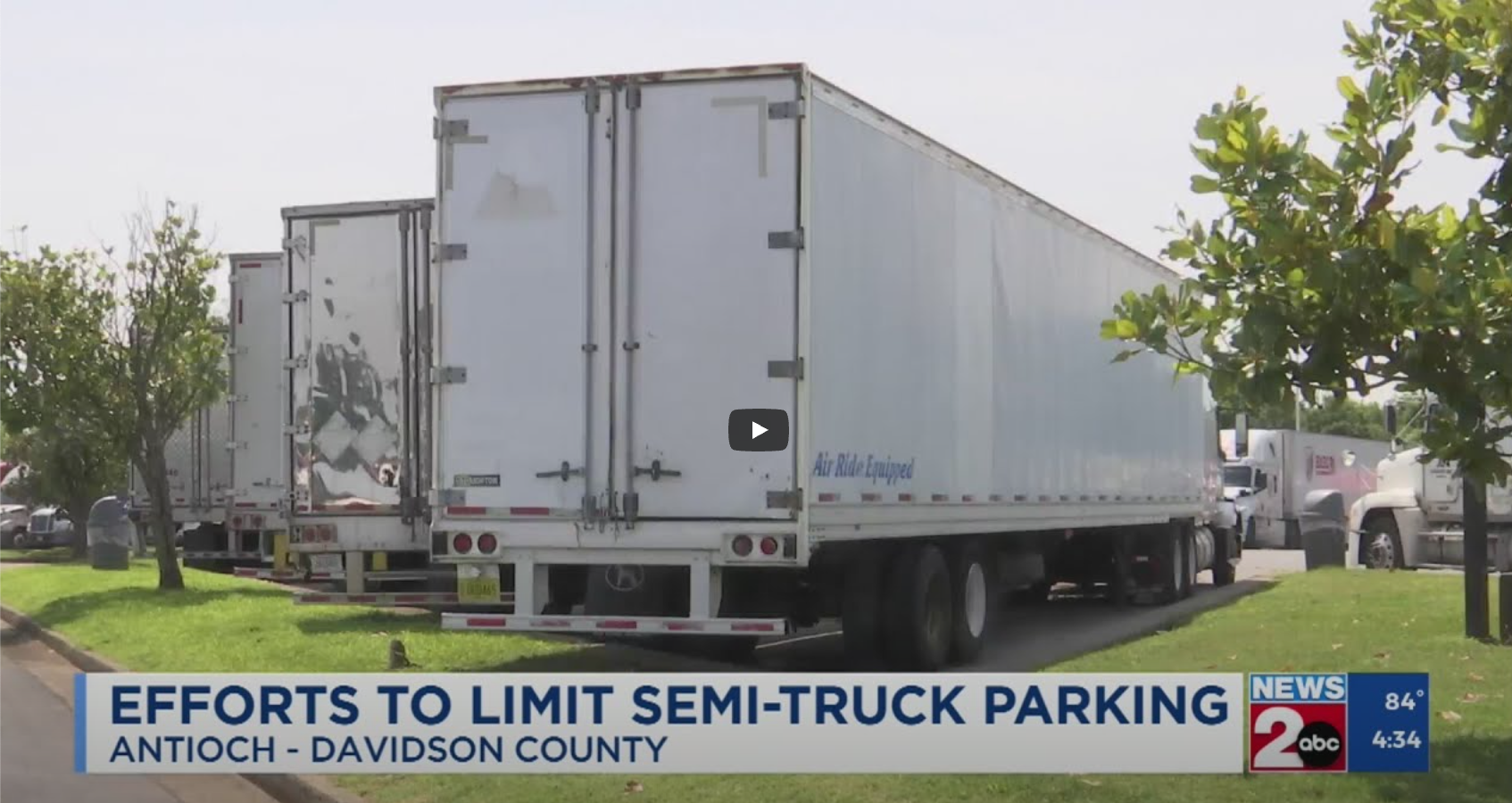
A recent WKRN News story highlighted a growing safety concern in Antioch, Tennessee – truck drivers forced to park on Old Hickory Boulevard and Murfreesboro Pike because legitimate parking options simply don’t exist.
Metro Council Member Joy Styles described the problem perfectly: “The truck stop is filling up, so truck drivers are having to stop, but they’re basically deciding to stop anywhere.” Federal law requires drivers to rest after specific driving hours, but with demand far outpacing supply nationwide, drivers have no choice but to park wherever they can when their time expires.
The Challenge: Limited Options, Growing Demand
Styles notes that local roads “were not built to hold tractor trailers,” creating serious visibility and safety concerns. Traditional solutions like “No Parking” signs aren’t working because drivers literally have nowhere else to go. Even building new truck stops takes years and costs $100,000-$200,000 per parking space.
But there’s a faster solution already working across the country.
The Opportunity: Your Property Could Be the Solution
If you own industrial property, vacant lots, or underutilized space near Antioch’s interstates, you could be part of solving this community problem while generating passive income.
Truck Parking Club connects property owners with truck drivers who need safe, legal parking. We work with:
Trucking companies with extra yard space
Self-storage facilities
Towing companies
Truck repair shops
Real estate investors
Any industrial property owner with available space
How It Works
No upfront costs or long-term contracts – you maintain full control
Quick setup – properties go online in days, not years
Passive income – drivers book and pay through our platform
Damage coverage – up to $25,000 protection
Full control – set your own availability and pricing
We already have 10 locations in the greater Nashville area and are adding 7-10 new properties daily nationwide. With 2,100+ locations and hundreds of thousands of completed bookings, we’ve proven this model works for property owners and communities alike.
Meeting Community Needs
Councilmember Styles emphasized that solutions should be “close to the interstate” but “not disruptive to existing neighborhoods” – exactly the type of industrial properties that work best for truck parking. Instead of waiting for new construction, we can activate existing space quickly to meet immediate demand.
As Styles said, “It’s about safety. Safety is always priority number one.” When drivers have legitimate parking options, they don’t resort to parking on residential streets or highway shoulders.
Ready to Help Solve Antioch’s Parking Challenge?
If you have industrial property in the Antioch area that could serve as truck parking, we’d love to discuss how you can generate income while helping solve this community safety issue.
Marketplace doubles location network in six months, now offers 40,000+ parking spaces across all lower 48 states
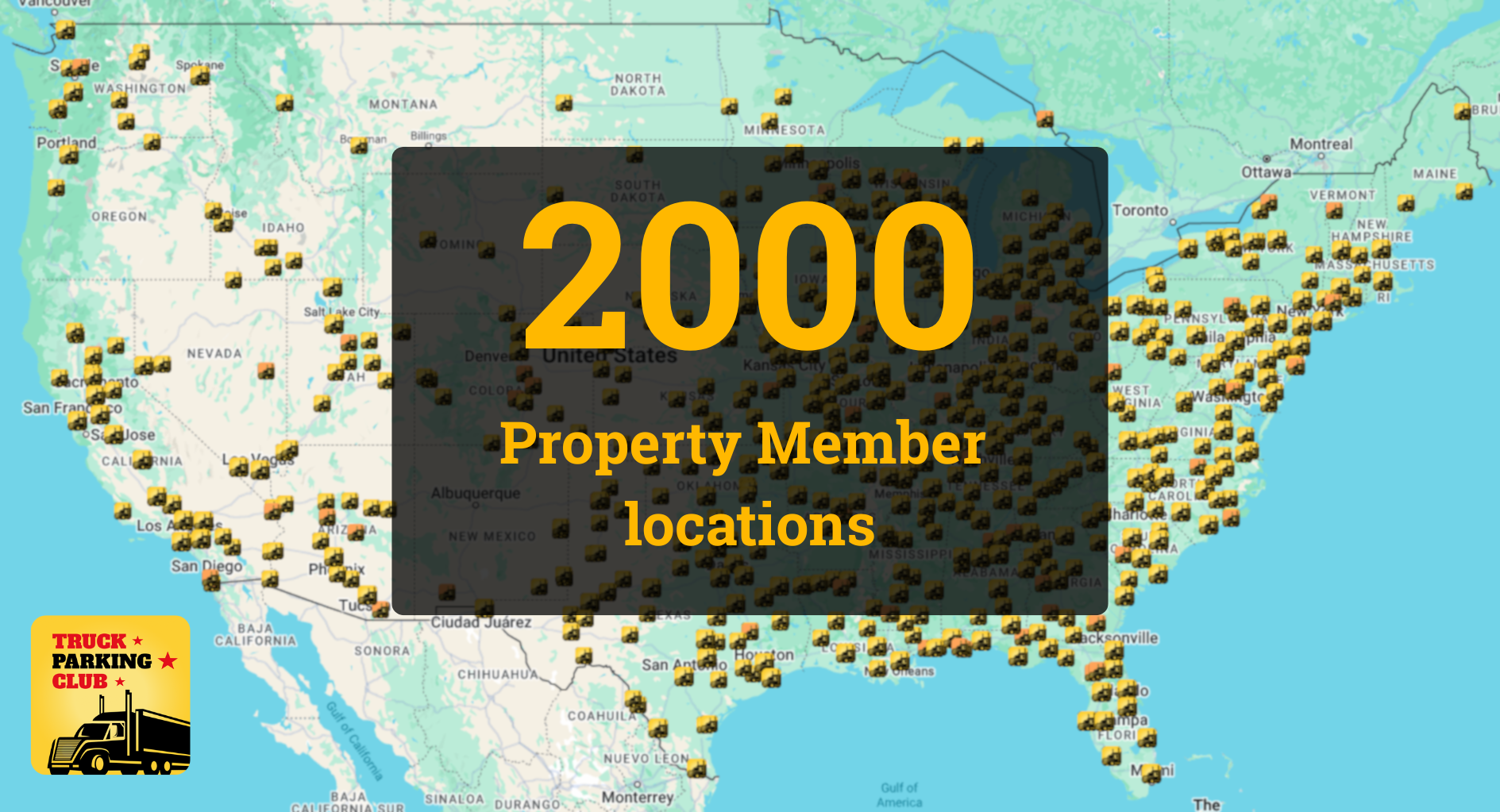
CHATTANOOGA, Tenn. – June 3, 2025 – Truck Parking Club, the leading marketplace connecting truck drivers with available parking spaces, today announced it has surpassed 2,000 Property Member locations across all lower 48 states, providing over 40,000 instantly reservable truck parking spaces to address the critical shortage that forces drivers to spend 56 minutes daily searching for safe parking.
The milestone represents a doubling of locations in just six months, driven by urgent demand from truck drivers seeking reliable parking and property owners looking to monetize unused space. With drivers losing an estimated $5,500 annually in wasted fuel while searching for parking, Truck Parking Club’s rapid expansion offers significant economic relief to both independent owner-operators and fleet drivers.
“This isn’t just about hitting a number – it’s about solving a decades-old problem that costs the trucking industry billions annually,” said Evan Shelley, Co-founder & CEO of Truck Parking Club. “Every new location means drivers spend less time searching and more time earning. Our goal is clear: reduce parking search time to under 10 minutes per day.”
The company’s network includes diverse property types from trucking companies and repair shops to storage facilities and real estate investors, creating a scalable solution to a problem traditionally addressed through expensive and slow infrastructure projects. New truck parking construction typically costs $100,000-$200,000 per space and takes years to complete, while Truck Parking Club can activate existing spaces within a day.
“We’re transforming unused space into income-generating property while giving drivers the certainty they need,” added Shelley.
The platform offers hourly, daily, weekly, and monthly reservations through its website and mobile apps, backed by 24/7 customer service staffed by former truck drivers.
As the company sets its sights on 10,000 locations, it continues to address one of the trucking industry’s most persistent challenges through marketplace innovation rather than traditional infrastructure development.
About Truck Parking Club
Truck Parking Club is a network of instantly reservable hourly, daily, weekly and monthly truck parking locations throughout the US. Truck Parking Club helps connect truckers to truck parking locations throughout the US via truckparkingclub.com and our mobile app. Our network is made up of property owners that have locations adequate for truck parking to list on the platform: this includes trucking companies, truck repair shops, tow truck companies, storage companies, CDL Schools, trailer leasing companies, real estate investors, truck stops, truck parking operators and more!
Truck parking remains one of the most critical challenges facing America’s freight industry. As the leading digital marketplace connecting truckers with available parking spaces, Truck Parking Club is committed to keeping our community informed about the latest developments in this crucial area. Let’s explore the key findings from the American Transportation Research Institute’s (ATRI) recent state-level truck parking analysis.
National Truck Parking Highlights
The ATRI report, developed in collaboration with AASHTO, provides a comprehensive state-by-state analysis of public truck parking availability across all 50 states. Here are the standout findings:
Montana, Vermont, and Massachusetts lead the nation in public parking spaces relative to truck traffic volume
Florida has the most public truck parking spaces (2,100), followed by Illinois (1,449) and Ohio (1,403)
Louisiana, Oklahoma, and Arkansas have the highest dependence on private parking solutions
Tennessee and Texas offer all eight key driver amenities at their public rest areas
Virginia invests the most in maintenance per parking space ($32,982 annually)
When Public Options Aren’t Available
While public rest areas provide essential parking in many regions, they often cannot meet the full demand. This is where Truck Parking Club’s network of 1,950+ locations becomes invaluable. Our platform offers:
Guaranteed parking when public rest areas are full
Flexible booking options (hourly, daily, weekly, or monthly)
Locations near major freight corridors and metropolitan areas
Verified properties with detailed information on amenities
24/7 customer support from experienced former drivers
For truckers navigating through states with limited public parking—like Louisiana, Oklahoma, or Texas—our marketplace provides critical alternatives to ensure legal parking is always available.
Access the Full ATRI Report
Want to explore the complete data on truck parking availability across all 50 states? Click here to download the full ATRI report. This comprehensive analysis includes details on amenities, safety features, and state-by-state comparisons that can help you plan your routes more effectively.
Whether you’re looking for reliable parking for your next haul or have property space that could generate additional revenue, Truck Parking Club is here to help. Visit our website or contact our support team to learn more about how we’re addressing America’s truck parking shortage together.
The recent news about truckers in Nevada threatening a $500 surcharge for deliveries in Clark County highlights a critical issue affecting the transportation industry nationwide: the severe shortage of truck parking.
At Truck Parking Club, we understand this challenge firsthand. Our platform was specifically created to address the critical truck parking shortage across America by connecting truckers seeking parking with property owners who have available space.
The Nevada Situation
As reported by CDLLife, multiple truck parking yards in Clark County have been closed due to zoning violations, creating a serious problem for truckers delivering to the Las Vegas area. The Nevada Hispanic Truckers’ Association has responded by threatening a $500 surcharge on deliveries to the county starting July 1st unless local government takes action.
The closures have forced many drivers to park in residential areas, resulting in expensive tickets ranging from $500-$800. County Commissioner Tick Segerblom acknowledges the problem but notes that the closed yards were never legally zoned for commercial vehicle parking, citing concerns about diesel fumes and trucks in residential neighborhoods.
How Truck Parking Club Can Help
With thousands of locations nationwide and many options in the Las Vegas area, Truck Parking Club offers Nevada truckers immediate solutions. Our platform provides guaranteed parking spot availability with instant booking capability, flexible duration options from hourly to monthly bookings, and verified locations with detailed information including property photos and available amenities.
Benefits for Nevada Truckers
When you book through Truck Parking Club, you’ll enjoy:
Guaranteed parking availability
Instant booking through our web and mobile platforms
Flexible duration options (hourly, daily, weekly, or monthly)
Verified locations with detailed property information
24/7 customer support from experienced former drivers
Looking Forward
While Commissioner Segerblom works on putting new policies in place for properly regulated truck parking yards, this process could take months. In the meantime, Truck Parking Club offers an immediate solution for truckers delivering to Clark County.
Our marketplace is designed to address the industry’s transition toward paid parking models and the growing demand for guaranteed parking spots, particularly in high-demand regions like Nevada. By connecting truckers with available spaces, we’re helping to solve one of the industry’s most pressing challenges.