Category: Parking Tips

  • Truck Parking Trends: Predicting the Future of the Trucking Industry

    Truck Parking Trends: Predicting the Future of the Trucking Industry

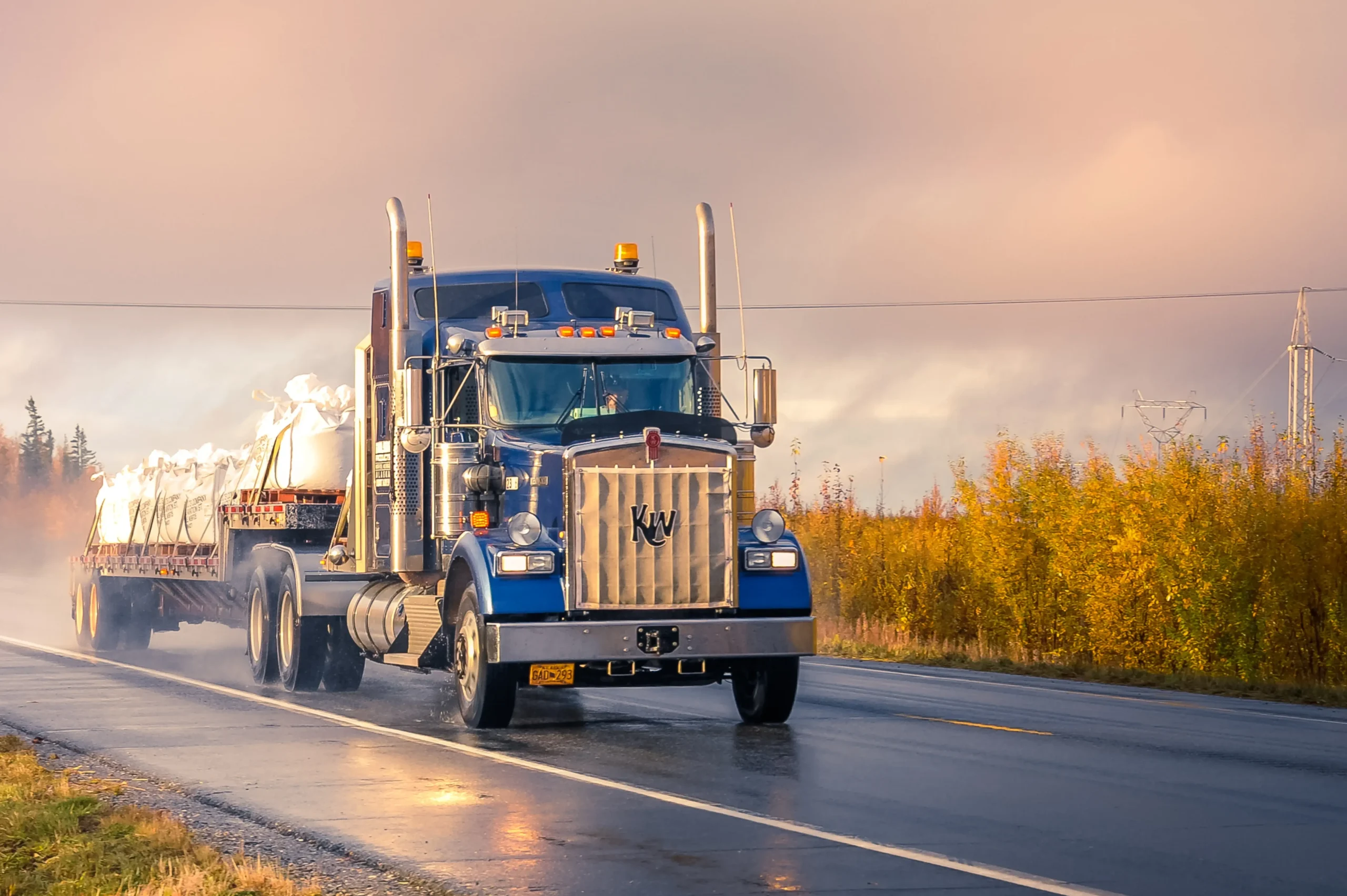
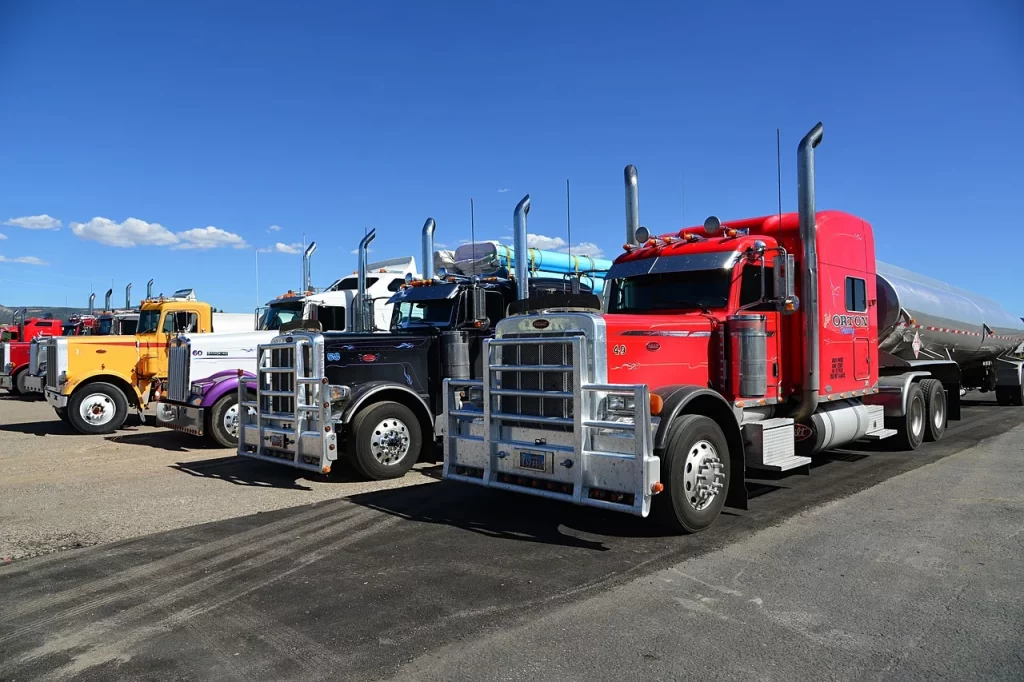
    huge blue truck with cargo

    Hello,

    Imagine you had a pretty grueling day at work – a full 12 hours in the office, factory, store, or wherever – before driving home, ready for a well-earned rest. You can’t wait. You earned it. 

    Now imagine arriving home only to find your driveway full of other cars. Not an inch of space to park. Worse still, so is the entire street, which is nose-to-tail full. The entire neighborhood, in fact, is crammed full of vehicles, all parked for the evening. 

    Tired and hungry, you aimlessly drive around, hoping to find a space. Endlessly circling the neighborhood, you beg the parking gods for a spot to magically appear just so you can park and start your evening.

    If you fail to find a spot in the next 30 minutes, inexplicably, the authorities will fine you anything from $ 1,000 to $16,000. And if the same thing happens tomorrow, another fine. If you make a habit of this, they might even stop you from working at all. But still, you can’t find a space. 

    It would be quite a frustrating, anxiety-ridden end to the day, wouldn’t it? You would probably feel as though you deserve more. That after such a tough day, you had at least earned the right to park the car, eat, and sleep. 

    Daily Scenario

    For thousands of American truck drivers, that scenario is a very real, daily event, and the problem is only getting worse. 

    Not too long ago, OTR truck drivers could pull into a rest area or truck stop at the end of a busy day, unannounced, and park without any issue. These days, finding a truck parking spot has become extremely problematic. 

    The fact is, rest areas and truck stops all over the country are brimming with parked trucks, and tired truckers are bearing the brunt of an industry that is changing. There are more OTR trucks than ever, driver regulations are tightening, and no parking spaces are being created to compensate. 

    Current Parking Situation

    Drivers must park their trucks for the evening before a 14-hour time limit is exceeded, and if they don’t, they are faced with those huge fines we mentioned earlier. With limited parking available and the clock ticking, it is not uncommon to see truckers parked on vulnerable off-ramps, or potentially dangerous urban public lots.

    The main cause of this issue owes to an outdated infrastructure coupled with a lack of investment in parking. With authorities further restricting where trucks can park and rising salaries fueling more new truck drivers, the parking options are becoming even fewer. 

    The Future of Truck Parking

    While we wait for the government to address the issue, technology is plugging the gap in the form of real-time truck parking apps, which aim to reduce the tedious searches for a spot and negate the risks of unplanned stops (more on that towards the end of this article). 

    Technology aside, there really isn’t very much being done to address the issue apart from the following:

    Federal Efforts

    The federal government is finally beginning to roll up its sleeves, slowly but surely. With the launch of a new pilot program, there’s an active effort to assess potential areas along highways most starved for parking. We can only hope that it isn’t too little, too late. And we can only pray it doesn’t take them too long. Unfortunately, it probably will. 

    Self-Driving Vehicles

    Looking further into the future, autonomous vehicles seem almost inevitable and will probably become a reality far quicker than we currently imagine. While their widespread adoption might still be a good few years away, their potential to continuously operate without set breaks offers a partial solution for truck parking challenges. 

    Commercial Hubs

    Problem-solving concepts like dedicated overnight delivery hubs offer a twofold solution for truckers: a place to collect and deliver cargo while resting for the evening if needed. While more distribution centers are offering this service, to call this a solution of any real value would be clutching at straws a little.

    Either way, none of this really helps truck drivers right at this very moment. Unless, of course, they are using Truck Parking Club as a solution. 

    Unfamiliar with Truck Parking Club? Let’s take a look. If you are a truck driver, you almost certainly need to read this. 

    The Future Is Here

    We have created a world where every vacant property can become a convenient place for tired truckers. A world in which every landowner can contribute to solving the truck parking dilemma – while also benefiting monetarily. 

    At Truck Parking Club, truckers can use our app to find spaces in real-time, wherever they happen to be in the country. It is revolutionizing parking – and it is surprisingly affordable.

    Let’s take a look at how you, as a trucker, can join this revolution. Fortunately, there isn’t much to tell you – the whole process is so simple and straightforward, it is almost effortless. 

    How It Works

    For Landowners: Sign up, list your property, and turn your spare land into an income source by hosting truckers.

    For Truckers: Create an account (it takes under a minute) and find an entire nation of safe, comfortable parking spots, most of which offer various amenities. Never worry about finding a spot again – just open the app, search by location, and pay for your spot. 

    This system is simple, effective, safe, and great value.

    Discover and List Locations

    Landowners: Add your location to our extensive nationwide list of parking spots. Our app will handle all bookings and notify you when one has been made. 

    Truckers: View and book spaces in real-time or even up to a whole month in advance. Your days of endlessly circling parking lots are a thing of the past. You are now part of the Truck Parking Club revolution.

    Bookings & Parking:

    Landowners: Stay updated with real-time notifications for every booking. You will know when the driver is arriving. Communicate any information to the driver through the app.

    Truckers: Once you’ve booked, chat with your host (if you wish to) about any specifics to your parking. Our team is just one call away to assist you if needed. 

    That’s all there is to it. We didn’t just revolutionize parking. We made the process laughably simple, too. 

    Bottom Line

    Spare a thought for the truck driver. For decades, they have been thundering along the highways of this great nation, quietly ensuring our essentials are distributed. The least we can hope is that they get a decent night’s rest, ready for the next few hundred kilometers of trucking. 

    For now, if you are curious what the future of truck parking looks like, just know this: 

    It’s already here. 

    The future is Truck Parking Club.

    The information published herein is for general informational purposes only. Truck Parking Club does not make any representations or warranties about the completeness, reliability, legality, and accuracy of this information. Any reliance placed on such material is strictly at the user’s own risk. Truck Parking Club shall not be responsible for any losses or damages incurred in connection with the information published herein.
  • Truck Parking Lot Layout & Dimensions: How to Design a Truck Parking Lot

    Truck Parking Lot Layout & Dimensions: How to Design a Truck Parking Lot

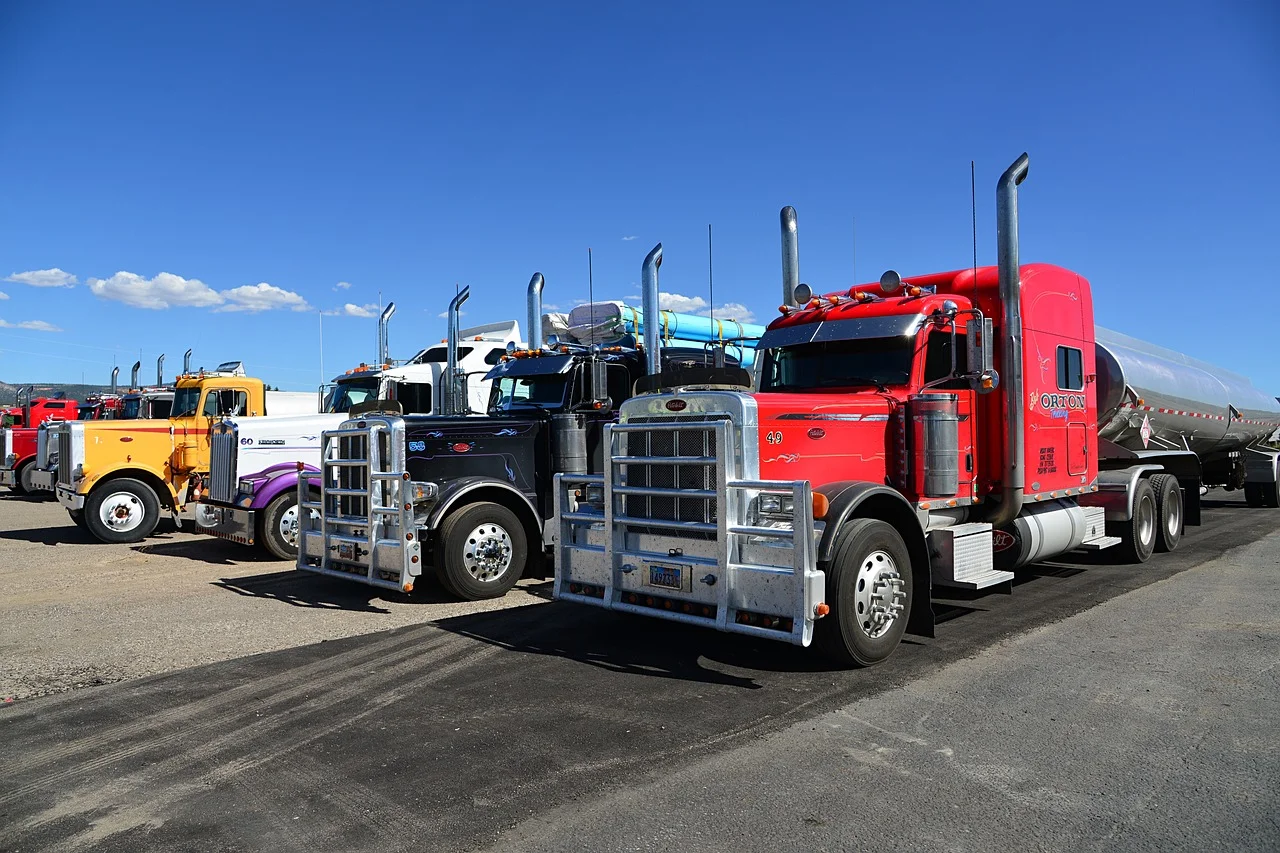
    semi truck trailer on parking

    There are many problems that American truckers have to deal with on a daily basis. In recent years, one of them has emerged as one of the key issues that directly affects not only truckers themselves, but also entire supply chains. The lack of available parking spaces delays deliveries, exhausts drivers, and places additional pressure on dispatchers. 

    Adding new parking lots is the only way to go around this issue. But it isn’t enough to simply pave an empty parcel of land near a highway with concrete and call it a day. There are certain regulations and requirements that need to be met by such a facility in order to properly accommodate truck drivers and their vehicles. 

    Are you interested in monetizing your empty property by turning it into a truck parking lot? Then you’ve come to the right place. We’ll take you through the appropriate layout and dimensions of truck parking facilities, as well as provide you some tips on getting started. 

    Why Properly Designed Truck Parking Lots Are So Important

    As we already mentioned, truck parking shortage is a serious problem for everybody who is involved in upholding modern supply chains. It begins with truckers, who waste their valuable time on looking for a parking space. 

    Then, dispatchers who manage fleets and timely deliveries are affected, as they need to make up for the delay by sending out additional vehicles or explaining the delays to their higher-ups. Prolonged delivery times also impact businesses on the other end of the supply chain, who are forced to delay their regular processes. 

    Finally, this leads to situations where individual customers are met with “out-of-stock” messages when browsing online shopping sites, or encounter empty shelves at physical stores. 

    All that because there aren’t enough parking spaces to accommodate American truckers. Of course, plenty of other factors also play a role in supply chain disruptions, but the truck parking shortage is a problem that can be alleviated through proactive industry decisions and the entrepreneurial actions of American landowners. 

    Parking lots with the right design and dimensions can fit more trucks, as well as provide truckers with the amenities that will allow them to properly rest, recover, and get ready to get back on the road. With enough such spaces available, the shortage issue will become a thing of the past. 

    Help alleviate the truck parking shortage 

    MONETIZE YOUR VACANT PROPERTY WITH TRUCK PARKING CLUB 

    Standard Truck Parking Dimensions 

    The blueprint for your truck parking lot should first and foremost contain clear divisions into sizable spaces for trucks. You’ll need to know the exact capacity of your facility before you get down to the construction work, to avoid overcrowding issues later down the road. 

    Each space needs to be clearly delineated with enough space between them, so that truckers can comfortably park their vehicles and exit them without much trouble. Here are the basic dimensions of truck parking spaces: 

    • Semi-trailers: 55 ft long, 14 ft wide 
    • Semi-trailers with an attached trailer: 75 ft long, 14 ft wide 

    These dimensions are just the recommendation for a parking space, and only take into account the trucks while they’re parked. On top of this space, you’ll also need to ensure that truckers have enough room for navigating the lot and loading their vehicles. Finally, you might also want to consider including a few spaces for regular-sized cars, especially if your parking lot is going to have additional facilities, such as restaurants or stores. 

    How to Design a Truck Parking Layout 

    Before diving into the many ways you can design a layout for your truck parking lot, let’s go over the dimension standards for truck parking facilities: 

    • Minimum parking space width: 9 ft 
    • Minimum parking space length: 55 ft 
    • Maneuvering and backing area: 55 ft 
    • Outer turning radii: 60 ft 
    • Vertical clearance: 14 ft 
    • Loading dock area: Twice the size of truck bed 
    • Loading dock height: 4 ft 
    • Loading dock width: 10 ft 

    As you can see, truck parking spots require plenty more space than one might initially expect. When calculating how many trucks your lot will fit once it’s ready, you’ll need to take all of the above standards into account. Above all else, your parking lot needs to be safe and convenient for truckers to use whenever they need to. 

    There are numerous configurations in which you can set up your lot to make the most out of your available space. Here are three of the most common ones: 

    • Parallel: The parking spots are set up parallel to the curb, with trucks parked in front of each other. It works best for narrow, but long lots. 
    • Angled: Perhaps the most convenient parking configuration for truckers, where spaces are arranged next to each other, at 30-60 degree angles. It allows for easy parking and backing out of a spot. 
    • Perpendicular: Standard, 90-degree parking lot configuration – you may be familiar with it from shopping malls and other large venues. It’s most suitable for wide lots without enough length to accommodate angled parking spaces.

    Choosing the Right Spot For a Truck Parking Lot 

    If you don’t already own a vacant property and are looking to purchase a land parcel to transform into a parking lot, you’ll want to consider the following criteria: 

    • Highway proximity: If you want to attract a high volume of trucks to your facility, then your parking lot needs to be located close to busy highways that lots of trucks drive on every day.  
    • Land prices: In order to fully realize your vision, you’ll need to stick to your budget when purchasing land. Generally speaking, the closer your parking lot is to a major highway, the more expensive the land will be. If you can’t afford to purchase plots near highways, you can make up for that by adding extra facilities to your new parking lot, such as restaurants or shops, to attract truckers. 

    All of the above points are important considerations for prospective parking lot owners who don’t yet have the land to transform into such a facility. However, if you already have some land that doesn’t necessarily check off all these boxes, don’t worry – you can still monetize it as a parking lot for truckers, especially with the right partner who will help make your facility discoverable. 

    Partner up with us to make the most out of your vacant property 

    TAKE A LOOK AT HOW WE OPERATE

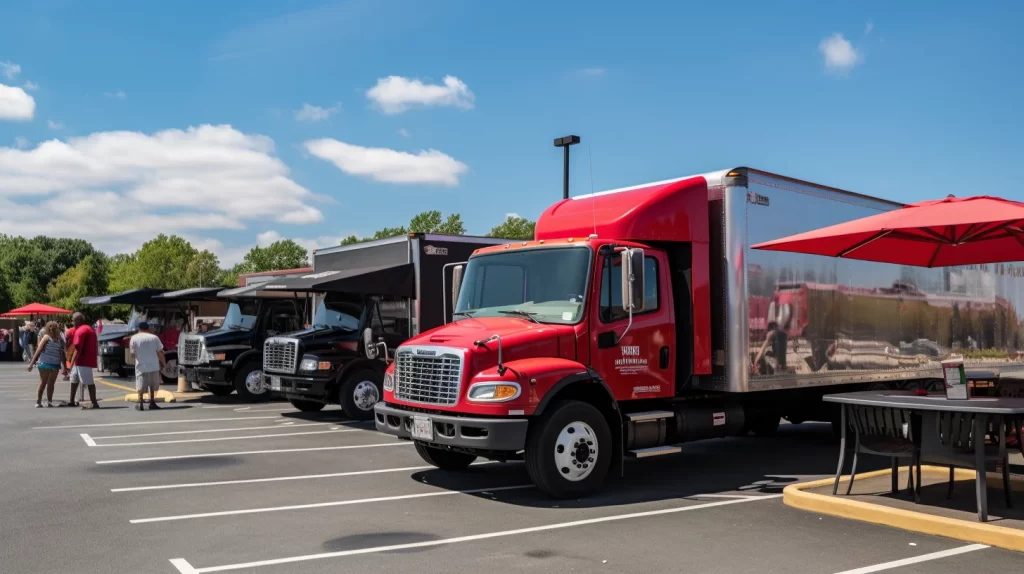
    Trucks parked at a sunny parking lot

    Once you plan out your land to accommodate as many truck parking spaces as possible, all the while maintaining the required safety standards, you’ll need to prepare your parking lot for business. This means ensuring that the ground and all of your facilities are ready to welcome truckers (and possibly other drivers). Here are five things to focus on first. 

    Pavement Thickness

    Trucks are heavy vehicles, that much is obvious. Your parking lot will ideally accommodate quite a few of them at any given time, which means that the ground they park on needs to be thick enough to withstand a high volume of traffic. If you plan to incorporate loading zones in your parking lot, the pavement on the lanes that lead to them, as well as the zones themselves, will have to be thicker than the rest of the facility to accommodate even heavier weights. 

    Signs and Markings 

    Setting up signs and ground markings along your brand-new parking lot isn’t only a legal requirement. This kind of signage helps drivers navigate your facilities, eliminates confusion when entering and exiting the parking lot, and prevents unnecessary damage or accidents. 

    Accessibility

    The Americans with Disabilities Act requires all public parking spaces to have dedicated parking spaces accessible to the handicapped. The minimum number of accessible spots depends on the total number of available spaces. For example, a parking lot with 76-100 spaces needs to have at least 4 accessible parking spots. 

    Keep in mind that these requirements do not apply if you plan to dedicate your parking lot solely to trucks and other industrial vehicles. 

    Facilities for Drivers 

    An empty lot that only has parking spaces will not attract lots of drivers, unless it’s placed in a “parking desert” with no other facilities available for dozens of miles in any direction. Some of the driver-friendly amenities you might want to implement include: 

    • Restaurants 
    • Stores
    • Bathrooms with showers 
    • Gas station 
    • On-site security 
    • Benches
    • Ashtrays 

    Lot Maintenance 

    If you’re unable to tend to your parking lot every single day, you’ll need to hire some staff to take care of the cleanliness and functionality of your facilities regularly. Truckers will not want to stop at a littered, run-down parking lot, especially if they can go to a better one a few miles down the road. If the budget allows it, build your facilities using durable materials that will stand the test of time.  

    Truck Parking Club: Your Ultimate Truck Parking Partner 

    Nowadays, with the truck parking shortage in full swing, and global supply chains still reeling from the downturn of the global economy, opening a truck parking lot can be a profitable idea. 

    However, even the best of facilities will not bring any cash in if truckers are unaware of them. A trusted partner, who knows the industry inside and out can help you connect with truckers all across the country, providing a stable, sustainable way to attract business to your facilities. 
    At Truck Parking Club, we have created a convenient digital platform that allows truckers to seek out spaces they would normally struggle to find. As a vacant lot owner, you can sign up to become a parking provider, and count on our ongoing support. Our goal is to alleviate the truck parking shortage by helping landowners monetize their properties – a win-win situation for all parties involved!

    The information published herein is for general informational purposes only. Truck Parking Club does not make any representations or warranties about the completeness, reliability, legality, and accuracy of this information. Any reliance placed on such material is strictly at the user’s own risk. Truck Parking Club shall not be responsible for any losses or damages incurred in connection with the information published herein.