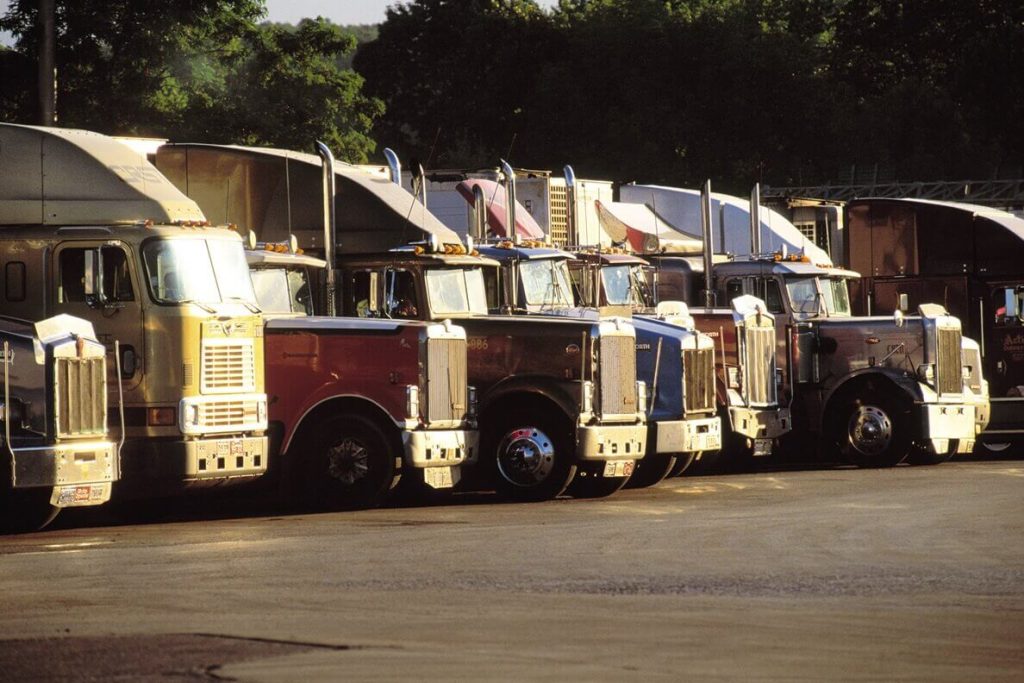
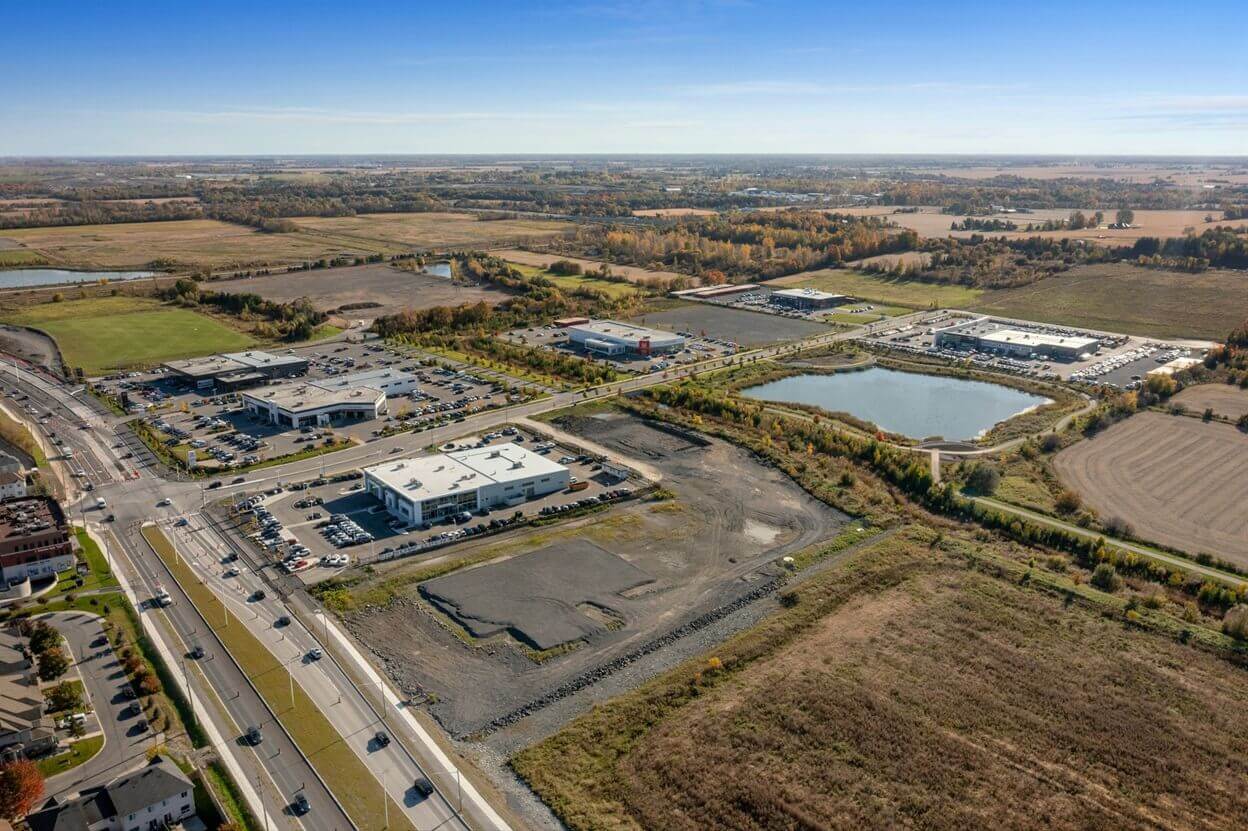
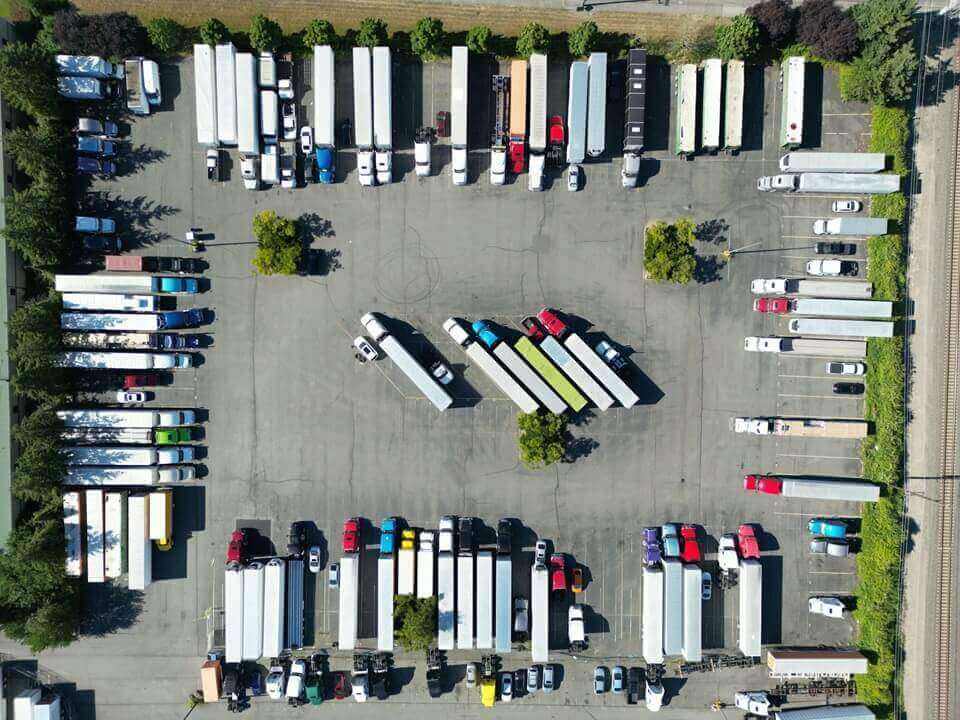
The rapidly expanding prospect of running a truck parking business comes with unique opportunities for entrepreneurs with commercial or nonresidential land available.
The benefits of opening a truck parking business are broad and lucrative, but like any business venture, its success depends on several factors.
The concept of running a semi-truck parking lot is refreshingly simple, with the single requirement of providing a secure and accessible space for truck drivers to park their vehicles. However, the simplicity of the concept doesn’t always correlate with easy success, and while the overwhelming majority of new truck parking businesses are doing very well, profitability involves careful planning and strategic decision-making.
In this article, we shall look at the various considerations for starting and operating a truck parking lot business, including the various aspects that may influence its success, before looking at the main pros and cons.
Before we cover those pros and cons, let’s first consider the required elements for success for a newly launched semi-truck parking lot.
Main Elements of Truck Parking Lot Business Success
At one time, advertising and marketing would have been the most decisive factor in launching a successful truck parking lot business. Even the most spacious, well-lit, easily accessible lots would struggle to survive if truck drivers were unaware of its existence.
At Truck Parking Club, we have removed your advertising and marketing concerns from the equation. Truckers everywhere are now aware of our popular, established truck parking app, and by listing your property with us, customers will find you. Aside from a few well-placed signs, there is no pressing need to commit too heavily, if at all, to advertising.
At the risk of stating the obvious, a truck parking lot located near major highways, logistics centers, or busy urban areas has a higher chance of attracting consistent traffic due to the increased demand for truck parking spaces. The ideal location should balance accessibility for drivers and proximity to their key destinations. Within fifteen minutes of a highway or major road would be ideal.
Pricing
A well-thought-out pricing model needs to balance affordability for the truckers with profitability for the business. This may involve varying rates based on demand, length of stay, and additional services offered. For a general idea of parking rates currently, you can browse our truck parking listings to gauge what other property members in your area are charging.
Operational Factors
Encompassing everything from the layout of the parking lot to the use of technology for managing bookings and payments, your operational factors are another important consideration. Streamlining your operations will reduce overhead costs and improve customer experience.
While not essential, investments in technology for easy access and security can make a difference in attracting customers. That said, price and location are going to be your biggest draw.
Other factors should be considered of course, but these three main elements – location, pricing, and operational factors – are going to form the main foundation of a successful truck parking lot business.
What Are the Advantages of a Truck Parking Lot Business?
With those brief caveats considered, what exactly are the most obvious benefits of owning a truck parking lot business?
Steady Revenue Source
Given the current truck parking crisis in which just one truck parking space exists for every ten trucks on American roads, success is almost guaranteed at the moment.
Well-located truck parking lots, especially near logistic hubs or major transit routes, are almost guaranteed to experience a high and consistent demand for spaces. This high demand equates to a regular and reliable income stream for a semi-truck parking business.
Low Ongoing Operational Costs
Once established, truck parking lots generally have lower operational expenses compared to many other businesses, primarily because they require minimal staffing and maintenance, especially if automated systems are in place.
As mentioned earlier, advertising is one of the biggest overheads faced by many truck parking lot businesses. With Truck Parking Club, truckers find you, and not the other way around. Removing these expensive advertising costs will greatly reduce your overhead.
Opportunities for Expansion
The truck parking lot business provides immense room for growth through expanding the existing physical space or adding services such as vehicle maintenance, washing stations, or overnight facilities, all of which can create additional revenue streams.
Flexibility
Running a truck parking lot business is not as time-consuming as you might imagine. As a result, you can dedicate as much time as you can afford. All driver communication and payments are managed through the Truck Parking Club app, and there is no need to be on-site during arrival times unless you want to be there.
Hassle-Free Customers
Truck drivers are notorious for being pretty easygoing with very few expectations. All they require is a convenient truck parking space for a reasonable rate. Provide that, and you will have very little in the way of interaction or customer service issues.
What Are the Challenges of a Truck Parking Lot Business?
Initial Capital Investment
Setting up a truck parking lot can require a large initial investment, particularly in purchasing land in a strategic location and developing the necessary infrastructure. Of course, this is not an issue if you happen to own existing commercial land.
Market Fluctuations
The demand for truck parking is influenced by economic conditions and industry trends, making the market somewhat unpredictable in previous years. However, with the current drastic shortage of truck parking spaces nationwide, the market seems quite stable for the next decade or so, at the very least.
Competition
In areas with high demand, competition can be quite fierce, with several parking lots vying for the same clientele. That said, there are a lot of truck drivers looking for spaces at the moment – unless you are located in a heavily populated truck parking area, competition should be too much of a concern.
Regulatory Hurdles
Complying with zoning laws, environmental regulations, and other local ordinances can be something of a headache at times – and can sometimes prove a little costly.
Maintenance and Security
Keeping the parking lot in good condition and ensuring good security are ongoing responsibilities that can require attention and resources. Assuming you already have a fenced property, this can be a moot point. In any event, security is not a prerequisite and isn’t necessarily a factor outside of urban areas.
Join the Truck Parking Revolution Today
With careful initial planning and a good eye for location selection, the advantages greatly outweigh the few existing challenges of a truck parking lot business.
It is with good reason why truck parking lot businesses are so lucrative at the moment: with such a critical shortage of truck parking spaces, this is a business that can very easily succeed, assuming you get the location right and list for affordable prices.
Do you own underutilized property? You can easily transform it into a profitable venture by partnering with Truck Parking Club right now. Join as a property member today, and you can potentially earn healthy revenues from day one!
The information published herein is for general informational purposes only. Truck Parking Club does not make any representations or warranties about the completeness, reliability, legality, and accuracy of this information. Any reliance placed on such material is strictly at the user’s own risk. Truck Parking Club shall not be responsible for any losses or damages incurred in connection with the information published herein.
Highway ramp parking is one of the ways that truck drivers get a night’s rest. Unfortunately, it’s a dangerous practice that’s generally frowned upon. Let’s take a closer look at why parking on highway ramps is a bad idea.
Safety Hazards
One of the main reasons not to park on highway ramps is that the process comes with a significant number of safety hazards. Some of these may include the following:
Increased Risk of Accidents
Let’s be honest: highway ramps weren’t made with the intention of having truckers park there for a nap. In fact, these structures were actually built for acceleration, not stopping. As a result, a semi-truck parked on a highway ramp provides an unexpected obstacle, reducing visibility and reaction time for other drivers. This significantly increases the risk of collisions.
Traffic Disruptions
Whether you’re parked on the on-road or off-road highway ramp, you face the risk of disrupting traffic. Naturally, it’s less of a risk in urban areas or outside of peak hours. However, it is a very real hazard when you park on highway ramps.
Vehicle Damage
Perhaps one of the most compelling reasons not to park on highway ramps is that you expose your vehicle to potential damage. Not all cars and drives approach highway ramps with equal caution, and being parked on a ramp exposes you to potential swiping and fender benders. There have also been cases where drunk or fatigued drivers caused much more significant damage.
Legal Issues
The next major set of reasons not to use highway ramps as parking is that legality forbids it in many places. Let’s take a closer look.
Illegal in Most Jurisdictions
In many states in the United States, it is now illegal to park on highway ramps. Not all states enforce it with equal fervor, but it is generally frowned upon. In some areas, you may get a ticket, while in others, authorities may wake you up and send you on your way to other places.
Civil Liability
In addition to the basic illegality of parking on highway ramps, you may want to consider civil liability as well. For instance, if you’ve parked on the highway ramps and your truck causes an accident, it’s possible that you may be held responsible for the costs and damages.
Alternatives to Parking a Semi-Truck on Highway Ramps
Now that we’ve established that you shouldn’t be parking on highway ramps, what are the alternatives? Let’s take a look at a few of the best options.
Designated Truck Parking Stops
Many towns and cities have designated truck parking stops where truckers can spend the night. Much of the time, these facilities also provide access to certain amenities. The downside to this option is that spaces are usually limited.
Rest Areas
Many areas, districts, and jurisdictions ensure that there are rest areas available where truckers and other drivers can stop for a rest. The upside to this arrangement is that it’s 100% legal. The downside is that there are generally few amenities and that the spaces may be limited.
Truck Parking Apps
Another of the more modern options for finding truck parking is to use a truck parking app or website. There are several advantages to this approach, including the fact that these apps generally have access to a far broader range of parking spots. You can also book space in advance. Between affordability, ease of use, and the option to book spaces in advance, truck parking apps are easily one of the most convenient modern options.
Find a Parking Spot with Truck Parking Club
It’s time to bring your days of highway ramp parking to an end, and what could be better than getting simple, affordable parking through a truck parking app? If you’re interested in using a truck parking app, one of the best options to consider is Truck Parking Club. Not only does it offer an app, but it offers a website as well. This means that you can easily book your parking space before or during a trip from any device with an internet connection.
One significant advantage that the Truck Parking Club system offers is that it allows owner members to register their properties anywhere in the country. As a result, the service has access to a whole host of properties that aren’t generally available to truckers.
Another excellent feature or benefit is that you can subscribe to a parking spot with a monthly subscription. This means that if you visit a town or city regularly, you can rest assured that there will be a space available where you can park your truck.
So, if you want to ensure that you always have access to a place where you can take a load off and get some rest, register with Truck Parking Club today.
The information published herein is for general informational purposes only. Truck Parking Club does not make any representations or warranties about the completeness, reliability, legality, and accuracy of this information. Any reliance placed on such material is strictly at the user’s own risk. Truck Parking Club shall not be responsible for any losses or damages incurred in connection with the information published herein.
Starting a truck parking lot has become one of the most exciting business opportunities for property owners. All ‘thanks’ to the national truck parking shortage causing the demand for reliable semi-truck parking spots to skyrocket.
Furthermore, with the Truck Parking Safety Improvement Act promising grants for new and existing truck parking businesses, turning your property into a well-functioning truck parking lot seems like a no-brainer.
Still, while a semi-truck parking business can be incredibly profitable (when operated correctly), it won’t run itself. For it to yield the expected returns, you must first convince the truckers to park at your lot instead of others.
This is where the effective truck parking marketing strategy comes in. Today, we’ll teach you how to craft it.
Why Promote Your Truck Parking Lot
First, let’s get one thing out of the way – do you really need to advertise my semi-truck parking lot?
After all, the demand for reliable truck parking is so high that truckers will flood any parking lot to serve their required sleeping break.
Well, you’re not wrong here. However, for a trucker to know that your truck parking lot is reliable, you must first promote it that way. Also, without promotion, how can a trucker know you have a lot they can park at?
And secondly, with the proper marketing strategy, you can build long-lasting relationships with truckers, ensuring they come back to your lot whenever they hit the road (even if they would have to go on a detour to get to your lot).
How to Build a Winning Truck Parking Lot Marketing Strategy
Truck parking is a unique niche that requires a distinctive approach to marketing. There’s no one-size-fits-all strategy here, but undertaking the following steps should give you an edge over your competitors and help you leverage advertising to increase your truck parking revenues.
#1 Know Your Audience
If you’re new to truck parking, you’ll quickly learn that truck drivers don’t like to beat about the bush. They’re direct people, and you can safely bet they will require the same approach from you.
So, when crafting your message, don’t try to convince truckers why they should park at your spot. Instead, be direct, giving them a clear message of what your truck parking lot offers. Oh, and don’t forget to sprinkle it with some banter. Truckers might seem rough, but they love to crack a joke.
#2 List Your Business at Truck Parking Club
If you want truckers to park at your parking lot, you must ensure they know it even exists. When it comes to that, the best idea is to leverage the leading truck parking app, which happens to be our very own Truck Parking Club.
To list your truck parking lot, simply create a free Property Member account. Once you’re registered, you’ll be able to effortlessly add your location to our map.
Oh, a word of advice: don’t forget to add a short description of your lot, followed by some nice-looking pictures. It will make your truck parking location seem more trustworthy, encouraging truckers to stop at your lot.
Although Truck Parking Club is by far the best way to get truckers to know your business, not all truck drivers have yet discovered the benefits of using our app. For this reason, you will also need to employ different marketing activities. When it comes to that, you have several options, including:
Put up Signage (Which Truck Parking Club provides) FOR FREE
Use flyers and posters: This is a more traditional approach, but it can be mighty beneficial. In short, you create flyers and posters, which you can then leave (with permission) at gas stations, truck stops, or restaurants located across the state.
Leverage radio ads: Although radio ads aren’t as popular as they used to be, they can be a great addition to your truck parking advertising strategy. Contact your local radio station and ask how much you would need to pay to promote your parking lot.
These three options should offer the best results, but you can also consider using social media marketing or banners and billboards located strategically to get your message across. The best idea is to pick two or three marketing tactics to boost your chances of reaching a broader audience.
#4 Focus on Building Relationships with Truckers
Attracting truckers to your parking lot is one thing. Another is ensuring they keep coming back or telling their friends about your truck parking business.
Again, there are several tactics you can use to build commitment. The most obvious strategies involve creating a loyalty program, where you would give points and discounts to returning truckers.
Another option is offering truckers a monthly parking subscription, which is something you can do through Truck Parking Club.
Either way, creating lasting relationships with truckers can provide you with a steady cash flow and build a trustworthy reputation in the industry.
Elevate Your Truck Parking Business Revenues
And that would be it. Utilizing the above marketing tactics should ensure that your truck parking lot receives the recognition it deserves, increasing the demand for your services and boosting your revenues.
So, don’t wait up. The truck parking industry is only expected to grow in the upcoming years, which translates to more competitors entering the market. With the right marketing strategy, you can build a solid reputation, ensuring that you have the advantage needed to keep your strong position in the industry.
Disclaimer:The information published herein is for general informational purposes only. Truck Parking Club does not make any representations or warranties about the completeness, reliability, legality, and accuracy of this information. Any reliance placed on such material is strictly at the user’s own risk. Truck Parking Club shall not be responsible for any losses or damages incurred in connection with the information published herein.
A commercial truck parking lot can be highly profitable. However, when you’re preparing to build one or have one already, you may encounter several challenges. Let’s take a closer look.
Challenges Faced by Truck Parking Businesses
Limited Land and High Costs
As someone who’s interested in buying land and building a truck parking lot, costs can be prohibitive. The land costs alone are immense and can place this dream outside the reach of many aspiring truck parking lot owners.
Unfortunately, there are fairly limited options when it comes to this area. One option for trying to get around this is buying properties at auctions. There are also ways to cut costs on building a truck parking lot without compromising on safety and quality.
For instance, you don’t necessarily need to offer covered parking, and the basic requirements are fairly minimal. While this may not be the approach that best suits your eventual planning, it’s an excellent way to get started. With the high demand for truck parking, even the most basic parking lots are likely to get plenty of business.
Demand vs. Supply Imbalance
As you might imagine, one of the biggest challenges you’re likely to face as the owner of a truck parking business is the lack of sufficient parking spaces. With trucking becoming an ever-expanding industry as the need for transport increases, there are many trucking companies and truck drivers looking for places to park overnight.
Many truck parking lots simply don’t have enough space to satisfy the demand, which means they can’t fully capitalize on the possible profit margin.
Security Concerns
When trying to start a truck parking business, providing sufficient safety and security is one of the many challenges faced by entrepreneurs. Many trucks carry high-value products, which can mean that truck parking lots are targets for theft, vandalism, and criminal activity.
As a result, many trucking companies exist on certain security measures to ensure that their trucks and precious cargo remain safe. This can be an awkward and expensive investment, especially if you wish to take the most comprehensive safety precautions possible.
If you want to know how to open a commercial truck parking lot successfully, some of the security measures you might consider taking include the following:
Creating a gated truck parking lot – Surrounding the lot with fences and limiting access to it is a good way to improve security.
Ensuring that the entire lot is well-lit – It’s essential to ensure that the entire lot has good lighting so that there’s less opportunity for unauthorized people to move around.
Installing a decent surveillance system – Many truck companies today insist upon good surveillance. CCTV and other systems can help to ensure that the trucks, truckers, and cargo can rest easy.
Hiring security guards – If you want to offer high-level security, you can also consider paying for security guards to guard the lot 24/7.
These are just a few of the ways that you can improve security in your parking lots. However, it can be difficult to reach an accommodation that meets both the truckers’ requirements and the need for easy accessibility.
Furthermore, implementing all these desirable security features can make a serious impact on the amount of investment required. Fortunately, many security features are optional, and you only need to implement the most basic of these to be viable.
The more of these options you implement, the more secure your commercial truck parking lot will be. The flip side is that the better the security is, the more you will likely have to charge. This means there’s a fine balance between having enough security for your average trucking company and having a price tag that those same businesses can afford.
Regulations
If you start learning about how to open a commercial truck parking lot, you’ll find that there are several regulations that need to be followed. While most of the federal trucking requirements are not related to parking lots, there are many municipal regulations to meet.
Some of the things you may encounter include the following:
Restrictions on where commercial truck parking lots can be placed. Due to noise pollution and other factors, most municipalities strictly prohibit which areas can house a commercial truck parking lot.
Restrictions on the operating hours that commercial parking lots have to keep. Many municipal regions may limit the times during which these lots can operate.
Restrictions on sound emissions. In some municipal regions, regulations are in place to ensure that parking lots don’t produce noise emissions above a certain level.
Restrictions on how to handle waste and sanitation. Many areas have very strict requirements about how to handle the sanitation process and how to treat waste.
Depending on the state or region where the commercial parking lot is located, there may also be additional regulations. However, you will be responsible for checking the regulations within the area where you wish to operate a commercial truck parking lot.
Driver Amenities
In many ways, we live in a society of convenience. Most people want as much access to amenities as possible. Commercial truck parking lots are no different, and many drivers want to stop at a truck parking lot with many amenities. Some of the things they may look for include the following:
Restrooms
Showers
Laundry facilities
Designated rest areas
Restaurants
While many of these are not essentials, many truck parking lot owners try to have as many amenities as possible, pushing up the amount of investment required.
Final Thoughts
The final challenge that you’re likely to face as the aspiring owner or owner of a commercial truck parking lot is the advent of new technologies. With the advent of new apps and online booking systems, many people adhering to traditional truck parking lot models are struggling.
However, technology doesn’t have to be your enemy. And you don’t need the fanciest or most complex truck parking lot to fulfill your dream. Here at Truck Parking Club, we open the way for owner-operators to register their unused properties as truck parking lots.
The information published herein is for general informational purposes only. Truck Parking Club does not make any representations or warranties about the completeness, reliability, legality, and accuracy of this information. Any reliance placed on such material is strictly at the user’s own risk. Truck Parking Club shall not be responsible for any losses or damages incurred in connection with the information published herein.
If you own private, underutilized land in a commercial, nonresidential location, you have almost certainly considered various ways to transform the land into a revenue-generating asset.
Different ideas, angles, and concepts occasionally bounce around your thoughts, but they all present serious obstacles in some way. You may even have spent countless hours staring at your vacant or unused land, almost willing the bright ideas to form.
Construction. Retail. Solar farms. Outdoor events. Farming, even. The ideas are plentiful, but so are the hurdles.
But what if you could instantly transform your land into a specific type of business without committing any (or little) investment, resulting in an immediate healthy revenue stream? What’s more, this business is almost effortless to run and is simple to launch in terms of time, effort, and planning.
Booming Niche
We are referring, of course, to a truck parking lot business – a rapidly growing and highly profitable niche born out of an extreme shortage of truck parking spaces all over America.
Truck parking lot businesses are booming, and with good reason: with just one truck parking space available for every ten commercial trucks, rest areas, and truck stops are at total capacity. As a result, drivers are resorting to dangerous exit ramps, abandoned gas stations, and even fine-heavy residential areas, shoulders, and retail parking lots to comply with new hours of service regulations.
We have an extensive range of articles and blog posts detailing the various aspects of running a truck parking business, but today, we would like to focus on one aspect in particular: the direct benefits of partnering with Truck Parking Club to launch your own truck parking business and capitalize on this boom.
In no particular order, let’s look at 10 Truck Parking Club Advantages for Truck Parking Lot Owners.
1) Turn Idle Land into Immediate Profits
Starting with the most obvious benefit, partnering with Truck Parking Club means entry into an accessible business in high demand that can generate immediate profits. Providing you are not located in a residential area, you are almost guaranteed to qualify as a property member, turning your idle land into an instant revenue stream.
2) No Marketing or Advertising is Required
Unlike a traditional parking lot business, becoming a property member through Truck Parking Club is almost effortless in terms of advertising and marketing. We have spent years building a dedicated customer base and have comprehensive marketing strategies. Just apply to become a property member and list available spaces on your property. Truckers will find you, and not vice versa!
3) Ready Customer Base
After becoming a property member, you can expect a continuous flow of truckers needing parking without spending years building a customer list. Drivers everywhere are familiar with Truck Parking Club, and if they need a place to rest in your area, we will help them find your truck parking lot spaces easily.
4) Direct Communication with Truckers
Thinking of turning your private land into a truck parking lot? You can communicate directly with truckers who have reserved a spot at your business through the Truck Parking Club app. This means no ‘ad-hoc’ parking with truckers turning up on spec: you know exactly who is coming.
4) Attractive Rates
If you have never worked with Truck Parking Club, you will almost certainly be surprised at the potential for impressive revenues. Given that the business almost runs itself, the monthly revenue per acre can dramatically exceed industry standards and form a credible business in its own right.
5) Easy Management Tools
Complicated dashboards with a relentless stream of stats, graphs, pie charts, and booking systems? Leave that to us. We keep things nice and straightforward for our property members, with an incredibly user-friendly system in place to manage your bookings and keep an eye on revenues.
6) Customer Service Handled
Becoming a property member with Truck Parking Club means not worrying about customer service issues. Our dedicated customer service team will handle anything that needs addressing, ensuring property members can run their business as close to effortlessly as possible. If Truckers need support in any way, they can simply contact our team for assistance.
7) Flexibility
Truck Parking Club embraces property owners of all sizes. Whether you have thousands of acres in prime commercial areas or just “room for one or two trucks,” everyone is welcome to take advantage of the parking revolution we created. What’s more, you can adapt the scale of your operations in real-time by adjusting the available spaces in the listings.
8) Increased Property Value
Nothing ramps up the value of your commercial property quite like a separate revenue stream, and by turning your idle land into a profitable business, not only are you enjoying regular profits, but you are also increasing the value of your land.
9) Community Building
Property members will become part of our nation’s commercial backbone: the trucking community. Truckers are in desperate need of parking spaces, and Truck Parking Club is helping to relieve the parking disaster that has swept America over the last decade by partnering with landowners and offering truck parking spaces.
10) Low Maintenance, High Reward
Partnering with Truck Parking Club means entering into a business model that demands minimal landowner maintenance. Unlike other commercial ventures, truck parking requires little ongoing upkeep or management, making it an ideal passive income source. This low-effort, high-reward scenario allows the benefits of running a truck parking lot business without the need for constant oversight or additional investment.
Join the Truck Parking Revolution
Interested? Become a property member, and not only will you benefit from a new revenue stream, but you will also help put a significant dent in the current truck parking issue plaguing the industry. You can make a difference.
Just create an account, add your location, and manage your bookings in real-time through our user-friendly truck parking app. Not only did we make Truck Parking Club highly profitable for our property members, but we also made it effortless, too.
The information published herein is for general informational purposes only. Truck Parking Club does not make any representations or warranties about the completeness, reliability, legality, and accuracy of this information. Any reliance placed on such material is strictly at the user’s own risk. Truck Parking Club shall not be responsible for any losses or damages incurred in connection with the information published herein.
The truck parking sector might not be the first industry that springs to mind when thinking about technology integration. And yet, it should.
The ongoing issues with truck parking management, mostly caused by the nationwide truck parking shortage, are forcing a technological revolution that aims to improve parking management efficiency and safety.
What is the role of technology in enhancing truck parking efficiency? And what parking technologies are leading the ongoing revolution? Let’s find out.
Current State of the US Truck Parking Management
There aren’t many sectors more crucial to the US economy than the trucking industry. As we speak, approximately 2 million truck drivers bravely travel across the vast US territory, moving precious cargo that allows our economy to thrive.
Yet, despite the trucking industry’s massive impact on the US supply chains (over 72% of America’s freight is moved by truck), the government has neglected it for many years, with truck parking being one of the key neglected areas.
According to one study, for every 11 drivers on the road, there’s only one truck parking space available, with over 90% of truck drivers claiming the ongoing shortage harms their quality of life when on the road.
The insufficient number of truck parking spaces also leads to truckers having difficulty finding available parking spots near their routes. That significantly hampers their ability to plan their trips better, affecting the overall supply chain efficiency.
Moreover, with many parking lots still relying on the phone reservation system, a trucker can spend hours searching for available spots, often ending up parking in unauthorized areas, which, put lightly, isn’t the safest option around.
Technology to the Rescue
In 2023, the US government finally introduced its solution to the truck parking crisis – the Truck Parking Safety Improvement Act, a grant program to increase the number of truck parking lots.
The real revolution, however, has been going on for some time now, thanks to the introduction of several technological innovations improving truck parking management efficiency, convenience, and trucker’s quality of life on the road.
The two primary forces leading the revolution are truck parking apps and automated parking availability systems.
Truck Parking Apps
First and foremost, we have truck parking apps, such as our very own Truck Parking Club.
These apps help truckers easily browse and book available truck parking spaces, ensuring they can quickly find reliable nearby parking spots when on the road. Moreover, they can do that with just a few clicks instead of spending precious time researching and calling numerous parking lots and stops to see whether there are spaces available.
Not only that, Truck Parking Club allows truck drivers to book spaces in advance, allowing them to plan their routes. That can significantly affect their efficiency and quality of life when on the road, giving them peace of mind that they have a sure place to spend their sleeping break.
Many truck parking lots and stops have been recently testing automated real-time parking availability systems. These systems use cameras and sensors to monitor parking spot availability in real-time.
What’s more, these systems can be easily integrated with GPS systems and navigation apps, providing truck drivers with real-time information about truck parking availability near their routes.
Using this information, truckers can quickly identify potential truck stops and parking lots they can target, helping them find spaces on the go. Some systems also use algorithms that predict parking availability based on historical data and current conditions, allowing truckers to plan their routes better.
The Future of Truck Parking Technologies
Numerous truck parking technologies are currently being developed. And while not all of them will go beyond the testing phase, the future of truck parking looks promising and certainly a lot brighter than it has been in recent years.
At Truck Parking Club, we’re proud to be an integral part of the ongoing change. Our truck parking app has already helped hundreds of truckers find reliable parking spots across the US, and our trucking community of drivers and parking lot owners grows each day.
Sign up for Truck Parking Club for free, browse and book available spots, and plan your routes more efficiently. The future of truck parking management is now. Become part of it today!
The information published herein is for general informational purposes only. Truck Parking Club does not make any representations or warranties about the completeness, reliability, legality, and accuracy of this information. Any reliance placed on such material is strictly at the user’s own risk. Truck Parking Club shall not be responsible for any losses or damages incurred in connection with the information published herein.
In May of last year, a semi-truck crashed into a minibus full of farm laborers. The minibus was parked on a highway shoulder behind a third semi-truck that was also parked illegally. The farm laborers stood little chance as the almost unstoppable force of the moving semi-truck careered into the almost immovable object of the parked semi-truck, with the minibus acting as an unfortunate and far smaller buffer.
Seven souls were lost.
A few months later, in July of the same year, a similar tragic incident involving a Greyhound bus unfolded as it turned into a rest area exit ramp under the darkness of night. The driver failed to spot the three semi-trucks using the shoulder as a rest area before crashing into them at speed.
Four souls were lost.
Rising Concern
These two incidents are by no means isolated. They highlight a tragic, growing phenomenon that is increasing each year in which fatalities involving parked or stationary semi trucks on highway shoulders and exit ramps are escalating, and so are the fatalities.
The tragedy is also not restricted to accidents alone. There has been a rise in robberies and assaults on parked truck drivers over the last decade or so, beginning with the tragic death of Jason Rivernburg, who was murdered while resting at an abandoned gas station in 2009.
Jason was murdered by an opportunist thief for the princely sum of seven dollars.
These events are not mere coincidences, either. The phenomenon of random tragedy with parked trucks didn’t exist barely 15 years ago, but it seems to be something of a regular occurrence these days. So what is the cause? Why, suddenly, are there increased numbers of accidents on shoulders and exit ramps and a rise in violent incidents? In short, why has the simple, everyday practice of truck parking become such a potentially dangerous endeavor?
You may be surprised to know that the underlying factor behind these events lies with the rise of e-commerce and changes in driver ‘hours of service’ regulations. There are other contributing factors, but they are the two prime motivators behind the truck parking crisis.
Through this article, we shall explain why. But first, we need to explain the current situation regarding the truck parking crisis.
The Current Truck Parking Climate
In the event that the issue escaped your attention, a terrible situation has been unfolding throughout the transport industry, concerning truck parking. Or rather, the lack of truck parking spaces available throughout the entire country.
The stats are quite jolting. According to official studies and various reports, there are approximately 350,000 truck parking spaces available for around 3.5 million trucks. If that fails to jolt you, just take a moment to ponder the numbers: more than three million trucks have nowhere to park when they are out on the road.
We are talking about huge, heavy, multiple-wheeled trucks here, after all, and not Mini Coopers. You can’t just park these things anywhere. Trucks need suitable parking spaces as part of their day-to-day life on the road, yet for every ten of them in existence, just one parking space is available. You can see how that might be a problem.
Truck Parking Crisis – a Widespread & Evident Problem
To grasp the seriousness of the issue, you don’t need to read official reports or digest complex studies, although plenty of them have been published recently. You just need to get out and take a look at America’s highways. If you are looking for it, you will see it everywhere, and once you see it, you can’t stop seeing it.
Entry and exit ramps are often nose-to-tail with semi-trucks parked through the night and at random times throughout the day. Rest areas are no different. Truck stops have become an absolute nightmare, with every square inch of truck parking seemingly taken while weary, frustrated drivers repeatedly circle the lot, hoping and praying for a space to become available.
Store parking lots like Walmarts used to generously accommodate truck parking (unofficially, at least), but with the number of trucks growing each year – owing to greater demand for road logistics and a regulatory change in driver hours – they have grown tired of doing so and have clamped down. So have casinos, malls, and depots.
There are simply too many trucks and not enough spots to park. As a result, the transport industry faces serious challenges as drivers are forced to park on exit ramps, dark urban lots, underpasses, and shoulders.
Track Parking Shortage – What Caused the Issue?
The surge in e-commerce is a large factor behind the truck parking crisis. With more goods being ordered online, the demand for road logistics has increased immeasurably, leading to an increased number of trucks on the road.
Additionally, changes in driver ‘hours of service’ regulations (particularly the switch to electronic logging in 2019) have tightened compliance, making it harder for drivers to find parking within the mandated rest times. Before the new regulations were introduced, drivers would take a more casual approach to hours or service regulations by maintaining a written log. This enabled greater flexibility when mandatory breaks were due.
Now, very specific hours or service rules stipulate that drivers must take fixed breaks at certain periods throughout the working day or face quite heavy fines for not doing so. The digital system has taken away all flexibility, meaning they must strictly adhere to the scheduled rest periods, regardless of the availability of safe and legal parking spaces. This far more rigid approach often forces drivers to park in less secure or legal areas, increasing the already pressing issue of truck parking shortage and safety concerns.
The government has been slow to react, with insufficient investment in the development of new truck stops and the expansion of existing ones. Investment has increased, but not at a rate that will come even close to solving the issue any time soon.
These factors combined have all contributed to the parking shortage, forcing drivers to resort to unsafe parking options. This scarcity of safe parking spots not only creates hazards on the road but also impacts the well-being of the truckers themselves.
The Solution
Frankly, and not to understate the issue, drivers need more truck stops and rest areas. The problem is, they are not getting them – or at least, they are not getting them fast enough. New truck stops and rest areas are being built, but only at a slow trickle. With over 3 million trucks without a convenient parking space, it will be decades before the shortfall is dealt with, if ever.
For the time being, the private sector is doing most of the heavy lifting. In particular, services like our very own Truck Parking Club have been accommodating truck drivers with convenient, accessible, readily available truck parking spots, courtesy of private commercial landowners acting as Property Members.
With parking areas ranging from a few hundred square feet to tens of thousands, landowners are renting out truck parking spots by listing their properties on the Truck Parking Club app.
In turn, drivers who require truck parking spaces can register with Truck Parking Club and browse for availability in any area before booking convenient truck parking at affordable rates.
It is a system that is working very well indeed, and is beginning to put a dent in the truck driver crisis. More needs to be done on a wider scale, however.
Join Truck Parking Club
If you are a commercial landowner with spare land available, you can now venture into the highly profitable business of truck parking almost immediately by listing your property with us. By the same token, if you are a truck driver in need of reliable, convenient parking, go ahead and register now, and never resort to dangerous highway exit ramps, shoulders, or sketchy urban areas ever again.
The information published herein is for general informational purposes only. Truck Parking Club does not make any representations or warranties about the completeness, reliability, legality, and accuracy of this information. Any reliance placed on such material is strictly at the user’s own risk. Truck Parking Club shall not be responsible for any losses or damages incurred in connection with the information published herein.
In the high-demand world of trucking, one of the most significant yet overlooked factors impacting today’s truckers is parking – more specifically, truck parking. The disparities between truck parking in the US and Europe are fascinating as they reflect each location’s unique regulatory frameworks, industry dynamics, and geographical characteristics. This article will explore these key differences.
The Trucking Industry in Europe
The European trucking industry functions quite differently to the American one. Transporting around 75% of Europe’s land freight, it is a crucial part of the continent’s economic infrastructure.
The highly evolved nature of European urban planning, where historical towns and cities require efficient logistics systems, has resulted in a well-established network of trucking routes. Without that, the Old Continent would quickly find itself in a supply chain crisis, as most of the European capitals and larger cities weren’t exactly built with truck traffic in mind. This stands in stark contrast to the American road system, a lot of which was purpose-built to accommodate the needs of automotive traffic.
European trucking is characterized by shorter transit times and distances compared to the US due to smaller country sizes and high population density. This means that a trucker can pass through multiple European countries in a single day, often dealing with various national regulations, road systems, and languages along the way. In the US, truckers also cross state borders and have to remain aware of the differences in DoT regulations for each state, but they are nowhere near as divergent as in Europe.
Importantly, the Old Continent follows a driver-centric model for its transportation industry. EU regulations mandate strict working time standards for drivers designed to ensure their well-being. Consequently, these rules directly impact truck parking and relevant facilities available across Europe.
European and US regulations regarding truck parking are distinctly different. In Europe, under Regulation (EC) No 561/2006, drivers are required to take 45-minute breaks after every 4.5 hours of driving and rest for 11 hours daily. To accommodate these rules, the EU has enacted directives centered around securing quality parking facilities for drivers with an additional focus on safety parameters.
In contrast, the United States focuses on promoting efficiency within its supply chain framework. The Hours of Service (HOS) regulations authorize a maximum driving time of 11 hours within a 14-hour workday, following which a 10-hour off-duty period is required. However, the US Federal Motor Carrier Safety Administration (FMCSA) offers flexibility on these limits through options like the split-sleeper berth rule, enhancing operational capabilities but presenting its own challenges regarding appropriate parking spaces.
Is One System Better Than the Other?
It is difficult to provide a definitive, simple answer to this question. After all, with the trucking regulations in the US and EU focusing on two entirely different aspects of the industry, this means that truckers in both these regions face completely unique challenges that stem from how these regulations were designed.
In the US, for example, supply chains are more efficient than in Europe, but this prioritization of efficiency comes at the cost of driver well-being. The truck parking shortage is the most evident result of this. Truckers often have to resort to making rest stops in run-down, dangerous areas, or, in the most dire scenarios, even on the sides of roads, simply because there aren’t any spaces available. With so many semis on the road at any given time, drivers are forced to compete for spaces and look for an available spot for much longer than their dispatchers envisioned, leading to shipping delays that unavoidably impact the system’s efficiency, the main focus of American lawmakers and corporations.
The EU faces the opposite problem. Most rest stops in the region are equipped with top-of-the-line amenities, allowing drivers to fully recuperate after long hours on the road and get ready to get behind the wheel again. While reports from Europe suggest that the shortage problem is beginning to spread across the continent just like in the States, there’s still a long way to go before the situation becomes as dire as it is here. The prioritization of driver comfort and safety, however, radically affects delivery times and the expectations that business owners can set for their shipping departments.
To sum it up, it all boils down to your personal point of view. As a truck driver, you’re probably leaning towards the European model as the better one, as it focuses on giving truckers the time and facilities to maintain healthy and sustainable working hours. European supply chain managers and entrepreneurs, on the other hand, are probably jealous of the US’s more efficiency-focused system that ensures higher productivity.
Are Truck Parking Facilities Better in Europe or the US?
The nature and quality of the truck parking facilities differ between Europe and the US. European areas provide secure truck parking locations (STPs) scattered across the continent that align with the EU’s focus on ensuring driver safety and comfort during mandatory rest periods. These STPs often have amenities such as surveillance systems, secure fencing, lighting, sanitary facilities, and even Wi-Fi in some cases.
On the other side of the pond, American truck stops are large and often equipped with various amenities. Still, their primary focus leans toward offering conveniences like fuel, food services, and basic overnight parking. Safety provisions vary significantly among these locations due to a lack of standardized regulations.
Given the regulations and the nature of the industries, it’s difficult to judge one as better than another – they are merely different and designed for their respective environments and industry frameworks.
Truck Parking Europe: Is There a Truck Parking Shortage on the Old Continent?
While Europe has worked diligently to provide quality truck stops to meet regulatory mandates, much like the US, it currently faces a shortage of safe and secure parking spaces. The European Commission’s study revealed significant gaps in the availability of truck parking facilities throughout EU member states.
This deficit has been compounded by increased freight demand amid e-commerce growth leading to worsening working conditions for drivers as they struggle to find suitable areas for obligatory rest. The issue is under active consideration at both national and EU levels, highlighting the urgent need for increased investment in infrastructure improvement for truck parking.
Find the Parking You Deserve – Join the Truck Parking Club
Truckers in America face an endless stream of challenges, with the main one being the ongoing truck parking shortage. Unlike their EU counterparts, whose comfort on the job is being prioritized by the authorities, they are forced to be more self-reliant in ensuring a safe, comfortable work environment when on the road. But you don’t have to spend hours on end looking for a parking space that meets your needs – as a member of the Truck Parking Club, you’ll gain access to a wide range of safe, well-equipped places to safely take your next break.
The information published herein is for general informational purposes only. Truck Parking Club does not make any representations or warranties about the completeness, reliability, legality, and accuracy of this information. Any reliance placed on such material is strictly at the user’s own risk. Truck Parking Club shall not be responsible for any losses or damages incurred in connection with the information published herein.
Many professional truck drivers find themselves asking this very question on a daily basis. Where can I find free semi truck parking near me? The answer often isn’t as straightforward as one might hope. Although there are free parking options available, they might not always offer the best service for truckers.
Sometimes, it’s better to shell out a few dollars on a parking spot with all of the amenities and security you could possibly need and have the peace of mind that nothing unexpected will come your way as you take your well-deserved break. Bear with us as we go over free truck parking and its pitfalls.
Looking for reliable, safe parking for your semi truck?
While you can definitely find places where you can park your truck for free, you might find that they are few and far between. With the truck parking shortage in the US affecting delivery times and trucker well-being, any parking spot is worth its weight in gold. This means that any free spaces that remain available are in heavy demand, and you might end up wasting a whole lot of time searching for one.
With that being said, there are areas where you can count on finding free truck parking, and they include:
Rest Areas: These places provide relief for drivers during long hauls. Most states have numerous rest areas along their highways where truck drivers can rest or sleep overnight without paying any fees.
Truck Stops: These are places specifically designed for trucks to stop and park for both short and prolonged periods. Some truck stops may charge a fee, but others allow free parking.
Large Retailer Parking Lots: Some big-box stores, such as Walmart or Home Depot, allow truck drivers to park overnight in their parking lots for free. Though it is essential to note that not all stores follow this policy; hence it is advisable to check with each location first.
The Shortcomings of Free Truck Parking
Although free truck parking sounds ideal at first glance, it comes with several caveats that can often lead to inconvenience or even danger for truck drivers. As is the case with any product or service that you don’t have to pay anything for, free truck parking spaces come with a whole host of disadvantages you need to take into account before you decide to park your semi truck there. Below are a few shortcomings you should be aware of.
Safety Concerns
Safety is the most significant concern in free parking areas. These areas attract a lot of transient traffic and lack proper security measures, making them a hot spot for theft and vandalism. Unlike premium services such as Truck Parking Club, which ensures the safety of trucks and their occupants, free parking areas leave trucks vulnerable due to lack of supervision.
Drivers may also face potential hazards from trailers moving in and out at odd hours and lack of appropriate lighting. One must also consider personal safety, as free parking spots are often located in remote or run-down areas.
Lack of Amenities
The convenience amenities and the standard of facilities offered at free parking spots may not exactly match up to your particular needs, especially after hours on the road. Clean restrooms, hot showers, laundromats, and food services are a few amenities that drivers need for comfort during their rest period, but these are often missing from free parking spots. Long hauls are tiring, and a lack of such facilities can negatively impact a driver’s well-being and work performance.
Uncertainty
An unmistakable downside to using free semi truck parking options is the uncertainty. With the number of truckers looking for parking far exceeding available spaces, finding a spot can undoubtedly be a stressful venture. You could drive up to your intended location after a long haul, only to find all spaces taken, or worse still, the store policy might have changed unexpectedly overnight, forbidding truck parking.
Premium services like Truck Parking Club eliminate this uncertainty providing reliable parking spaces conveniently placed along popular trucking routes. We allow drivers to reserve spots ahead of time so that they know exactly where and when they’ll be stopping.
Use Truck Parking Club to Find Cheap, Reliable Parking
At Truck Parking Club, we prioritize convenience and security for all of our clients. That goes for both the truckers looking to find reliable parking, as well as property owners who seek to monetize their land by offering it up for truck parking rental. With us, you can be sure that the parking spaces you reserve will definitely be available as you arrive, and will have all of the amenities and facilities laid out in the listing. That’s the Truck Parking Club guarantee.
The information published herein is for general informational purposes only. Truck Parking Club does not make any representations or warranties about the completeness, reliability, legality, and accuracy of this information. Any reliance placed on such material is strictly at the user’s own risk. Truck Parking Club shall not be responsible for any losses or damages incurred in connection with the information published herein.
Running a truck parking lot – it’s a bigger opportunity than you may realize. Truck drivers constantly need places to rest up along their routes across the country. Yet suitable parking spaces remain limited. By transforming available land into a trucker oasis, you tap into this high-demand market. Platforms like Truck Parking Club even provide the technology to simply connect drivers to Property Members.
But where do you start to turn this idea into reality? A solid business plan that’s where. Too often, eager entrepreneurs jump into a new venture without thorough planning. By outlining every aspect of your future lot in a business plan, you set yourself up for success.
In this beginner’s guide, we’ll walk through drafting a comprehensive business plan to launch and run a truck parking business. You’ll discover how to bring your vision to life the right way.
The scale or size of your plot doesn’t matter – if you have five acres or fifty available, by the end, you’ll have a proven blueprint for an achievable, profitable truck parking lot business.
Why a Business Plan Matters
Validating Your Concept
A business plan forces you to analyze and research your assumptions about target customers and demand trends. Rather than risk moving forward on speculation, the data will reveal whether your truck parking idea has legs or needs rethinking.
Attracting Investors and Lenders
External funding often proves essential for getting a new truck parking venture off the ground. A well-researched plan demonstrates your commitment and ability to potential backers, increasing your odds of securing startup financing. The document makes or breaks accessing the capital essential to get off the ground.
Mapping Your Path to Profitability
Detailing out your operational plan, marketing strategy, and financial projections acts like a roadmap for managing cash flow and reaching profit milestones. With so many variables at play, a plan helps identify potential pitfalls early.
Securing County Approvals
Zoning laws and land regulations vary from area to area. Local municipalities will want to review your business plan as part of the permitting process for getting approval.
Why a Truck Parking Lot Business?
You’ve probably done some initial research and grasped why a truck parking lot carries potential, but let’s recap on its promise. As we mentioned right at the beginning, the trucking industry itself shows no signs of shrinking, so you rely on a constantly available customer base that shows no let-up in demand. This constant flow is what makes investing in truck parking lots a smart business move.
Think about it: every truck on the road is a potential customer. The more trucks there are, the greater the need for parking spaces. And with the trucking industry expanding due to the growth in sectors like e-commerce and cross-country shipping, the demand for truck parking is only going to increase.
There are also minimal overhead expenses involved compared to many other businesses, with the potential for a strong cash flow. Of course, parking is just part of the business equation; amenities and add-on services can open additional revenue streams. Let’s not forget truckers talk; a good parking spot gets known quickly in their community.
Components of a Strong Truck Parking Business Plan
A rock-solid business plan forms the blueprint for executing your truck parking vision and transforming it into a revenue-generating reality. Here’s what it should include:
Executive Summary
The Executive Summary sums up the fundamentals of your business for potential investors. It should succinctly convey your parking lot’s unique value proposition, target customer base, competitive advantages, operations overview, and projection of financial returns. Don’t get lost in the details here – simply spotlight the core concept and financial viability of your trucking parking lot business to capture interest.
Company Description
This section is an opportunity to showcase your business’s strengths. Maybe you have extensive experience in the trucking industry, or you live in a location that offers easy access to major highways or trucking routes.
This section of the plan should specify the target audience, typically independent truck drivers and trucking companies looking for reliable parking solutions. The competitive advantages of the business should be clearly outlined, boasted even.
Market Analysis
The Market Analysis section of your truck parking lot business plan should provide a comprehensive overview of the current state of the trucking industry, particularly focusing on the parking needs of long-haul truckers. This analysis should include data confirming the major shortage of parking capacity nationwide. Call out the rate this crisis expands year-over-year with more freight traversing roadways, yet infrastructure failing to keep pace.
Your data-backed market analysis findings should convincingly argue that there is a clear and growing need for the services your business plans to provide. Use specific figures around parking shortages, trucking industry growth projections, and other metrics to reinforce that your venture fills a defined market gap.
Management and Organization
Detail your business structure – sole proprietorship, partnership, LLC, or corporation. An organizational chart should be included to illustrate the hierarchy and management structure. It should clearly show the roles and responsibilities of each team member, from top management to operational staff. Underscore transportation-specific backgrounds for added credibility.
Operational Plan
This outlines the day-to-day management of your truck parking lot. Explain the roles and responsibilities of staff members and how they’ll contribute to its smooth running operation.
Include plans for routine checks and upkeep of the parking area, including any amenities. Outline your security measures – surveillance systems, on-site security personnel, and any tech used, like automated gates or security apps. Describe how you’ll handle customer inquiries and bookings and any policies in place for dealing with issues or complaints.
In short, demonstrate that you have a well-thought-out plan for managing and maintaining a high-quality parking lot.
Products and Services
At its most basic, a truck parking lot business is a place for truckers to safely rest overnight between destinations. But you have the potential to offer features and services far beyond simply a place to park.
Security infrastructure features – gated perimeter access or surveillance camera networks to protect precious cargo and ensure a safe and secure environment.
Amenities that provide a little comfort after a hard day’s driving – hot showers to freshen up or vending machines for quick eats. Don’t forget the ability to pre-book spaces through websites like Truck Parking Club that prioritize planning ahead versus first-come-first-serve.
There’s a breadth of value-adding services that you could potentially add to your parking lot business.
Marketing and Sales Strategy
Promoting your parking lot requires messaging resonating with your core audience – truckers crisscrossing state lines daily. This part of the business plan will demonstrate how you plan to reach and engage this specific demographic effectively.
Identify publications, apps, social media groups, and other media specifically catering to long-haul transport workers.
The marketing plan should show a distinct understanding of where truckers consume information and plan routes so that you can convince investors you can reach and fill capacity cost-effectively.
Funding Request and Financial Projections
This is where you will discuss the amount of funding you are seeking and specify how it will be used to establish and grow your truck parking business.
Total Capital Required – Specify the total dollar amount you are requesting from investors and lenders. Break this total number down into clear categories such as land acquisition, construction/development, technology systems, operating reserves, marketing, and contingencies.
Usage of Funds – Describe what the funding will specifically finance, including major startup costs like property purchase, parking lot development, initial marketing campaign, etc. Provide a detailed breakdown that ties directly to established growth milestones and operating plans.
Financial Projections – Include pro forma statements projecting revenue, expenses, ROI, and cash flows over a 5+ year period. Convey potential for steady, growing profitability that gives investors confidence in realizing returns.
Appendix
The Appendix serves as a supplementary repository for additional documents and data that support the main content of your plan. This isn’t a core part of the narrative but can provide more background information and details that potential investors may find useful.
Examples could be:
Detailed maps and layouts
Building permits
Local business licenses
Legal documents
Full reports of market research conducted
Samples of marketing materials/ advertising mockups
Truck Parking Lot Business Plan Example
Now that we’ve covered the key components that go into a strong truck parking lot business plan let’s put it into practice with an example plan for a hypothetical new parking venture. This one is produced off the cuff. The company background, market statistics, financial forecasts, and other metrics are fabricated. But it will give you a broad idea of what one should look like.
Of course, you’ll want to make yours as polished and comprehensive as possible. And there are great templates out there – both free and paid – to reference that provide detailed frameworks, sample text, forms, and guidance to produce an investor-grade document.
Executive Summary Example
Rest N’ Go Trucker’s Retreat® plans to capitalize on the severe shortage of parking for long-haul truckers by transforming 10 acres off I-75 just outside Cincinnati, OHIO, into a gated, monitored 70-space truck parking spot.
The location provides convenient access to major shipping routes and industrial hubs. Over 15,000 semis drive along the target stretch of I-75 near Cincinnati daily with few accommodation alternatives for required rest periods.
This convenient truck parking lot will fill a major infrastructure void in the southwest region.
Company Description Example
Rest N’ Go Trucker’s Retreat® will be organized as a Limited Liability Company and co-owned by Jane Thomas and Mark Wilson, who boast over 20 years of collective experience across transportation operations and logistics planning.
Located 12 miles southwest of Cincinnati off I-75, the gated parking facility will encompass 70 spaces for standard rigs with room for future expansion.
Our mission is to be the best-in-class truck parking lot in Ohio, offering a facility that combines state-of-the-art security with exceptional amenities.
Market Analysis Example
Our market analysis underscores a pressing shortfall in truck parking availability, a challenge particularly acute along heavily trafficked routes such as Interstate 75. This shortage is occurring in the context of a burgeoning freight transportation sector, which is set to intensify the demand for additional parking solutions.
The trucking industry’s growth only serves to heighten this urgency. Rest N’ Go Trucker’s Retreat® is strategically positioned to address this need by providing essential parking services in a market that is not only in need but also expanding.
The gravity of the truck parking space shortage in the USA is significant, and various studies highlight the extent of this problem. One notable statistic from the Federal Highway Administration (FHWA) indicates a nationwide deficit exceeding 40,000 truck parking spaces.
Management and Organization Example
The organizational structure will consist of Jane Thomas as the CEO, overseeing day-to-day operations, business development, and strategy for the parking facility. Mark Wilson will serve as COO, managing key logistics like security, maintenance, and transportation partnerships.
Additional staff in the first year includes parking security attendants on rotating shifts to cover the 24/7 facility and an assistant manager supporting administrative tasks. We will outsource cleaning and repairs to specialized local vendors. As capacity expands beyond 70 spaces in future years, further operations personnel will be brought on board to match growth.
Operational Plan Example
Daily operations will involve managing parking reservations, overseeing the security of the premises, and maintaining the facilities. Parking attendees will check in arrivals and monitor the gated, camera-equipped parking area.
Facility maintenance, like cleaning and grounds management, will be outsourced to specialized local vendors and supervised by the COO. Preventative protocols will be in place for lighting, amenities, and restrooms to guarantee continuous upkeep.
Products and Services Example
In addition to parking, Rest N’ Go Trucker’s Retreat® will offer amenities like 24/7 security surveillance, clean restrooms, hot showers, and vending machines. We will also integrate with a digital booking platform like Truck Parking Club so drivers can reserve spots in advance, reducing uncertainty and wait times.
Marketing and Sales Strategy Example
Rest N’ Go Trucker’s Retreat® will employ a multifaceted marketing approach to attract truck drivers and trucking companies. Our digital marketing efforts will be geared towards increasing our online visibility, particularly in the Cincinnati area, using local SEO strategies to rank higher in search results related to truck parking. Additionally, we plan to advertise in trucking magazines and on billboards along major highways leading to Cincinnati, ensuring high visibility among our target market.
While the amenities will speak for themselves, we will maintain consistent social media engagement, focusing attention on truck driver testimonials and facility images to attract newcomers.
Funding Request and Financial Projections Example
Rest N’ Go Trucker’s Retreat® is seeking $1.5 million in funding to establish and grow the truck parking business. The breakdown of the funding request is as follows:
Land acquisition and development: $800,000
Construction and facility setup: $400,000
Marketing and operational reserves: $300,000.
Sales Forecast
Based on average regional occupancy rates at existing parking facilities and the high volume of underserved traffic along 1-75, Rest N’ Go Trucker’s Retreat® projects the following annual sales:
Year 1 – $850,000
Year 2 – $1.1 million
Year 3 – $1.5 million
These forecasts assume progressively ramping occupancy beginning at 75% in Year 1 and exceeding 90% by Year 3. Multiple revenue streams from parking fees, as well as ancillary purchases, factor into aggregate sales expectations. The projections are based on a careful analysis of market trends and the strategic location of our facility.
Appendix Example
The Appendix for the Rest N’ Go Trucker’s Retreat® business plan contains supplementary documents supporting the details and claims made in the main sections of the plan.
Surveyed drawings of the 10-acre lot showing exact site boundaries
Proposed parking layout diagram highlighting spaces, traffic flow, and amenities
Local business license certificate
Building permits for planned structures
Water connection approval
Articles of Organization establishing Rest N’ Go Trucker’s Retreat® LLC
We hope this beginner’s guide to drafting a business plan has helped map your path to opening and operating a truck parking lot.
Ready to turn prospects into reality? Truck Parking Club provides the technology infrastructure to connect truckers to vacant spaces, making it simple to manage bookings and maintain steady occupancy rates. Reach out to us today with any questions. We’re looking forward to partnering with you!
The information published herein is for general informational purposes only. Truck Parking Club does not make any representations or warranties about the completeness, reliability, legality, and accuracy of this information. Any reliance placed on such material is strictly at the user’s own risk. Truck Parking Club shall not be responsible for any losses or damages incurred in connection with the information published herein.