The trucking industry continues to struggle with ongoing disruptions that have wreaked havoc on logistics networks and left drivers facing a range of challenges. From port congestion and labor shortages to fluctuating fuel prices and unpredictable delivery schedules, truckers are bearing the brunt of a supply chain that is approaching breaking point.
Port congestion remains a significant bottleneck, with ships waiting weeks to unload cargo. This has led to delays in getting goods onto trucks, creating a ripple effect throughout the trucking industry. Labor shortages at ports and warehouses have exacerbated the problem, further slowing down the movement of goods.
“It’s a constant juggling act,” says veteran trucker and Truck Parking Club ‘Trucker Member’ Dave Butcher. “We’re always waiting on something, like a load to pick up, or a dock to open up, or even a part to get fixed. It’s hard to keep up with the changes and delays.”
Inevitable Ripple Effect
These delays have also caused problems with driver schedules. Truckers, who often operate on tight schedules combined with Hours of Service regulations, are finding it increasingly difficult to plan their routes and rest stops. This level of unpredictability has raised concerns about driver fatigue and safety, as truckers may be pressured to push their limits to make up for lost time.
Fuel prices, another major pain point for the industry, have been on a roller coaster ride due to geopolitical tensions and supply chain volatility. This adds another layer of financial stress for truckers, who are already facing rising costs across the board.
In addition to these operational challenges, truckers are also dealing with the psychological toll of the ongoing disruptions. The constant uncertainty and pressure to keep goods moving can take a toll on drivers’ mental health and well-being.
Industry Adapts to Meet Challenges
Amid these disruptions, the trucking industry is finding new ways to adapt. Many companies are investing in technology to better manage logistics and predict delays. Interestingly, there is also a growing movement to improve working conditions for drivers, recognizing the critical role they play in keeping goods moving.
By focusing on various practical and technological solutions, the industry is working to make life easier for the people who keep our supply chains running. Whether these efforts make a significant difference or not is difficult to measure, but it does demonstrate that efforts are a little one-sided at present.
Calm Among the Chaos
At the center of this problematic environment, truckers need a reliable and safe haven where they can rest, recharge, and regroup. Truck Parking Club provides just that through a network of secure, private parking facilities that offer a respite from the chaos of the supply chain.
The real-time browse and book system allows drivers to plan their stops in advance, providing a sense of stability and predictability in an otherwise unpredictable world. Anyone interested in signing up for Truck Parking Club can do so here.
The information published herein is for general informational purposes only. Truck Parking Club does not make any representations or warranties about the completeness, reliability, legality, and accuracy of this information. Any reliance placed on such material is strictly at the user’s own risk. Truck Parking Club shall not be responsible for any losses or damages incurred in connection with the information published herein.
Some interesting trucking news out of Washington D.C this week as the Federal Motor Carrier Safety Administration (FMCSA) has unveiled proposed changes to the Hours-of-Service (HOS) regulations, potentially offering truck drivers greater flexibility in managing their time on the road. However, industry experts are closely examining how these revisions might affect the already critical issue of truck parking availability.
The proposed changes include:
Split Sleeper Berth: Allowing drivers to split their required 10-hour off-duty period into two segments (e.g., 7 hours and 3 hours), providing more rest options.
Modified 30-Minute Break: Drivers could satisfy the 30-minute break requirement by using on-duty, non-driving status instead of only off-duty time.
Adverse Driving Conditions Exception: Extending the maximum window for driving under adverse conditions by two hours, offering more leeway during inclement weather or traffic congestion.
It is speculated that further changes will also be announced after sufficient debate has taken place – although they are likely to relate to zonal truck parking rest periods on some level.
The FMCSA claims these changes will improve safety by reducing driver fatigue and providing more flexibility for rest breaks. However, some trucking organizations and safety advocates have expressed concerns that increased flexibility could lead to drivers pushing their limits and exacerbating the existing truck parking shortage.
“While we welcome any changes that can improve driver well-being, we must also be mindful of the potential consequences,” said a spokesperson for the Owner-Operator Independent Drivers Association (OOIDA). “If drivers are on the road for longer periods, the demand for safe and accessible parking will only increase.”
The current truck parking shortage is already a significant problem, with drivers often forced to park in unsafe locations or drive beyond their limits to find a spot. If the HOS changes are implemented, this situation could worsen unless more parking spaces become available.
The trucking industry is closely monitoring the proposed changes as the FMCSA gathers public comment. While the potential impact on driver safety and well-being remains a topic of debate, one thing is clear: the need for reliable, secure truck parking is more critical than ever.
A Solution for Changing Times
As the trucking industry considers the potential changes to HOS rules, Truck Parking Club remains committed to providing drivers with a safe haven for rest and recovery by providing private truck parking options.
Our network of secure, private parking facilities offers a reliable alternative to overcrowded rest stops and risky roadside parking. With amenities like restrooms, showers, and laundry facilities in many locations, we believe in driver comfort and well-being, regardless of how HOS regulations may evolve.
Become a Truck Parking Club member today and discover the peace of mind that comes with having a guaranteed parking spot whenever and wherever you need it.
The information published herein is for general informational purposes only. Truck Parking Club does not make any representations or warranties about the completeness, reliability, legality, and accuracy of this information. Any reliance placed on such material is strictly at the user’s own risk. Truck Parking Club shall not be responsible for any losses or damages incurred in connection with the information published herein.
Delivering crucial cargo, working through holidays, and living life on the road is challenging. Truck Parking Club aims to simplify the day for hardworking drivers by providing accessible parking solutions anytime, anywhere.
With a limited number of free parking spaces for semi-trucks, many drivers resort to paid lots, which can add unexpected costs.
Therefore, we’ve examined 2024 truck parking prices to outline the expenses drivers can anticipate while on the job.
How Much Do Truck Stops Charge for Parking?
We’ve divided truck parking lots into three categories: free, affordable, and expensive. In addition to the cost, we will provide the reasons that may have influenced the price of a particular lot.
Free Truck Parking Lots
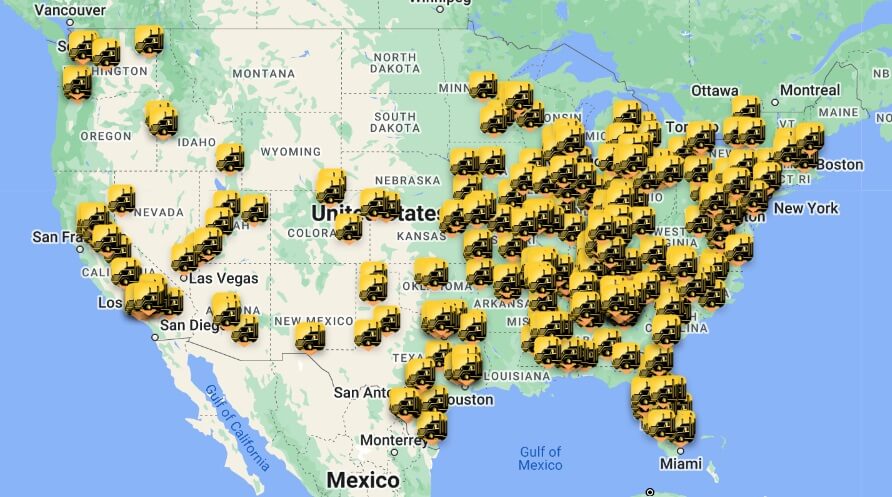
There are over 300,000 truck parking spaces in the US but only a fracture actually costs nothing to park at and get some rest. At Truck Parking Club, you can filter the map by choosing ‘Free Parking’ to find wheather some are on your way to the destination.
Typically, free parking lots lack amenities yet provide a place to rest. These are usually rest areas, truck stops, or retailer parking lots. Some free parking lots don’t provide enough lighting, are located in remote areas or have so few available spaces that a spot isn’t guaranteed.
Affordable Truck Parking Lots
The term ‘affordable’ is different for everyone, but we tried to collect examples that would suit truck drivers with different budgets. It’s important to note that prices may change and depend on the availability of parking spaces and location.
Most truck parking lots charge per hour, date, week, and month.
Per hour, you can expect to pay anywhere between $1 to $3. For example, truck parking lots in Forest City in Missouri, Nampa in Idaho, and Blytheville in Arkansas offer a spot for a dollar per hour. Moreover, some offer free parking spaces until they are all occupied or in exchange for purchases at the local store.
Among amenities, you can find the basic ones as rest rooms to more useful ones as restaurants and hotels.
Per day, you can expect to pay between $10 to $20. While the cheapest ones as in Sturtevant in Wisconsin offers nothing more than a 24/7 access for $10 a day, the ones in Ronks in Pennsylvania and El Reno in Oklahoma have decent amenities for $12 a day.
If you need to reserve a spot for a week or longer, you can expect the price to fluctuate between $75 to about $100 per week and anywhere from $180 to $350 per month.
Expensive Truck Parking Lots
What most higher-end truck parking lots have in common is security at gate – an amenity you can use to filter the lots if that’s an important factor for you. Other than that, you can also benefit from other amenities such as food or restaurants in the area, gates area, hotels, and assigned spaces that will not be occupied if you book them.
As for prices, you can expect to pay between $25 to $60 per day. An hourly rate may start at about $18, too.
Longer periods may cost about $125 to $310 per week, and between $350 to $1000 per month.
The truck parking lot in Pompano Beach in Florida offers only monthly parking opinion that is slightly higher than $1000. The parking offer free showers, good location, several restaurants, many other facilities, including a repair shop.
Other parking lots have similar offers but with more booking flexibility (per day, week, and month). They offer various amenities including:
Uber/Lyft/Taxi available
Hotels
Maintained pavement/asphalt/concrete
Lights
Restrooms
Repair shops/Slots where repairs are allowed
Which One Should You Choose?
Choosing the right truck parking lot depends on your specific needs and budget. Free parking lots are idea for those looking to save money but are also willing to sacrifice amenities. Affordable parking lots for truck drivers offer a balance between cost and amenities, whilst more expensive lots often preoritize security and additional amenities suchas guarded gates, assigned spaces, repair shops, and more.
Ultimately, your choice should align with your budget and the level of comfort and security you require.
For easy and flexible booking, become a Truck Member at Truck Parking Club to find the best available options that meet your needs. Our free platform makes all the difference when planning your routes.
The information published herein is for general informational purposes only. Truck Parking Club does not make any representations or warranties about the completeness, reliability, legality, and accuracy of this information. Any reliance placed on such material is strictly at the user’s own risk. Truck Parking Club shall not be responsible for any losses or damages incurred in connection with the information published herein.
Ever wonder what’s inside big rigs? These are the most common goods shipped by trucks
Drivers may take notice when behind a logging truck on the interstate, a semi towing a livestock trailer, or a loudly branded Amazon shipping container, but what about the many more semitrucks crisscrossing the U.S. without offering a clue to what lies within? These anonymous giants ply the nation’s highways from sunrise until long after sunset.
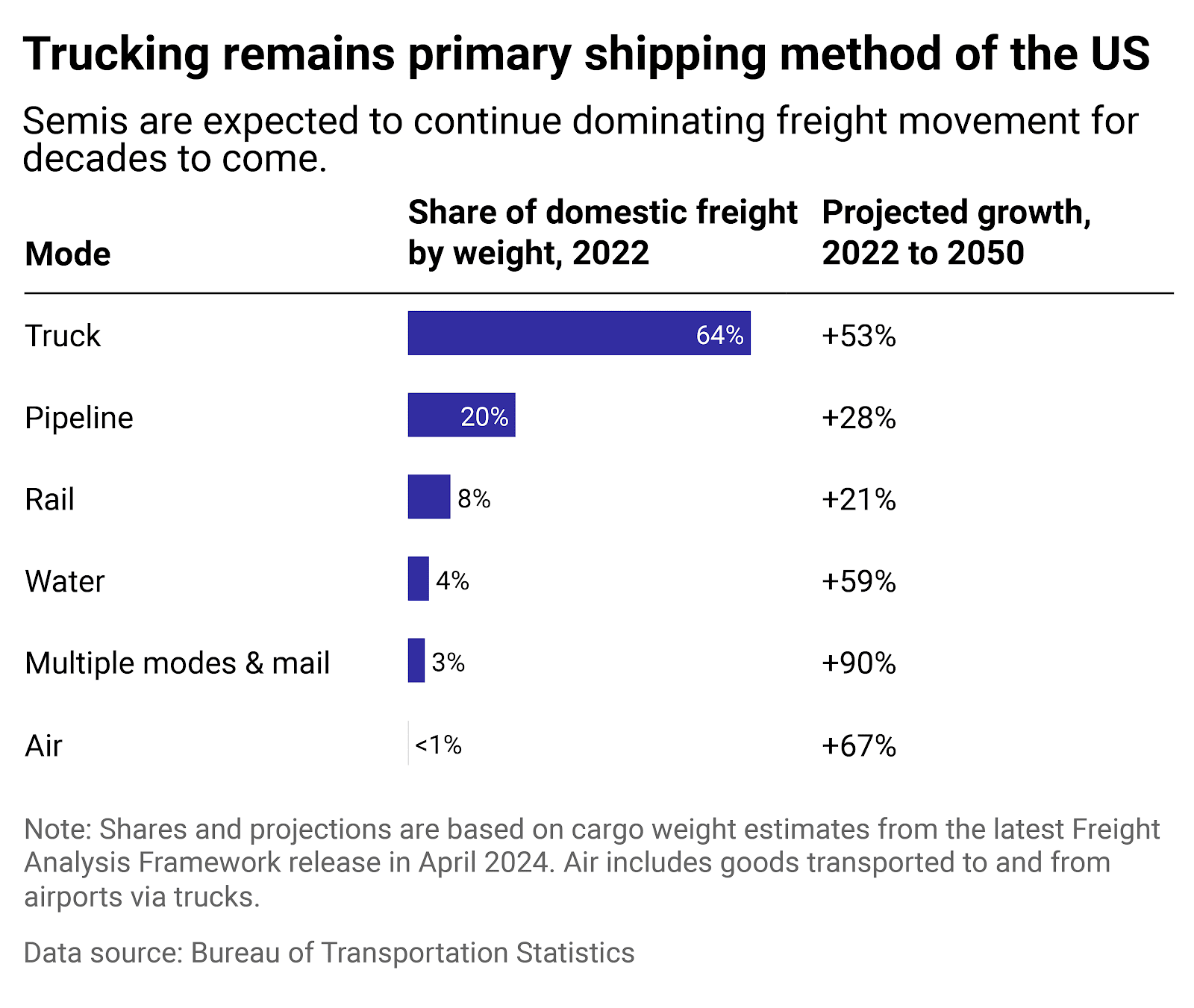
Nearly two-thirds of the nation’s 20 billion tons of domestic freight is transported by truck, making semis the most prevalent method of sending goods across the U.S. So what are they most often hauling?
Truck Parking Club used data from the Bureau of Transportation Statisticsto identify the most common goods transported by semitrucks within the U.S. based on weight. This analysis also charts the expected growth of shipping freight, with semitrucks continuing to lead the way.
PREVIOUSLY INACCESSIBLE TRUCK PARKING
Take care of your truck and trailer parking needs with new locations added daily.
Earthy materials, foodstuffs fill most semitrucks
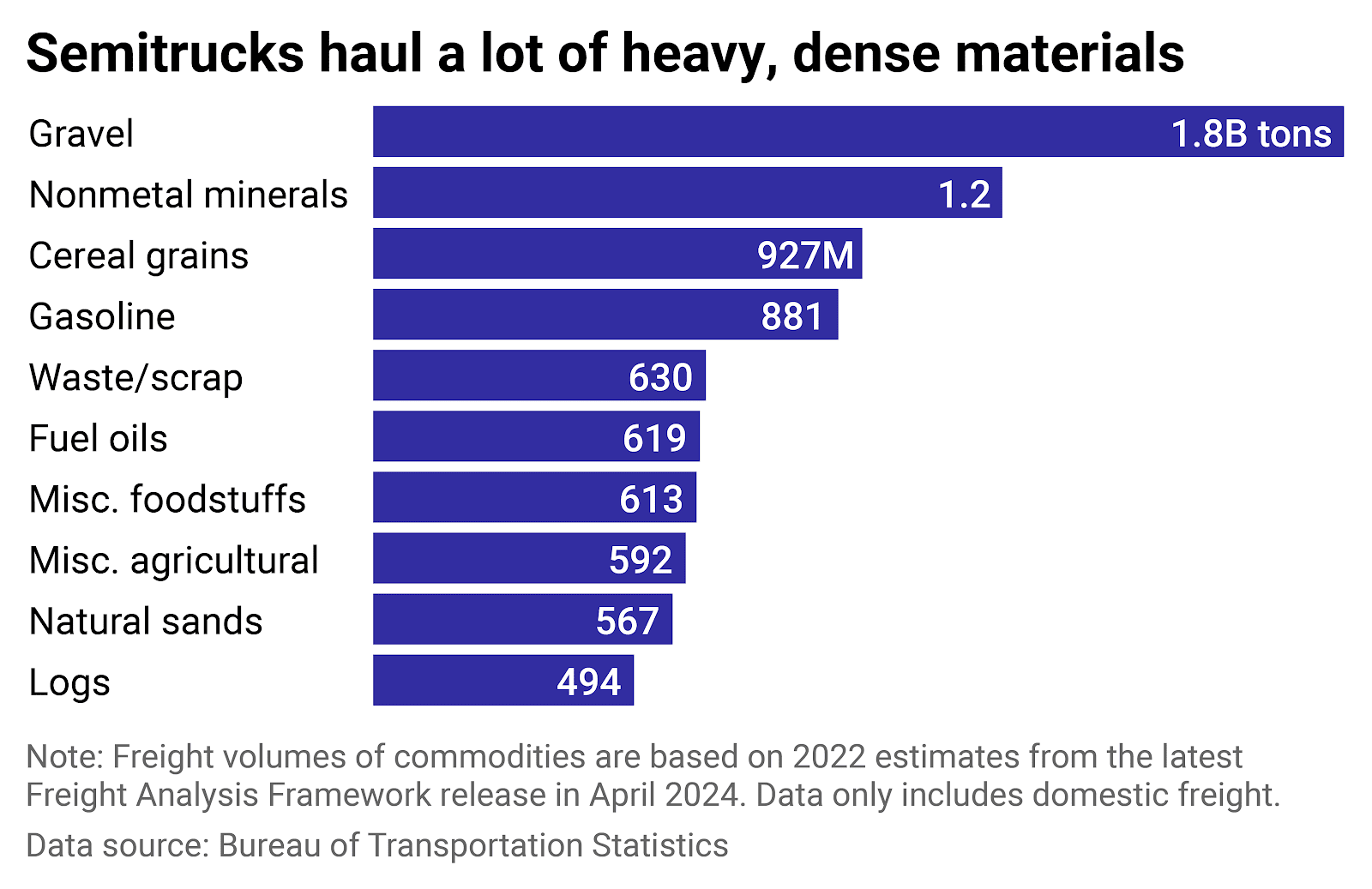
In some cases, the mystery of what’s inside may be more thrilling than what the trucks are actually hauling. By weight, the item most frequently transported by truck is gravel, followed by nonmetal minerals, which include materials like clay or cement. These products are, of course, very heavy and dense, contributing to their high rankings among transported materials by tons.
Even so, these substances, important components in the booming construction industry, are in high demand throughout the country. Nationally, construction spending has already reached $2.1 trillion as of May 2024, the highest level in the past 30 years, according to Census Bureau data. Gravel, minerals, sands, and logs are shipped around the country to be used in foundations, buildings, roads, and more, helping them achieve their top-10 slots.
Other common goods are part of the food supply chain. Among them are cereal grains, including wheat, corn, rice, and oats—staples in most diets. Another is miscellaneous foodstuffs, a wide range of foods like dairy products, frozen or processed foods, spices, cooking oils, and more. These foods are largely shelf-stable or long-lasting and can be shipped and stored in greater quantities.
Gasoline, the substance that keeps Americans moving, is another top commodity shipped across the country. And, as people create record levels of garbage, waste has become another major category as semitrucks transport trash to landfills and recycling centers.
PARK YOUR TRAILER WITH NO HASSLE
Store your trailer in a safe place with a state-of-the-art platform that locates trailer parking near me.
Nearly two-thirds of US freight shipped via trucks
The vast majority of U.S. domestic freight is transported via truck, and that lead is only expected to grow. The bureau projects that large trucks will haul over 19 billion tons of goods annually by 2050—nearly as much as all shipping modes haul today.
Pipelines are the next-highest route for U.S. domestic goods—largely flowing with crude petroleum and natural gas. Rail, water, air, and multiple-mode and mail shipping each moved less than 10% of freight by weight in 2022. Trucks carry all kinds of goods, while rail and water modes most often carry bulk products, and air shipping is reserved for smaller quantities of high-value items, such as electronics and medicines.
Semitrucks have the most available infrastructure of all shipping methods in the U.S., and near-total road access means they can deliver items almost anywhere in the country. Meanwhile, planes, trains, and barges are limited by ports and tracks, which aren’t as ubiquitous in the nation’s infrastructure.
Still, each of these shipping modes will likely grow in the decades to come as Americans, corporations, and governments continue building out infrastructure and consuming goods. BTS projects that multiple-mode and mail deliveries will grow fastest, nearly doubling in the decades to come. This category includes goods shipped through mail and parcel delivery, the paths of which are often a mystery to senders, as well as freight that moved through multiple vehicle types, such as by truck and rail.
The U.S. is in the midst of a major infrastructure revamp, thanks partly to the Bipartisan Infrastructure Law, which President Joe Biden signed in November 2021. The law is investing hundreds of millions of dollars into repairing, expanding, and modernizing roads, bridges, ports, pipes, and more. Analysts predict this will improve the efficiency, reliability, and cost-effectiveness of transporting people and goods, boosting the economy.
Story editing by Carren Jao. Additional editing by Kelly Glass. Copy editing by Kristen Wegrzyn.
Battling the clock to stay on schedule, having spent an entire morning crawling through roadworks at the speed of a tectonic plate while repeatedly hitting silent on the relentless dispatch calls, you pull into the rest area in grave need of a well-earned rest.
This is no ordinary rest, though, as you badly need the bathroom and haven’t eaten since 5 am. To make an already urgent matter even more pressing, your DOT-enforced Hours of Service break is fast approaching and you could do without another violation, so there is that, too.
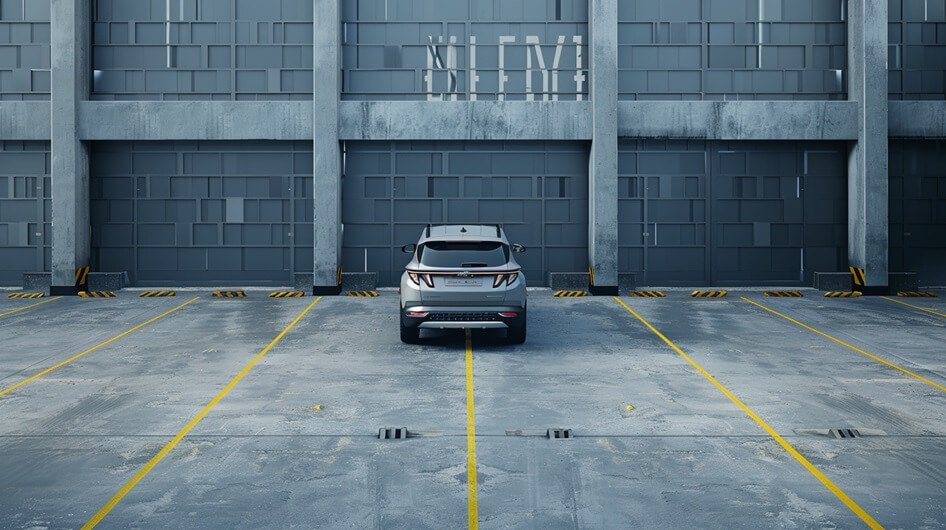
You really need this rest break, and both you and your bladder can’t wait to take it. But then disaster, as an increasingly common sight greets you on entering the parking area: a Hyundai Tucson with a ‘Happiness is Homemade’ bumper sticker parked unashamedly in the middle of the only remaining truck parking space.
Cursing both your luck and the faceless driver in equal measure, you are forced to endlessly circle the lot, praying to the parking gods for a space to become available, pronto.
Common Issue
If you are a reasonably experienced truck driver with a decade or so of service in your rearview, this has almost certainly happened to you. If you are a relatively new truck driver, be prepared for it to happen at some point. Either way, parking a regular vehicle in a space allocated for semi-truck parking is an infuriating, rude, arrogant, and selfish practice.
But is it really?
The truth is, parking a regular vehicle in a truck parking space is something of a gray area. Many truck drivers and car owners are unaware of the rules in this regard because some parking lots and rest areas allow it, and others don’t.
So, what are the actual rules, and can cars park at truck stops or not? Regardless of any rules that may or may not exist, should car drivers be more empathetic of truck drivers and respect their boundaries? Through this article, we shall attempt to unearth the facts, mixed with a few gentle opinions. Let’s get to it.
Can Cars Park at Truck Stops, Rest Areas, and Parking Lots?
Given the three main types of parking locations available to truckers, we shall approach each one with the same question, starting with rest areas.
Please be aware of one thing, however: this is by no means a complicated subject, but it is a nuanced one. With that in mind, we shall tackle the issue with a broad, general view.
Are Cars Allowed to Park at Truck Rest Areas?
The rules around whether cars can park at truck rest areas vary by location.
Generally speaking, truck rest areas are specifically designed to accommodate the needs of truck drivers who require ample space to park their large vehicles and take mandatory breaks. These areas are usually located along highways and interstates and are intended to provide truckers with a safe and convenient place to rest.
In some rest areas, you might find designated spaces for smaller vehicles, but these are often quite limited. While it might not be explicitly forbidden for cars to park in truck spaces at these rest areas, it is usually frowned upon (at best) or causes mild aggression (at worst). Essentially, truck drivers depend on these spaces to adhere to their strict driving schedules and regulations. Having them occupied by smaller vehicles can cause a great deal of inconvenience.
Given the national truck parking shortage, spaces are incredibly limited at the moment, so you would probably forgive the average truck driver for becoming a little irate should they find a rare empty spot taken up by a small vehicle in a large bay. To that end, it’s always a good idea for car drivers to look for clearly marked car parking spaces or use alternative rest areas designed for all types of vehicles.
Are Cars Allowed to Park in Truck Stops?
When it comes to truck stops, the situation can be a little different. Truck stops are commercial facilities that offer a variety of services for truck drivers, including fuel, food, showers, and parking, with the main purpose of catering to the needs of truckers. The parking spaces within them are designed to accommodate large trucks and not the metaphorical Hyundai Tucson we mentioned at the top of this article.
However, this is where it gets a little tricky. As a general rule, truck stops are often more lenient about allowing cars to park, especially if the car driver is a customer using the services offered. From their point of view, any business is good business, and if that means sacrificing a truck parking space so a family of five can spend eighty bucks on fried chicken and air freshener, so be it.
While there might not be a hard and fast rule against cars parking at truck stops, it is generally understood that truck parking spaces should be left available for trucks. So, while it might be possible to park a car at a truck stop, you might argue it is courteous and practical to avoid occupying a space meant for a truck.
Are Cars Allowed to Park in Private Truck Parking Lots?
Private truck parking lots, just like those managed by Truck Parking Club, are specifically designed for truck drivers to reserve and secure parking spaces. These lots provide a desperately needed service to truckers who need reliable, convenient parking options, often in areas where public truck parking is extremely scarce. The rules are typically far stricter in private truck parking lots, and cars are generally not allowed to park in spaces designated for trucks in the overwhelming majority of properties.
Private truck parking lots operate on a reservation system, meaning that truck drivers have a guaranteed spot to park their vehicles in advance. Allowing cars to occupy these reserved spaces would undermine the entire purpose of the lot and could lead to logistical issues for truck drivers who rely on these spaces.
Ultimatley, if you’re driving a car, it’s best to seek alternative parking arrangements and leave these specialized lots for their intended users. Truck drivers are under enough pressure at the moment without having to surrender spaces to car owners, most of whom have an abundance of parking options. Fair is fair, as they say.
Can Cars Park Overnight at Truck Stops?
So, what about sneaking into a truck parking area under cover of darkness? Will your typical car driver fare any better at night? To be honest, the answer is almost certainly no: the same principles apply to overnight parking.
As a general rule, truck stops, rest areas, and private parking lots are equally as busy (if not more busy) during overnight hours. Can cars park overnight at truck stops if they are empty? Maybe. Possibly. It depends on the location. Good luck finding an empty truck parking lot, though, regardless of the hour.
The same caveat applies, however, to some truck stops that may allow car parking if car owners commonly use the facilities to purchase food and drinks. It just depends on the truck stop’s policy.
Bottom Line
While the rules differ from location to location, parking a personal vehicle in a truck parking space is generally not advisable and often inconsiderate. While some rest areas and truck stops may allow it, the main purpose of these spaces is to accommodate large trucks and their drivers.
Private truck parking lots are strictly for truck use, ensuring that truck drivers have reliable, convenient, guaranteed parking options. If you are a truck driver and that sounds appealing to you, you might want to sign up for Truck Parking Club. We can solve your parking woes by offering thousands of private parking spaces all over America.
Simply browse for truck parking spots in your area of choice to secure your spot today. We didn’t just make Truck Parking convenient and affordable, we made it effortless, too.
The information published herein is for general informational purposes only. Truck Parking Club does not make any representations or warranties about the completeness, reliability, legality, and accuracy of this information. Any reliance placed on such material is strictly at the user’s own risk. Truck Parking Club shall not be responsible for any losses or damages incurred in connection with the information published herein.
Store your trailer in a safe place with a state-of-the-art platform that locates trailer parking near me.
As semi-trucks face parking crisis, the scramble is on to find solutions
While car parking is required in most local ordinances and integral to basic community or city design, commercial truck parking is often illegal in those same areas. With insufficient or nonexistent sanctioned commercial truck parking, illegal parking in dense areas like Queens, New York, is commonplace (and highly controversial).
For many commercial truckers, the only alternative to illegal parking is to keep driving—oftentimes further than the 11-hour limit set by the Federal Motor Carrier Safety Administration. To solve the crisis, more truck parking is needed. But whose responsibility is it to figure that out—and pay for it? Truck Parking Club dug into the semi-truck parking crisis in the U.S. and explored who’s responsible for coming up with—and paying for—the solutions.
Every day, the average American uses products that were at some point transported by a semi-truck. These trucks travel hundreds of miles, accounting for moving more than 73% of goods in the U.S. by value. Despite being vital to the nation’s economy, however, these inconveniently large vehicles are kept out of sight and out of mind. That means when it comes to parking (and resting), the drivers responsible for transporting essential goods are faced with significant challenges.
Canva
PREVIOUSLY INACCESSIBLE TRUCK PARKING
Take care of your truck and trailer parking needs with new locations added daily.
A parking double standard
Some of the highest traffic areas for long-haul trucks are those that are the least accommodating for practical solutions. Rural states are typically better at meeting the demands of big-rig truck parking, but in more urban areas, the calculus flips, according to data from the Bureau of Transportation Statistics analyzed by Stacker. Massachusetts has about 35.5 parking spaces for every 100,000 truck miles traveled, while New York has about 57.1 spaces. Compare this with New Hampshire, where 230 parking spaces exist for every 100,000 truck miles.
In places like New York City, where more than 70% of goods are transported by trucks, semis can only rest at very few commercial parking lots which are typically bursting to capacity. In Clark County, Nevada, there have been reports of residents placing dirt piles on vacant lots to prevent trucks from parking—an example of residents opposing infrastructure adjustments in their immediate area despite the amenities trucks provide them on a daily basis.
In his book, “Paved Paradise: How Parking Explains the World,” Henry Grabar, a Slate journalist, argues that far too much space and resources are devoted to residential parking in the United States, a large contributing factor in the national semi-truck parking shortage. “The core distinction between the truck parking and car parking is that car parking is required by law in most jurisdictions for most land uses,” Grabar told freight market reporting agency FreightWaves. “Truck parking has become something that nobody wants in their neighborhood ever.”
As it stands, there are over 11 truck drivers for every parking space, and a leading concern is safety. In a 2020 survey, the Federal Highway Administration found that 98% of drivers struggle to find safe parking for their trucks. In addition, they spend an average of 56 minutes a day to ensure a safe spot, according to a study from the American Trucking Associations. When they can’t find suitable parking, more than half admit to taking a risk and parking in unauthorized or undesignated spots at least three times a week. These risks can sometimes have fatal consequences: In July 2023, three passengers were killed and 14 injured when a Greyhound bus crashed into three tractor-trailers parked along an exit ramp along Interstate 70 near St. Louis.
While there aren’t yet concrete solutions for commercial parking, things have gotten more complicated for the truckers who are looking. Drivers are only allowed to drive a maximum of 11 hours within a 14-hour window before they’re required to take a 10-hour break, according to the FMCSA. These hours of service regulations have been around since 1937, but a 2017 mandate to use electronic logging devices has made it more difficult for drivers to work around these hours and yielded no significant safety benefits. According to a study of 2017 through 2018 data, it may have even caused the opposite effect, increasing the frequency of unsafe driving for truckers in a hurry.
For truck drivers, every minute of moving counts. Their wages rely on the miles logged each day, so limited time coupled with scarce parking has created a headache for America’s 2 million long-haul truckers.
It’s important to remember that parking isn’t just finding a space for the truck itself. Of the lucky truckers who are able to find a space at a stop, it’s where they will eat, shower, and sleep. Beyond being considered “a national safety concern,” this is a quality-of-life issue.
An obvious solution is to simply increase the amount of parking offered to truck drivers. What that looks like—and more specifically, who will pay for it—has yet to be determined. There are existing publicly owned rest areas and travel centers, but parking is getting harder and harder to find at these stops.
According to survey findings shared by the Department of Transportation, many commercial truck stops typically operate at more than 100% capacity overnight, on weekdays, and between May and October. Without more public land dedicated to providing safe overnight parking and resources for truck drivers, this issue is likely to get worse. The same survey also found that about 87% of all truck parking is at private truck stops, which may cost $10 to $50 per night—a relatively steep fee for an industry working with razor-thin margins.
Some entrepreneurs are building on this demand for parking by developing apps that allow truck drivers to book and secure their spots. If successful, this business model could become attractive, potentially resulting in more parking. Venture capitalists are skeptical, however. “We aren’t convinced these are technology businesses that can generate venture-scale returns,” Santosh Sankar, co-founder of venture capital firm Dyanmo Ventures, told FreightWaves. “It instead feels like a real estate investment that has some technology strapped on top of it for discovery and payment.”
While the economics have yet to be threshed out, solutions are being sought at all levels of the government.
After the passing of Jason’s Law—named after Jason Rivenburg, who was murdered while parked in an unsanctioned spot in South Carolina—lawmakers have tried to introduce a bill that aims to allot $755 million for truck parking. It has been introduced to the House, but an analysis by GovTrack only gives it a slim 35% chance of passing.
There have been wins, too. The American Trucking Association recently praised Republican Rep. Steve Womack for including $200 million in the House Transportation Appropriations Subcommittee funding bill dedicated to expanding truck parking. The Department of Transportation also has five federal projects that will add about 1,000 parking spaces for drivers along key corridors in Florida, California, and Wisconsin. These were funded by the Bipartisan Infrastructure Law that passed Congress in 2021 and allocated through the Infrastructure for Rebuilding America program.
States have similarly sought solutions within their jurisdiction. Washington state, for example, has directed its Department of Transportation and an investment board to study parking needs and identify opportunities to partner with cities, counties, ports, and private entities. This Truck Parking Implementation Plan is due to be submitted by Dec. 1, 2024.
Cities have also started to make some accommodations. In New York City, city council member Nantasha Williams introduced the Trucks Resting in Urban Communities Act, which allows overnight curbside parking in 21 industrial and manufacturing zones throughout locations like Brooklyn Navy Yard, Jamaica, and the Northshore of Staten Island. In an opinion piece for Queens Daily Eagle, Williams and Kendra Hems, president of the Trucking Association of New York, advocated for the legislation by writing, “It’s the kind of smart urban planning that can keep our city and residents moving forward.”
While pieces of legislation like these make their way through the system, residents can expect to see parked trucks in perhaps unsafe or inadvisable places—a less-than-desirable side effect of a consumer industry run on wheels.
Story editing by Carren Jao. Additional editing by Kelly Glass. Copy editing by Tim Bruns.
The trucking industry is the backbone of the American economy. It keeps the wheels of commerce thundering along by moving a wide range of goods across the country. The simple truth is that our nation would grind to a halt without trucks.
If you are in the truck parking lot business, you will know that grasping trucking statistics is an important aspect of your thinking. Being fully informed of the various stats available will help you make informed, forward-thinking decisions.
This article will examine the most important, relevant trucking industry statistics, offering a full overview of the current state of trucking and its impact on the economy and, ultimately, your truck parking lot business.
General Trucking Industry Statistics
The numbers behind the trucking industry paint a clear and obvious picture of its scale and significance on the American economy. Here are the broader statistics of the trucking industry:
Number of Trucks: Over 10.77 million trucks are registered in the United States.
Economic Contribution: The industry hauls goods worth around $791 billion annually.
Employment: Approximately 9.2 million people are employed in trucking-related jobs across the country.
Freight Movement: Trucks transport about 72.5% of the nation’s freight by weight.
Revenue: In 2021, the industry generated over $875 billion in revenue.
Small Businesses: Most trucking companies are small, with 95.8% operating ten or fewer trucks.
Importance of the Trucking Industry
The trucking industry is the unsung hero of our daily lives, ensuring that the shelves are stocked, medical supplies are available, and businesses run smoothly. It supports the economy in numerous ways, making it indispensable.
Supply Chain: Trucks are responsible for transporting essential goods, from food and medical supplies to raw materials.
Employment: The industry provides jobs for millions, supporting families and communities nationwide.
Economic Growth: The movement of goods fuels economic activity and growth.
Connectivity: Trucks connect different parts of the country, making even remote areas accessible.
Income and Employment
The trucking industry offers a wide range of income opportunities, with truck drivers often earning more than the average American worker. Here’s a breakdown:
Average Salary: Light and delivery service truck drivers earn around $41,960 annually, while heavy and tractor-trailer drivers make about $46,370.
Full-Time Earnings: Full-time truckers earn $100 more weekly than the average full-time American worker.
Wages: The average hourly wage for truck drivers in the U.S. is $22.66.
Taxes and Expenses
The trucking industry is a major contributor to state and federal tax revenues, playing a huge role in funding public services and infrastructure. Here are some key figures that demonstrate its financial impact:
Diesel Tax: As of January 2023, the average state fuel tax for diesel was 32.7 cents per gallon.
Gasoline Tax: For gasoline, the state fuel tax averaged 31 cents per gallon.
Federal Tax: The federal tax on diesel fuel was about 24.4 cents per gallon, while gasoline was taxed at 18.4 cents per gallon.
Highway Use Tax: Trucking companies pay a federal highway use tax, which can range up to $550 per year for vehicles weighing 55,000 pounds or more. This tax supports the maintenance and construction of highways.
Toll Fees: Trucks often incur significant toll fees, with costs varying by location. For example, a typical toll for a commercial truck on the Pennsylvania Turnpike can be as high as $100 for a full-length trip.
Registration Fees: Trucks are subject to state and federal registration fees, which can total up to $1,500 annually, depending on the weight of the vehicle and the state of registration. These fees contribute to the administrative costs of managing transportation systems and ensuring road safety.
Challenges in the Trucking Industry
Again, the trucking industry is the backbone of commerce, but it is not without its hurdles. From fluctuating fuel prices to a persistent shortage of drivers, these challenges can greatly impact operations and profitability. Here are some key challenges faced by the trucking industry:
Fuel Prices: Rising fuel costs are a significant concern, making up 28% of all trucking-related expenses in 2022.
Driver Shortage: There is a persistent shortage of drivers, with the industry needing 54% of new hires to replace retiring drivers.
Truck Parking: The truck parking shortage is a pressing issue, ranking as the second-highest concern for truckers in 2023.
Insurance Costs: Insurance premiums have risen from $12,000 to $14,000 annually between 2019 and 2022.
Regional Statistics
The trucking industry exhibits distinct characteristics across different regions, shaped by unique economic activities and transportation demands. Each region’s infrastructure, regulations, and market conditions contribute to the diverse landscape of trucking operations. Here are some key regional statistics that highlight these variations:
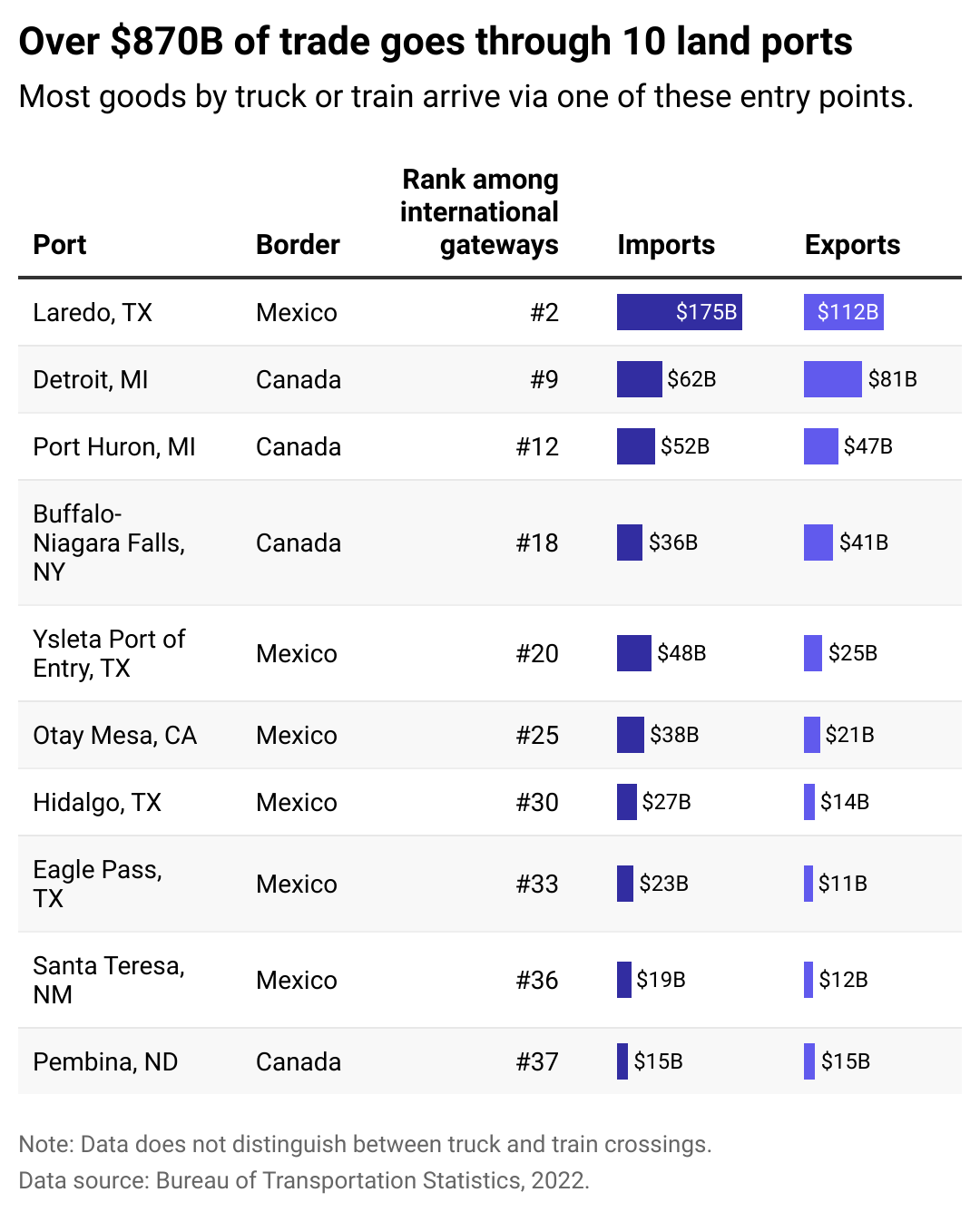
Top Border Ports: Laredo, TX (USD 20 billion), Detroit, MI (USD 10.7 billion), and Port Huron, MI (USD 6.9 billion) are the busiest truck border ports.
Freight Value: In North America, freight transported was valued at USD 85.5 billion in 2022, up from USD 73.9 billion in 2021.
Regional Employment: The Midwest region employs the highest number of truck drivers, with over 900,000 drivers, followed by the South, with approximately 800,000 drivers.
Infrastructure Investment: The Northeast region invests significantly in road infrastructure, with annual expenditures exceeding USD 15 billion to support heavy truck traffic.
Goods Transported: The West Coast region leads in transporting agricultural products, accounting for over 60% of the nation’s produce transport.
Owner Operators
Independent drivers often run their own small businesses, facing tough challenges and reaping the rewards of their hard work through generally higher wages. Here are some key statistics and insights about owner-operators in the trucking industry:
Number of Owner Operators: There are about 400,000 owner-operators in the industry.
Income: The average median net income for owner-operators is around $70,000.
Military Background: 34% of owner-operators have served in the military.
Experience: Many have been driving for over 20 years, with an average age of 46.
Demographics and Diversity
The trucking industry is diverse, with a range of drivers from different backgrounds:
Gender: 86% of truck drivers are male, while 14% are female.
Ethnicity: 72% of truckers are white, 12% are black, and 8% are Hispanic or from other ethnic backgrounds.
Age: The majority of truck drivers fall into the 35-54 age range, with 8% aged 16-24, 17% aged 25-34, 21% aged 35-44, 26% aged 45-54, 21% aged 55-64, and 7% aged 65 and over.
Types of Goods Transported
Trucks are the lifeline of the economy, moving an impressive range of goods that keep various sectors thriving. From everyday essentials to specialized products, the diversity of items transported by trucks hints at their crucial role in maintaining the flow of commerce. Here are some key statistics and insights about the types of goods transported by the trucking industry:
Top Goods: Clothing, food, furniture, machinery, and electrical goods are among the top transported items.
Refrigerated Trucks: 90% of food in the U.S. is transported by refrigerated trucks.
Freight Weight: 72.5% of the freight moved in the U.S. is transported by trucks.
Agricultural Products: Over 60% of agricultural products, including grains, vegetables, and fruits, are transported by trucks, ensuring fresh produce reaches markets nationwide.
Medical Supplies: Trucks play a critical role in the healthcare sector, transporting medical supplies and pharmaceuticals, which make up a significant portion of the freight moved.
Costs in the Trucking Industry
Various costs are associated with running a trucking business:
Driver Wages: Currently account for 32% of all trucking-related costs.
Fuel Costs: Fuel represents 28% of expenses for typical trucking companies.
Miscellaneous Costs: These include mechanical, logistical, maintenance, permits, and tolls.
Truck and Trailer Payments: Payments for purchasing or leasing trucks and trailers make up about 14% of the total costs.
Driver Benefits: Health insurance, retirement plans, and other benefits account for roughly 10% of the expenses.
Repair and Maintenance: Regular maintenance and unexpected repairs can account for a significant portion of the budget, ensuring that trucks remain in good working condition.
Licensing and Regulatory Fees: Compliance with various state and federal regulations requires payment of licensing and regulatory fees, which can be substantial for trucking companies.
Industry Trends and Forecast
The trucking industry is continuously evolving, with several trends shaping its future:
Technology: The adoption of trucking technology, such as electronic logging devices (ELDs) and telematics systems, is improving operations and compliance.
Sustainability: There is a growing shift towards greener practices, including the use of electric and hybrid trucks.
Automation: Autonomous trucking technologies are being developed for long-haul transportation.
Driver Safety: Increasing investment in driver training programs and improved working conditions.
Bottom Line
While the trucking and transport industry faces challenges like driver shortages and rising costs, the general outlook remains positive through various innovations and growth in specific areas. With advancements in transport industry technology and a wider focus on sustainability, the future of trucking looks really quite promising.
Either way, whether you’re already operating a parking lot or have unused space, Truck Parking Club can help you maximize your property’s potential. By listing your lot with us, you can provide truckers with reliable parking solutions while generating additional income.
Join our community today and turn your parking space into a valuable resource for the trucking industry.
The information published herein is for general informational purposes only. Truck Parking Club does not make any representations or warranties about the completeness, reliability, legality, and accuracy of this information. Any reliance placed on such material is strictly at the user’s own risk. Truck Parking Club shall not be responsible for any losses or damages incurred in connection with the information published herein.
In recent years, the national truck parking shortage has received considerable attention. Insufficient truck parking, combined with the Hours of Service regulations, has inconvenienced truck drivers and sometimes even forced them into dangerous situations.
Since truck drivers may only legally drive a certain number of hours each day, they must stop at some point, regardless of whether or not there is space for them at the local truck stop.
Have we seen any improvement in truck parking availability over the last few years? Let’s find out.
Truck Parking Availability in 2021
In 2021, truck parking was at a particular low. The national average for availability was 40.7% between 11:00 and 14:00. However, it’s worth mentioning that only specific truck drivers seek parking during those hours. Even though this number is high, it’s ludicrously low compared to the figures for peak hours.
Between the hours of 19:00 and 22:00 when many more truckers are taking their sleeper berths, the national truck parking availability dropped to only 17.1%.
Some states had better availability than others, with Montana having up to 82.5% availability between 11:00 and 14:00. During those same hours, Nevada only had an availability of 58.5%.
The same was true during the evening hours, with Montana’s truck parking availability at 69.7% between 19:00 and 22:00. During the same timeframe, Florida’s was only 27%.
Truck Parking Availability in 2023
In 2023, the truck parking shortage saw some significant improvements. The average national truck parking availability between 11:00 and 14:00 improved by an impressive 16.3%, bringing it up to 64%.
Between 19:00 and 22:00, the improvement was even more significant, at nearly 22%. This brought it up to 38%, which, while still not great, is much better than 17%.
In 2023, the number of truck drivers unable to find a parking space dropped to 9% (during the 11:00-14:00 time slot), a decline of 7.7% from 2021. The 19:00 to 20:00 time slot dropped nearly 25%, bringing it down from 50.6% to 26%.
As far as state specifics are concerned, some states still performed better than others. For instance, Montana had 73.9% availability between 11:00 and 14:00, while Montana had 82.5%. It’s certainly less of a dichotomy, but it’s there nonetheless. Between 19:00 and 22:00, Montana had 69.7% availability, while Oregon only had 58.6%.
The inevitable conclusion is that truck parking availability increased between 2021 and 2023. But why? We’ll examine the factors below.
Factors Causing an Increase in Truck Parking Availability
Over the last five years, government-owned and private initiatives have worked hard to solve the truck parking shortage. But what are some of the factors leading to the difference in results between 2021 and 2023? Let’s look into it.
A Boom in Privately-Owned Truck Parking
Since it became apparent that the truck parking shortage was a significant problem, many private individuals have stepped up to the plate and opened up unused land and parking spaces for use by truck drivers.
Not only has this helped to alleviate the truck parking shortage, but it has also boosted local economies by providing an additional source of income for local residents.
One way that people are doing this is by using the Truck Parking Club App to register their available properties for use by truck drivers. In so doing, truck drivers have been given access to a myriad of parking spaces that they can’t access elsewhere.
This type of privately owned parking initiative has made a considerable dent in the parking shortage.
New Government Initiatives
Several new initiatives are currently in the works to help alleviate the truck parking problem, and they are slowly coming into effect.
For instance, Florida has been implementing a Truck Parking Information System in the form of the Truck Parking Availability System, or TPAS, which lets truck drivers know where space is available before they ever arrive.
Other initiatives have included the construction of several additional truck parking areas along Interstates.
A Decrease in Freight Volume
In 2021, many businesses and regions were in recovery mode. As a result, many places were ordering, and sending, immense volumes of stock. However, in 2023 the freight volumes were lower, leading to more abundant truck parking availability.
Final Thoughts
It’s clear that there has been a significant increase in truck parking availability over the last few years. However, we’re still nowhere near where we need to be in terms of having sufficient truck parking availability.
If you want to ensure that you have the best possible chances of finding truck parking in your area, register for Truck Parking Club. Registration is free, and you will have access to a wide range of truck parking spots that aren’t listed elsewhere.
The information published herein is for general informational purposes only. Truck Parking Club does not make any representations or warranties about the completeness, reliability, legality, and accuracy of this information. Any reliance placed on such material is strictly at the user’s own risk. Truck Parking Club shall not be responsible for any losses or damages incurred in connection with the information published herein.
They come rumbling down the highway, crossing bridges and international borders. They bring life-saving drugs, food for the kitchen table, and that random clothing fad that will be out of fashion mere months later.
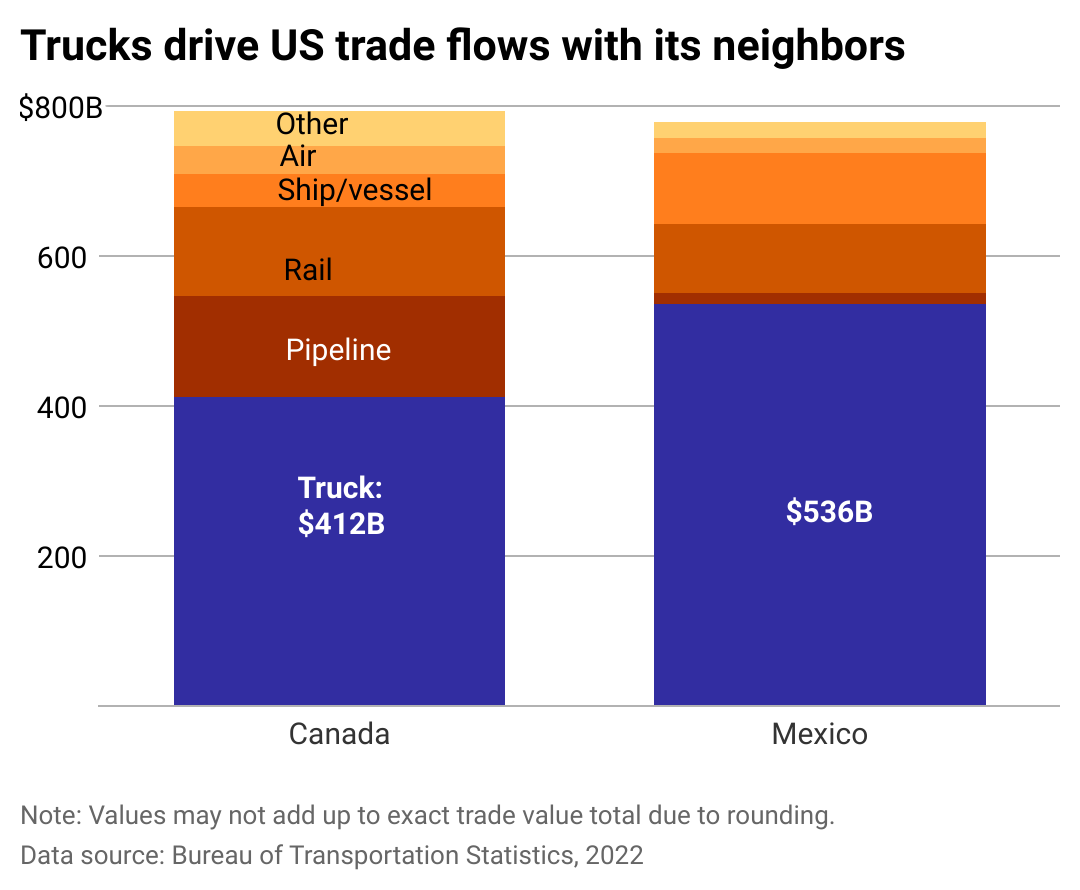
Trucks are ubiquitous on American roadways. However, they’ve become increasingly important in trade with its neighbors, Mexico and Canada, as relations with China cool and the United States government encourages “nearshoring,” the practice of moving part of a company’s production to nearby countries with similar time zones. In 2022, there were about 5.5 million truck crossings at the U.S.-Canada border and 7.25 million at the U.S.-Mexico border.
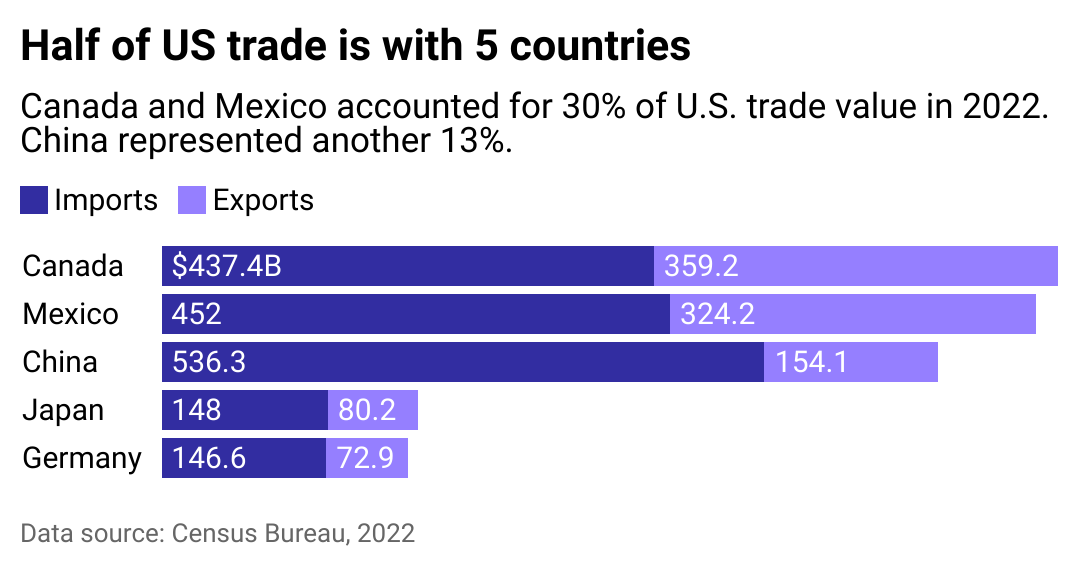
Trade with Canada and Mexico (much of it via land instead of water or rail) has recently outpaced trade with China, which has long dominated the international trade landscape.
On the road and looking for a daily truck parking space? Operated by truckers, we source the best parking spots across the nation to ease your trip planning.
Geopolitical pressures shift top trading partners
For the first time in decades, Mexico overtook China in the number of goods bought and sold to the U.S. in 2023. Centers for Disease Control and Prevention data shows that Canada claimed first place, taking the title of top trade partner.
The shift follows the push to embrace nearshoring. The United States’ dependence on the fragile worldwide supply chain came into focus during the coronavirus pandemic. Then, shipments of vital supplies like computer chips, personal protection equipment, and medication faced shipping backlogs and caused shortages worldwide. Nearshoring policies aimed to encourage suppliers to keep materials and the manufacturing processes geographically closer to the U.S.—not only to have them readily available in case of an emergency but to encourage the economic growth of the U.S. and its direct neighbors.
The trade war between the U.S. and China that began in 2018 and the subsequent Russian invasion of Ukraine worried U.S. investors. They recognized the war would bring more sanctions and devolve international business relations and figured it was better to transition some manufacturing to North American soil and U.S. allies.
Increased tariffs on Chinese goods imposed by the Trump administration and carried through the Biden administration also made an impact, forcing companies to look for suppliers and manufacturers closer to the United States. The international North American Free Trade Agreement and its successor, the United States-Mexico-Canada Agreement, imposed strict rules outlining what percentage of an item must be produced in North America. For example, under the USMCA, 70% of a vehicle manufacturer’s steel and aluminum purchases by value must originate in North America, and those companies that don’t meet the mark may face additional tariffs.
PARK YOUR TRAILER WITH NO HASSLE
Store your trailer in a safe place with a state-of-the-art platform that locates trailer parking near me.
The outsized role of trucks in US trade
Most trade among the U.S. and its neighbors occurs through trucking, and the percentage of goods arriving on trucks continues to increase. According to the BTS, $948.0 billion in goods were shipped via truck from and to Canada and Mexico, while goods shipped via trains accounted for $210.2 billion in 2022. The value of truck freight increased by 14.5%, while rail increased by 12.7% between 2021 and 2022.
The U.S., Canada, and Mexico are each other’s largest trade partners for oil, energy, automobiles, electronics, and agricultural goods—and it’s common for materials to be procured from one country, produced into goods in a second, and then marketed and sold in a third.
According to the BTS, U.S. trade with Canada and Mexico accounted for almost a quarter of the country’s international trade. There is hope these ties will economically lift the whole continent and establish stronger labor policies. The USMCA fast-tracks labor dispute processes and requires manufacturers to allow their employees to unionize, leading to higher wages. It pushes Mexico, in particular, to enforce existing employee rights, according to a Brookings Institution analysis.
Laredo’s rising prominence in the world of international trade
The key to this intracontinental trade is the land ports in the U.S., where trucks stop to have their goods and materials inspected and tracked.
Laredo, a sprawling city in Texas just over the Mexican border, is the second-largest international gateway for trade in the U.S. It has sometimes bested even the ocean ports of Los Angeles and Long Beach, California, which have long been the top import location.
“The Southern California ports grew exponentially during an era of globalization centered on China,” New York Times economics reporter Peter Goodman explained. “Laredo appears primed to assume a similar role in the anticipated next phase of globalization, one centered on regional supply chains, with American companies forging greater reliance on Mexico and Central America.”
Local government officials and business leaders say Laredo’s infrastructure is already lagging behind the demand. Freight entrepreneurs are scrambling to buy land and build warehouses into way stations for goods. Plus, there are plans to streamline the customs process by enacting just one inspection for American and Mexican authorities and expanding the World Trade Bridge so trucks can more quickly pass over the Rio Grande river into Texas.
According to the Joint Transportation Committee, demand for truck parking will likely continue as international border crossing inspections cause bottlenecks and unpredictable wait times. Truckers will try to avoid the traffic by crossing the border at odd hours and planning their mandatory rest periods in the country they cross into.
In this new era of nearshoring, a competitive edge can be as simple as having enough parking for trucks while they wait to drop off their goods. Afterward, they will turn around, go home, and pick up their next load, creating the next link in the ever-evolving global supply chain.
Story editing by Carren Jao. Additional editing by Kelly Glass. Copy editing by Paris Close. Photo selection by Michael Flocker.
The shortage of overnight truck parking has often been in the news over the last half-decade. However, recent information has shown some promising improvement in this area.
But is it all that it seems to be? Let’s take a closer look at the facts.
Has There Been an Increase in Overnight Truck Parking?
Data shows a significant increase in the average number of available truck parking spaces across the US since late 2021.
A recent study by TruckerPath has shown that truck drivers using the app have seen a significant increase in the number of available truck parking spots.
The study shows that between the hours of 11:00 and 14:00, the national average number of available parking spaces has increased from 47.7% to 64%.Between the hours of 19:00 and 22:00 the number has increased from 17.1% to 38%.
Looking at the other side of things, namely an absence of available overnight truck parking, the same study has shown that a complete absence of truck parking spaces is becoming less common.
In 2021, the national average for an absence of truck parking between the hours of 19:00 and 22:00 was a whopping 50.6%. Fast forward to 2023 and the number drops to only 26%. Between 11:00 and 14:00, these numbers went from 16.7% to 9% over the same timeframe.
Looking at these statistics, they certainly seem to indicate that the number of truck parking lots and spaces have increased significantly in recent years.
What Trucking Employment Statistics Have to Say
While it may seem like there’s been a significant increase in the numbers where overnight truck parking is concerned, the truck driver employment statistics are saying something else.
2023 saw a significant decrease in the number of available trucking jobs, which means that there’s likely been a decrease in the number of truck drivers. Consequently, this likely also means a decrease in the number of trucks needing overnight truck parking.
The trucking volume has decreased significantly since 2001. Despite that, there’s still a 26% shortage of parking spaces for trucks at night. This goes to show that, even though the situation may have improved significantly, the trucking industry still has a long way to go before the parking shortage is fully resolved.
Federal, state and local governments all believe that there is still a major problem, and several different federal and state grants have been made available to help deal with the issue. However, relatively few applicants have made use of the grants.
Certain states have also introduced additional systems and tools to help solve the shortage. The truck parking availability system is one example of such a tool that helps truckers keep track of available truck parking before reaching a lot or other parking area.
How the Private Sector is Helping to Improve the Truck Parking Situation
While it is undeniable that there has been some increase in the number of available parking spaces, relatively few of these have been the result of federal intervention. Instead, the private sector has been responsible for most of the growth within the industry.
This is largely due to an influx of privately owned truck stops but also thanks to tools like Truck Parking Club. This wonderful website and application give you access to many parking spots that are not generally available through other platforms.
Any landowner with suitable property can easily list their land as a truck parking opportunity. Truck drivers can also sign up with ease, giving them access to hundreds of parking spaces that they may not have had access to otherwise. With just a few clicks, you can easily narrow down parking spaces by region as well as available amenities.
It certainly isn’t as much progress as may be required, but any improvement is a good thing. In terms of the public sector, many additional parking areas have been announced, including an additional 200 truck parking spaces on Interstate 80 in Wyoming. In Nevada, an additional 50 spaces are also being created on the I-80.
Final Thoughts
While it’s definite that there have been significant improvements in the state of the truck parking shortage over the last few years, it’s also clear that there’s still a long road ahead of us.
Considering the decline in freight loads, the increase in truck parking opportunities, and the still-considerable number of shortages, many more initiatives and changes will need to take place before the situation is completely resolved.
However, with tools like Truck Parking Club and similar initiatives, it’s considerably easier to find overnight truck parking than it once was. Why struggle with the rigors of the mainstream truck parking industry when you can do well with independent tools? Sign up for Truck Parking Club today.
The information published herein is for general informational purposes only. Truck Parking Club does not make any representations or warranties about the completeness, reliability, legality, and accuracy of this information. Any reliance placed on such material is strictly at the user’s own risk. Truck Parking Club shall not be responsible for any losses or damages incurred in connection with the information published herein.