Evan Shelley, Co-founder & CEO – Chattanooga, Tennessee – Thursday, November 21, 2024
I am very excited to announce that Truck Parking Club has added our 1000th Property Member location. We now have truck parking locations in 46 states with 24,000 spaces!
When I started this company two years ago, I had no idea the amount of work it would take to get to this point. It took months to add our first few locations, and to earn the trust of a handful of drivers to the point where they would book with us. Because of the hard work of our tremendous team, half of which are former drivers, we’re able to celebrate this milestone on the way to helping solve the truck parking shortage.
The thing is though, while 1000 might seem like a big number, it’s not. There are many areas where we have few, if any, locations. Drivers should not have to go miles out of route to find parking. The average driver takes 56 minutes to find parking on a daily basis, our goal is to have drivers spend 10 minutes or less. Saving billions in inefficiencies. Our ambition is to give drivers an option no matter where they are. Suffice to say, we have a long way to go. Our next target is 10,000 locations.
I want to say thank you to our tens of thousands of Trucker Members for continuing to trust us to provide the parking they need. Thank you to our Property Members for opening their locations up to countless drivers and fleets and thank you to our fantastic team for their tireless work to make this all possible.
We’re just getting started. Next stop, 10,000 locations!
Check out our website to learn more and book truck parking at one of our 1000+ locations across the US.
If someone you know has property suitable for truck parking, refer them to us.
About Truck Parking Club
Truck Parking Club is a network of instantly reservable hourly, daily, weekly and monthly truck parking locations throughout the US. Truck Parking Club helps connect truckers to truck parking locations throughout the US via truckparkingclub.com and our mobile app. Our network is made up of property owners that have locations adequate for truck parking to list on the platform: this includes trucking companies, truck repair shops, tow truck companies, storage companies, CDL Schools, trailer leasing companies, real estate investors, truck stops, truck parking operators and more!
Compliance, Safety, and Accountability (CSA) is a crucial score that reflects your safety performance as a motor carrier. A high CSA score signals poor adherence to safety regulations and suggests a need for improvement.
If you want to build a reputation as a reliable truck driver who follows the rules, we’ve got some practical tips for you. The good news is that lowering your CSA score is entirely achievable with the right steps.
Read on to learn more about what CSA is, the ideal score you should aim for, and how to improve it effectively.
What Is a CSA score?
A CSA score stands for Compliance, Safety, and Accountability. The Federal Motor Carrier Safety Administration (FMCSA) uses it to monitor and evaluate the safety performance of vehicle drivers.
Simply put, the CSA score is used to check how well you drive and how consistent you are with regulations set to prevent accidents on the road.
Your personal CSA score depends on the reports of crashes, inspections, and violations you’ve had. The lower the score is, the better your performance on the road is.
How to Check Driver CSA Score?
You can access your CSA score through the FMCSA’s Safety Measurement System (SMS) website, where you need to log in with your USDOT number and PIN.
Next, you can check what CSA score you currently have, including any available reports of crashes, violations, and inspections.
If any of the reports have been filed incorrectly, you can dispute them through the DataQs system.
What Is a Good CSA Score?
A “good” CSA score is one that stays as low as possible. There is no ideal number, except for the fact that it shouldn’t be high. The CSA score ranges from 0 to 100, so the closer your score is to zero, the better it is.
It is important to stick to regulations and safety on the road because you can potentially attract unwanted attention from the FMCSA and go through inspections or receive warnings if your CSA is above 65.
This is especially crucial for truck drivers who are looking for a new company to work for or have direct contact with clients. Both employers and clients can check your CSA score, which may play a negative role in your reputation and future business opportunities.
How to Lower Your CSA Score?
Lowering your CSA score is possible, and here is how you can do it:
Regular Vehicle Inspection
Performing thorough vehicle inspections before and after trips is critical. Regular inspections help catch maintenance issues early on, preventing violations during roadside checks. Ensure that all components—brakes, tires, lights, and coupling devices—are functioning properly and that your vehicle is road-ready before hitting the highway.
Training and Education
Ongoing training and education are key to maintaining safety standards. Both drivers and carriers should invest in regular safety training sessions to stay up-to-date on regulations, safe driving techniques, and how to handle roadside inspections.
Quick Resolution of Violations
When violations do occur, addressing them promptly is crucial. Correct the issue as quickly as possible and ensure that it doesn’t happen again. You can monitor your records and make sure there are no incorrect reports added to your account.
Safety Protocols
Establishing strong safety protocols ensures drivers are well-prepared for the road. This includes planning for rest breaks and finding safe, comfortable places to park. Using services like Truck Parking Club allows drivers to locate verified parking spots with amenities like free showers, clean restrooms, and food options.
Having a restful place to stop can improve driver alertness and reduce the risk of fatigue-related incidents, ultimately helping to keep CSA scores low.
Implement Technology Solutions
Leveraging technology can be a game-changer for improving your CSA score. Consider using Electronic Logging Devices (ELDs), telematics, and fleet management software to track driving behaviors, monitor vehicle maintenance, and ensure compliance with hours-of-service regulations.
Use different tools to help you track real-life data and make informed decisions any time of the day.
Final Words
Maintaining a good CSA score is essential for ensuring safety, staying compliant with regulations, and securing your reputation as a reliable trucker or motor carrier. A low CSA score reduces the risk of fines, penalties, and costly interventions while positioning your business as a trusted partner in the industry.
Using resources like Truck Parking Club not only provides drivers with restful places to stop but also helps ensure they’re well-rested and alert on the road—further supporting your goal of maintaining a strong CSA score.
By prioritizing regular inspections, training, prompt resolution of violations, and leveraging technology, you can keep your CSA score in check and stay on the road with confidence.
The information published herein is for general informational purposes only. Truck Parking Club does not make any representations or warranties about the completeness, reliability, legality, and accuracy of this information. Any reliance placed on such material is strictly at the user’s own risk. Truck Parking Club shall not be responsible for any losses or damages incurred in connection with the information published herein.
The trucking industry in North America is facing a confluence of challenges that threaten to disrupt the supply chain and impact operations’ safety and efficiency.
According to Trimble’s latest Transporeon report, overcapacity remains a critical issue, exacerbated by the ongoing nationwide truck parking shortage. The growing trend of nearshoring operations to Mexico also adds fuel to the ongoing discussion around the state of the US trucking industry.
These dual challenges strain the industry and highlight the need for urgent solutions to ensure the continued flow of goods across the continent.
Overcapacity: A Persistent Issue
The Transporeon report, released in August 2024, sheds light on the current state of the truckload transportation sector.
It reveals that overcapacity continues to plague the industry, with the number of new carriers entering the market during the pandemic creating an oversupply that has yet to stabilize. Despite a decline in new carrier registrations from the peak in March 2022, the levels remain above pre-2020 averages, leading to increased competition and downward pressure on rates.
This oversupply of capacity, combined with relatively weak domestic manufacturing demand, has created a challenging environment for carriers. The report emphasizes that while imports saw a solid increase in early 2024, freight demand has not kept pace, further intensifying the overcapacity issue.
The Truck Parking Shortage: A Growing Concern
While overcapacity presents one set of challenges, the nationwide truck parking shortage adds another layer of complexity to the trucking industry’s woes.
The lack of safe and accessible parking has been a long-standing issue that impacts not only truck drivers but also public safety. With more trucks on the road due to overcapacity, the demand for parking has only increased, exacerbating the shortage.
Truck drivers often face the difficult choice of parking in unsafe locations or continuing to drive while fatigued, risking violations of federal hours-of-service regulations.
Nearshoring to Mexico: Shifting Dynamics in Supply Chain
The report also highlights another significant trend impacting the trucking industry: nearshoring to Mexico. As companies seek to mitigate supply chain risks and reduce reliance on China, Mexico has emerged as a key source of U.S. imports.
This shift has led to increased cross-border trucking activity, with over 7.35 million trucks entering the U.S. from Mexico in 2023, marking a 1.4% increase from the previous year.
The growing importance of Mexico as a manufacturing and distribution hub is expected to continue, with significant investments being made in industrial infrastructure. However, this increased cross-border activity further strains the already limited truck parking infrastructure, particularly in border states like Texas, where the port of Laredo saw nearly 3 million incoming trucks from Mexico in 2023.
Addressing the Dual Challenges: A Path Forward
The dual challenges of overcapacity and the truck parking shortage require a coordinated and comprehensive approach.
The trucking industry must work with policymakers to address these issues, including the passage of legislation like the Truck Parking Safety Improvement Act, which aims to expand truck parking capacity across the country.
Moreover, the industry must continue to monitor and adapt to shifting supply chain dynamics, particularly the rise of nearshoring to Mexico. By recognizing these trends and investing in the necessary infrastructure, stakeholders can help ensure the long-term sustainability of the truckload transportation sector.
This is something that Truck Parking Club has been advocating for years. Standing at the forefront of the truck parking industry, TPC has become the beacon for truckers seeking reliable parking spots in the US.
Join our community today and connect with private truck parking owners across the country to ensure you always have a spot to park your rig!
The information published herein is for general informational purposes only. Truck Parking Club does not make any representations or warranties about the completeness, reliability, legality, and accuracy of this information. Any reliance placed on such material is strictly at the user’s own risk. Truck Parking Club shall not be responsible for any losses or damages incurred in connection with the information published herein.
In a welcome turn of events for the US trucking industry, the first signs of recovery are starting to appear after what many consider one of the most challenging periods in its history. While demand is on the upswing, the road to full recovery remains bumpy, with lingering issues of excess capacity and fierce competition keeping a lid on prices.
Recent data from logistics intelligence firm FreightWaves paints a cautiously optimistic picture. The second quarter of 2024 saw a 9% year-over-year increase in shipment requests, while tender rejections – a key indicator of carriers’ willingness to accept loads – inched up by 1.3%. This subtle shift suggests that truckload capacity is gradually tightening, potentially signaling the beginning of the end of the industry’s prolonged downturn.
Bob Costello, chief economist for the American Trucking Associations, echoes this sentiment. “I do think the worst is behind us,” he remarked, hinting at a light at the end of what has been a very long tunnel for the sector.
The Pandemic’s Lasting Impact
The industry’s current predicament can be traced back to the pandemic’s whiplash effect. An initial surge in consumer demand led to one of the largest upswings in trucking history. However, this boom was short-lived. As inflationary pressures took hold in 2022, consumer spending declined, triggering what industry insiders dubbed a “freight recession.” The result? A market flooded with trucks but starved of cargo.
Michael Castagnetto, president of North American surface transportation for logistics firm CH Robinson, didn’t mince words when describing the situation. “Rates went into free fall,” he said, adding, “We’re seeing an extended trough.”
Ongoing Challenges
This oversupply continues to cast a long shadow over the industry. Major players like JB Hunt are still feeling the pinch, with the company reporting a 24% decline in operating income compared to the same period last year. JB Hunt cited underutilized assets and stagnant pricing as the primary culprits behind their lackluster revenue.
Yet structural challenges persist. Rising business insurance and maintenance costs, coupled with high interest rates and new technology investments, are squeezing margins, particularly for smaller fleet owners. Tony Mulvey, a senior analyst at FreightWaves, noted that these costs have surged by a third, creating significant pressure on small- to mid-sized operators.
A Unique Industry Structure
The industry’s unique structure adds another layer of complexity. With over 85% of the market comprising carriers with fewer than five trucks, competition for limited freight loads is fierce. The rise of digital platforms allowing drivers to independently source loads has further intensified this dynamic.
As the industry navigates these choppy waters, a game of chicken is unfolding. Larger players are holding off on capacity reductions, anticipating that smaller firms will exit the market first. This strategic waiting game is slowing the reduction of industry oversupply.
Cautious Optimism for the Future
Despite these hurdles, forecasters remain cautiously optimistic. As consumer demand steadily climbs, industry analysts are eyeing 2025 for potential rate gains. Avery Vise, vice president of trucking for FTR Transportation Intelligence, suggests that if interest rates decrease, “We could be back by, say, the middle of next year, late next year, to something that is very comfortable for carriers.”
As supply gradually aligns with demand, rate improvements appear to be on the horizon. “Exits are happening,” Mulvey observed. “From a shipper perspective, if you’re looking for cost savings, that time has largely passed.”
Addressing the Parking Challenge with Truck Parking Club
As the trucking industry shows signs of revival, one persistent challenge remains: finding reliable and secure parking.
While the industry recalibrates, Truck Parking Club is helping solve this long-standing issue.
Truck Parking Club is a user-friendly platform for finding and booking secure parking spaces across the US. With flexible hourly, daily, weekly, and monthly options, drivers from Texas to Wisconsin have a place to rest, no matter their schedule or route.
By joining Truck Parking Club, drivers can focus on what they do best – keeping America’s goods moving – without the added stress of hunting for parking. As the industry gears up for a potential upswing, now is the perfect time for drivers to explore smarter parking solutions.
At the same time, property owners with unused space can tap into a new revenue stream. You can list your property and turn your vacant lots into an income-generating space.
The information published herein is for general informational purposes only. Truck Parking Club does not make any representations or warranties about the completeness, reliability, legality, and accuracy of this information. Any reliance placed on such material is strictly at the user’s own risk. Truck Parking Club shall not be responsible for any losses or damages incurred in connection with the information published herein.
New Rest Areas Offer Respite, But Truck Parking Crisis Persists
The Texas Department of Transportation (TxDOT) has unveiled two new rest areas along Interstate 10 near Van Horn, providing much-needed parking for 116 trucks. The facilities, located 9 miles east and west of Van Horn, Texas, replace older rest stops and boast amenities such as Wi-Fi, restrooms, vending machines, and walking trails.
This expansion comes as a welcome relief for truck drivers navigating the busy I-10 corridor, a vital artery for freight movement connecting Texas to the rest of the country. The strategic location of the new rest areas near the intersection of major highways and the Presidio border crossing underscores their importance in accommodating the high volume of commercial traffic in the region.
Addressing Fatigue and Safety Concerns
TxDOT’s investment in these rest areas highlights a growing recognition of the critical role truck parking plays in ensuring driver safety. Fatigue is a major contributor to truck accidents, and providing adequate rest areas encourages drivers to take breaks and avoid pushing their limits. The inclusion of a law enforcement room further emphasizes the commitment to safety and security along this crucial stretch of highway.
A Drop in the Bucket?
While the addition of 116 truck parking spaces is commendable, many drivers will be left wondering if it’s merely a band-aid solution to a much larger problem. The truck parking shortage in America is a well-documented crisis, with drivers often forced to park in unsafe or illegal locations due to a lack of available spaces.
The new rest areas, while certainly beneficial, hardly make a dent in the overwhelming demand for truck parking. Only time will tell if these occasional developments are a classic case of too little, too late.
The trucking industry continues to grapple with the consequences of inadequate infrastructure, and these new facilities, though appreciated by local drivers, serve as a stark reminder of the work that remains to be done.
The Road Ahead
As the trucking industry evolves and freight volumes continue to rise, the need for safe and accessible truck parking will only become more pressing. TxDOT’s efforts to address this issue are laudable, but they also underscore the urgent need for a more comprehensive and coordinated approach to truck parking infrastructure development.
The question remains: Will these new rest areas be enough to stem the tide of the truck parking crisis? Or are they simply a temporary reprieve in a long and arduous battle for adequate parking solutions? Only time will tell.
A Glimmer of Hope Amidst the Parking Crisis
While the expansion of truck parking in Texas offers some relief to weary drivers, the industry clearly needs more comprehensive solutions to address the ongoing parking shortage. As the trucking sector gears up for a potential resurgence, the demand for safe and accessible parking will only intensify.
In the face of this challenge, Truck Parking Club provides hope for truckers and property owners. By connecting drivers with secure parking options across the US, Truck Parking Club empowers them to focus on their crucial role in the supply chain.
Join the Truck Parking Revolution
For truckers tired of the endless search for parking, Truck Parking Club provides peace of mind with flexible booking options and a nationwide network of secure spaces.
For property owners, Truck Parking Club offers an opportunity to transform unused space into a profitable venture, contributing to the solution while reaping financial benefits.
Take the Next Step
Don’t let the parking shortage hinder your progress. Sign up for free at Truck Parking Club today and experience the difference. List your space and become part of the solution. Together, we can build a more efficient and driver-friendly trucking industry.
Are you a property owner with unused space? You can tap into a new revenue stream by listing your property and turning your vacant lots into a highly lucrative income-generating space.
The information published herein is for general informational purposes only. Truck Parking Club does not make any representations or warranties about the completeness, reliability, legality, and accuracy of this information. Any reliance placed on such material is strictly at the user’s own risk. Truck Parking Club shall not be responsible for any losses or damages incurred in connection with the information published herein.
The growing truck parking crisis in the U.S. has led over a dozen trucking industry stakeholders, spearheaded by the Owner-Operator Independent Drivers Association (OOIDA), to call on the House of Representatives to vote on the Truck Parking Safety Improvement Act (HR2367).
This legislation, which has been stalled since passing the committee last May, would provide $755 million over three years to expand truck parking capacity across the country.
Why the Truck Parking Bill Matters
The shortage of safe and accessible parking for truck drivers is a significant safety concern. Truckers often face the tough choice between parking in unsafe locations or violating federally mandated hours of service by continuing to drive while fatigued. This situation endangers not only truckers but also other motorists on the road.
The Truck Parking Safety Improvement Act seeks to address this issue by funding truck parking projects that are publicly accessible and free of charge, ensuring that drivers have safe options while they rest. Importantly, the bill prohibits the inclusion of paid parking in any funded projects, making it clear that all new parking must be free to use.
A Unified Push for Action
On July 29, 2024, a coalition of trucking associations sent a letter to House Speaker Mike Johnson and Minority Leader Hakeem Jeffries, urging them to move forward with HR2367. The letter emphasized that truck parking is a national safety issue that affects everyone on the road.
The coalition also highlighted a recent high-profile crash involving a Greyhound bus and trucks parked on the shoulder of an exit ramp in Illinois, resulting in three deaths and 14 injuries. This tragic incident underscores the urgent need for more secure truck parking solutions.
Funding Without New Spending
One key point in the coalition’s letter was that HR2367 would not lead to increased federal spending. Instead, it allocates funds already available through the annual appropriations process, making it a fiscally responsible solution to a critical safety issue.
The coalition argues that passing the bill would demonstrate Congress’s commitment to improving highway safety and addressing the daily challenges faced by truck drivers.
Many in the trucking industry feel that while they operate under strict federal regulations, lawmakers have largely ignored their concerns about safety and parking.
Industry Support
Led by OOIDA, the coalition includes a diverse group of organizations from across the trucking industry, including the American Trucking Associations, Women in Trucking, the North American Punjabi Trucking Association, and the National Association of Small Trucking Companies.
These groups represent a wide array of stakeholders who understand the impact of the truck parking shortage on safety, efficiency, and the overall supply chain.
How to Get Involved
As of July 30, 2024, HR2367 has garnered 49 co-sponsors, with a nearly even split between Republicans and Democrats. However, more support is needed to push the bill to the House floor for a vote. Truckers and supporters can make their voices heard by visiting FightingForTruckers.com and sending a letter directly to their representatives, urging them to support this critical piece of legislation.
The Future of the Truck Parking Safety Improvement Act
The Truck Parking Safety Improvement Act has been in limbo for over a year despite overwhelming bipartisan support from the committee.
Moving this bill forward is essential not only for improving the lives of truck drivers but also for enhancing safety on America’s highways. With continued pressure from industry groups and grassroots supporters, the hope is that the House will finally bring HR2367 to the floor for a vote.
As of today, however, the truck parking shortage remains a key issue for the industry. Truck Parking Club works hard with private truck parking owners to improve the situation.
Whenever you need a reliable truck parking spot, TPC is your go-to platform. We connect truckers with pre-vetted truck parking owners, ensuring you always have a place to park your rig wherever the road takes you.
The information published herein is for general informational purposes only. Truck Parking Club does not make any representations or warranties about the completeness, reliability, legality, and accuracy of this information. Any reliance placed on such material is strictly at the user’s own risk. Truck Parking Club shall not be responsible for any losses or damages incurred in connection with the information published herein.
In a recent development, the Pennsylvania Senate has taken a step towards addressing what some claim is a critical shortage in the trucking industry. On July 17, 2024, senators voted 31-19 to adopt a resolution urging the U.S. Congress to allow drivers between 18 and 20 years old with commercial driver’s licenses (CDLs) to engage in interstate commerce.
The Case for Younger Drivers
The resolution, SR258, is backed by the Pennsylvania Motor Truck Association and championed by Senator Greg Rothman, R-Mechanicsburg.
Rothman argues that current federal restrictions are “arbitrary and are contributing to driver shortages, shipping delays and higher prices for consumers.” He points out the paradox in the current regulations: “We have well-trained CDL drivers who are safely and successfully driving across Pennsylvania, from Erie to Philadelphia and back – but are prohibited from driving the same truck with the same load across the state line.”
Proponents of the resolution cite alarming statistics, claiming the nation faces a shortage of nearly 78,000 drivers, a number they expect to increase. The resolution suggests that allowing younger drivers to cross state lines could help alleviate this shortage and provide more job opportunities in the trucking industry.
Challenging the Shortage Narrative
However, the very existence of a truck driver shortage is a matter of debate. Research from the OOIDA Foundation challenges this notion, stating that “real-world facts have demonstrated there are more trucks on the road than there is freight to haul.” This contradiction raises questions about the true nature of the industry’s challenges.
Adding to the skepticism is Michael Belzer, an economics professor at Wayne State University with over two decades of experience studying the trucking industry. Belzer asserts that there isn’t a driver shortage but rather a problem with recruitment and retention.
He suggests that the real issue lies in the industry’s ability to attract and keep drivers rather than a lack of available workers.
The Retention Puzzle
Belzer’s perspective sheds light on a different aspect of the problem. He notes that potential drivers often make rational decisions to pursue other career paths when they realize the demands of the job may not align with the compensation offered. This view shifts the focus from a simple shortage of drivers to more complex issues of job satisfaction and fair compensation within the industry.
Looking Ahead
While non-binding, the Pennsylvania Senate’s resolution serves as a call to action for federal lawmakers. If heeded, it could lead to significant changes in interstate trucking regulations. Copies of the resolution will be sent to key figures, including the U.S. Transportation Secretary, the Federal Motor Carrier Safety Administration administrator, and members of Congress from Pennsylvania.
As this debate unfolds, it’s clear that the trucking industry faces multifaceted challenges. While lowering the age limit for interstate drivers might increase the pool of available workers, it may not address the underlying issues of driver retention and job satisfaction.
The industry and policymakers alike will need to grapple with these complex issues to ensure a sustainable future for trucking in America.
As Pennsylvania takes this bold step, eyes across the nation will be watching to see how federal authorities respond and what impact, if any, this push for younger interstate drivers will have on the trucking industry.
While lawmakers debate driver shortages, one pressing issue unites the trucking community nationwide: the scarcity of convenient parking spots.
Truck Parking Club addresses this challenge head-on, offering drivers a user-friendly platform to locate and reserve parking spaces with ease.
For property owners USA-wide, it presents an opportunity to convert unused land into parking areas to generate additional income.
Join Truck Parking Club for free today to be part of the solution, whether you’re behind the wheel or have space to spare.
The information published herein is for general informational purposes only. Truck Parking Club does not make any representations or warranties about the completeness, reliability, legality, and accuracy of this information. Any reliance placed on such material is strictly at the user’s own risk. Truck Parking Club shall not be responsible for any losses or damages incurred in connection with the information published herein.
In a significant move to address one of the trucking industry’s long-standing challenges, a fiscal 2025 House committee-approved transportation funding bill has earmarked $200 million to expand parking availability for truck drivers across the nation.
This development is a crucial step toward enhancing safety and efficiency in the supply chain, directly benefiting the millions of truck drivers who keep America moving.
Expanding Truck Parking: A Safety Priority
The lack of adequate truck parking has been a pressing issue for the industry, often forcing drivers to park in unsafe or illegal locations.
The $200 million allocation, managed by the Nationally Significant Multimodal Freight and Highway Projects program, will prioritize rural corridors where the need for parking is most critical. The bill emphasizes collaboration between the Department of Transportation (DOT), private sector partners, and state and metropolitan planning organizations to tackle this issue head-on.
A Broader Focus on Transportation Safety
Beyond truck parking, the fiscal 2025 transportation funding bill reflects a comprehensive approach to transportation safety. The legislation, backed by Republican lawmakers, focuses on ensuring the safety and efficiency of all transportation modes, from highways to airways.
It also underscores the importance of maintaining a safety net for vulnerable populations, including veterans and the elderly.
Support for the Trucking Industry
The bill dedicates $909 million to the Federal Motor Carrier Safety Administration (FMCSA), reinforcing the agency’s role in regulating the trucking industry and ensuring safety on the roads. This funding will support critical programs like the compliance, safety, and accountability program, which plays a pivotal role in enforcing safety standards across the industry.
Moreover, the bill includes several provisions aimed directly at supporting truck drivers. These include blocking the enforcement of electronic logging devices for carriers transporting livestock or insects, prohibiting inward-facing cameras in commercial driver apprenticeships, and pausing rulemaking on speed-limiting devices for commercial vehicles.
Addressing Predatory Towing Practices
One of the bill’s most welcomed aspects by the trucking community is the provision targeting predatory towing practices. The bill urges FMCSA to develop guidelines that protect truck drivers from excessive towing fees and the holding of cargo hostage by unscrupulous towing companies.
This move has been strongly supported by the American Trucking Association (ATA), which has been advocating for reforms to improve transparency and fairness in the system.
The Road Ahead
While the House committee’s approval of the fiscal 2025 transportation funding bill is a significant milestone, it is just the beginning. The bill must still pass through both chambers of Congress and receive the President’s signature before becoming law. Failure to enact the bill by October 1 could result in a partial federal shutdown, adding urgency to the legislative process.
As the trucking industry continues to evolve, the support provided by this funding bill is a positive step toward addressing some of the most critical challenges faced by truck drivers today.
From expanding parking availability to cracking down on predatory towing, the fiscal 2025 transportation funding bill promises to meaningfully impact the lives of truck drivers and the broader transportation industry.
Looking for a truck parking near you? Leverage Truck Parking Club and connect with private parking owners across the US!
The information published herein is for general informational purposes only. Truck Parking Club does not make any representations or warranties about the completeness, reliability, legality, and accuracy of this information. Any reliance placed on such material is strictly at the user’s own risk. Truck Parking Club shall not be responsible for any losses or damages incurred in connection with the information published herein.
In the ever-evolving sphere of trucking, convenience stores are stepping up their game to cater to the needs of professional drivers. Both 7-Eleven and Sheetz are expanding their networks to include locations with truck-friendly features like high-flow diesel pumps, DEF, truck parking, scales, and fleet payment options.
Diesel Network Accelerates Growth
7-Eleven’s 7Fleet Diesel Network, launched in 2022, has experienced rapid expansion, growing from 240 to over 375 locations in just two years. With plans to add even more sites in 2025, the network is set to become a major player in the convenience store landscape for truckers.
Beyond fueling and convenience items, 7Fleet locations also provide essential amenities for truck drivers, including over 4,500 truck parking spaces, restaurants, and a dedicated sales team. The network’s focus on truck-specific needs sets it apart from traditional convenience stores, recognizing the unique demands of the trucking industry.
Sheetz Joins the Race with New Truck-Diesel Locations
Not to be outdone, Sheetz is also expanding its truck-friendly offerings. With four new stores featuring truck diesel lanes opening in August, Sheetz is demonstrating its commitment to serving the trucking community. Each new location will provide high-flow diesel, DEF, truck scales, and free overnight parking, catering to the essential needs of truck drivers on the road.
The Parking Puzzle: A Lingering Challenge
While these expanded services are certainly welcome, the persistent issue of truck parking remains a significant concern. The industry continues to grapple with a shortage of safe and accessible parking spaces, forcing many drivers to park in unsafe locations or risk violating hours-of-service regulations.
Although initiatives like 7Fleet and Sheetz’s truck-diesel locations are a step in the right direction, they only scratch the surface of the problem. The need for more comprehensive solutions to the truck parking crisis remains urgent.
Industry Collaboration Key to Unlocking Solutions
The challenges faced by the trucking industry, particularly the truck parking shortage, require collaborative efforts from various stakeholders. Convenience store chains, trucking companies, technology providers, and government agencies all have a role to play in developing comprehensive and sustainable solutions.
Partnerships between convenience stores and truck parking lots demonstrate the potential for industry collaboration. By leveraging technology and shared resources, these partnerships can create a more efficient and driver-friendly trucking ecosystem.
Addressing the Parking Challenge with Truck Parking Club
The trucking industry is showing signs of recovery, but the persistent challenge of finding reliable and secure parking remains.
Truck Parking Club is a user-friendly platform that connects drivers with secure parking spaces across the US. With flexible hourly, daily, weekly, and monthly options, drivers can find a place to rest, regardless of their schedule or route.
Join the Truck Parking Revolution
Byjoining Truck Parking Club, drivers can prioritize their well-being and safety without the added stress of searching for parking.
By the same token, property owners with unused space can turn their vacant lots into income-generating assets by signing up to become property members.
Sign up for free at Truck Parking Club today. Together, we can build a more efficient and driver-friendly trucking industry.
The information published herein is for general informational purposes only. Truck Parking Club does not make any representations or warranties about the completeness, reliability, legality, and accuracy of this information. Any reliance placed on such material is strictly at the user’s own risk. Truck Parking Club shall not be responsible for any losses or damages incurred in connection with the information published herein.
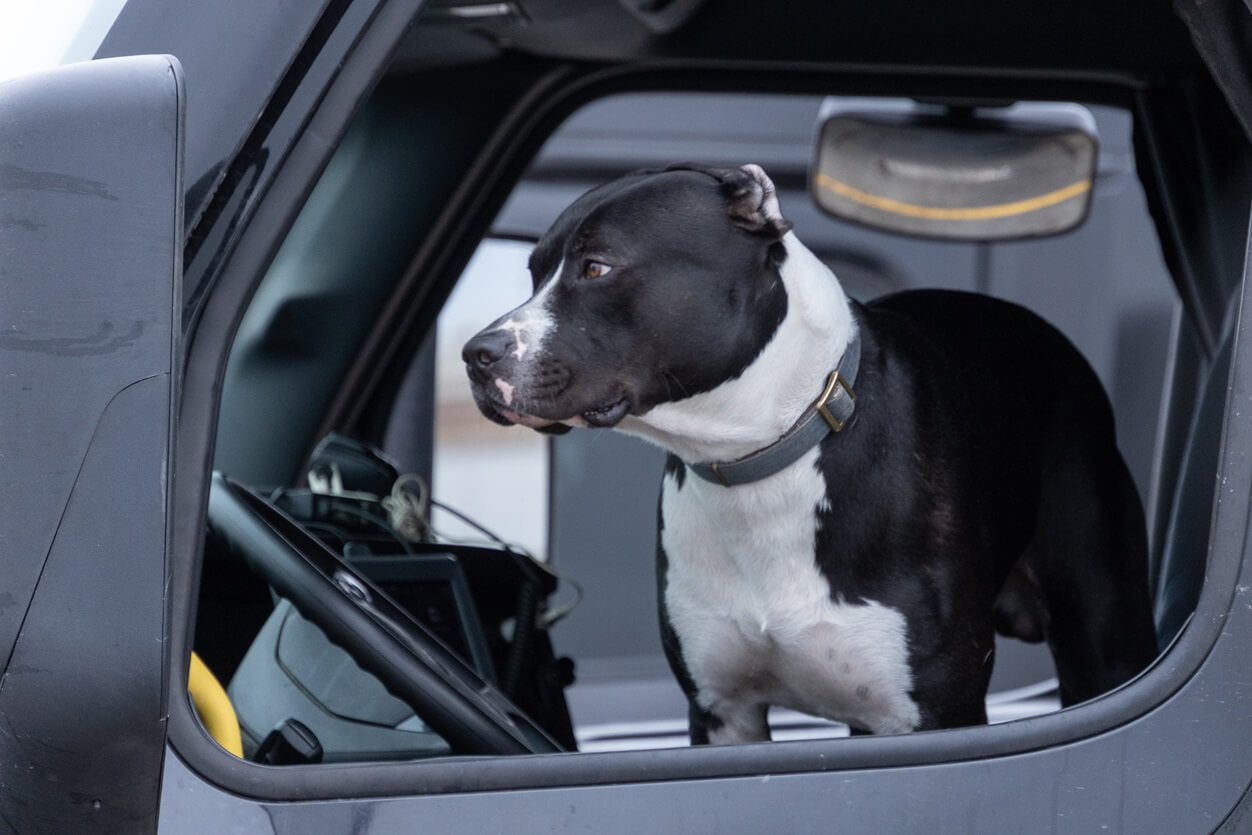
If you’re a trucker who crosses borders with your canine companion, heads up: the rules of the road have changed. Since August 1, 2024, the Centers for Disease Control and Prevention (CDC) has new regulations in place for dogs entering or re-entering the United States. Let’s break down what this means for you and your four-legged friend.
The New Reality at the Border
The CDC’s aim? Keeping canine rabies out of the U.S. It’s a Noble goal, but it does add a few steps to your border crossing routine. These rules apply to all pets— everyday pets, service dogs, and even dogs born right here in the USA.
What You Need to Know
Here’s the checklist for your pup:
Age: Must be at least six months old.
ID: Needs an approved microchip.
Health: Your dog should look healthy when you roll up to the border.
Paperwork: You’ll need a CDC Dog Import Form receipt.
The CDC Dog Import Form
This form is now essential when crossing borders with your dog. Here’s the lowdown:
It’s good for six months.
You can use it for multiple crossings (unless your dog visits a high-risk country).
Each dog needs its own form.
It’s free to fill out and submit.
Staying on Top of It
Fill out that CDC form well before hitting the road.
Keep form receipts on your phone for easy access.
Making sure their dog’s microchip is good to go.
Keep up with those vet check-ups.
Adapting to Change
These new regulations may seem like an extra hurdle, but they’re designed to keep both human and canine travelers safe. A well-prepared trucker is an efficient trucker. Keep your dog’s documents as organized as your logbook, and you’ll have no issues.
It often seems like there’s always one more regulation to keep track of. From hours of service to emissions standards and now pet travel requirements, the list keeps growing. It’s part of the job to stay on top of these changes and adapt accordingly. But while regulations may come and go, one constant remains the need for reliable, convenient parking during your hauls.
Simplify Your Journey with Truck Parking Club
While you’re dealing with new regulations, finding a parking spot to rest shouldn’t add to your stress. Long hauls are tough enough without worrying about where you’ll park for the night.
Truck Parking Club has a network of parking spots across North America. Our user-friendly app lets you find and reserve spaces in advance, giving you one less thing to worry about on the road.
But we’re not just for drivers. Property owners, got unused land? Turn that space into a steady revenue stream. By joining our network, you’re not just making money—you’re supporting the backbone of America’s supply chain. It’s a win-win: drivers get the secure parking they need, and you get to capitalize on your unused property.
The information published herein is for general informational purposes only. Truck Parking Club does not make any representations or warranties about the completeness, reliability, legality, and accuracy of this information. Any reliance placed on such material is strictly at the user’s own risk. Truck Parking Club shall not be responsible for any losses or damages incurred in connection with the information published herein.