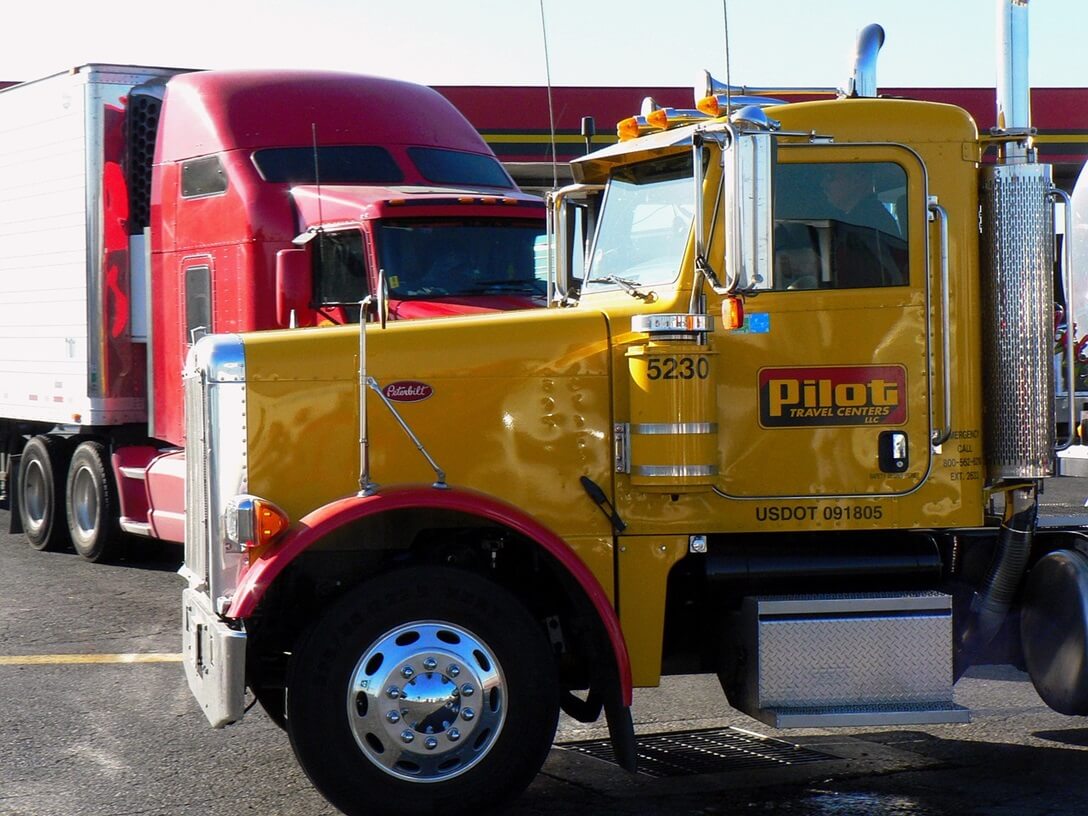
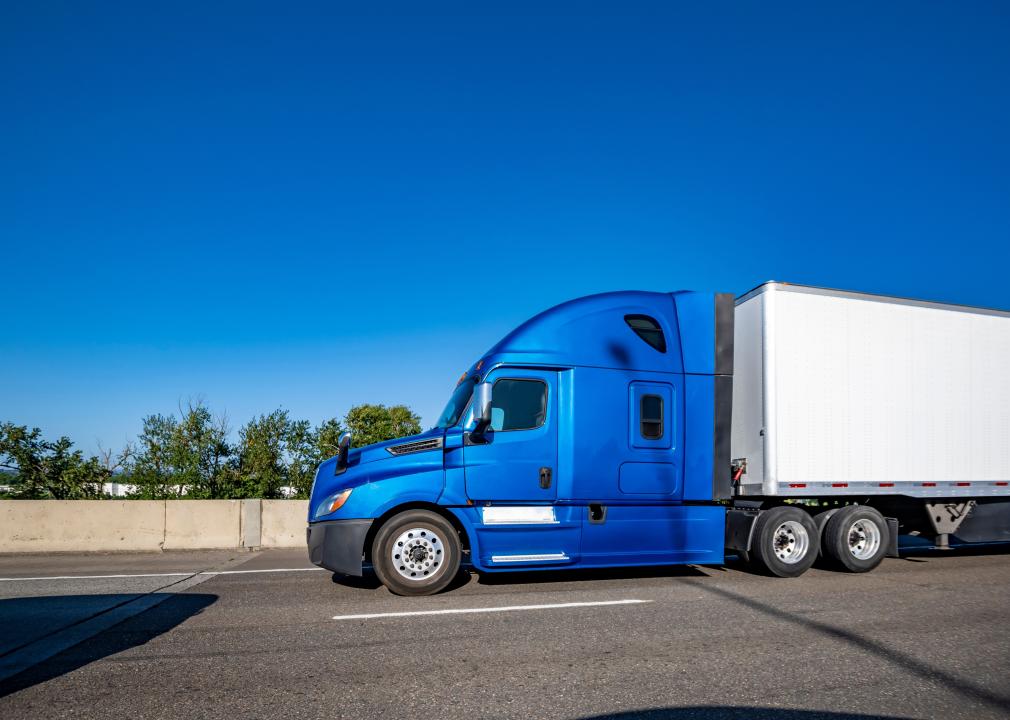
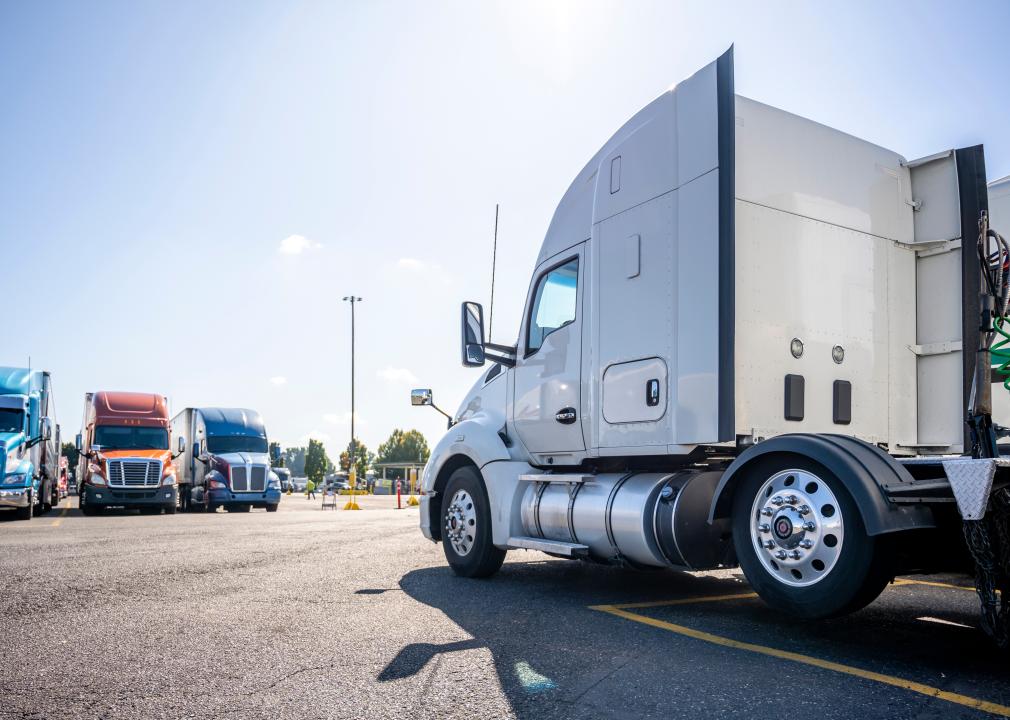
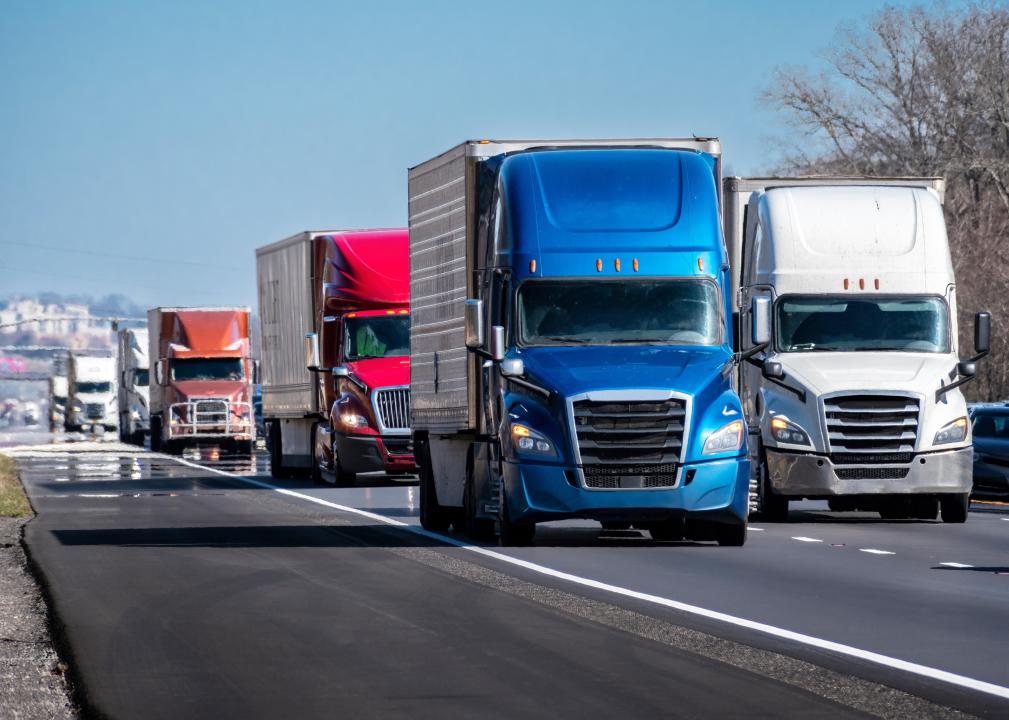
Parking a large truck can be a challenging task, especially for new drivers or those accustomed to smaller vehicles. Mastering the art of parking a big rig is crucial for safety, efficiency, and maintaining a professional reputation.
Whether you’re navigating tight urban spaces or maneuvering in expansive truck stops, the following tips and techniques will help you park your large truck with confidence in any lot.
Preparing for Parking
Before you even attempt to park your truck, proper preparation is key. One of the most important aspects of this preparation is inspecting and adjusting your mirrors. Your mirrors are your eyes when maneuvering a large vehicle, so they must be set up correctly.
Take the time to adjust all mirrors to minimize blind spots and give you the best possible view of your surroundings. Remember, what you can’t see can hurt you or others, so thorough mirror checks are essential.
Choosing the right spot is another critical step in the parking process. When you enter a parking lot, take a moment to survey the area and identify suitable spaces for your vehicle.
Look for spots that offer enough room not just for your truck’s length but also for the swing of your trailer when turning.
If possible, opt for pull-through spots or areas at the back of the lot where there’s less traffic. This not only makes parking easier but also reduces the risk of accidents when you’re ready to leave.
Techniques for Parking a Large Truck
Mastering specific parking techniques can make a world of difference when it comes to parking a big truck. One valuable skill to learn is the three-point turn. This maneuver is particularly useful when you need to turn your truck around in a tight space.
To execute a three-point turn, start by turning your steering wheel fully to one side and pulling forward as far as possible. Then, back up while turning the wheel in the opposite direction.
Finally, pull forward again, straightening out your vehicle. With practice, this technique can help you navigate tricky situations with ease.
Angle parking is another useful technique, especially in truck stops or designated truck parking areas. When parking at the right angle, approach the spot at the designated angle, usually around 45 degrees.
As you near the spot, begin turning your steering wheel towards the direction of the angle. Slowly pull forward, adjusting as necessary, until your truck is centered in the spot. Remember to leave enough room on either side for neighboring vehicles and for you to exit safely.
Maneuvering in Tight Spaces
Understanding your truck’s dimensions is crucial when maneuvering in tight spaces. Know your vehicle’s length, width, and height like the back of your hand.
This knowledge will help you judge whether you can fit into a particular spot or clear an overhead obstacle. Always factor in extra space for safety margins and the swing of your trailer.
When maneuvering into a tight spot, the key is to take it slow and steady. Rushed movements often lead to mistakes. Make small, controlled adjustments as you position your truck.
Utilizing Technology
Modern trucks often come equipped with backup cameras and sensors, which can be invaluable parking tools. These technologies provide additional visual information and proximity alerts, helping you avoid obstacles you might not otherwise see.
However, while these tools are helpful, they should supplement, not replace, your visual checks and judgment.
GPS and parking apps like our Truck Parking Club can also be incredibly useful for truck drivers. These tools can help you locate suitable parking spots in advance, reducing stress and saving time. Some apps even offer real-time updates on parking availability, helping you plan your stops more effectively.
Common Mistakes to Avoid
One common error to watch out for is undercutting turns. This happens when a driver doesn’t account for the extra space needed for the trailer to clear an obstacle.
To avoid this, always remember that your trailer will track to the inside of your turn. Give yourself extra room, especially in tight spaces.
Overconfidence is another pitfall to avoid. Even experienced drivers can make mistakes, so it’s important to stay alert and cautious. Never assume you know exactly where every part of your truck is without checking. A moment of overconfidence can lead to costly accidents.
Mastering the Art of Truck Parking: Your Path to Stress-Free Stops
Mastering the art of parking a large truck takes skill, patience, and practice. By following these tips and techniques, you can confidently handle even the most challenging parking situations.
And remember, whenever you seek a great spot to park your big rig, Truck Parking Club is here to help. Using our app, you can browse available parking spots throughout the US, ensuring you always find the right spot for your large truck.
The information published herein is for general informational purposes only. Truck Parking Club does not make any representations or warranties about the completeness, reliability, legality, and accuracy of this information. Any reliance placed on such material is strictly at the user’s own risk. Truck Parking Club shall not be responsible for any losses or damages incurred in connection with the information published herein.
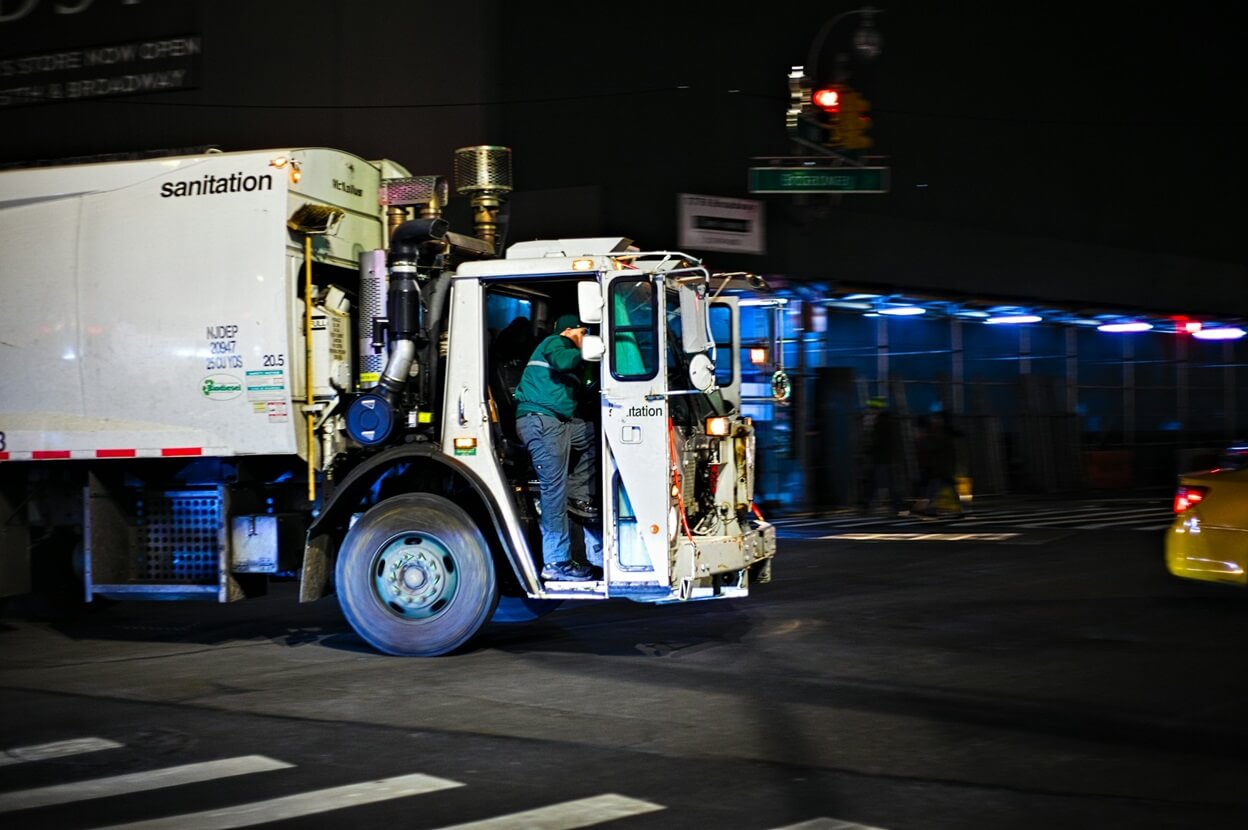
SOUTH SIOUX CITY, Iowa — Residents of South Sioux City are voicing their concerns en masse about a new development project planned for the area. The proposed site along Golf Road, near a local college complex, would quickly transform up to 15 acres of prime land into a parking lot for garbage trucks, with space for office buildings.
The plan has caused huge, vocal concern among local homeowners and business owners.
Community Voices Concerns
At a recent city council meeting, residents shared their concerns about the potential negative impact on their properties and potential quality of life. One resident angrily questioned the project’s implications on noise and odor, passionately stating, “Why don’t one of you guys volunteer your property next to your place? I can hear the garbage truck a quarter of a mile away when it comes down the road, now you got a hundred of them.”
In equal measure, business owners are also worried about the disruption the trucks might cause. “We do not need hundreds of garbage trucks going up and down Golf Road all day long interrupting our business and our guests,” one business owner said. Another resident added, “I don’t know how it would be ok to have so many trucks going flying around every single day, hearing beep, beep, beep, crash, bang, and any other awful noises they make.”
City Council’s Response
Local councilors waded in on the subject with predictable diplomacy without committing or confirming anything in particular.
South Sioux City Mayor Rod Koch acknowledged the concerns, stating that the project is not yet finalized and that other sites are being considered.
“ I think we definitely have to take into consideration these concerns and listen to the citizens,” Koch said, without hinting toward any specific possible alternatives.
Gill Hauling, the company behind the proposed development, was not present at the meeting to address these issues directly. As a result, the proposal’s discussion was postponed to the next city council meeting scheduled for August, allowing more time for community input and consideration of alternative solutions.
Awaiting Further Discussion
No decision has been made regarding the proposal, and it remains to be seen how influential the local community is in terms of affecting any decisions. Residents and city officials will continue to discuss the project at the next city council meeting.
Either way, the community remains divided, with many hoping for a solution that balances much-needed development requirements with the well-being of local residents and businesses.
TPC Opinion
As a successful company specializing in private truck parking, Truck Parking Club understands the frustrations of local communities and recognizes the importance of peace and quiet for residents.
By the same token, garbage disposal is essential for every community. In the next meeting, finding a balance that addresses both residents’ needs and the operational requirements of essential services will be crucial.
The information published herein is for general informational purposes only. Truck Parking Club does not make any representations or warranties about the completeness, reliability, legality, and accuracy of this information. Any reliance placed on such material is strictly at the user’s own risk. Truck Parking Club shall not be responsible for any losses or damages incurred in connection with the information published herein.
Former President Donald Trump, well known for his strong support of the wider trucking industry, particularly owner-operators, has announced his running mate for the upcoming election.
Ohio Republican Senator J.D. Vance, selected as Trump’s vice-presidential candidate at the Republican National Convention in Milwaukee, has a record of supporting key legislative priorities for truck drivers.
Support for Truck Parking
Senator Vance is a co-sponsor of the Truck Parking Improvement Act. This legislation allocates $755 million in grant money over the next three years, specifically for the expansion of truck parking. This act is seen as a significant step toward addressing the chronic shortage of truck parking spaces, a critical issue for drivers who need safe and accessible places to rest.
Opposition to Speed Limiting Devices
In addition to supporting truck parking initiatives, Vance is a co-sponsor of the DRIVE Act. This bill seeks to prohibit the Federal Motor Carrier Safety Administration (FMCSA) from mandating speed-limiting devices on trucks.
The proposed rule, scheduled for May 2025, has been highly controversial within the trucking community. Many drivers and industry representatives argue that speed limiters could pose safety risks and operational challenges.
OOIDA’s Perspective
George O’Connor, a spokesperson for the Owner-Operator Independent Truck Drivers Association (OOIDA), expressed approval of Vance’s legislative efforts. “We’re a non-partisan organization, but unabashedly pro-trucker,” O’Connor told reporters. “We’ll work with anyone and everyone who supports our members’ priorities, regardless of party affiliation. It’s helpful to have someone advising the President with a proven pro-trucker legislative record.”
Broader Political Stance
Vance’s political views often align with populist conservatism, sometimes diverging from traditional Republican stances. He has supported a Rail Safety Bill championed by Democrats in Congress, spurred by the Norfolk Southern train derailment in East Palestine, Ohio. At the same time, Vance advocates for repealing tax incentives for electric vehicles, including those intended for commercial trucks.
Historical Context
Trump has a history of rallying support among owner-operators. In May 2020, truck drivers protesting broker practices caught Trump’s attention during a weeks-long demonstration along Constitution Avenue in Washington. Drivers accused brokers of unfairly lowering rates and exploiting the market conditions during the early stages of the pandemic. Brokers, however, argued that the lack of freight was the root cause of the reduced rates, not their practices.
Bottom Line
With Vance on the ticket, Trump aims to solidify his appeal to the trucking industry by supporting legislative measures that address truckers’ critical issues. Vance’s involvement in key bills reflects a commitment to improving conditions for truck drivers, ensuring they have the resources and protections necessary to perform their vital role in the economy.
As these legislative efforts continue to develop, truck drivers may find it increasingly beneficial to explore new solutions for their parking needs. Tools like Truck Parking Club can offer practical assistance in finding available, convenient truck parking spots helping drivers stay safe and compliant on the road.
The information published herein is for general informational purposes only. Truck Parking Club does not make any representations or warranties about the completeness, reliability, legality, and accuracy of this information. Any reliance placed on such material is strictly at the user’s own risk. Truck Parking Club shall not be responsible for any losses or damages incurred in connection with the information published herein.
During the height of the Covid pandemic, the trucking industry experienced an unprecedented boom. While consumers were confined to their homes, they were ordering goods at an extraordinary rate, with the supply chain inevitably struggling to keep up.
Susan Reynolds, a 44-year-old single mother of four, saw this as an opportunity to make her dream of owning a trucking company a reality. Having spent six years driving a semi-truck for a company, she took out a loan for a new $200,000 truck in 2021. Initially, the decision paid off, with Barron earning as much as $20,000 a month in profit.
“It was incredible. I was a teen parent. I had my first child at 15, and all the odds were stacked against me,” Reynolds shared. “I had all three of my children graduate from high school while I was driving a truck, and I still figured it out and made it happen.”
The Boom and Bust
However, the good times were short-lived. Over the past year, shipping rates have plummeted, leaving Reynolds and many other drivers struggling to make ends meet. The number of trucking companies surged by 50% from the start of the pandemic until the end of 2023, driven by record pay and social media influencers touting trucking as a lucrative career.
But as consumer spending has leveled off and shipping volumes have returned to pre-pandemic levels, the demand for truckers has waned, creating fierce competition and driving down rates.
“Basically, the good times have come and gone,” said David Clergo, transport industry growth consultant. “There’s a huge turnaround happening right now, and it’s probably going to continue throughout 2024.” With 15,000 trucking companies shut down since October 2022 – most of them owner-operators with just one truck – it is predicted that another 2,000 carriers may need to exit the market before supply meets demand.
Reynolds’s experience is a testament to these challenges. Her monthly profits dropped from $20,000 in March 2022 to just over $3,600 in July as fuel prices spiked and demand slowed. This was insufficient to cover her $2,800 rent and $1,700 truck loan payment. By August, she had to surrender her truck, losing her $5,000 down payment and paying a $9,000 penalty.
“Everything was great, but there wasn’t such a huge demand once the pandemic went away. So I couldn’t make the money that I needed to make to be able to live, and then the fuel prices went up too,” Barron explained.
The Pandemic’s Aftermath
The pandemic’s initial surge in demand for truckers was fueled by Americans flush with stimulus checks and unable to spend on travel or dining out, leading to a spike in online orders. This was coupled with a booming housing market, increasing the need for construction materials and appliances. The logistical bottlenecks at ports and warehouses further compounded the challenges, slowing down the movement of goods and driving the need for more truckers.
With the promise of high earnings, many workers switched to truck driving during the pandemic, either joining companies or starting their own operations. An unprecedented spike in female truck drivers was also evident during this time. However, as the market normalizes, many drivers are finding it difficult to sustain their businesses.
Finding reliable parking and support on the road is more critical than ever for truck drivers facing these challenges. Truck Parking Club offers secure, private parking facilities, providing much-needed stability for drivers navigating these tough times.
Moving Forward
As the trucking industry adjusts to post-pandemic realities even now, four years later, drivers like Reynolds and her plight demonstrate the need for better support and planning. This may include providing financial guidance, mental health resources, and improved infrastructure to ensure their long-term success.
Additionally, the truck parking crisis remains a huge industry challenge, compounding the issues that truckers face. Truck Parking Club is stepping up by offering private truck parking spots at affordable rates to provide truckers with secure and reliable options. Visit Truck Parking Club today to find out more.
The information published herein is for general informational purposes only. Truck Parking Club does not make any representations or warranties about the completeness, reliability, legality, and accuracy of this information. Any reliance placed on such material is strictly at the user’s own risk. Truck Parking Club shall not be responsible for any losses or damages incurred in connection with the information published herein.
On the road and looking for a daily truck parking space? Find the closest daily parking spot in a matter of seconds.
States where traffic volumes are increasing most
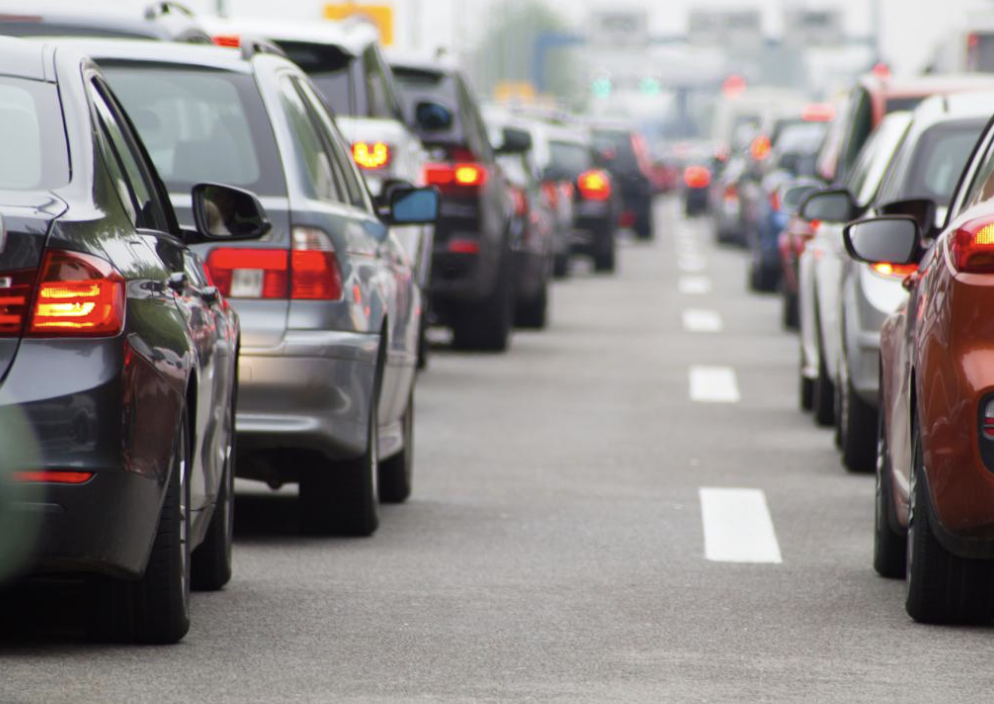
Few daily frustrations are as annoying, expensive, and sometimes downright dangerous as vehicular traffic. And it’s only getting worse.
Migration, population increases, development, and urban sprawl have increased traffic volume in nearly every state. In many areas, public transportation is underfunded or nonexistent, leaving residents reliant on vehicular travel. Transportation infrastructure has not kept up with population demands, with only 44% of bridges being considered in good condition, while 32% of urban roads were found to be in unsatisfactory condition. The combination of worsening congestion and weakening infrastructure is a major problem on roads and highways already straining to support current traffic volumes.
Truck Parking Club analyzed data from the Federal Highway Administration by approximately 5,000 FHWA traffic monitoring stations and determined where the country’s greatest increases have occurred.
The data reflects the period between April 2023 and April 2024 and considers traffic volume increases by individual states and geographic regions.
PARK YOUR TRAILER WITH NO HASSLE
Store your trailer in a safe place with a state-of-the-art platform that locates trailer parking near me.
Population growth, urban sprawl account for regional traffic upticks
Despite a major dip in traffic during the COVID-19 pandemic, there’s been a near-universal uptick in traffic in recent years. Between 2000 and 2022, lockdowns and remote work limited the number of drivers on the roads. But by 2023, traffic began to rebound. With the lone exception of Montana, all U.S. states reported traffic increases in 2023. According to FHWA data, drivers clocked a record 3.263 trillion miles in 2023, a nationwide increase of 67.5 billion miles, or just over 2% from the year prior.
With migration driven by the rising cost of living, metropolitan development, and the return to onsite work, traffic shows no signs of slowing down in 2024.
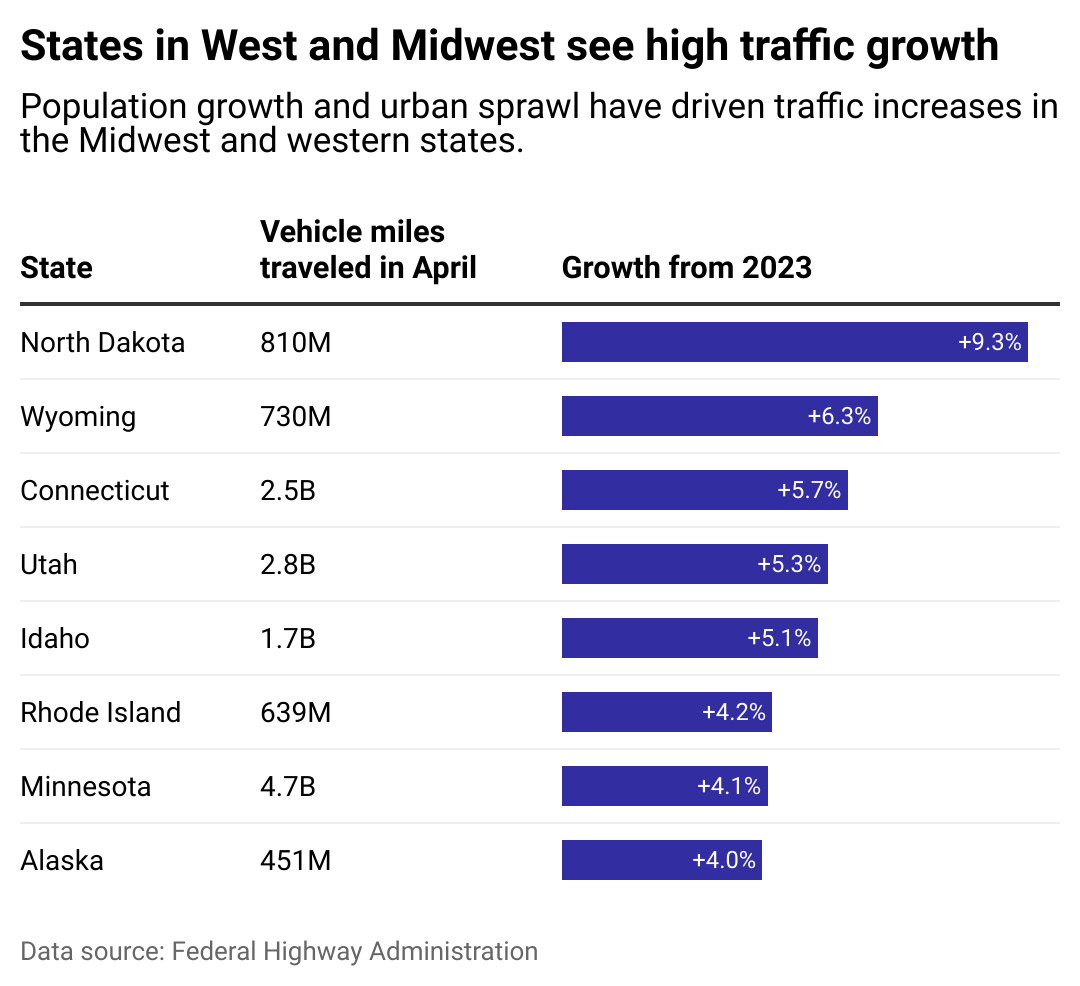
Regional variations in traffic patterns also point to population shifts. Major increases in traffic volume occurred in the Midwest, particularly the north-central region, with a 2.7% increase for the entire region. North Dakota and neighboring Minnesota rank in the top 10 states for increased traffic volume, along with nearby Wyoming and Idaho in the Mountain West subregion. The northeast also saw a heavy increase in traffic volumes. While the region is home to many of the worst-rated traffic cities—including New York City, Philadelphia, and Boston, according to INRIX’s 2023 Global Traffic Scorecard report—the biggest increases occurred in surrounding states like Connecticut and Rhode Island.
North Dakota saw the sharpest increase, with a nearly 10% rise in statewide traffic volume. Due to a booming energy sector and comparatively low costs of living, over 100,000 people flocked to the state over the last decade, until the state declared a record population count in 2023.
While this is not the largest population increase among all states, many of the developed areas in the region are spread out and lack options, such as public transportation, forcing residents to rely on personal vehicles and cover greater distances. Conversely, Montana was the only state with decreased overall traffic volume. With a lagging national economy, the state’s typically thriving tourism industry, sustained by travelers from out of state, took a hit this year.
As the national traffic volume has increased, so have the inconveniences and dangers that come with congestion and more drivers on the road. Many heavily populated urban areas no longer have clearly defined rush hours; traffic is consistently heavy throughout the day. Such conditions lead to lost time and increased expenses for individuals and governments. Injuries and property damage remain high from traffic accidents, and while traffic fatalities declined from 2022 to 2023, they are still considered a public health crisis.
Measures to mitigate traffic are slowly being put in place. Local governments have committed funds to construction projects to ease traffic congestion, and Americans have opted to walk, cycle, or use public transport where it is available. Despite local and civic measures, traffic volumes nationwide continue to accelerate.
PREVIOUSLY INACCESSIBLE TRUCK PARKING
Take care of your truck and trailer parking needs with new locations added daily.
Story editing by Alizah Salario. Additional editing by Kelly Glass. Copy editing by Paris Close. Photo selection by Clarese Moller.
The American Petroleum Institute (API), the nation’s largest oil and gas industry association, has taken legal action against the Environmental Protection Agency (EPA) over its new heavy-duty vehicle emissions standards. The lawsuit, filed in the D.C. Circuit Court of Appeals, sees API joined by the Owner-Operator Independent Drivers Association (OOIDA) and several farming organizations as co-petitioners.
API, representing over 500 companies, including giants like Exxon Mobil and Chevron, argues that the EPA’s regulations mandate either nonexistent or impractical technology for current trucks. Ryan Meyers, API’s Senior Vice President and General Counsel, stated, “The EPA is pushing for truck technology that doesn’t exist for these vehicles—and even if it did, it would likely have adverse effects on the average American trucker.”
EPA’s Emission Standards Under Fire
The EPA’s Greenhouse Gas Emissions Standards for Heavy-Duty Vehicles—Phase 3 (GHG3) aims to implement stricter emission regulations from model year 2027 through 2032. These rules are designed to reduce engine-out greenhouse gas emissions for new heavy-duty vocational vehicles, including tractor-trailer trucks and delivery trucks.
For example, emissions standards for a high roof Class 8 sleeper cab will decrease from 70.7 grams per ton-mile in 2024 to 48.2 grams per ton-mile by 2032.
While the regulations don’t explicitly mandate electric vehicle production, the EPA anticipates that 25% of long-haul sleeper cab tractors will be zero-emission vehicles by 2032. Manufacturers can meet these standards through various technologies, including improved aerodynamics and alternative fuel propulsion systems. However, the cost of compliance is expected to be steep, with some estimates suggesting an increase of $25,000 per vehicle.
Critics, including the American Trucking Associations and Clean Freight Coalition, argue that the new regulations will significantly increase operational costs and strain the already limited zero-emission vehicle infrastructure. Todd Spencer, president of OOIDA, warned that small trucking businesses could be “regulated out of existence” due to the high costs and operational challenges posed by the EPA’s rule.
Legal Battles and Industry Impact
This lawsuit is part of a broader pattern of legal challenges that the EPA faces over its emissions standards. API has a history of litigating against federal regulations, having previously contested rules on oil and natural gas leasing, sector emissions, and biofuel production mandates. Recently, API and other groups also filed a lawsuit against the EPA’s emissions standards for light- and medium-duty vehicles, labeling them as an “electric vehicle mandate.”
The current wave of lawsuits demonstrates the tension between regulatory agencies and industry stakeholders. While the EPA maintains that its regulations are crucial for reducing greenhouse gas emissions and combating climate change, industry representatives argue that the rules are overreaching and could have unintended economic consequences, particularly for small businesses.
A Look Ahead
As the legal battles unfold, the trucking industry faces a period of uncertainty. The outcome of these lawsuits could shape the future of truck manufacturing and emissions standards in the United States. While the EPA aims to push for greener technologies, the industry negotiates the feasibility and economic impact of such regulations.
Finding reliable and compliant parking solutions is more critical than ever for truck drivers and operators. Truck Parking Club offers a network of secure, private parking facilities, providing convenience for truckers navigating these challenging times.
To secure your spot and ensure peace of mind, visit Truck Parking Club today.
The information published herein is for general informational purposes only. Truck Parking Club does not make any representations or warranties about the completeness, reliability, legality, and accuracy of this information. Any reliance placed on such material is strictly at the user’s own risk. Truck Parking Club shall not be responsible for any losses or damages incurred in connection with the information published herein.
News of a revival in the US trucking sector has been somewhat overstated of late, as industry data indicates a continued struggle with negative growth expected for the remainder of the year. Despite occasional optimistic forecasts, however, the numbers tell a different story.
The CASS Freight Index, which had shown some improvement in the first quarter, recorded a 5.8% year-on-year drop in shipments for May. Although the month-on-month figures were flat, a seasonally adjusted analysis reveals a 3.1% decline from April, marking a 46-month low. This downturn was nearly double the 3% drop previously forecasted by CASS, and the trend suggests a similar annual decline.
Industry analysts have questioned the notion that the market’s woes are due to an oversupply of struggling small players. They point out that a record 42,000 operating authorities have been revoked since October 2022. Instead, two significant factors have been identified: the consolidation of less-than-truckload (LTL) traffic into full truckload shipments and the unexpected expansion of private fleets.
May of this year saw transport spending decrease by 9% compared to the previous year, although this was an improvement from the 17% gap recorded in April. Month-on-month, spending rose by 1.9%, suggesting a rise in rates. CASS predicts a 16% decline in spending for the first half of the year and 10% for the full year.
Optimistic Signs
There was a silver lining, however. The inferred rates, calculated as transport spend divided by shipment count, dropped by 3.4% from May 2023. This was an improvement from the 13% decline observed the previous month and marked the narrowest decline in 16 months. Seasonally adjusted, these rates increased by 3.9% from April, reaching a six-month high.
Derek Leathers, CEO of Werner Enterprises, noted that his company plans to maintain pricing discipline, citing positive market developments. “We’re seeing less price pressure and less churn, indicating we’re nearing an inflection point,” he said. Leathers also mentioned that inventory levels appear more balanced, pointing towards normalization in the replenishment cycle while consumer behavior remains stable.
The American Trucking Association (ATA) has also reported some positive signs. Their For-Hire Truck Tonnage Index for May showed a 1.5% year-on-year increase, the first annual gain in 15 months, and a 3.6% rise from April. ATA chief economist Bob Costello expressed cautious optimism, noting that while there was a noticeable increase in freight activity before Memorial Day, it’s too early to declare a sustained recovery.
Looking Ahead
As the trucking industry navigates these turbulent waters, one thing is clear: adaptability and strategic planning are essential. Companies like Truck Parking Club are playing a crucial role by offering reliable, secure parking options for truck drivers. This support is invaluable as truckers face ongoing challenges, from market fluctuations to operational hurdles.
For truckers seeking dependable parking solutions, Truck Parking Club provides a network of secure, private facilities that offer peace of mind and essential amenities. Browse truck parking spots today and ensure your journey is as smooth as possible.
The information published herein is for general informational purposes only. Truck Parking Club does not make any representations or warranties about the completeness, reliability, legality, and accuracy of this information. Any reliance placed on such material is strictly at the user’s own risk. Truck Parking Club shall not be responsible for any losses or damages incurred in connection with the information published herein.
On the road and looking for a daily truck parking space? Find the closest daily parking spot in a matter of seconds.
Where are all these trucks headed? The top freight destinations from each state.
In many parts of the country, you can’t drive on an interstate without spotting a semitruck. But have you ever wondered where they are hauling all that stuff?
Truck Parking Club used Bureau of Transportation Statistics data to identify the top destinations of freight from each state. The analysis looks just at domestic freight and shows the value of freight headed for in-state destinations separately from the top out-of-state destination. Origin states are listed in alphabetical order.
Most of the time, semis are headed somewhere within the same state. In all but one, the highest share of freight was delivered to other destinations within its own borders. The only exception was Rhode Island, which is the smallest U.S. state by area, leaving few possible in-state destinations for freight.
The average haul length has been decreasing for years as e-commerce—Amazon in particular—has normalized speedy and frequent deliveries. These days, regional warehouses and distribution centers are more common and widespread so trucks don’t have to move goods as far to get them to local stores or individuals. The COVID-19 pandemic exacerbated this trend, causing severe supply-chain disruptions, panic-buying, and driving up online purchasing.
When shipping out-of-state, Texas and California were the most prevalent freight destinations. These two states are major economic centers of the U.S. as the most populous in the nation with the largest state gross domestic product. Texas and California each offer huge consumer markets, major production centers, and abundant trade with international markets, making them obvious destinations for freight from across the country.
Trucks are the most prevalent shipping method in the U.S. and most commonly transport goods including construction materials, gas and oil, food and agricultural products, and waste. Read on to see where semitrucks in your state are headed.
Kevin Ruck // Shutterstock
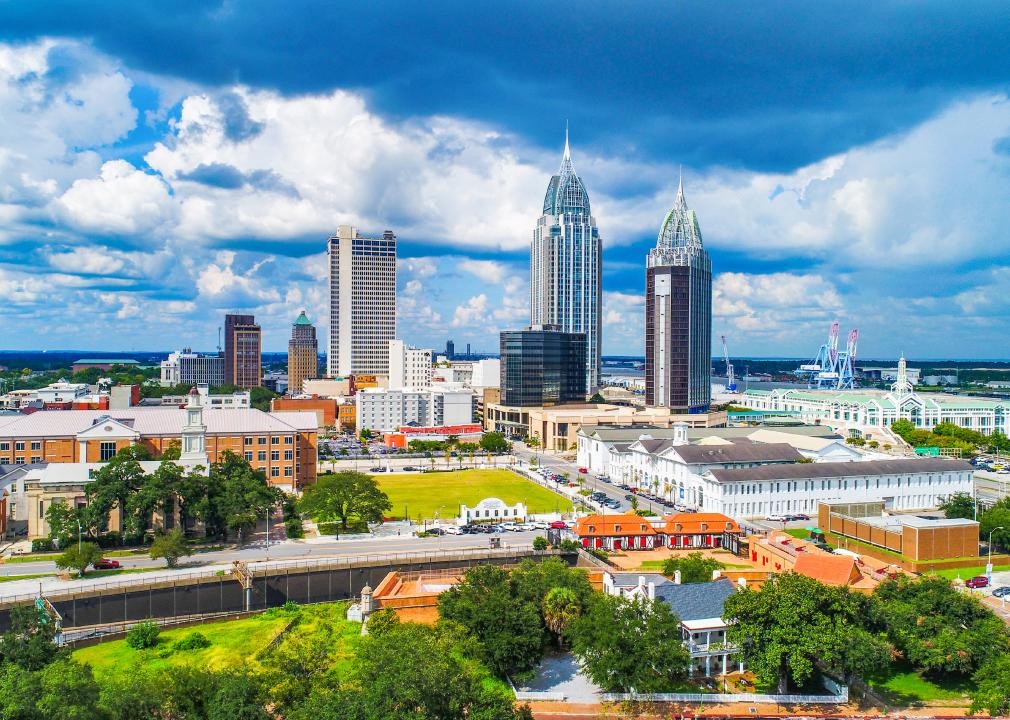
Alabama
– Top destination: Georgia — Value of freight: $34.3 billion (10.2% of domestic freight originating in Alabama) – Freight heading to in-state destinations: $150.5 billion (44.9%)
Canva
Alaska
– Top destination: California — Value of freight: $9.7 billion (24.6% of domestic freight originating in Alaska) – Freight heading to in-state destinations: $23.4 billion (59.1%)
Sean Pavone // Shutterstock
Arizona
– Top destination: California — Value of freight: $32.3 billion (13.1% of domestic freight originating in Arizona) – Freight heading to in-state destinations: $137.6 billion (55.8%)
Canva
Arkansas
– Top destination: Texas — Value of freight: $14.1 billion (7.4% of domestic freight originating in Arkansas) – Freight heading to in-state destinations: $88.8 billion (46.6%)
Marek Masik // Shutterstock
California
– Top destination: Texas — Value of freight: $75.8 billion (3.6% of domestic freight originating in California) – Freight heading to in-state destinations: $1387.2 billion (65.9%)
Bits And Splits // Shutterstock
Colorado
– Top destination: Wyoming — Value of freight: $12.2 billion (4.5% of domestic freight originating in Colorado) – Freight heading to in-state destinations: $146.9 billion (53.8%)
Sean Pavone // Shutterstock
Connecticut
– Top destination: New York — Value of freight: $34.1 billion (14.4% of domestic freight originating in Connecticut) – Freight heading to in-state destinations: $101.0 billion (42.6%)
Real Window Creative // Shutterstock
Delaware
– Top destination: Pennsylvania — Value of freight: $12.1 billion (16.1% of domestic freight originating in Delaware) – Freight heading to in-state destinations: $25.6 billion (34.2%)
Canva
District of Columbia
– Top destination: Maryland — Value of freight: $735 million (15.6% of domestic freight originating in the District of Columbia) – Freight heading to in-state destinations: $2.7 billion (56.1%)
Mia2you // Shutterstock
Florida
– Top destination: Georgia — Value of freight: $23.3 billion (3.3% of domestic freight originating in Florida) – Freight heading to in-state destinations: $522.1 billion (73.5%)
Vitpho // Shutterstock
Georgia
– Top destination: Florida — Value of freight: $70.2 billion (11.2% of domestic freight originating in Georgia) – Freight heading to in-state destinations: $280.3 billion (44.8%)
Canva
Hawaii
– Top destination: California — Value of freight: $476 million (1.3% of domestic freight originating in Hawaii) – Freight heading to in-state destinations: $33.8 billion (95.6%)
Charles Knowles // Shutterstock
Idaho
– Top destination: Washington — Value of freight: $8.5 billion (9.4% of domestic freight originating in Idaho) – Freight heading to in-state destinations: $50.1 billion (55.3%)
Sean Pavone // Shutterstock
Illinois
– Top destination: Indiana — Value of freight: $84.6 billion (7.5% of domestic freight originating in Illinois) – Freight heading to in-state destinations: $567.5 billion (50.0%)
Sean Pavone // Shutterstock
Indiana
– Top destination: Ohio — Value of freight: $52.3 billion (8.7% of domestic freight originating in Indiana) – Freight heading to in-state destinations: $232.8 billion (38.9%)
Jacob Boomsma // Shutterstock
Iowa
– Top destination: Illinois — Value of freight: $30.3 billion (8.7% of domestic freight originating in Iowa) – Freight heading to in-state destinations: $156.3 billion (44.6%)
Jacob Boomsma // Shutterstock
Kansas
– Top destination: Missouri — Value of freight: $24.4 billion (7.9% of domestic freight originating in Kansas) – Freight heading to in-state destinations: $147.9 billion (48.0%)
Vitpho // Shutterstock
Kentucky
– Top destination: Tennessee — Value of freight: $38.6 billion (10.9% of domestic freight originating in Kentucky) – Freight heading to in-state destinations: $122.9 billion (34.7%)
Sean Pavone // Shutterstock
Louisiana
– Top destination: Texas — Value of freight: $67.3 billion (13.7% of domestic freight originating in Louisiana) – Freight heading to in-state destinations: $269.4 billion (55.0%)
Joseph Sohm // Shutterstock
Maine
– Top destination: Massachusetts — Value of freight: $5.2 billion (9.6% of domestic freight originating in Maine) – Freight heading to in-state destinations: $29.5 billion (54.4%)
Sean Pavone // Shutterstock
Maryland
– Top destination: Virginia — Value of freight: $32.2 billion (14.3% of domestic freight originating in Maryland) – Freight heading to in-state destinations: $89.4 billion (39.7%)
Sean Pavone // Shutterstock
Massachusetts
– Top destination: New Hampshire — Value of freight: $30.4 billion (8.6% of domestic freight originating in Massachusetts) – Freight heading to in-state destinations: $153.1 billion (43.4%)
Sean Pavone // Shutterstock
Michigan
– Top destination: Ohio — Value of freight: $39.7 billion (5.9% of domestic freight originating in Michigan) – Freight heading to in-state destinations: $366.8 billion (54.7%)
Canva
Minnesota
– Top destination: Wisconsin — Value of freight: $36.8 billion (8.3% of domestic freight originating in Minnesota) – Freight heading to in-state destinations: $221.0 billion (49.5%)
Canva
Mississippi
– Top destination: Alabama — Value of freight: $41.5 billion (17.1% of domestic freight originating in Mississippi) – Freight heading to in-state destinations: $63.1 billion (26.0%)
Vitpho // Shutterstock
Missouri
– Top destination: Illinois — Value of freight: $32.1 billion (8.1% of domestic freight originating in Missouri) – Freight heading to in-state destinations: $159.2 billion (40.4%)
Mihai_Andritoiu // Shutterstock
PARK YOUR TRAILER WITH NO HASSLE
Store your trailer in a safe place with a state-of-the-art platform that locates trailer parking near me.
Montana
– Top destination: Idaho — Value of freight: $4.3 billion (7.4% of domestic freight originating in Montana) – Freight heading to in-state destinations: $38.2 billion (65.4%)
Katherine Welles // Shutterstock
Nebraska
– Top destination: Iowa — Value of freight: $13.7 billion (7.2% of domestic freight originating in Nebraska) – Freight heading to in-state destinations: $99.6 billion (52.0%)
randy andy // Shutterstock
Nevada
– Top destination: California — Value of freight: $17.4 billion (20.7% of domestic freight originating in Nevada) – Freight heading to in-state destinations: $39.0 billion (46.5%)
Sean Pavone // Shutterstock
New Hampshire
– Top destination: Massachusetts — Value of freight: $10.1 billion (14.0% of domestic freight originating in New Hampshire) – Freight heading to in-state destinations: $24.0 billion (33.2%)
Mihai_Andritoiu // Shutterstock
New Jersey
– Top destination: New York — Value of freight: $89.0 billion (14.9% of domestic freight originating in New Jersey) – Freight heading to in-state destinations: $212.3 billion (35.6%)
Vitpho // Shutterstock
New Mexico
– Top destination: Texas — Value of freight: $22.8 billion (19.9% of domestic freight originating in New Mexico) – Freight heading to in-state destinations: $50.7 billion (44.2%)
Wangkun Jia // Shutterstock
New York
– Top destination: New Jersey — Value of freight: $55.9 billion (7.3% of domestic freight originating in New York) – Freight heading to in-state destinations: $391.1 billion (51.2%)
Sharkshock // Shutterstock
North Carolina
– Top destination: South Carolina — Value of freight: $40.4 billion (7.1% of domestic freight originating in North Carolina) – Freight heading to in-state destinations: $260.9 billion (46.1%)
Jacob Boomsma // Shutterstock
North Dakota
– Top destination: Texas — Value of freight: $20.2 billion (12.9% of domestic freight originating in North Dakota) – Freight heading to in-state destinations: $53.8 billion (34.4%)
Canva
Ohio
– Top destination: Indiana — Value of freight: $55.5 billion (6.6% of domestic freight originating in Ohio) – Freight heading to in-state destinations: $391.5 billion (46.7%)
Sean Pavone // Shutterstock
Oklahoma
– Top destination: Texas — Value of freight: $47.5 billion (19.0% of domestic freight originating in Oklahoma) – Freight heading to in-state destinations: $117.8 billion (47.0%)
Sean Pavone // Shutterstock
Oregon
– Top destination: Washington — Value of freight: $32.9 billion (16.4% of domestic freight originating in Oregon) – Freight heading to in-state destinations: $99.1 billion (49.4%)
ESB Professional // Shutterstock
Pennsylvania
– Top destination: New Jersey — Value of freight: $93.7 billion (10.5% of domestic freight originating in Pennsylvania) – Freight heading to in-state destinations: $346.9 billion (38.8%)
Vitpho // Shutterstock
Rhode Island
– Top destination: Massachusetts — Value of freight: $17.8 billion (28.4% of domestic freight originating in Rhode Island) – Freight heading to in-state destinations: $15.6 billion (24.9%)
f11photo // Shutterstock
South Carolina
– Top destination: North Carolina — Value of freight: $27.9 billion (10.9% of domestic freight originating in South Carolina) – Freight heading to in-state destinations: $99.6 billion (39.0%)
JohnDSmith // Shutterstock
South Dakota
– Top destination: Minnesota — Value of freight: $10.6 billion (13.6% of domestic freight originating in South Dakota) – Freight heading to in-state destinations: $39.3 billion (50.4%)
Kevin Ruck // Shutterstock
Tennessee
– Top destination: Georgia — Value of freight: $38.9 billion (7.2% of domestic freight originating in Tennessee) – Freight heading to in-state destinations: $176.8 billion (32.7%)
Sean Pavone // Shutterstock
Texas
– Top destination: Louisiana — Value of freight: $130.1 billion (4.9% of domestic freight originating in Texas) – Freight heading to in-state destinations: $1945.9 billion (74.0%)
Sean Pavone // Shutterstock
Utah
– Top destination: California — Value of freight: $15.8 billion (8.0% of domestic freight originating in Utah) – Freight heading to in-state destinations: $85.5 billion (43.7%)
Carolyn Franks // Shutterstock
Vermont
– Top destination: New York — Value of freight: $3.1 billion (10.0% of domestic freight originating in Vermont) – Freight heading to in-state destinations: $9.4 billion (30.1%)
Sean Pavone // Shutterstock
Virginia
– Top destination: North Carolina — Value of freight: $27.5 billion (7.8% of domestic freight originating in Virginia) – Freight heading to in-state destinations: $168.0 billion (47.4%)
Agnieszka Gaul // Shutterstock
Washington
– Top destination: Oregon — Value of freight: $43.1 billion (9.8% of domestic freight originating in Washington) – Freight heading to in-state destinations: $253.4 billion (57.4%)
Sean Pavone // Shutterstock
West Virginia
– Top destination: Ohio — Value of freight: $19.9 billion (19.2% of domestic freight originating in West Virginia) – Freight heading to in-state destinations: $37.2 billion (35.8%)
Mihai_Andritoiu // Shutterstock
FIND DAILY, WEEKLY, AND MONTHLY TRUCK PARKING
On the road and looking for a daily truck parking space? Operated by truckers, we source the best parking spots across the nation to ease your trip planning.
Wisconsin
– Top destination: Illinois — Value of freight: $43.1 billion (9.5% of domestic freight originating in Wisconsin) – Freight heading to in-state destinations: $209.5 billion (46.1%)
LBill45 // Shutterstock
Wyoming
– Top destination: Colorado — Value of freight: $8.3 billion (14.1% of domestic freight originating in Wyoming) – Freight heading to in-state destinations: $20.4 billion (34.6%)
The growl of diesel engines may soon be accompanied by a quieter hum as the trucking industry witnesses a growing shift towards electric vehicles (EVs). Major companies are investing heavily in electric truck fleets, spurred by environmental concerns, potential cost savings, and advancements in battery technology.
This transition, however, raises questions about the infrastructure needed to support these vehicles, particularly when it comes to charging and parking.
“We’re at a pivotal moment,” says Bob Greenough, a long-haul trucker with over two decades of experience. “Electric trucks have the potential to change our industry for the better, but we need to make sure we’re ready for them.”
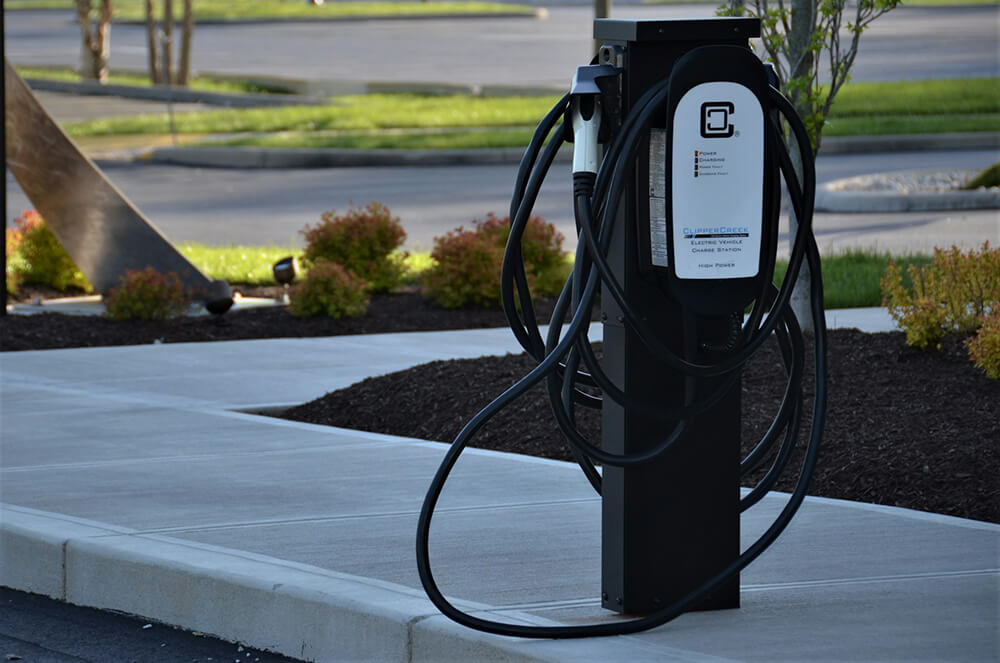
While electric trucks offer the promise of reduced emissions and lower operating costs, they come with unique challenges. Charging times are longer than refueling a diesel truck, and the availability of charging stations along trucking routes is still limited. This could lead to increased demand for truck parking spaces equipped with charging infrastructure, further straining an already stressed system.
“Finding parking is already a daily battle,” says Sanchez. “If we add charging to the equation, it could become a real headache. We need to start planning for this now before it becomes a crisis.”
Coordinated Approach
Some companies are already taking steps to address this issue. Truck stop chains are starting to install charging stations, and some manufacturers are developing trucks with longer ranges to reduce the frequency of charging stops. However, the transition to electric trucks will require a coordinated effort from industry stakeholders, policymakers, and infrastructure providers.
“This is a complex issue, but it’s also an opportunity,” says Maria Gomez, an energy analyst consultant specializing in transportation. “We can create a network of charging stations that not only support electric trucks but also enhance the overall truck parking experience.”
This could mean incorporating charging stations into existing truck stops and rest areas or developing new, dedicated charging hubs. These hubs could offer amenities like restrooms, showers, and food options, making them attractive resting points for drivers.
Infrastructure Investment
Many industry experts feel that a solid, reliable, and widespread charging network is required to truly unlock the potential of electric trucks. While the current infrastructure is growing, it is insufficient to support widespread adoption.
Government investment and incentives will be crucial in accelerating the rollout of charging stations along major trucking routes and at strategic locations like logistics hubs and distribution centers.
Another critical area of innovation is the development of high-powered chargers that can significantly reduce charging times. Additionally, standardized charging protocols and payment systems will streamline the charging process and make it more convenient for drivers.
Sign up for Truck Parking Club
If you are interested in joining Truck Parking Club, you can sign up to become a parking member here. After registering, drivers are able to browse private truck parking spots before confirming a reservation at an affordable price.
The information published herein is for general informational purposes only. Truck Parking Club does not make any representations or warranties about the completeness, reliability, legality, and accuracy of this information. Any reliance placed on such material is strictly at the user’s own risk. Truck Parking Club shall not be responsible for any losses or damages incurred in connection with the information published herein.
A surge in theft and vandalism at truck stops and rest areas is casting a shadow over the trucking industry, raising concerns about driver safety and the security of valuable cargo. Reports of break-ins, stolen goods, and damaged equipment are becoming increasingly common, adding another layer of stress to an already demanding profession.
“It’s a constant worry,” said veteran female truck driver Sarah Reynolds. “You never know what you’re going to come back to after a few hours of sleep. It could be a smashed window, a missing catalytic converter, or even worse.”
The rise in crime is attributed to several factors, including economic hardship, increased drug activity, and the perceived vulnerability of unattended trucks. Thieves often target parked trucks for their valuable cargo, fuel, and even personal belongings left inside the cab.
“Truckers are easy targets,” explained a law enforcement official specializing in cargo theft. “They’re often alone and vulnerable, especially at night. And with the value of cargo these days, the rewards for thieves can be high.”
Consequences of National Shortage?
The various crimes extend beyond financial losses, however. Drivers who become victims of theft or vandalism may face delays, missed deliveries, and even physical harm. The psychological impact can be significant, leading to anxiety, stress, and a sense of insecurity.
“It’s not just about the money,” said Martinez. “It’s the violation of your personal space and the feeling that you’re not safe even when you’re just trying to get some rest.”
While authorities are reluctant to confirm official reasons for the increase, many would argue the issue stems from a serious national truck parking crisis that has caused a shortage of parking spaces for truck drivers. With truck stops full to capacity, and many drivers parking in abandoned properties as a result, criminals have a greater fixed audience to target.
Solutions
To address this growing problem, many truck stops and rest areas are implementing various security measures, such as increased patrols, surveillance cameras, and better lighting. Some states are also passing legislation to stiffen penalties for crimes targeting truck drivers.
However, these efforts may not be enough to eradicate the threat completely. Many drivers are now seeking out alternative parking options that prioritize safety and security.
Private Truck Parking
For drivers seeking a better alternative to traditional truck stops, Truck Parking Club provides a solution through a vast network of convenient, private parking facilities that offer a respite from the dangers lurking at traditional truck stops.
With controlled access and 24/7 surveillance at many (but not all) of the parking locations, Truck Parking Club is making notable efforts to create an environment where drivers can rest knowing their trucks and cargo are better protected.
While security can not be guaranteed, these smaller parking solutions are a more viable alternative with potentially less risk than a sprawling truck stop.
“The peace of mind is priceless,” said John Anderson, a Truck Parking Club member. “I know my truck is safe, and I can finally get a good night’s sleep without worrying about what I might find in the morning.”
Sign up for Truck Parking Club
If you are interested in becoming a parking member with Truck Parking Club, you will find the simple registration details here. After registering, members can browse thousands of private but affordable truck parking spaces in real time before confirming their reservation in advance of arrival.
The information published herein is for general informational purposes only. Truck Parking Club does not make any representations or warranties about the completeness, reliability, legality, and accuracy of this information. Any reliance placed on such material is strictly at the user’s own risk. Truck Parking Club shall not be responsible for any losses or damages incurred in connection with the information published herein.