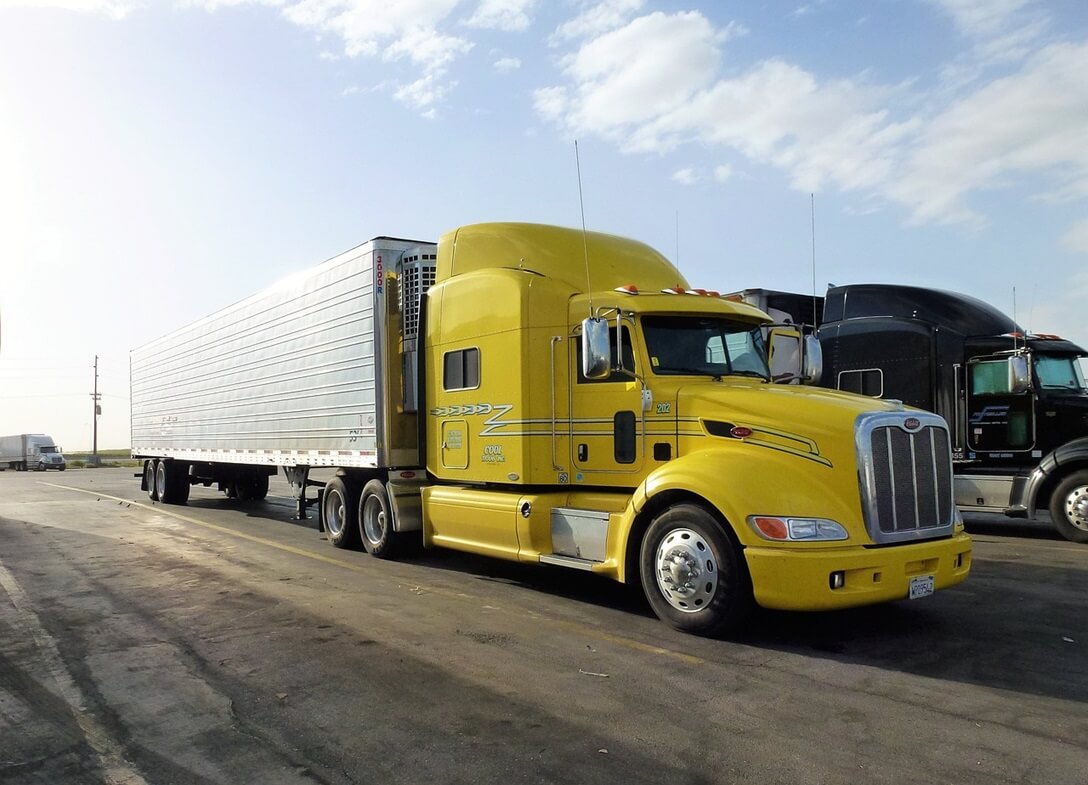
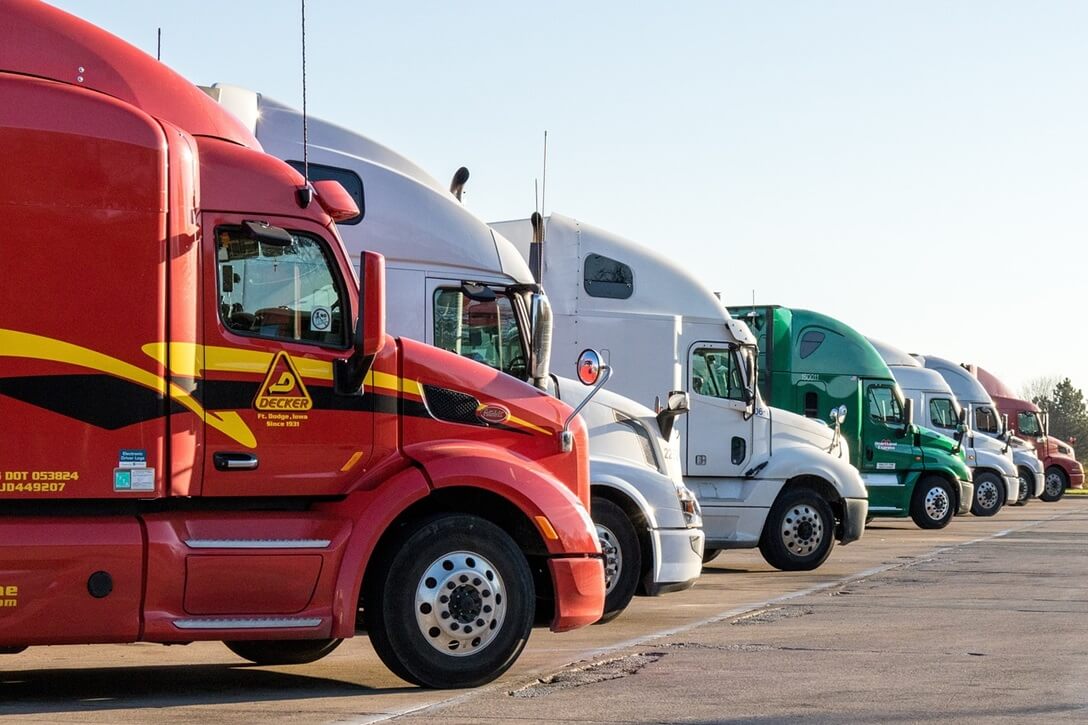
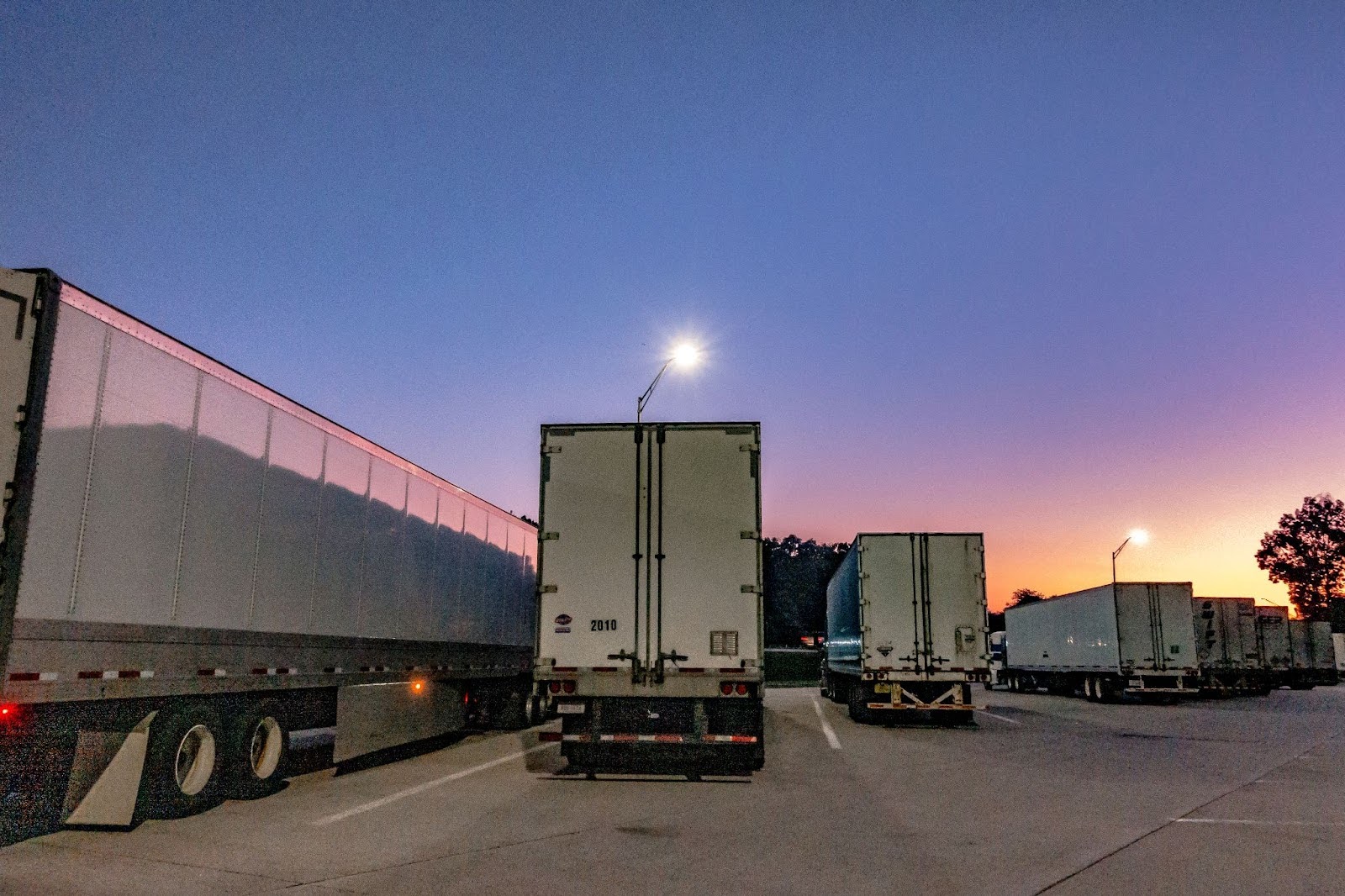
The trucking industry continues to struggle with ongoing disruptions that have wreaked havoc on logistics networks and left drivers facing a range of challenges. From port congestion and labor shortages to fluctuating fuel prices and unpredictable delivery schedules, truckers are bearing the brunt of a supply chain that is approaching breaking point.
Port congestion remains a significant bottleneck, with ships waiting weeks to unload cargo. This has led to delays in getting goods onto trucks, creating a ripple effect throughout the trucking industry. Labor shortages at ports and warehouses have exacerbated the problem, further slowing down the movement of goods.
“It’s a constant juggling act,” says veteran trucker and Truck Parking Club ‘Trucker Member’ Dave Butcher. “We’re always waiting on something, like a load to pick up, or a dock to open up, or even a part to get fixed. It’s hard to keep up with the changes and delays.”
Inevitable Ripple Effect
These delays have also caused problems with driver schedules. Truckers, who often operate on tight schedules combined with Hours of Service regulations, are finding it increasingly difficult to plan their routes and rest stops. This level of unpredictability has raised concerns about driver fatigue and safety, as truckers may be pressured to push their limits to make up for lost time.
Fuel prices, another major pain point for the industry, have been on a roller coaster ride due to geopolitical tensions and supply chain volatility. This adds another layer of financial stress for truckers, who are already facing rising costs across the board.
In addition to these operational challenges, truckers are also dealing with the psychological toll of the ongoing disruptions. The constant uncertainty and pressure to keep goods moving can take a toll on drivers’ mental health and well-being.
Industry Adapts to Meet Challenges
Amid these disruptions, the trucking industry is finding new ways to adapt. Many companies are investing in technology to better manage logistics and predict delays. Interestingly, there is also a growing movement to improve working conditions for drivers, recognizing the critical role they play in keeping goods moving.
By focusing on various practical and technological solutions, the industry is working to make life easier for the people who keep our supply chains running. Whether these efforts make a significant difference or not is difficult to measure, but it does demonstrate that efforts are a little one-sided at present.
Calm Among the Chaos
At the center of this problematic environment, truckers need a reliable and safe haven where they can rest, recharge, and regroup. Truck Parking Club provides just that through a network of secure, private parking facilities that offer a respite from the chaos of the supply chain.
The real-time browse and book system allows drivers to plan their stops in advance, providing a sense of stability and predictability in an otherwise unpredictable world. Anyone interested in signing up for Truck Parking Club can do so here.
The information published herein is for general informational purposes only. Truck Parking Club does not make any representations or warranties about the completeness, reliability, legality, and accuracy of this information. Any reliance placed on such material is strictly at the user’s own risk. Truck Parking Club shall not be responsible for any losses or damages incurred in connection with the information published herein.
Store your trailer in a safe place with a state-of-the-art platform that locates trailer parking near me.
Federal mandates meant to make trucking safer, so why have fatal truck accidents increased?
Semis, big-rigs, or tractor-trailers—whatever you call them—are ubiquitous on American roadways and are the most common means of transport for goods in the country.
But 18-wheelers can contribute to dangerous situations. Rushed drivers, cramped roadways, a lack of parking, and large blindspots lead to accidents and fatalities.
Federal Motor Carrier Safety Administration laws have been in place since the 1930s, and state truckers should not drive more than 11 hours in a 14-hour period. Legislators at the time reasoned that a well-rested driver was a safe driver. However, until 2018, drivers used paper logs they filled out by hand to track their hours. This practice allowed numerous drivers to fudge their records, Alex Scott, an assistant professor of supply chain management at the University of Tennessee, Knoxville, told FreightWaves.
Say a driver is only 30 minutes from home; they may decide to push on through the night despite being technically over the legal “hours of service.” In addition, some owner-operators face the decision of either obeying the law to the tee or delivering their goods late, which could create a cascading effect on the rest of the week’s delivery and jeopardize their client’s business, logistics industry reporter Rachel Premack explained in a FreightWaves interview.
In those cases, drivers simply jotted down hours permitted under the law to keep federal inspectors happy.
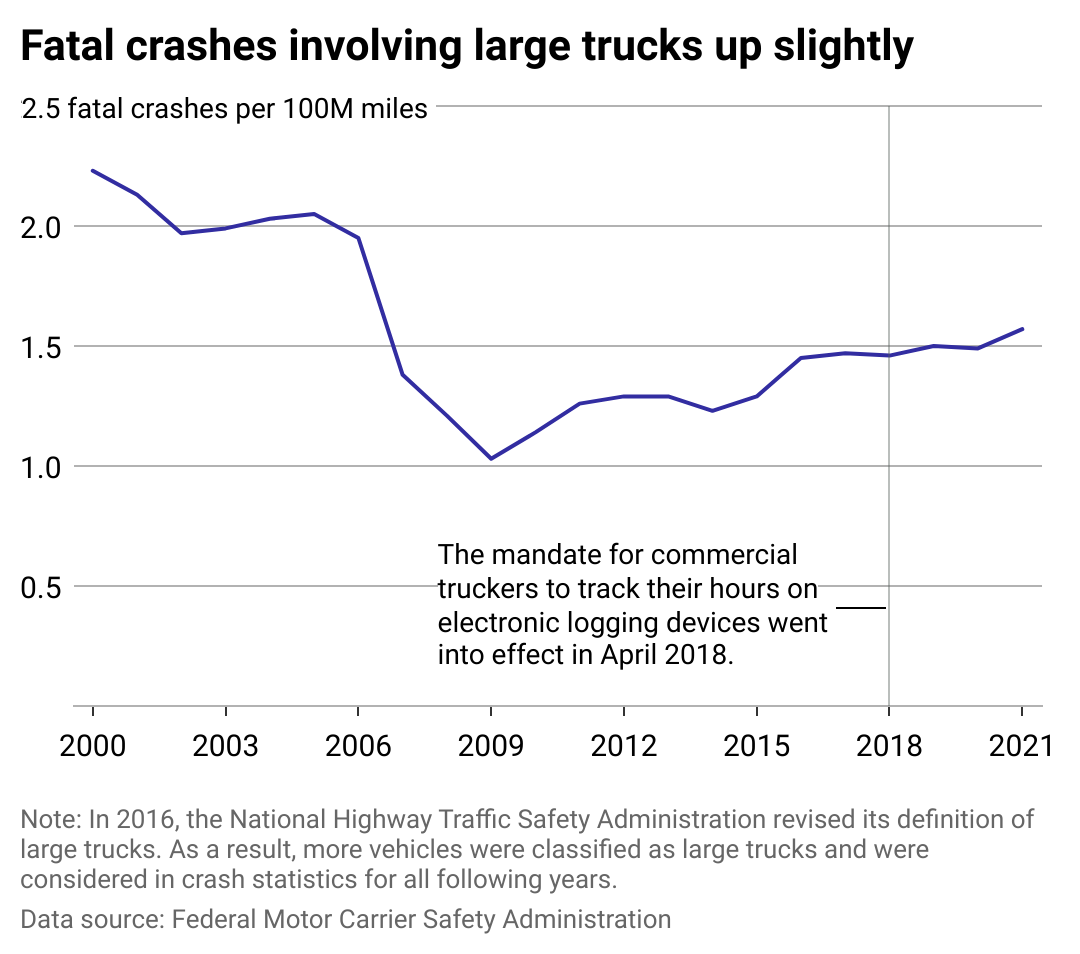
In 2018, federal mandates requiring commercial truckers to track their working hours on electronic logging devices in their cabs went into effect. The mandates aimed to reduce accidents and fatalities, and the auto-tracking ultimately meant drivers could no longer skirt the law.
However, enforcing ELDs may have backfired as fatalities have ticked up slightly since 2018.
To assess whether the ELD rule has had its intended impact, Truck Parking Club visualized data from the Federal Motor Carrier Safety Administration to see how rates of fatal truck accidents have changed since it went into effect. The analysis also examines other factors affecting truck safety and the inherent complications in measuring the success of individual policies.
FIND DAILY, WEEKLY, AND MONTHLY TRUCK PARKING
On the road and looking for a daily truck parking space? Operated by truckers, we source the best parking spots across the nation to ease your trip planning.
Truck-involved fatal crashes up slightly since ELD mandate
Following the enforcement of ELDs on April 1, 2018, federal data shows a decrease in hours of service citations but an increase in accidents for solo drivers or carriers with up to six trucks. For larger companies with more trucks, citations for exceeding the hour limit remained roughly the same, but accidents initially spiked before rising and falling over the following months.
There are a few explanations for this disparity. According to a 2019 report in the S&P Global Market Intelligence Research Paper Series, larger companies were more likely to have implemented ELDs ahead of the mandate—and they had a chance to adapt to the new monitoring technology, while owner-operators and smaller carriers had a steeper learning curve.
Smaller companies also had more skin in the game. With fewer drivers to substitute when they reach a time limit, drivers for smaller companies may take a larger hit for a missed delivery. The ELDs force them to obey hour-of-service limitations. Drivers may, in turn, drive more dangerously by speeding or rapidly changing lanes to dodge traffic.
Remember, drivers are compensated per mile, not hours in the cab; a fast truck is a profitable truck.
“Workers may compensate for this lost income by driving more intensively, namely, covering more miles per hour,” according to the authors of the paper. “Unfortunately, this may also incentivize an increase in unsafe driving behavior, which is more tightly correlated to accident rates than hours of service violations.”
The researchers cited an increase in unsafe driving violations by owner-operators, which increased between 23% and 33%, and speeding violations, which increased between 23% and 31%, following the mandate.
Other aggravating factors include truck drivers not being paid overtime and going unpaid any time the truck isn’t moving toward its end goal, including during fuel and meal breaks, driving miles out of the way to look for parking, which is in scarce supply, and during the lengthy “detention” time when they are waiting to unload their goods.
Additionally, the industry faces a labor shortage, with high attrition among its ranks. According to the Department of Transportation, truck driver turnover rates exceed 90% for large, long-haul carriers and 72% for smaller carriers. That means many in the workforce are new to driving a semi-truck, and a 2020 study by Virginia Tech Transportation Institute shows that inexperienced drivers are more likely to be involved in an accident.
All these factors may have contributed to slightly more fatalities despite regulators’ best intentions.
PREVIOUSLY INACCESSIBLE TRUCK PARKING
Take care of your truck and trailer parking needs with new locations added daily.
Story editing by Mary Reardon. Additional editing by Kelly Glass. Copy editing by Kristen Wegrzyn.
Written by: Cassidy Grom, Data Work By Paxtyn Merten
Some interesting trucking news out of Washington D.C this week as the Federal Motor Carrier Safety Administration (FMCSA) has unveiled proposed changes to the Hours-of-Service (HOS) regulations, potentially offering truck drivers greater flexibility in managing their time on the road. However, industry experts are closely examining how these revisions might affect the already critical issue of truck parking availability.
The proposed changes include:
Split Sleeper Berth: Allowing drivers to split their required 10-hour off-duty period into two segments (e.g., 7 hours and 3 hours), providing more rest options.
Modified 30-Minute Break: Drivers could satisfy the 30-minute break requirement by using on-duty, non-driving status instead of only off-duty time.
Adverse Driving Conditions Exception: Extending the maximum window for driving under adverse conditions by two hours, offering more leeway during inclement weather or traffic congestion.
It is speculated that further changes will also be announced after sufficient debate has taken place – although they are likely to relate to zonal truck parking rest periods on some level.
The FMCSA claims these changes will improve safety by reducing driver fatigue and providing more flexibility for rest breaks. However, some trucking organizations and safety advocates have expressed concerns that increased flexibility could lead to drivers pushing their limits and exacerbating the existing truck parking shortage.
“While we welcome any changes that can improve driver well-being, we must also be mindful of the potential consequences,” said a spokesperson for the Owner-Operator Independent Drivers Association (OOIDA). “If drivers are on the road for longer periods, the demand for safe and accessible parking will only increase.”
The current truck parking shortage is already a significant problem, with drivers often forced to park in unsafe locations or drive beyond their limits to find a spot. If the HOS changes are implemented, this situation could worsen unless more parking spaces become available.
The trucking industry is closely monitoring the proposed changes as the FMCSA gathers public comment. While the potential impact on driver safety and well-being remains a topic of debate, one thing is clear: the need for reliable, secure truck parking is more critical than ever.
A Solution for Changing Times
As the trucking industry considers the potential changes to HOS rules, Truck Parking Club remains committed to providing drivers with a safe haven for rest and recovery by providing private truck parking options.
Our network of secure, private parking facilities offers a reliable alternative to overcrowded rest stops and risky roadside parking. With amenities like restrooms, showers, and laundry facilities in many locations, we believe in driver comfort and well-being, regardless of how HOS regulations may evolve.
Become a Truck Parking Club member today and discover the peace of mind that comes with having a guaranteed parking spot whenever and wherever you need it.
The information published herein is for general informational purposes only. Truck Parking Club does not make any representations or warranties about the completeness, reliability, legality, and accuracy of this information. Any reliance placed on such material is strictly at the user’s own risk. Truck Parking Club shall not be responsible for any losses or damages incurred in connection with the information published herein.
Trucking can be a great way to see the country and make a living. But long hours behind the wheel can lead to a serious problem: fatigue. Drowsiness can sneak up on even the most experienced driver, making it harder to focus and react quickly. This is a major safety hazard, not just for you, but for everyone on the road.
So, how can you conquer fatigue and remain alert behind the wheel? Check out our comprehensive guide packed with practical tips to help you stay awake on the road.
10 Tricks to Stay Awake While Driving
Drowsy driving is dangerous, so the most important trick is to prioritize your safety. Here are some tips to consider:
Prioritize sleep
It all starts before you even get behind the wheel. The best way to stay awake while driving is to get a decent sleep. Aim for a consistent sleep schedule, ideally getting 7-8 hours of quality sleep each night. This means establishing a regular bedtime and wake-up routine, even on your off days. Avoid caffeine and heavy meals before bed, as they can disrupt sleep patterns. If possible, plan your route to allow for ample rest stops during your journey.
Plan your trip strategically
Planning goes a long way in combating fatigue. Avoid scheduling long stretches of driving during the night, especially if you’re a natural morning person. Research rest stops with amenities like showers and comfortable seating to ensure you can truly recharge during breaks. Use electronic logbooks (ELDs) effectively to plan routes that comply with hours-of-service regulations and allow for sufficient breaks.
Fuel your body wisely
What you eat as a truck driver has a direct impact on your alertness. Ditch the greasy fast food and sugary snacks. Instead, pack healthy meals and snacks rich in protein, complex carbohydrates, and healthy fats. These provide sustained energy and keep your blood sugar levels stable, preventing those dreaded afternoon crashes. Fruits, vegetables, nuts, and yogurt are all great choices. Stay hydrated throughout the day by opting for water over sugary drinks, which can lead to dehydration and fatigue.
Move your body
Sitting for extended periods can make drowsiness worse. Combat this by incorporating regular movement into your routine. Schedule breaks every 2-3 hours to get out of the cab and stretch your legs. Simple exercises like jumping jacks, lunges, or push-ups can get your blood pumping and improve alertness. Consider investing in resistance bands to add variety to your rest stop workouts.
Optimize your cabin environment
The temperature inside your truck plays a significant role in alertness. Avoid extremes – a sweltering cabin will make you drowsy, while a frigid one can be uncomfortable and distracting. Aim for a comfortable temperature, ideally around 70°F (21°C). Additionally, keep your cabin clean and well-ventilated. Stale air can contribute to drowsiness.
Stimulate your senses
Fight monotony by stimulating your senses. Play upbeat music or listen to audiobooks and podcasts. Keep a variety of choices on hand to avoid becoming bored with the same tunes. Open a window for fresh air, especially if you start to feel drowsy. Chewing sugar-free gum can also help keep you alert.
Embrace the power of light
Light can significantly influence alertness. During the day, open the curtains and maximize natural light exposure. At night, use bright white overhead lights while driving. Avoid using red or dim lights, as they can have a calming effect. If driving at night for long stretches, consider using a light therapy box during breaks to help regulate your circadian rhythm.
Plan for power naps
Sometimes, a short nap is the best way to combat fatigue. However, naps should be strategic. Avoid napping for too long, as you may enter deep sleep which can leave you feeling groggy upon waking. Aim for power naps of 20-30 minutes. Set a timer to ensure you don’t oversleep. Park in a safe and designated location for napping, and avoid napping while parked on the side of the road.
Know when to pull over
Despite your best efforts, fatigue may still overpower you. Don’t be a hero. If you find yourself struggling to stay awake, even after implementing these tips, pull over immediately and take a proper rest. Find a safe rest stop, park your truck, and take a longer nap (ideally 1-2 hours) or until you feel fully refreshed.
Utilize technology
Technology can be your ally in the fight against fatigue. Many newer trucks come equipped with driver-assistance features like lane departure warnings and drowsiness detection systems. These features can alert you if you start to drift out of your lane or exhibit signs of fatigue. Utilize smartphone apps designed to help truck drivers stay awake and alert. Some apps offer fatigue warnings based on driving patterns, while others provide engaging audio content to keep you focused.
The Bottom Line
So, how do truck drivers stay awake? The key to staying alert on the road is a multi-pronged approach. With these useful tips, you can significantly reduce fatigue and ensure a safe and productive journey for yourself and everyone on the road. Don’t be afraid to experiment and find a combination of strategies that work best for you.
Power naps turning into parking lot hunts? Truck Parking Club is your ultimate solution. We connect truckers with property owners offering vacant spaces perfect for a good night’s rest. Whether you need a quick recharge or a full eight hours, we boast a diverse network of options nationwide. Join us today and keep yourself energized, ready to conquer the open road once more.
The information published herein is for general informational purposes only. Truck Parking Club does not make any representations or warranties about the completeness, reliability, legality, and accuracy of this information. Any reliance placed on such material is strictly at the user’s own risk. Truck Parking Club shall not be responsible for any losses or damages incurred in connection with the information published herein.
For reefer drivers, the open road is a constant hum of activity. But sometimes, the hum coming from their own trailers can disrupt the peaceful lullaby of a truck stop parking lot. Unlike other trucks, refeers require constant power to maintain the optimal temperature for their precious cargo. This means the characteristic rumble of the refrigeration system can be a thorn in the side – or rather, an earache – for fellow truckers seeking a good night’s rest.
So, how can reefer drivers navigate the parking lot conundrum and be considerate neighbors? Here are some tips to ensure a peaceful rest for everyone.
Know Your Noise Level
First things first, understand the noise level of your specific reefer. Not all reefer trucks are created equal. Newer models may be quieter than older ones. Check your owner’s manual for decibel ratings, and if unsure, do a little research online to see what other drivers with the same model say about noise levels.
Plan Your Park
Armed with this knowledge, it’s time to find the perfect parking spot. Here’s where some strategic maneuvering comes in:
Lay-by areas: Look for designated lay-by areas specifically meant for trucks requiring continuous power. These are usually located away from the main parking lot, allowing your refeers to run freely without disturbing anyone’s sleep.
The periphery: If lay-by areas are unavailable, aim for the fringes of the parking lot. This puts distance between your humming fridge and fellow truckers seeking some shut-eye.
Consider wind direction: Wind can amplify noise. If possible, park with the prevailing wind blowing away from the main parking area to further minimize disturbance.
Communicate with Parking Staff
Be upfront with parking lot staff about your reefer. Let them know you require a spot with access to power and, if possible, explain your efforts to minimize noise. They may have additional guidance or direct you to designated areas for trucks like yours.
Courtesy Goes a Long Way
Even with careful planning, there may be times when a quiet spot isn’t available. In such situations, a little courtesy goes a long way:
Ask your neighbors: If parking near other trucks, politely inquire if the noise from your refeer will be an issue. Most truckers appreciate a heads-up and will understand your situation.
Offer incentives: Consider offering a small token of appreciation to a fellow trucker who is willing to tolerate your parked reefer. This could be sharing a meal, buying them a coffee, or simply offering your company over a friendly chat.
Invest in Noise Reduction
For long-term solutions, consider investing in noise reduction strategies for your reefer. Some options include:
Sound dampening materials: Explore aftermarket soundproofing materials that can be applied to the sides and top of your trailer to dampen the noise emitted by the refrigeration system.
Quieter fans: If your reefer uses particularly loud fans, consider replacing them with quieter models after consulting with a qualified mechanic.
Beyond Noise
Being a considerate reefer driver extends beyond noise:
Avoid idling: While some older reefers require continuous idling, newer models may have features that allow them to maintain temperature without the engine running. Check your owner’s manual and avoid unnecessary idling to reduce noise and exhaust fumes.
Maintain proper upkeep: Regularly maintaining your reefer is vital for its smooth operation and noise reduction. Get regular checkups to ensure all components are working efficiently and not creating additional noise.
The Bottom Line
Keeping your reefer humming without disrupting others is all about being a good neighbor on the road. By understanding your truck’s noise level, planning your parking wisely, and showing some simple courtesy, you can ensure a peaceful rest stop for everyone.
Struggling to find a suitable parking spot for your reefer? Truck Parking Club makes it easy! We connect truck drivers with property owners who have vacant spaces perfect for refeers.
Whether you need daily or monthly parking, Truck Parking Club boasts a wide range of options across the United States. Plus, our handy app allows for easy reservation, ensuring you secure a quiet spot with access to power – all with just a few clicks. Join us today for a stress-free and restful journey.
The information published herein is for general informational purposes only. Truck Parking Club does not make any representations or warranties about the completeness, reliability, legality, and accuracy of this information. Any reliance placed on such material is strictly at the user’s own risk. Truck Parking Club shall not be responsible for any losses or damages incurred in connection with the information published herein.
Securing a parking spot at a truck stop is challenging for any driver, but it can be particularly stressful for those operating reefers. Despite their crucial role in transporting perishable goods, these drivers encounter unique issues that can be overlooked.
In this blog post, we’ll share 6 practical tips every reefer driver should know to make their parking experience easier and more worry-free.
1. Reserve a Parking Spot in Advance
It’s no secret that there is a shortage of truck parking lots, so the first thing any driver should do is secure a place beforehand. How can you do that? By finding the best and nearest truck parking spot in Truck Parking Club. Our platform is free to use and has already helped multiple truck drivers find a cozy lot, day or night.
Once you’ve reserved your spot, what’s next? Older reefers used to operate loud and noisy, forcing truck drivers to the back of the lot. But that’s a thing of the past!
Modern reefers, on the other hand, are built to keep temperatures stable for extended periods, eliminating the need for you to park far away and disrupt others with noise.
Hence, if you have a spot and drive a modern reefer – chances are you have nothing to worry about.
2. Shut Off the Reefer When Idle and Empty
When parked at a truck parking lot along with other truck drivers, you may face the problem of having your reefer working. What you can do to avoid disturbing others is to switch off the engine when it’s empty.
In winter, managing your reefer can be simpler. If it comes with insulation, you can turn it off in cold weather when empty. High-quality insulation can maintain the desired temperature for hours, ensuring your reefer maintains the desired temperature when it arrives at the destination.
Always consult with your company for guidance on handling specific loads.
3. Avoid Parking in Direct Sunlight
Reefers are designed to handle various weather conditions, but it’s best not to push their limits. When parking, try to avoid spots in direct sunlight. If that’s not possible, remember that prolonged exposure to the sun can affect the insulation’s ability to keep temperatures cool. This can be especially critical when transporting perishable goods that require consistently low temperatures.
If you can’t find a shaded spot, consider using sunshades or reflective covers to reduce the amount of heat absorbed by the truck. Leaving the truck parked in sunny conditions for too long is not ideal; monitoring the temperature is crucial.
4. Follow Your Checklist
When parked or before hitting the road, it’s helpful to have a checklist that guides you through the things you need to check to make sure your reefer works properly. This routine helps you catch potential issues early, maintaining the efficiency of your unit and the safety of your cargo.
Your checklist doesn’t have to be extensive; it should include only the essential steps:
Ensure that the temperature remains stable and within the acceptable range throughout your trip.
Inspect the airflow settings to ensure they are optimal for maintaining the desired temperature.
Perform a visual inspection of the insulation for any visible signs of wear, tear, or damage.
Check for any unusual noises or vibrations coming from the unit that might indicate a mechanical issue.
5. Avoid Blocking Airflow
The last but not least tip is to ensure optimal ventilation for your unit in order to maintain the desired temperature inside it at all times.
If you keep your reefer operational throughout your stay, make sure that there is proper airflow. To do that, simply park in a place where other vehicles or objects won’t block the exhaust vents and ventilation grills.
6. Park on Level Ground
Parking on a level ground can be as important as parking in a shaded area. When transporting valuable cargo, you want to ensure it arrives intact. Parking on an uneven surface can cause your goods to shift, leading to potential damage.
Most parking lots at Truck Parking Club will have slots suitable for your reefer, but it won’t hurt to call to double-check the information with the lot owner.
Wrapping Up
Parking your reefer doesn’t have to be a hassle if you follow our 6 practical tips. In addition to good planning, it’s no less important to know how to park your unit to maintain cool temperatures inside and also avoid disturbing your fellow drivers.
Before you hit the road, become a member of Truck Parking Club for free and use our intuitive platform to find convenient parking spots at any time of day.
The information published herein is for general informational purposes only. Truck Parking Club does not make any representations or warranties about the completeness, reliability, legality, and accuracy of this information. Any reliance placed on such material is strictly at the user’s own risk. Truck Parking Club shall not be responsible for any losses or damages incurred in connection with the information published herein.
Delivering crucial cargo, working through holidays, and living life on the road is challenging. Truck Parking Club aims to simplify the day for hardworking drivers by providing accessible parking solutions anytime, anywhere.
With a limited number of free parking spaces for semi-trucks, many drivers resort to paid lots, which can add unexpected costs.
Therefore, we’ve examined 2024 truck parking prices to outline the expenses drivers can anticipate while on the job.
How Much Do Truck Stops Charge for Parking?
We’ve divided truck parking lots into three categories: free, affordable, and expensive. In addition to the cost, we will provide the reasons that may have influenced the price of a particular lot.
Free Truck Parking Lots
There are over 300,000 truck parking spaces in the US but only a fracture actually costs nothing to park at and get some rest. At Truck Parking Club, you can filter the map by choosing ‘Free Parking’ to find wheather some are on your way to the destination.
Typically, free parking lots lack amenities yet provide a place to rest. These are usually rest areas, truck stops, or retailer parking lots. Some free parking lots don’t provide enough lighting, are located in remote areas or have so few available spaces that a spot isn’t guaranteed.
Affordable Truck Parking Lots
The term ‘affordable’ is different for everyone, but we tried to collect examples that would suit truck drivers with different budgets. It’s important to note that prices may change and depend on the availability of parking spaces and location.
Most truck parking lots charge per hour, date, week, and month.
Per hour, you can expect to pay anywhere between $1 to $3. For example, truck parking lots in Forest City in Missouri, Nampa in Idaho, and Blytheville in Arkansas offer a spot for a dollar per hour. Moreover, some offer free parking spaces until they are all occupied or in exchange for purchases at the local store.
Among amenities, you can find the basic ones as rest rooms to more useful ones as restaurants and hotels.
Per day, you can expect to pay between $10 to $20. While the cheapest ones as in Sturtevant in Wisconsin offers nothing more than a 24/7 access for $10 a day, the ones in Ronks in Pennsylvania and El Reno in Oklahoma have decent amenities for $12 a day.
If you need to reserve a spot for a week or longer, you can expect the price to fluctuate between $75 to about $100 per week and anywhere from $180 to $350 per month.
Expensive Truck Parking Lots
What most higher-end truck parking lots have in common is security at gate – an amenity you can use to filter the lots if that’s an important factor for you. Other than that, you can also benefit from other amenities such as food or restaurants in the area, gates area, hotels, and assigned spaces that will not be occupied if you book them.
As for prices, you can expect to pay between $25 to $60 per day. An hourly rate may start at about $18, too.
Longer periods may cost about $125 to $310 per week, and between $350 to $1000 per month.
The truck parking lot in Pompano Beach in Florida offers only monthly parking opinion that is slightly higher than $1000. The parking offer free showers, good location, several restaurants, many other facilities, including a repair shop.
Other parking lots have similar offers but with more booking flexibility (per day, week, and month). They offer various amenities including:
Uber/Lyft/Taxi available
Hotels
Maintained pavement/asphalt/concrete
Lights
Restrooms
Repair shops/Slots where repairs are allowed
Which One Should You Choose?
Choosing the right truck parking lot depends on your specific needs and budget. Free parking lots are idea for those looking to save money but are also willing to sacrifice amenities. Affordable parking lots for truck drivers offer a balance between cost and amenities, whilst more expensive lots often preoritize security and additional amenities suchas guarded gates, assigned spaces, repair shops, and more.
Ultimately, your choice should align with your budget and the level of comfort and security you require.
For easy and flexible booking, become a Truck Member at Truck Parking Club to find the best available options that meet your needs. Our free platform makes all the difference when planning your routes.
The information published herein is for general informational purposes only. Truck Parking Club does not make any representations or warranties about the completeness, reliability, legality, and accuracy of this information. Any reliance placed on such material is strictly at the user’s own risk. Truck Parking Club shall not be responsible for any losses or damages incurred in connection with the information published herein.
Ever wonder what’s inside big rigs? These are the most common goods shipped by trucks
Drivers may take notice when behind a logging truck on the interstate, a semi towing a livestock trailer, or a loudly branded Amazon shipping container, but what about the many more semitrucks crisscrossing the U.S. without offering a clue to what lies within? These anonymous giants ply the nation’s highways from sunrise until long after sunset.
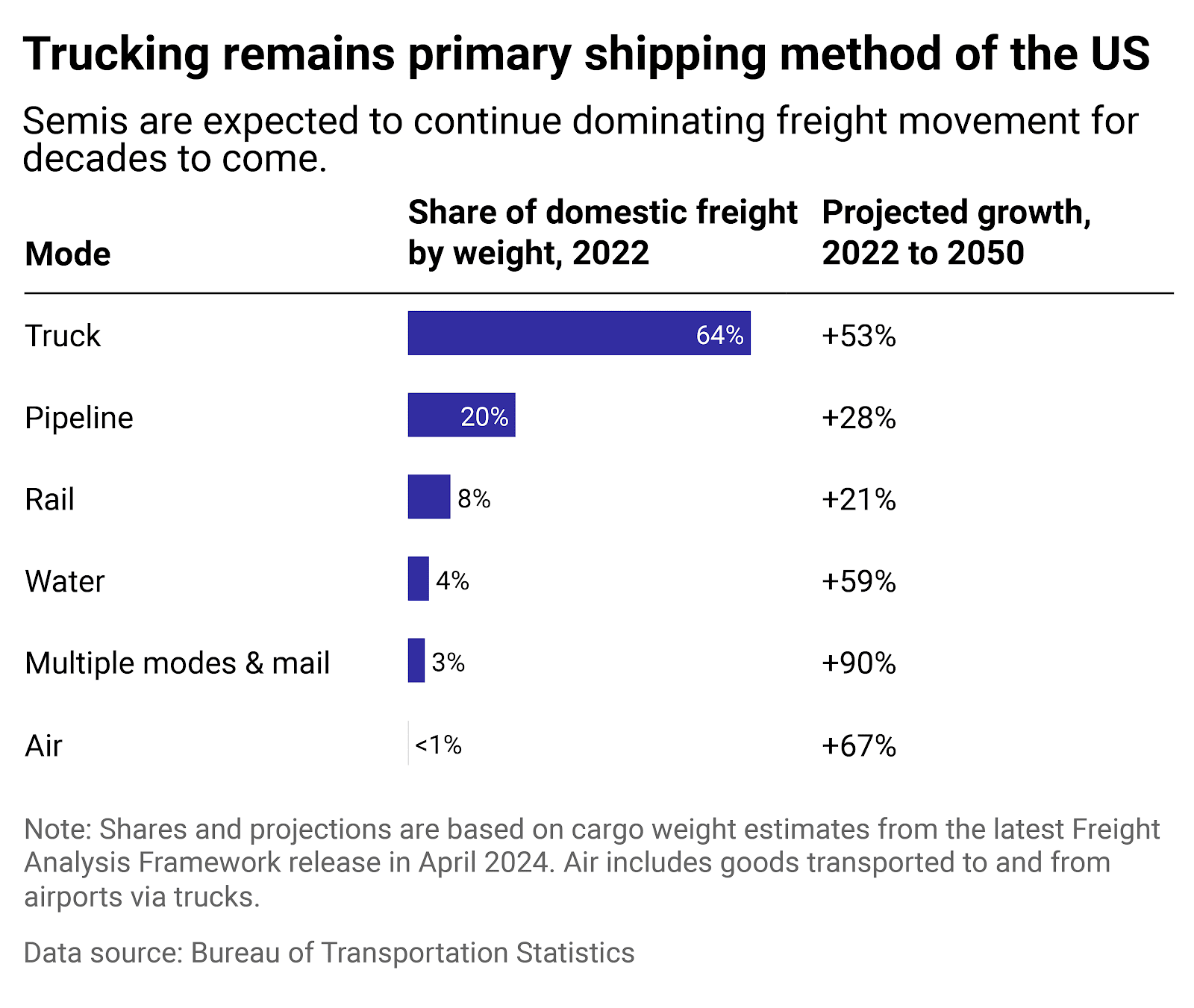
Nearly two-thirds of the nation’s 20 billion tons of domestic freight is transported by truck, making semis the most prevalent method of sending goods across the U.S. So what are they most often hauling?
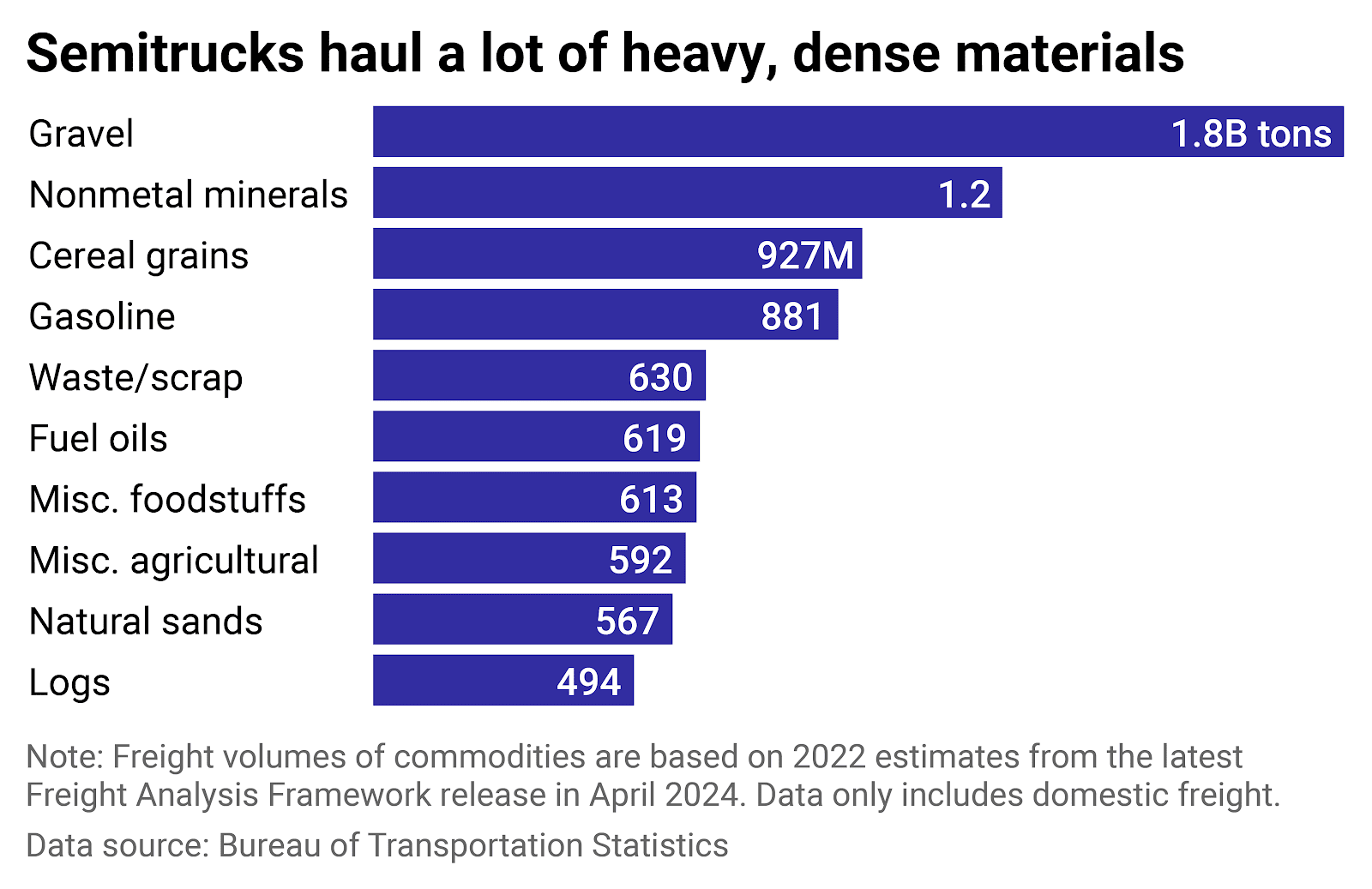
Truck Parking Club used data from the Bureau of Transportation Statisticsto identify the most common goods transported by semitrucks within the U.S. based on weight. This analysis also charts the expected growth of shipping freight, with semitrucks continuing to lead the way.
PREVIOUSLY INACCESSIBLE TRUCK PARKING
Take care of your truck and trailer parking needs with new locations added daily.
Earthy materials, foodstuffs fill most semitrucks
In some cases, the mystery of what’s inside may be more thrilling than what the trucks are actually hauling. By weight, the item most frequently transported by truck is gravel, followed by nonmetal minerals, which include materials like clay or cement. These products are, of course, very heavy and dense, contributing to their high rankings among transported materials by tons.
Even so, these substances, important components in the booming construction industry, are in high demand throughout the country. Nationally, construction spending has already reached $2.1 trillion as of May 2024, the highest level in the past 30 years, according to Census Bureau data. Gravel, minerals, sands, and logs are shipped around the country to be used in foundations, buildings, roads, and more, helping them achieve their top-10 slots.
Other common goods are part of the food supply chain. Among them are cereal grains, including wheat, corn, rice, and oats—staples in most diets. Another is miscellaneous foodstuffs, a wide range of foods like dairy products, frozen or processed foods, spices, cooking oils, and more. These foods are largely shelf-stable or long-lasting and can be shipped and stored in greater quantities.
Gasoline, the substance that keeps Americans moving, is another top commodity shipped across the country. And, as people create record levels of garbage, waste has become another major category as semitrucks transport trash to landfills and recycling centers.
PARK YOUR TRAILER WITH NO HASSLE
Store your trailer in a safe place with a state-of-the-art platform that locates trailer parking near me.
Nearly two-thirds of US freight shipped via trucks
The vast majority of U.S. domestic freight is transported via truck, and that lead is only expected to grow. The bureau projects that large trucks will haul over 19 billion tons of goods annually by 2050—nearly as much as all shipping modes haul today.
Pipelines are the next-highest route for U.S. domestic goods—largely flowing with crude petroleum and natural gas. Rail, water, air, and multiple-mode and mail shipping each moved less than 10% of freight by weight in 2022. Trucks carry all kinds of goods, while rail and water modes most often carry bulk products, and air shipping is reserved for smaller quantities of high-value items, such as electronics and medicines.
Semitrucks have the most available infrastructure of all shipping methods in the U.S., and near-total road access means they can deliver items almost anywhere in the country. Meanwhile, planes, trains, and barges are limited by ports and tracks, which aren’t as ubiquitous in the nation’s infrastructure.
Still, each of these shipping modes will likely grow in the decades to come as Americans, corporations, and governments continue building out infrastructure and consuming goods. BTS projects that multiple-mode and mail deliveries will grow fastest, nearly doubling in the decades to come. This category includes goods shipped through mail and parcel delivery, the paths of which are often a mystery to senders, as well as freight that moved through multiple vehicle types, such as by truck and rail.
The U.S. is in the midst of a major infrastructure revamp, thanks partly to the Bipartisan Infrastructure Law, which President Joe Biden signed in November 2021. The law is investing hundreds of millions of dollars into repairing, expanding, and modernizing roads, bridges, ports, pipes, and more. Analysts predict this will improve the efficiency, reliability, and cost-effectiveness of transporting people and goods, boosting the economy.
Story editing by Carren Jao. Additional editing by Kelly Glass. Copy editing by Kristen Wegrzyn.
If you’ve been in the trucking game for a while, you know that truck parking lots are more than just a place to rest your weary head. They have their own unique ecosystem and a set of rules that keep everything running smoothly. Sure, there are the official regulations that you’ll find posted on signs and bulletins, but those are just the tip of the iceberg.
To thrive in the asphalt jungle (or a truck stop, as it’s sometimes called!), you must understand the unwritten rules—the secret handbook that every seasoned trucker carries in their heart. These guidelines might not be spelled out in black and white, but they’re just as important as any official policy.
Now, I know what you might be thinking. “Hey, most of these unwritten rules are just common sense!” And you’re absolutely right. Things like respecting your neighbor’s space, keeping the noise down, and cleaning up after yourself should be second nature to anyone with a shred of decency.
But let’s be real – we’ve all come across that one driver who seems to have missed the memo.
You know the type: the one who parks so close to your rig that you can barely squeeze out of your cab, or the one who thinks 3 AM is the perfect time to rev their engine like they’re at the Daytona 500. It’s drivers like these who make us appreciate the unwritten rules even more. They remind us why we need to look out for each other and hold ourselves to a higher standard.
If you’re looking in the mirror now and realizing that you might have been “that driver” at some point, don’t worry – it’s never too late to change your ways. Take up the unspoken code of the truck stop, and you’ll find that life on the lot becomes a whole lot easier.
The Unwritten Rules (now written)
Respect Thy Neighbor
Thou Shalt Not Block
Don’t be a parking lot hog. Leave room for your fellow truckers to maneuver and exit their rigs without playing a game of “Truck Tetris.” If you’re just taking a quick break, don’t park in spots designated for overnight stays. Save those prime locations for the drivers who really need them.
Silence is Golden
Keep the noise down during rest hours. Your fellow truckers are trying to catch some much-needed z’s, so resist the urge to rev your engine or blast your tunes in the middle of the night. Be mindful of your volume when chatting with other drivers. Not everyone wants to hear your life story at full volume, especially when they’re trying to unwind after a long day on the road.
Blinded by the Light
Be considerate with your parking directions. Aim your headlights away from other trucks to avoid giving your neighbor an unwanted wake-up call. Use curtains or shades to block out any excessive light from your cab. No one wants to feel like they’re sleeping in the middle of a football stadium.
Cleanliness Is Next to Godliness
Trash Talk
Use the designated receptacles for your trash. Don’t leave your garbage lying around for someone else to clean up. Keep the lot clean for your fellow truckers. A tidy truck stop is a happy truck stop.
The Scoop on Poop
If you’re traveling with a dog, be a responsible owner. When your furry friend needs to do their business, make sure to clean up after them properly. No one wants to step in a surprise left behind by your furry co-pilot.
Leak Patrol
If you notice any fluid leaks from your rig, address them promptly. Not only can they create slippery, hazardous conditions for others, but they can also harm the environment and damage the lot surface. Keep an eye out for any drips or puddles, and take care of them before they become a bigger problem.
Dance Like No One’s Watching, But Park Like Everyone’s Looking
The Art of Truck Stop Tetris
When parking your rig, leave enough space for your neighbors to maneuver and exit their trucks comfortably. No one wants to play a real-life game of Tetris when it’s time to hit the road. Respect the invisible bubble of personal space around each truck, and everyone will be able to coexist peacefully.
Chatter Matters
Striking up a conversation with your fellow truckers can be a great way to pass the time and build camaraderie. However, watch for the other person’s body language and cues. If they seem more interested in their phone or are giving you short, clipped responses, it might be time to wrap things up. Not everyone is in the mood for small talk, especially if they’re exhausted from a long day of driving.
Look, But Don’t Touch
Admiring another trucker’s rig is one thing, but touching or tampering with their equipment is strictly off-limits. You wouldn’t want someone messing with your truck, so extend that same courtesy to others. Keep your hands to yourself, and if you need to get someone’s attention, use your words, not your hands.
Keeping Your Haul Under Wraps
When it comes to discussing your freight, the watchword is discretion. You never know who might be listening in or fishing for information. Loose lips sink ships; in this case, they could also put your cargo at risk. If someone starts asking too many questions about what you’re hauling, politely steer the conversation in another direction.
The Ebb and Flow of Parking
The Long Goodbye
As much as you might enjoy the amenities and camaraderie of a particular truck stop, it’s important to remember that parking spaces are a hot commodity. Don’t linger too long in a spot that could be used by another driver who needs to rest. Be mindful of the time you spend parked, and when it’s time to hit the road again, make like a tree and leave.
The Space Race
In the high-stakes game of truck stop parking, every inch counts. When maneuvering your rig into a spot, aim to maximize the available space without encroaching on your neighbors’ turf. Park straight and center, and avoid taking up more room than necessary. The more efficiently you park, the more spaces will be available for your fellow truckers.
Staking Your Claim: The Art of Reserving a Spot
In some cases, you may have the option to reserve a parking spot ahead of time. If you know you’ll be needing a place to rest during a busy period or at a popular location, consider making a reservation. This can save you time and frustration later on and ensure that you have a guaranteed spot waiting for you when you arrive.
You can find and reserve truck parking all across the country with Truck Parking Club. Become a Trucker Member today and reap the benefits of having a reserved spot in a quality truck parking lot.
We’re all in this together. Don’t hesitate to offer assistance when you see a fellow driver needing it. Whether it’s helping to change a tire or sharing a meal, a little kindness goes a long way. We all face challenges on the road, and by supporting each other, we can make the journey a little easier for everyone.
The Watchful Eye
As members of the trucking community, we are all responsible for looking out for one another and keeping our shared spaces secure. If you witness any suspicious or illegal activity at a truck stop, don’t turn a blind eye. Report it to the proper authorities, whether that’s the truck stop management, local law enforcement, or your company’s safety department.
Wrapping Up
That’s just about it from me. Just remember that when you pull into a truck stop, you’re not just another anonymous face in the crowd. You’re a member of a brotherhood (and sisterhood!) of the road.
So, the next time you find yourself at a truck stop, take a moment to appreciate the unspoken code that binds us all together. Give a friendly wave to your neighbor, offer a helping hand when needed, and always remember to leave the lot better than you found it.
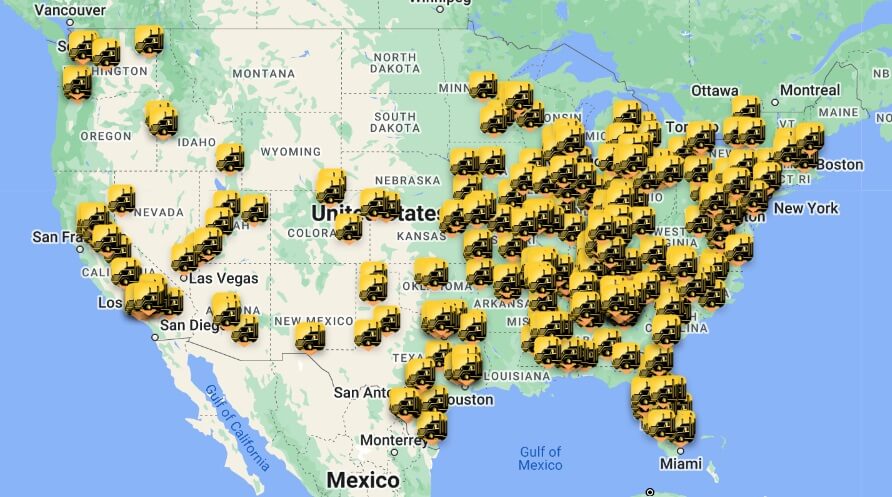
Don’t forget that Truck Parking Club has your back when it comes to finding secure parking. We’ve got a network of quality lots spanning from coast to coast, including popular spots from Alabama to Wisconsin.
The information published herein is for general informational purposes only. Truck Parking Club does not make any representations or warranties about the completeness, reliability, legality, and accuracy of this information. Any reliance placed on such material is strictly at the user’s own risk. Truck Parking Club shall not be responsible for any losses or damages incurred in connection with the information published herein.
Battling the clock to stay on schedule, having spent an entire morning crawling through roadworks at the speed of a tectonic plate while repeatedly hitting silent on the relentless dispatch calls, you pull into the rest area in grave need of a well-earned rest.
This is no ordinary rest, though, as you badly need the bathroom and haven’t eaten since 5 am. To make an already urgent matter even more pressing, your DOT-enforced Hours of Service break is fast approaching and you could do without another violation, so there is that, too.
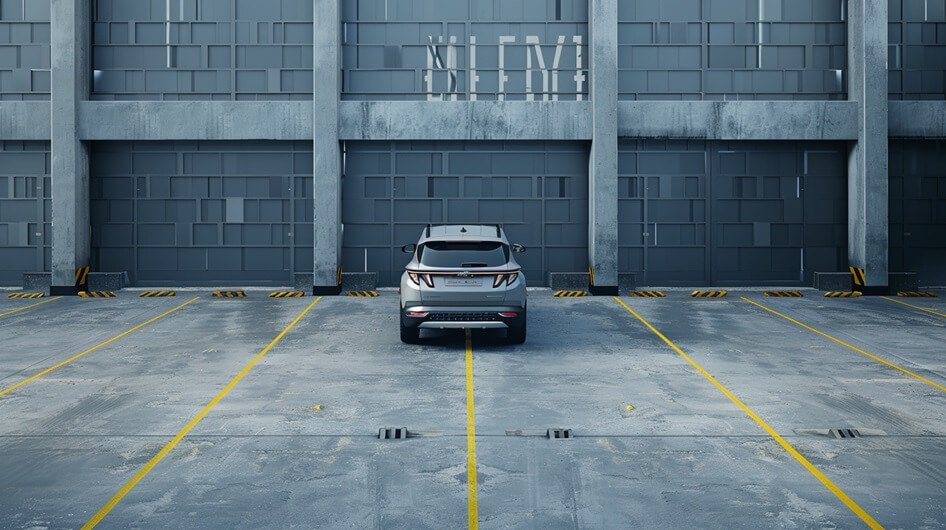
You really need this rest break, and both you and your bladder can’t wait to take it. But then disaster, as an increasingly common sight greets you on entering the parking area: a Hyundai Tucson with a ‘Happiness is Homemade’ bumper sticker parked unashamedly in the middle of the only remaining truck parking space.
Cursing both your luck and the faceless driver in equal measure, you are forced to endlessly circle the lot, praying to the parking gods for a space to become available, pronto.
Common Issue
If you are a reasonably experienced truck driver with a decade or so of service in your rearview, this has almost certainly happened to you. If you are a relatively new truck driver, be prepared for it to happen at some point. Either way, parking a regular vehicle in a space allocated for semi-truck parking is an infuriating, rude, arrogant, and selfish practice.
But is it really?
The truth is, parking a regular vehicle in a truck parking space is something of a gray area. Many truck drivers and car owners are unaware of the rules in this regard because some parking lots and rest areas allow it, and others don’t.
So, what are the actual rules, and can cars park at truck stops or not? Regardless of any rules that may or may not exist, should car drivers be more empathetic of truck drivers and respect their boundaries? Through this article, we shall attempt to unearth the facts, mixed with a few gentle opinions. Let’s get to it.
Can Cars Park at Truck Stops, Rest Areas, and Parking Lots?
Given the three main types of parking locations available to truckers, we shall approach each one with the same question, starting with rest areas.
Please be aware of one thing, however: this is by no means a complicated subject, but it is a nuanced one. With that in mind, we shall tackle the issue with a broad, general view.
Are Cars Allowed to Park at Truck Rest Areas?
The rules around whether cars can park at truck rest areas vary by location.
Generally speaking, truck rest areas are specifically designed to accommodate the needs of truck drivers who require ample space to park their large vehicles and take mandatory breaks. These areas are usually located along highways and interstates and are intended to provide truckers with a safe and convenient place to rest.
In some rest areas, you might find designated spaces for smaller vehicles, but these are often quite limited. While it might not be explicitly forbidden for cars to park in truck spaces at these rest areas, it is usually frowned upon (at best) or causes mild aggression (at worst). Essentially, truck drivers depend on these spaces to adhere to their strict driving schedules and regulations. Having them occupied by smaller vehicles can cause a great deal of inconvenience.
Given the national truck parking shortage, spaces are incredibly limited at the moment, so you would probably forgive the average truck driver for becoming a little irate should they find a rare empty spot taken up by a small vehicle in a large bay. To that end, it’s always a good idea for car drivers to look for clearly marked car parking spaces or use alternative rest areas designed for all types of vehicles.
Are Cars Allowed to Park in Truck Stops?
When it comes to truck stops, the situation can be a little different. Truck stops are commercial facilities that offer a variety of services for truck drivers, including fuel, food, showers, and parking, with the main purpose of catering to the needs of truckers. The parking spaces within them are designed to accommodate large trucks and not the metaphorical Hyundai Tucson we mentioned at the top of this article.
However, this is where it gets a little tricky. As a general rule, truck stops are often more lenient about allowing cars to park, especially if the car driver is a customer using the services offered. From their point of view, any business is good business, and if that means sacrificing a truck parking space so a family of five can spend eighty bucks on fried chicken and air freshener, so be it.
While there might not be a hard and fast rule against cars parking at truck stops, it is generally understood that truck parking spaces should be left available for trucks. So, while it might be possible to park a car at a truck stop, you might argue it is courteous and practical to avoid occupying a space meant for a truck.
Are Cars Allowed to Park in Private Truck Parking Lots?
Private truck parking lots, just like those managed by Truck Parking Club, are specifically designed for truck drivers to reserve and secure parking spaces. These lots provide a desperately needed service to truckers who need reliable, convenient parking options, often in areas where public truck parking is extremely scarce. The rules are typically far stricter in private truck parking lots, and cars are generally not allowed to park in spaces designated for trucks in the overwhelming majority of properties.
Private truck parking lots operate on a reservation system, meaning that truck drivers have a guaranteed spot to park their vehicles in advance. Allowing cars to occupy these reserved spaces would undermine the entire purpose of the lot and could lead to logistical issues for truck drivers who rely on these spaces.
Ultimatley, if you’re driving a car, it’s best to seek alternative parking arrangements and leave these specialized lots for their intended users. Truck drivers are under enough pressure at the moment without having to surrender spaces to car owners, most of whom have an abundance of parking options. Fair is fair, as they say.
Can Cars Park Overnight at Truck Stops?
So, what about sneaking into a truck parking area under cover of darkness? Will your typical car driver fare any better at night? To be honest, the answer is almost certainly no: the same principles apply to overnight parking.
As a general rule, truck stops, rest areas, and private parking lots are equally as busy (if not more busy) during overnight hours. Can cars park overnight at truck stops if they are empty? Maybe. Possibly. It depends on the location. Good luck finding an empty truck parking lot, though, regardless of the hour.
The same caveat applies, however, to some truck stops that may allow car parking if car owners commonly use the facilities to purchase food and drinks. It just depends on the truck stop’s policy.
Bottom Line
While the rules differ from location to location, parking a personal vehicle in a truck parking space is generally not advisable and often inconsiderate. While some rest areas and truck stops may allow it, the main purpose of these spaces is to accommodate large trucks and their drivers.
Private truck parking lots are strictly for truck use, ensuring that truck drivers have reliable, convenient, guaranteed parking options. If you are a truck driver and that sounds appealing to you, you might want to sign up for Truck Parking Club. We can solve your parking woes by offering thousands of private parking spaces all over America.
Simply browse for truck parking spots in your area of choice to secure your spot today. We didn’t just make Truck Parking convenient and affordable, we made it effortless, too.
The information published herein is for general informational purposes only. Truck Parking Club does not make any representations or warranties about the completeness, reliability, legality, and accuracy of this information. Any reliance placed on such material is strictly at the user’s own risk. Truck Parking Club shall not be responsible for any losses or damages incurred in connection with the information published herein.