
Author: Evan Shelley

  • Trucking Business Ideas: Leverage Trucking Industry Opportunities

    Trucking Business Ideas: Leverage Trucking Industry Opportunities

    parked trucks

    The trucking industry is the lifeblood of the global economy, responsible for transporting a staggering amount of goods across vast distances. With the ever-growing demand for e-commerce and the constant movement of raw materials and finished products, the trucking industry shows no signs of slowing down. 

    This presents a wealth of opportunities for entrepreneurs looking to capitalize on this dynamic market.

    If you’re considering entering the trucking industry but don’t necessarily want to become a driver yourself, there are numerous business ventures you can explore. Let’s talk about some of the most promising trucking business ideas that allow you to tap into the industry’s potential and build a successful company.

    1. Open a Truck Parking Business

    Truck stops are vital hubs for truckers, providing essential services like fueling stations, restaurants, convenience stores, and rest areas. With the ongoing shortage of safe and well-equipped parking facilities, opening a truck stop can be a beneficial business venture.

    Here’s what you can offer:

    • Fueling stations: Partner with major fuel companies or offer competitive fuel prices to attract truckers.
    • Restaurants and convenience stores: Cater to the needs of truck drivers with a variety of quick and convenient dining options, including healthy choices and grab-and-go meals. Stock your convenience store with essential supplies and travel necessities.
    • Rest areas: Provide secure truck parking spaces with amenities like showers, laundry facilities, and secure parking. Offer designated pet areas and well-maintained rest areas for drivers to unwind.
    • Truck repair services: Partner with a mechanic or offer on-site truck repair services to cater to breakdowns and maintenance needs.

    Maximize Your Business with Truck Parking Club

    Truck Parking Club can be a valuable asset in developing your truck stop business. Here’s how:

    • Attract more truckers: Listing your truck stop on the Truck Parking Club app and website exposes your business to a vast network of truck drivers actively searching for safe and secure parking.
    • Highlight amenities: Promote the amenities you offer, such as showers, laundry facilities, and secure parking, to attract drivers seeking a comfortable rest stop.
    • Membership benefits: Consider offering special discounts or rewards to Truck Parking Club members, further incentivizing them to choose your stop.

    By partnering with Truck Parking Club, you gain access to a targeted audience and can leverage our platform to showcase your truck stop’s offerings, ultimately leading to a thriving business and a more comfortable experience for truckers. 

    Learn more about how it works to be a property member and discover the benefits for yourself!

    2. Launch a Truck Brokerage Service

    Truck brokers act as intermediaries between shippers and carriers. They connect businesses that need goods transported with trucking companies or owner-operators who have the capacity to deliver.

    Here’s how you can excel in this space:

    • Develop strong relationships: Build strong relationships with both shippers and carriers. Secure reliable carriers with diverse capabilities and negotiate competitive rates with shippers.
    • Industry expertise: Gain a deep understanding of the trucking industry, including regulations, freight types, and market trends. This knowledge allows you to efficiently match loads with suitable carriers.
    • Technology integration: Utilize logistics management software to streamline operations, automate tasks like dispatching and route planning, and track shipments in real-time.

    By establishing yourself as a reliable and efficient broker, you can connect shippers with the right carriers and create a win-win situation for everyone involved.

    3. Offer Specialized Trucking Services

    There is a growing demand for specialized trucking services that cater to specific needs. This could include:

    • Refrigerated transportation: Focus on transporting temperature-sensitive goods, requiring specialized refrigerated trailers and drivers trained in handling perishable items.
    • Oversized or hazardous cargo: Transporting oversized or hazardous materials requires specific permits, specialized equipment, and drivers with the necessary certifications.
    • Expedited delivery: This niche caters to urgent deliveries needing faster turnaround times. Invest in a reliable fleet with dedicated routes and ensure efficient logistical planning.

    4. Provide Maintenance and Repair Services

    Trucks require regular maintenance and occasional repairs to keep them running smoothly. You can establish a repair shop catering specifically to the needs of the trucking industry.

    Focus on these services:

    • Preventative maintenance: Offer scheduled maintenance packages that include oil changes, tire rotations, and inspections to prevent breakdowns.
    • Emergency repairs: Be equipped to handle a wide range of repairs, including engine issues, brake problems, and trailer malfunctions.
    • Mobile repair services: Consider investing in mobile repair trucks to reach stranded drivers in need of immediate assistance.

    5. Become a Trucking Consultant

    If you have extensive experience in the trucking industry, you can offer consulting services to help businesses optimize their transportation operations.

    Your expertise can provide solutions in areas like:

    • Fleet management: Advise companies on efficient fleet management practices, including route optimization, fuel efficiency strategies, and driver safety training.
    • Logistics and compliance: Help businesses navigate the complexities of logistics planning, ensuring compliance with industry regulations and safety protocols.
    • Cost reduction strategies: Assist companies in identifying and implementing cost-saving measures in their transportation operations, including negotiating better rates with carriers and optimizing fuel consumption.

    By leveraging your knowledge, you can become a valuable resource for businesses seeking to improve their transportation efficiency and profitability.

    6. Develop Trucking Apps and Software Solutions

    Technology plays a crucial role in the modern trucking industry. You can develop innovative apps and software solutions that address specific needs within the sector.

    Here are some potential areas to focus on:

    • Dispatch and route optimization: Develop software that helps dispatchers efficiently assign loads to drivers while optimizing routes for shorter travel times and reduced fuel consumption.
    • Driver safety and performance monitoring: Create apps that track driver behavior, monitor fatigue levels, and promote safe driving practices.
    • Load board applications: Develop platforms that connect shippers with carriers in real-time, facilitating efficient load matching and streamlining the transportation process.

    By understanding the challenges faced by truck drivers and trucking companies, you can create innovative software solutions that enhance efficiency, safety, and productivity within the industry.

    7. Offer Educational and Training Services

    The trucking industry requires a skilled workforce. You can establish a training school or online platform that offers educational programs for aspiring truck drivers and training courses for existing drivers to enhance their skills.

    Potential training areas include:

    • CDL acquisition: Prepare individuals to obtain their Commercial Driver’s License (CDL) through comprehensive training programs.
    • Specialized skills training: Offer courses on specific skills like handling hazardous materials, operating specialized equipment, or defensive driving techniques.
    • Compliance and safety training: Educate drivers on industry regulations, safety procedures, and best practices to minimize accidents and ensure safe operations.

    By providing high-quality training and education programs, you can contribute to a more skilled and professional workforce within the trucking industry.

    The Bottom Line

    The trucking industry provides a wealth of opportunities for entrepreneurs looking to build a successful business. By considering these ideas and leveraging the potential within the market, you can find a niche that aligns with your skills and interests, allowing you to contribute to the smooth operation of this vital sector. 

    Are you interested in opening your own truck parking spot? At the Truck Parking Club, we can help you develop your business. Become a property host and start earning income quickly!

    The information published herein is for general informational purposes only. Truck Parking Club does not make any representations or warranties about the completeness, reliability, legality, and accuracy of this information. Any reliance placed on such material is strictly at the user’s own risk. Truck Parking Club shall not be responsible for any losses or damages incurred in connection with the information published herein.
  • Choosing Between Recaps and 34-Hour Resets: Deciding Your Rest Strategy

    Choosing Between Recaps and 34-Hour Resets: Deciding Your Rest Strategy

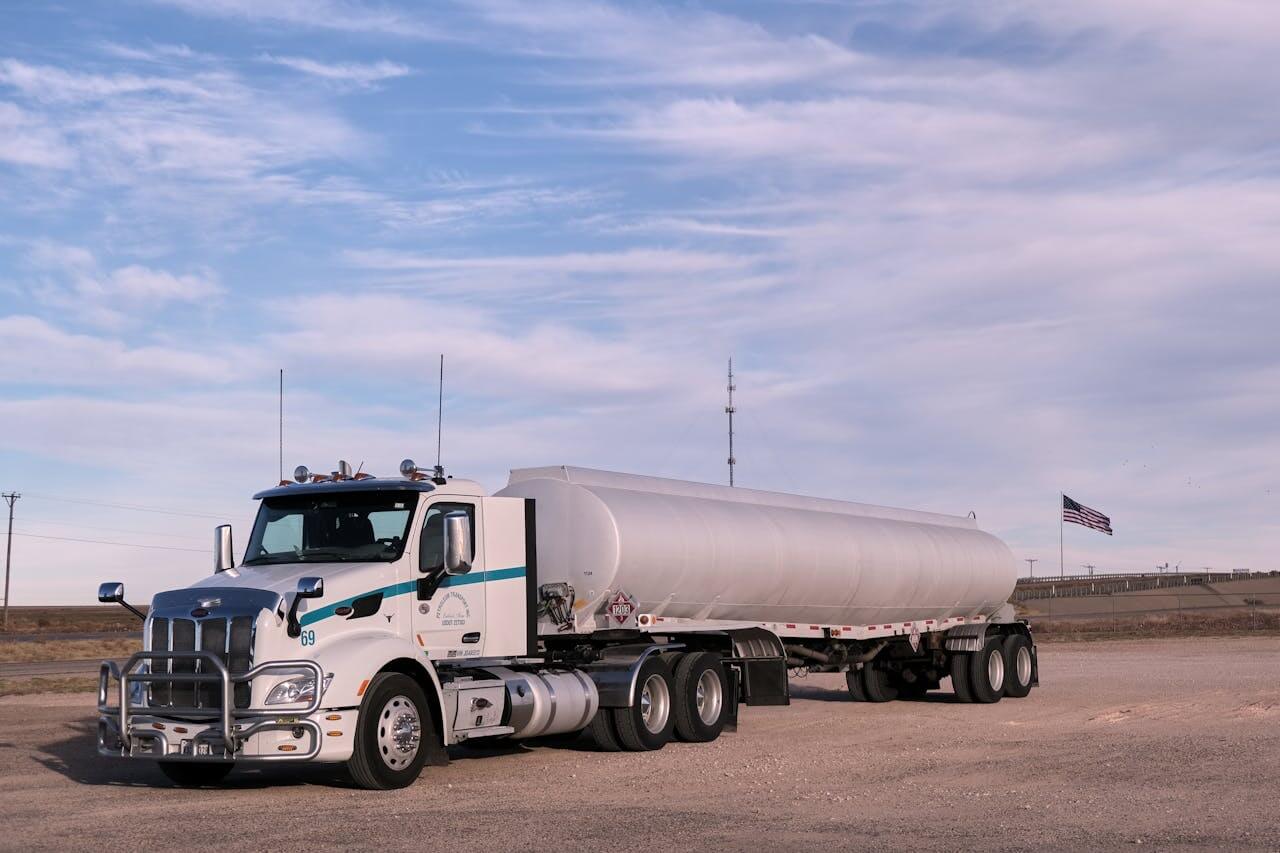
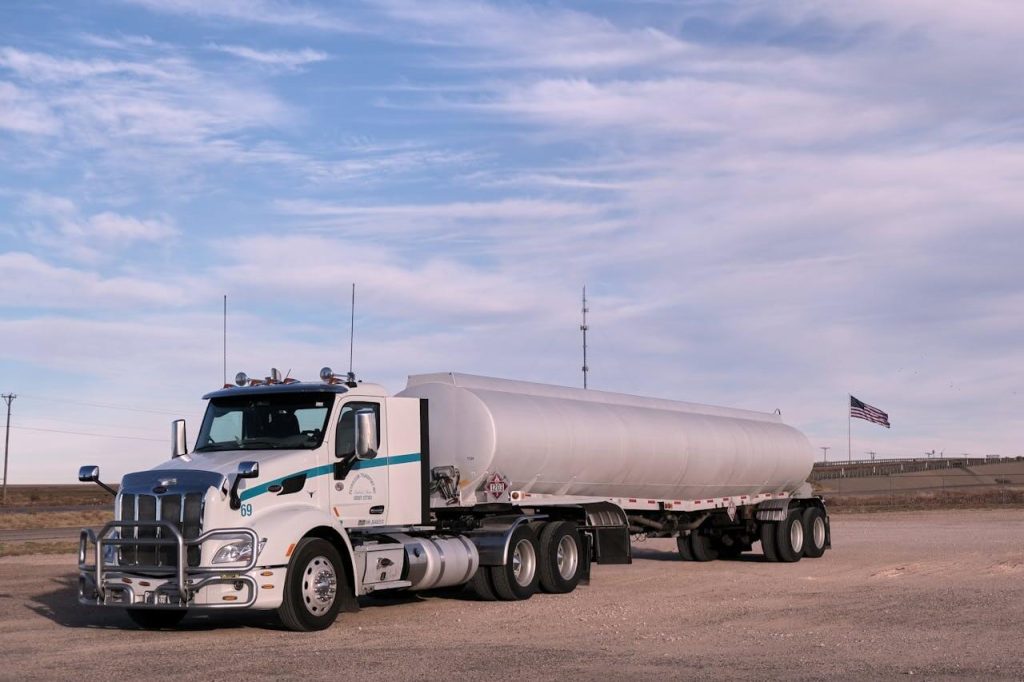
    white truck on a parking

    If you’ve been driving a truck for any length of time, you’re probably familiar with the concepts of recaps and 34-hour resets. However, we’re often still overrun with questions like, “how long do truck drivers have to rest,” and “how long can truck drivers drive without rest?”

    In this article, we’ll take a closer look at how much rest is required and the benefits of 32-hour resets vs. recaps.

    How Long Do Truck Drivers Have to Rest?

    By law, according to Hours of Service (HoS) regulations set by the Federal Motor Carrier Safety Administration (FMCSA), a truck driver may do the following:

    • Truckers can drive for up to 11 hours in a single day. However, their total shift must include an additional 3 hours for non-driving activities.
    • Truckers can work up to 70 hours in any given week, not just from Sunday to Saturday. 
    • After reaching the 70-hour workweek limit, truckers must take a break of at least 34 consecutive hours before resuming work. 
    • Before hitting the eight-hour mark of a shift, truckers must take a 30-minute break.

    Recaps vs. 34-Hour Reset Defined

    If you’re new to the trucking industry, then these two terms may be somewhat confusing. Let’s attempt to unravel them so you can understand the difference between them.

    A 34-hour reset is when you take a full 34 hours off driving after you’ve reached your 70-hour workweek limit. You may take this time to do whatever you like, even if that means you spend it at a truck stop catching up on laundry and watching movies.

    A recap is slightly more complicated to explain. As a trucker, your workweek does not run from a given day to a given day. Instead, it works on the concept of the last eight cycles of 24 hours, however they may fall on the days.

    In other words, at the end of any given day, your hours “refresh.” The number of hours you have worked over the last eight days get calculated and, if they’re less than 70 you’re free to drive.  

    Let’s say that you’ve driven 65 hours in the last eight days, but five of them were on the first day. At the end of the day, when those five hours fall away, you’re free to drive for ten hours since that’s what you have left in your 70-hour window.

    In short, a 34-hour reset gives you 34 hours of rest. A recap gives you as many hours as there happens to be between the end of your shift and the end of the day. 

    Company Policies

    When trying to decide between a 34-hour reset and recaps, it’s essential to remember that individual trucking companies usually have specific policies about rest periods. 

    At some companies, depending on the load frequency, they may prefer to keep you on recaps for as long as possible. This is mainly because they need to get as many loads delivered as soon as possible and have a limited number of drivers.

    Other companies may insist upon 34-hour recaps because they believe it is the safe, responsible thing to do and they have plenty of drivers.

    In the end, your preferences will always be subject to company policy.

    Why Some Drivers Prefer Recaps

    Some drivers try to work recaps almost continuously. It’s a valid approach as long as you drive less than nine hours a day. 

    The benefit to this approach is that you don’t get stuck spending 34 hours in a random location. You’re consistently busy, which is ideal if you’re someone who doesn’t deal well with inactivity.

    The Downsides to Recaps

    The downside here is that you never really get much time to fully unwind, relax, and do your own thing. While that isn’t a major problem if you’re only away from home for short periods, it can be problematic if you’re spending weeks on the road.

    The other problem is that you have to keep your hours shorter to allow for the continuous recap cycle. This means that you may have to cut your days shorter than you’d like to.

    Why Some Drivers Prefer 34-Hour Resets

    The advantage to resets is that you get a full day to yourself, and you’re also likely to be better rested than you otherwise would be.

    It also gives you improved flexibility over how you want to plan your routes the next week. If you like to run more miles in a day, then you can do that with a 34-hour reset. Recaps are far more limiting.

    Another advantage is that this approach gives you time to explore a new area and maybe do a few activities. Either way, you’ll be able to get out of your truck for a well-deserved break.

    Downsides to 34-Hour Resets

    There are also a few disadvantages to 34-hour resets. For one thing, not every place where you are will be a nice place to spend 34 hours. Some truck stops are in the middle of nowhere and have no amenities.

    Another thing is that it might mess up your schedules for a few days. If you have a tight delivery schedule after your break it might be more tiring than it would have been to go without the break.

    Final Thoughts

    In the end, it all comes down to personal preference. You need to find out which option, or combination of options, works best for you.
    No matter which option you prefer, you can rely on Truck Parking Club to help you find a parking spot in the area where you’ll be resting. Register for free today.

    The information published herein is for general informational purposes only. Truck Parking Club does not make any representations or warranties about the completeness, reliability, legality, and accuracy of this information. Any reliance placed on such material is strictly at the user’s own risk. Truck Parking Club shall not be responsible for any losses or damages incurred in connection with the information published herein.

  • Ease Back Stiffness: Tips for Comfortable Rest Breaks at Truck Parking Lots

    Ease Back Stiffness: Tips for Comfortable Rest Breaks at Truck Parking Lots

    a man with a back pain

    Truck drivers often experience lower back pain from driving. While it may not be life-threatening, it is painful and can have a significant impact on the quality of their lives. In this article, we’ll take a closer look at some of the root causes of this problem. We’ll also discuss what you can do to help prevent or alleviate lower back pain from driving.

    Lower Back Pain From Driving: Causes

    There are many potential causes for lower back pain when you’re driving, but some of the most common include the following:

    Sitting for Extended Periods of Time

    Truck drivers often spend many hours seated in the same position. This puts a lot of strain on their bodies and is one of the primary causes of lower back pain from driving. 

    Mainly, this is because subjecting your body to one position for a long time leads to muscle fatigue and compresses your spinal discs. 

    The same is true if you’re not getting good sleep on a quality mattress.

    Bad Posture

    Very few people manage to successfully maintain an appropriate posture. Many truck drivers either slouch or lead forward in their seats. This leads to imbalances in their muscles and puts additional strain on their lower backs.

    Exposure to Constant Vibrations

    Because they spend so much time on the road, truckers are consistently exposed to the vibrations caused by the road and the engine. This can quickly lead to discomfort and pain. Unfortunately, it also has a tendency to turn into chronic back pain, rather than just a temporary bout of pain.

    Improper Lifting Techniques

    Depending on the contract they have, and their general personality, truck drivers may be involved in loading and unloading their trucks. As a truck driver, you’re often responsible for transporting heavy cargo and freight. If you don’t know how to lift correctly, this can easily lead to back damage.

    These are just a few of the things that lead to lower back pain from driving. Unfortunately, there are many other habits and mistakes that can easily lead to back pain.

    Common Symptoms of Lower Back Pain

    While you may think that this seems like a fairly obvious list, lower back pain from driving doesn’t present the same way in everybody. Here’s a list of common symptoms to look out for:

    • Lower back pain: This can range from a sharp stabbing feeling to a dull ache or throbbing discomfort.
    • Muscle tightness and aches: This pain can be felt around the muscles that support your spine.
    • Sciatica: This radiating pain travels down one or both legs, often into the buttocks.
    • Numbness or tingling: This can be felt in your legs, feet, or buttocks.
    • Reduced movement in your back and hips: This stiffness might make it harder to bend, twist, or stand up straight.
    • Possible signs of disc problems: This includes bulging or herniated discs in your spine.

    How to Prevent Lower Back Pain from Driving

    Fortunately, back pain is an enemy that can be conquered. Here are some tips that you can take to help ensure that your back suffers as little pain and discomfort as possible.

    Practice Good Posture

    Bad posture is one of the major culprits when it comes to back pain. If you can teach yourself to sit upright, without slouching or leading forward, it will significantly reduce the strain on your back. 

    Unfortunately, sitting habits are often the result of years of thoughtless action. This can make them difficult to correct. However, if you can’t manage to sit correctly of your own volition, you can always use a posture brace. This tool fits over your shoulder and around your waist, pulling your back into an upright and correct posture.

    Proper Mirror Adjustment

    If you’re constantly having to bend your back and neck at odd angles to see in your mirrors, it can easily have an adverse effect on your back and spine. That’s why it’s so vital to ensure that your mirrors are correctly set before you leave on your route.

    Take Regular Breaks and Exercise

    It’s important to take regular breaks, even if it’s not time for sleeping. These should be active breaks, involving movement, not sitting or standing in one place. This allows your back to stretch out and helps alleviate pain. Having a targeted stretching routine for your back will also help.

    It’s worth considering a regular exercise routine for when you’re not on the road, as it may help strengthen your muscles and make you more limber.

    How to Treat Lower Back Pain from Driving

    If you do experience back pain from driving, there are several ways you can treat it.

    Heat Packs or Ice Packs

    Heat and ice packs are both effective means of combating back pain. Alternating between the two will likely give you the best results. The heat packs relax your muscles while the ice packs help to ease any inflammation in the spinal area.

    Painkillers and Anti-Inflammatory Medication

    Over-the-counter painkillers and anti-inflammatories may be required in cases of moderate to severe back pain. However, there’s always a risk of addiction, and it’s best not to turn to medication until after you’ve seen a medical professional.

    Use Lumbar Support and Compression Devices

    Compression garments and lumbar braces can give your back a boost by providing extra support. This can help prevent injuries from heavy lifting and even improve your posture while driving.

    You may also consider using ergonomic seat cushions and backrests to make your drive more comfortable.

    Final Thoughts

    Lower back pain from driving is a common problem in the trucking industry. However, with a few basic changes you can combat it successfully.

    One way of doing this is by getting good sleep during your resting hours. You can turn to Truck Parking Club to help you find parking spaces with amenities. Getting quality sleep is essential in the trucking industry, and it’s worth trying a truck lot or stop that has more amenities you can use. You can also consider sleeping in hotels or motels.

    The information published herein is for general informational purposes only. Truck Parking Club does not make any representations or warranties about the completeness, reliability, legality, and accuracy of this information. Any reliance placed on such material is strictly at the user’s own risk. Truck Parking Club shall not be responsible for any losses or damages incurred in connection with the information published herein.

  • How Summer Heat Affects Your Commercial Concrete Parking Lots

    How Summer Heat Affects Your Commercial Concrete Parking Lots

    A-truck-parked-on-an-empty-truck-parking

    Summer heat is challenging for people, animals, and even concrete parking lots. Prolonged exposure to sunlight and high temperatures can cause concrete and asphalt to crack, which, in turn, creates perfect conditions for water to seep in and worsen the problem even further. 

    A heated parking lot is simply more vulnerable to deterioration, which usually translates to hefty repair costs for truck parking lot owners. 

    In this article, we will discuss how summer heat affects concrete parking lots and what you can do to mitigate this problem. Let’s begin! 

    How Heat Affects Asphalt and Concrete Parking Lots?

    Let’s start by making an important distinction between concrete and asphalt since both of these materials will be impacted by the heat in slightly different ways. 

    Concrete

    Concrete is moderately heat resistant, usually faring better in the summer heat than asphalt. Still, it is susceptible to damage caused by high temperatures. Here’s how it can happen: 

    • Dehydration: Extreme heat acts like a sponge, drawing moisture out of concrete. This dehydration makes the concrete brittle and more susceptible to cracking, leading to potholes and uneven surfaces.
    • Expansion and Contraction: Concrete, like most materials, expands slightly when hot and contracts when cold. Summer’s rapid temperature swings exacerbate these movements, putting stress on the material and potentially causing cracks to form along weakened points.
    • Water Infiltration: Cracks and a more porous surface allow water to seep into the underlying layers of the pavement. This water can freeze and expand in colder months, expanding cracks and potentially causing underlying base material failure.
    • Bleaching and Fading: Sunlight can also lead to concrete bleaching, which is a process that results in concrete losing its natural gray color and getting lighter. The same fate can happen to any ground markings, such as yellow lines that separate parking spots or lanes of traffic. 
    • Reduced Durability: The combined effects of dehydration and thermal stress can weaken concrete over time. This, naturally, reduces its overall lifespan and increases maintenance needs down the road.

    Asphalt

    Asphalt parking lots can withstand heat but only to a certain degree. Some common problems that may occur as a result of summer heat include:

    • Softening: The bitumen binder in asphalt acts like glue, holding the aggregate particles together. Heat loosens the binding properties of bitumen, causing the asphalt to soften and become more pliable. This process can lead to:
      • Tire Impressions: Softer asphalt is more prone to tire marks becoming embedded in the surface, creating unevenness.
      • Rutting: Heavy traffic on softened asphalt can create wheel ruts, further compromising the surface integrity.
    • Increased Cracking: Similar to concrete, asphalt can also experience cracks due to thermal stress during the summer heat. Rapid temperature fluctuations cause the asphalt to expand and contract, putting pressure on existing weaknesses and potentially creating new cracks.

    If you own a concrete or asphalt truck parking lot, you might be interested in exploring some of the following strategies to protect them from the effects of extreme heat.

    How To Protect Your Concrete Parking Lot From Heat

    Investing some time and resources in pavement maintenance and protection can pay off in the long run. But what can you do to minimize the adverse effects of heat on your concrete lot? 

    Sealcoating

    A high-quality sealer applied every few years forms a protective barrier, preventing water infiltration, cracks, potholes, and (most importantly, in this context) blocking the sun’s drying effect. 

    There are other good reasons to perform sealcoating every couple of years, for example, to prevent or minimize the damage that some auto fluids, such as oil and gas, can have on the pavement. 

    Prompt Repair

    Cracks are like small tears in your clothes; they’ll only get bigger if left unattended. If you can, address cracks promptly to prevent them from growing larger and causing further damage. This will save you money on extensive repairs later and maintain a smooth, safe surface for those who utilize the lot.

    Proper Drainage

    Even though it might keep the pavement cooler in some spots, standing water is not your friend. Ensure your parking lot has a proper drainage system to prevent water from pooling on the surface and penetrating the concrete.

    Shade for Cars

    Providing shade for parked cars can significantly reduce the amount of direct sunlight hitting the concrete surface. This lowers overall temperatures and lessens the heat’s impact. Planting trees strategically or installing shade structures are excellent options for creating a cooler parking environment.

    Not to mention, it’s something your truck-driving clients will appreciate greatly! 

    Conclusion

    High temperatures in the summer are not surprising, but it is good to be aware of the potential damage heat can cause to your concrete parking lot. By being mindful of how heat affects pavement, you can, as an owner, ensure your parking lot stays in good shape all year round! 

    Many truck drivers look for well-kept, convenient parking spaces during their time on the road. At Truck Parking Club, we make searching and booking a desired parking space a breeze. Find out how you can join our base and become a property manager on our website.   

    The information published herein is for general informational purposes only. Truck Parking Club does not make any representations or warranties about the completeness, reliability, legality, and accuracy of this information. Any reliance placed on such material is strictly at the user’s own risk. Truck Parking Club shall not be responsible for any losses or damages incurred in connection with the information published herein.
  • Preventing Common Health Issues in Truck Drivers

    Preventing Common Health Issues in Truck Drivers

    A truck driver in an orange vest stands before a fleet of semi trucks

    Taking certain precautions and strategies to mitigate work-related health risks is important in any profession – including truck drivers. 

    Due to the nature of this occupation, drivers face numerous challenges in staying healthy on the road.

    With long driving hours, a sedentary lifestyle, and sometimes limited access to healthy foods as a part of a job description, professional truck drivers can benefit greatly from learning how to prevent some common health problems that are the direct or indirect result of truck driving.

    Let’s learn them now!  

    #1 Sleep Deprivation

    One of the most common problems drivers struggle with is tiredness due to the lack of sleep or an irregular sleeping schedule. This can lead to a multitude of health complications, including:

    • Increased Risk of Accidents: Drowsiness can be a major contributor to truck accidents. Studies have shown that sleep deprivation can impair alertness, reaction time, and decision-making skills as much as alcohol intoxication!
    • Chronic Health Conditions: Long-term sleep disruption is linked to an increased risk of developing heart disease, stroke, diabetes, and obesity.
    • Mental Health Issues: Irregular sleep can also exacerbate anxiety, depression, and mood swings.

    Tips to Mitigate It

    What can you do to achieve better rest?

    • Sticking to a Schedule: As much as possible, try to go to bed and wake up at consistent times, even on off days. This helps regulate your body’s internal clock.
    • Creating Good Sleep Conditions: Invest in blackout curtains or a sleep mask to block out light. Earplugs can also help, reducing noise disruptions. Consider bringing a comfortable pillow and familiar bedding to create a sense of normalcy. 
    • Diet and Exercise: Maintain a healthy diet and regular exercise routine. Avoid heavy meals and caffeine close to bedtime, as they can disrupt sleep. Regular exercise can improve sleep quality, but avoid strenuous activity right before bed.

    #2 Dehydration

    The long stretches of highway and the climate-controlled cabs of trucks can lull drivers into a false sense that they drink enough water. Dehydration can sneak up quickly, though, especially during hot weather or with physical exertion. Even mild dehydration can lead to decreased alertness and focus, fatigue, or even headaches and dizziness.

    Tips to Mitigate It

    • Carry a Reusable Water Bottle: We advise you to invest in a high-quality, insulated water bottle to keep water cool throughout the day.
    • Sip Frequently: Don’t wait until you’re thirsty to drink. Make a conscious effort to take regular sips of water throughout your shift.
    • Limit Dehydrating Drinks: While coffee and sugary drinks may seem appealing, they can actually worsen dehydration. Even if you depend on those to get you through the day, from time to time opt for water or water-based beverages with electrolytes.

    #3 Mental Health Challenges

    The solitary nature of truck driving, coupled with the demanding schedules and constant pressure to meet deadlines, can take a significant toll on a driver’s mental well-being. Those mental struggles can relate to loneliness and isolation, chronic stress, or even depression.

    Mental health is not a topic that should be brushed off or ignored. Some strategies you may try to find help are as follows.

    Tips to Mitigate It

    • Manage Stress: Develop healthy coping mechanisms for stress, such as relaxation techniques like deep breathing or meditation. Regular exercise can also be a great way to manage stress and improve mood.
    • Seek Help: Don’t be afraid to seek professional help if you are struggling with mental health challenges. Many resources are available for truck drivers, such as confidential hotlines and mental health support programs.

    Remember – there’s no shame in asking for support when you need it. 

    #4 Poor Diet

    The easy availability of fast food and limited access to fresh groceries often lead to poor dietary choices. This reliance on convenient, calorie-laden meals can, unfortunately, have significant health consequences, like:

    • Increased Risk of Chronic Disease: A diet high in processed foods, unhealthy fats, and sugar is linked to an increased risk of developing heart disease, stroke, type 2 diabetes, and some types of cancer.
    • Weight Gain and Obesity: The combination of a sedentary lifestyle and unhealthy eating habits can lead to weight gain and obesity, further increasing the risk of chronic diseases.
    • Fatigue and Decreased Alertness: Sugary and processed foods can cause energy crashes, leading to fatigue and decreased alertness. In its extreme forms, it is a major safety concern while driving.

    Tips to Mitigate It

    While eating a balanced diet might be more challenging on the road, it’s still important to try to choose the best products and foods available to you. 

    • Meal Planning and Prep: Planning meals and prepping healthy snacks in advance can help you resist the temptation of unhealthy fast food.
    • Invest in a Cooler: A good cooler is a life-saver. It will allow you to pack fresh fruits, vegetables, and yogurt for healthy on-the-go meals. 
    • Healthy Snacking: Pack nuts, seeds, whole-grain crackers, and dried fruits for nutritious and satisfying snacks to avoid reaching for sugary treats.

    #5 Sedentary Lifestyle

    Among the biggest health problems with truck driving is the sedentary lifestyle and its adverse consequences on the body. For one, sitting for long periods can slow down blood circulation, increasing the risk of blood clots and varicose veins.

    It can also lead to muscle loss and decreased flexibility, which in turn can contribute to pain, discomfort, and increased risk of injuries.

    Tips to Mitigate It

    • Move More Throughout the Day: If your schedule allows it, take regular breaks to get out of the cab and move around. Walk around the truck stop, do some stretches, or perform light exercises like jumping jacks. If you can only take one 30-minute break, make sure it includes some physical movement. 
    • Factor in Gym Availability When Planning Your Route: While it might not always be feasible to prioritize every stop that includes a gym or offers one in the vicinity, including a few along the way can make a big difference.

    Final Words

    If you’re a truck driver, you already know how difficult and stressful this profession can be. That is without the added burden of health issues such as poor mental health, dehydration, or physical discomfort due to prolonged hours spent sitting behind the wheel. 

    As always, prevention is the best strategy to minimize many health complications and ensure you’re in the best shape to work and enjoy the free time with family and friends. 

    We’re here to make your job easier! Use the Truck Parking Club app that comes with filter options to identify truck stop locations with chosen amenities, such as showers, repair shops and restaurants nearby. With our app or website, you will be able to quickly access and book truck parking spaces at your desired locations, saving you time and many headaches of looking for each stop manually. Test it yourself and feel the difference! 

    The information published herein is for general informational purposes only. Truck Parking Club does not make any representations or warranties about the completeness, reliability, legality, and accuracy of this information. Any reliance placed on such material is strictly at the user’s own risk. Truck Parking Club shall not be responsible for any losses or damages incurred in connection with the information published herein.
  • How trucks connect the US with two of its biggest trading partners

    How trucks connect the US with two of its biggest trading partners

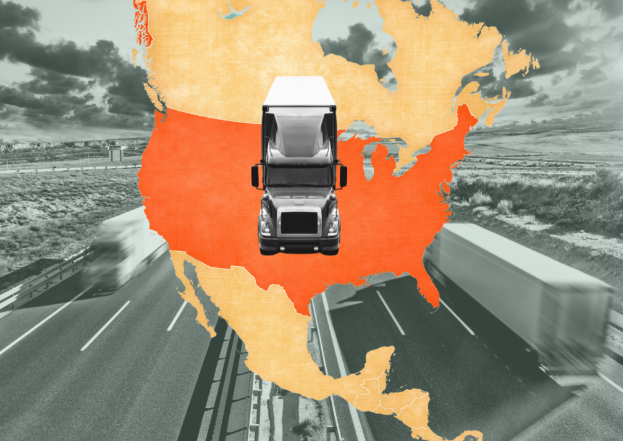
    An image of a truck superimposed over an orange map of North America.

    Photo Illustration by Stacker // Canva

    They come rumbling down the highway, crossing bridges and international borders. They bring life-saving drugs, food for the kitchen table, and that random clothing fad that will be out of fashion mere months later.

    Trucks are ubiquitous on American roadways. However, they’ve become increasingly important in trade with its neighbors, Mexico and Canada, as relations with China cool and the United States government encourages “nearshoring,” the practice of moving part of a company’s production to nearby countries with similar time zones. In 2022, there were about 5.5 million truck crossings at the U.S.-Canada border and 7.25 million at the U.S.-Mexico border.

    Trade with Canada and Mexico (much of it via land instead of water or rail) has recently outpaced trade with China, which has long dominated the international trade landscape.

    Truck Parking Club used data from the Bureau of Transportation Statistics and Census Bureau to explore U.S. freight trade with Canada and Mexico.

    Bar chart showing half of US trade is with five countries. Canada and Mexico accounted for 30% of U.S. trade value in 2022. China represented another 13%.

    FIND DAILY, WEEKLY, AND MONTHLY TRUCK PARKING

    On the road and looking for a daily truck parking space? Operated by truckers, we source the best parking spots across the nation to ease your trip planning.

    Geopolitical pressures shift top trading partners

    For the first time in decades, Mexico overtook China in the number of goods bought and sold to the U.S. in 2023. Centers for Disease Control and Prevention data shows that Canada claimed first place, taking the title of top trade partner.

    The shift follows the push to embrace nearshoring. The United States’ dependence on the fragile worldwide supply chain came into focus during the coronavirus pandemic. Then, shipments of vital supplies like computer chips, personal protection equipment, and medication faced shipping backlogs and caused shortages worldwide. Nearshoring policies aimed to encourage suppliers to keep materials and the manufacturing processes geographically closer to the U.S.—not only to have them readily available in case of an emergency but to encourage the economic growth of the U.S. and its direct neighbors.

    The trade war between the U.S. and China that began in 2018 and the subsequent Russian invasion of Ukraine worried U.S. investors. They recognized the war would bring more sanctions and devolve international business relations and figured it was better to transition some manufacturing to North American soil and U.S. allies.

    Increased tariffs on Chinese goods imposed by the Trump administration and carried through the Biden administration also made an impact, forcing companies to look for suppliers and manufacturers closer to the United States. The international North American Free Trade Agreement and its successor, the United States-Mexico-Canada Agreement, imposed strict rules outlining what percentage of an item must be produced in North America. For example, under the USMCA, 70% of a vehicle manufacturer’s steel and aluminum purchases by value must originate in North America, and those companies that don’t meet the mark may face additional tariffs.

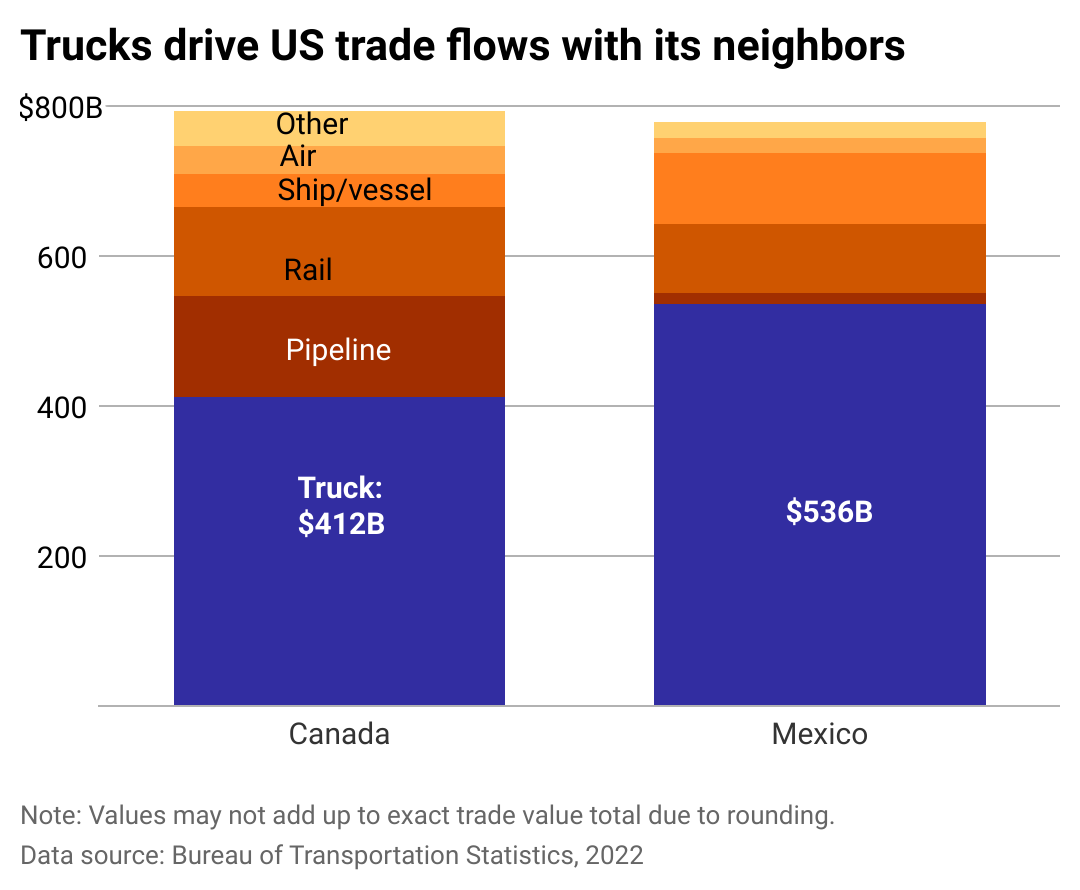
    Column chart showing how trucks drive US trade flows with its neighbors. Trucks accounted for over half of the value of traded goods in both Mexico and Canada in 2022.

    PARK YOUR TRAILER WITH NO HASSLE

    Store your trailer in a safe place with a state-of-the-art platform that locates trailer parking near me.

    The outsized role of trucks in US trade

    Most trade among the U.S. and its neighbors occurs through trucking, and the percentage of goods arriving on trucks continues to increase. According to the BTS, $948.0 billion in goods were shipped via truck from and to Canada and Mexico, while goods shipped via trains accounted for $210.2 billion in 2022. The value of truck freight increased by 14.5%, while rail increased by 12.7% between 2021 and 2022.

    The U.S., Canada, and Mexico are each other’s largest trade partners for oil, energy, automobiles, electronics, and agricultural goods—and it’s common for materials to be procured from one country, produced into goods in a second, and then marketed and sold in a third.

    According to the BTS, U.S. trade with Canada and Mexico accounted for almost a quarter of the country’s international trade. There is hope these ties will economically lift the whole continent and establish stronger labor policies. The USMCA fast-tracks labor dispute processes and requires manufacturers to allow their employees to unionize, leading to higher wages. It pushes Mexico, in particular, to enforce existing employee rights, according to a Brookings Institution analysis.

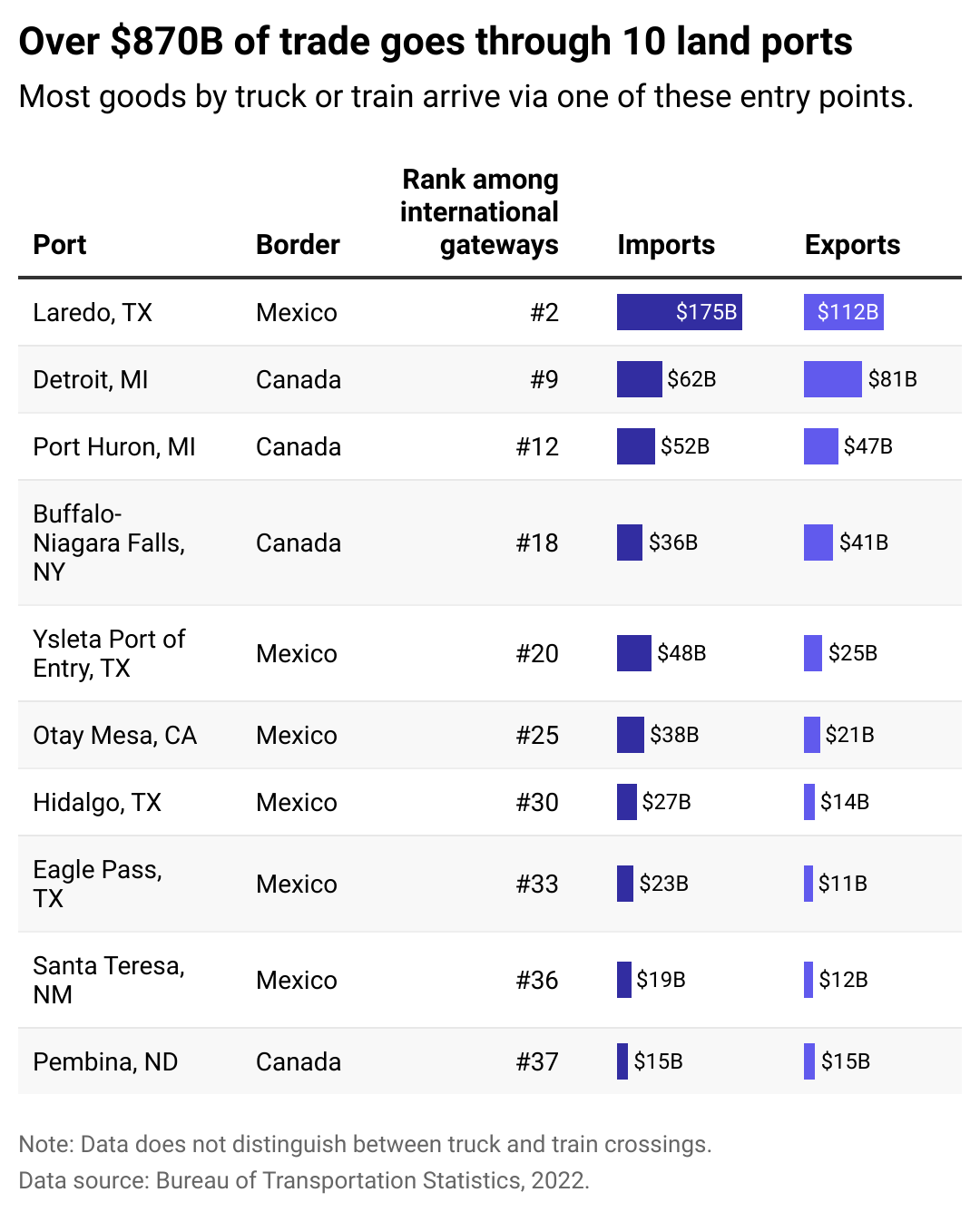
    Table showing top 10 land ports in the U.S. Over $870B of trade goes through these ports. Laredo, Texas is the highest land port and also the #2 highest international gateway overall.

    FIND DAILY TRUCK PARKING IN NEARLY EVERY STATE

    On the road and looking for a daily truck parking space? Find the closest daily parking spot in a

    matter of seconds.

    Laredo’s rising prominence in the world of international trade

    The key to this intracontinental trade is the land ports in the U.S., where trucks stop to have their goods and materials inspected and tracked.

    Laredo, a sprawling city in Texas just over the Mexican border, is the second-largest international gateway for trade in the U.S. It has sometimes bested even the ocean ports of Los Angeles and Long Beach, California, which have long been the top import location.

    “The Southern California ports grew exponentially during an era of globalization centered on China,” New York Times economics reporter Peter Goodman explained. “Laredo appears primed to assume a similar role in the anticipated next phase of globalization, one centered on regional supply chains, with American companies forging greater reliance on Mexico and Central America.”

    Local government officials and business leaders say Laredo’s infrastructure is already lagging behind the demand. Freight entrepreneurs are scrambling to buy land and build warehouses into way stations for goods. Plus, there are plans to streamline the customs process by enacting just one inspection for American and Mexican authorities and expanding the World Trade Bridge so trucks can more quickly pass over the Rio Grande river into Texas.

    According to the Joint Transportation Committee, demand for truck parking will likely continue as international border crossing inspections cause bottlenecks and unpredictable wait times. Truckers will try to avoid the traffic by crossing the border at odd hours and planning their mandatory rest periods in the country they cross into.

    In this new era of nearshoring, a competitive edge can be as simple as having enough parking for trucks while they wait to drop off their goods. Afterward, they will turn around, go home, and pick up their next load, creating the next link in the ever-evolving global supply chain.

    Story editing by Carren Jao. Additional editing by Kelly Glass. Copy editing by Paris Close. Photo selection by Michael Flocker.

    Written by: Cassidy Grom

  • Truck Parking: Tracking Growth or Decline in Lot Numbers

    Truck Parking: Tracking Growth or Decline in Lot Numbers

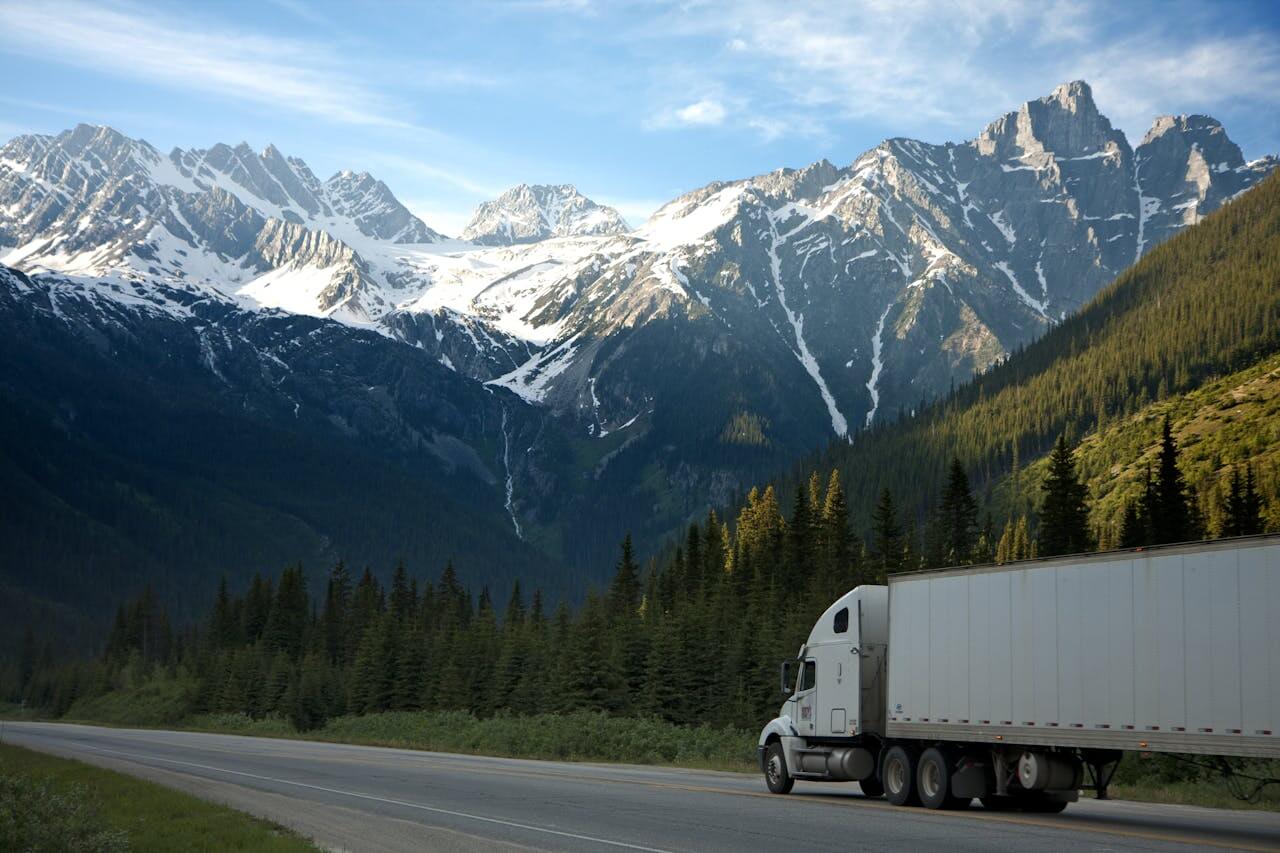
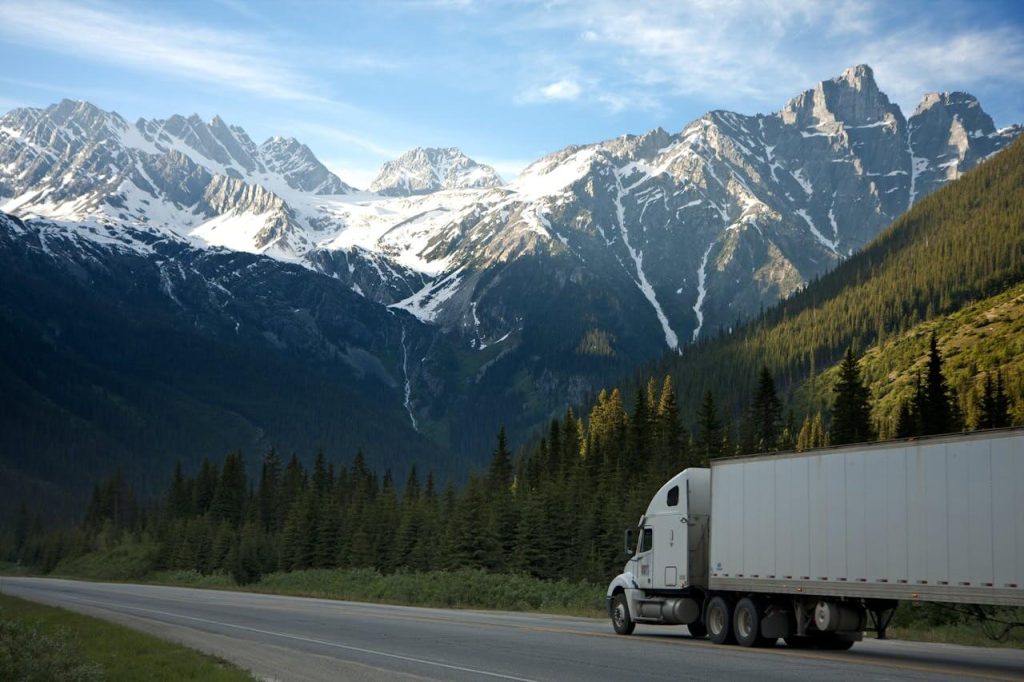
    Truck against the backdrop of the mountains

    The shortage of overnight truck parking has often been in the news over the last half-decade. However, recent information has shown some promising improvement in this area. 

    But is it all that it seems to be? Let’s take a closer look at the facts.

    Has There Been an Increase in Overnight Truck Parking?

    Data shows a significant increase in the average number of available truck parking spaces across the US since late 2021. 

    A recent study by TruckerPath has shown that truck drivers using the app have seen a significant increase in the number of available truck parking spots. 

    The study shows that between the hours of 11:00 and 14:00, the national average number of available parking spaces has increased from 47.7% to 64%.Between the hours of 19:00 and 22:00 the number has increased from 17.1% to 38%.

    Looking at the other side of things, namely an absence of available overnight truck parking, the same study has shown that a complete absence of truck parking spaces is becoming less common. 

    In 2021, the national average for an absence of truck parking between the hours of 19:00 and 22:00 was a whopping 50.6%. Fast forward to 2023 and the number drops to only 26%. Between 11:00 and 14:00, these numbers went from 16.7% to 9% over the same timeframe.

    Looking at these statistics, they certainly seem to indicate that the number of truck parking lots and spaces have increased significantly in recent years.

    What Trucking Employment Statistics Have to Say

    While it may seem like there’s been a significant increase in the numbers where overnight truck parking is concerned, the truck driver employment statistics are saying something else.

    2023 saw a significant decrease in the number of available trucking jobs, which means that there’s likely been a decrease in the number of truck drivers. Consequently, this likely also means a decrease in the number of trucks needing overnight truck parking.

    The trucking volume has decreased significantly since 2001. Despite that, there’s still a 26% shortage of parking spaces for trucks at night. This goes to show that, even though the situation may have improved significantly, the trucking industry still has a long way to go before the parking shortage is fully resolved.

    Federal, state and local governments all believe that there is still a major problem, and several different federal and state grants have been made available to help deal with the issue. However, relatively few applicants have made use of the grants.

    Certain states have also introduced additional systems and tools to help solve the shortage. The truck parking availability system is one example of such a tool that helps truckers keep track of available truck parking before reaching a lot or other parking area.

    How the Private Sector is Helping to Improve the Truck Parking Situation 

    While it is undeniable that there has been some increase in the number of available parking spaces, relatively few of these have been the result of federal intervention. Instead, the private sector has been responsible for most of the growth within the industry.

    This is largely due to an influx of privately owned truck stops but also thanks to tools like Truck Parking Club. This wonderful website and application give you access to many parking spots that are not generally available through other platforms.

    Any landowner with suitable property can easily list their land as a truck parking opportunity. Truck drivers can also sign up with ease, giving them access to hundreds of parking spaces that they may not have had access to otherwise. With just a few clicks, you can easily narrow down parking spaces by region as well as available amenities.

    It certainly isn’t as much progress as may be required, but any improvement is a good thing. In terms of the public sector, many additional parking areas have been announced, including an additional 200 truck parking spaces on Interstate 80 in Wyoming. In Nevada, an additional 50 spaces are also being created on the I-80.

    Final Thoughts 

    While it’s definite that there have been significant improvements in the state of the truck parking shortage over the last few years, it’s also clear that there’s still a long road ahead of us.

    Considering the decline in freight loads, the increase in truck parking opportunities, and the still-considerable number of shortages, many more initiatives and changes will need to take place before the situation is completely resolved.

    However, with tools like Truck Parking Club and similar initiatives, it’s considerably easier to find overnight truck parking than it once was. Why struggle with the rigors of the mainstream truck parking industry when you can do well with independent tools? Sign up for Truck Parking Club today.

    The information published herein is for general informational purposes only. Truck Parking Club does not make any representations or warranties about the completeness, reliability, legality, and accuracy of this information. Any reliance placed on such material is strictly at the user’s own risk. Truck Parking Club shall not be responsible for any losses or damages incurred in connection with the information published herein.

  • How to Boost Your Truck Parking Lot with 5-Star Reviews

    How to Boost Your Truck Parking Lot with 5-Star Reviews

    graphic depicting gold stars

    If you own a truck parking lot or are considering entering this lucrative, popular sector, earning 5-star reviews is going to be a fundamental aspect of marketing your truck parking business. Good reviews not only build your reputation but also encourage more truckers to choose your parking lot over others. 

    As you may have guessed, we happen to know a thing or two about what makes a good parking lot business. In this article, we have put together ten actionable tips to help you boost your truck parking reviews. This will ensure you create a great experience for your customers while also appealing to a wider audience through the power of social proof. 

    Before we get to the tips, why are truck parking reviews so important? Let’s quickly examine the reasons.

    The Value of Customer Reviews

    Make no mistake about it, truck parking customer reviews are incredibly important for your business. Positive truck parking reviews will improve your reputation and drive more traffic to your parking lot as effectively as other forms of marketing.

    Like many consumers, truckers rely heavily on online reviews to make decisions. Recent studies suggest that the majority of people trust online reviews as much as personal recommendations, and truckers are no exception. This trust directly translates into more bookings and increased revenue for businesses that make efforts to polish their online reputation.

    Reviews also offer valuable feedback that can help you improve your services. By listening to your customers and addressing their concerns, you can continuously improve the quality of your truck parking lot, leading to even better reviews over time. 

    Responding to positive and negative reviews shows that you care about your customers’ experiences and are committed to providing excellent service in your parking lot business.

    10 Tips for Winning Excellent Reviews for Your Truck Parking Business

    1. Train Your Staff: Ensure every team member understands the impact of their service on your business’s reputation. Staff who are trained in customer service excellence can greatly influence the positivity of truck parking reviews through friendly and helpful interactions.
    1. Offer Valuable Amenities: Equip your parking lot with amenities that matter most to truckers, such as reliable Wi-Fi, clean restrooms, and convenient snack areas. These added comforts improve their rest breaks and can lead to glowing truck parking reviews from satisfied customers.
    1. Engage with Reviews Promptly: Make it a practice to respond to all reviews swiftly. This active engagement demonstrates your commitment to customer satisfaction and can influence other truckers to leave positive truck parking reviews, seeing that their feedback is valued and acted upon.
    1. Use Signage to Encourage Reviews: Place friendly reminders around your parking lot, encouraging truckers to leave reviews. Simple signs with messages like, “Loved your stay? Tell us about it!” can make a big difference in the number of truck parking reviews you receive.
    1. Ensure Clean and Secure Facilities: Prioritize keeping your truck parking lot impeccably clean and well-secured. Installing good lighting and surveillance systems makes truckers feel safer, especially when truck parking at night. It also encourages them to share positive truck parking reviews reflecting their secure and pleasant experiences.
    1. Promote a Loyalty Program: Implement a loyalty program that rewards returning customers. This will help with repeat business and encourage participants to share their positive experiences in truck parking reviews, boosting your lot’s reputation.
    1. Highlight Unique Selling Points: Clearly communicate what makes your parking lot different from others, such as exceptional security measures, prime location, or even eco-friendly practices. These unique features should be loud and clear in your marketing to attract truckers and inspire them to leave positive reviews.
    1. Monitor and Adapt: Review the feedback you receive regularly and look for patterns that suggest areas for improvement. Adapting your services based on trucker feedback can lead to improved services and, by extension, better truck parking reviews.
    1. Offer Incentives for Reviews: Consider offering small incentives for reviews, like discounts on future stays or even entries into prize draws. While it may seem a little excessive, it should motivate truckers to share their experiences, increasing both the quantity and quality of your truck parking reviews.
    1. Maintain an Online Presence: Always keep your digital profiles up-to-date, interesting, fun, and engaging. An active online presence helps truckers find your parking lot and will influence their decision to leave positive truck parking reviews after they visit your business. 

    Bottom Line

    Ultimately, you need to think about creating a memorable experience for your customers. By implementing specific tactics, you can improve your service quality and, by proxy, your online reputation. Earning reviews is all about the small details. As you work on these initiatives, remember that every small improvement can contribute to your overall success.

    Are you ready to increase your truck parking lot bookings? Become a property member at Truck Parking Club and learn how easy it is to improve your ratings and attract more truckers to your location. Start today by focusing on customer satisfaction and watch your business grow!

    The information published herein is for general informational purposes only. Truck Parking Club does not make any representations or warranties about the completeness, reliability, legality, and accuracy of this information. Any reliance placed on such material is strictly at the user’s own risk. Truck Parking Club shall not be responsible for any losses or damages incurred in connection with the information published herein.

  • Truck Driver Sleeping Rules

    Truck Driver Sleeping Rules

    truck driver sleeping in cab

    As the commercial backbone of our fine nation, truck drivers play a huge role in keeping the economy moving by transporting goods from state to state. Without our beloved highway warriors behind the wheel, the country would simply grind to a halt. 

    Truck drivers are an incredibly tough breed who work long, pressured hours, spending days, weeks, or sometimes even months away from their loved ones. The vehicle’s cab is a second home to this dedicated bunch, with millions of drivers eating and sleeping in them each week.

    Parking Spot Selection

    Despite common misconception, they are not allowed to pull up just anywhere and visit the land of nod. Parking a 100,000-pound, 80-foot-long semi-truck with the intention of having a quick nap or long slumber takes more thought than you might imagine, especially given the current truck parking crisis, which has caused a severe national shortage of places to park and rest.

    So, where do truckers sleep, and what are the rules for sleeping on the road? In this short blog post, we will explain where truckers can and cannot legally rest before exploring the guidelines for compliance and safety. 

    Where Do Truck Drivers Park to Sleep?

    1. Rest stops

    Legally speaking, there are several options available to truckers who need to sleep in their truck. Rest stops along highways are arguably the most common choice, as they are specifically designed to accommodate large vehicles. They also offer amenities (albeit quite basic in nature) like restrooms and vending machines. 

    1. Truck Stops

    Truck stops are another popular option. They provide parking, food, showers, and fuel and are generally quite large in comparison to rest areas, with some truck stops accommodating hundreds of vehicles. There is a downside, however; given the current truck parking shortage, many locations are full by mid-afternoon, making it hard for drivers to find a spot.

    1. Private Terminals

    Some trucking companies have private terminals where their drivers can park and sleep securely, although once again, they are known to fill up very quickly and are extremely limited in availability.

    1. Gratuitous Parking

    Occasionally (but not very often), friendly customers allow truckers to park on their properties overnight, although this is usually arranged in advance and depends on the relationship between the driver and the customer. 

    1. Public Lots

    Parking in supermarkets, casinos, or malls has always been a common choice for many truckers. Companies like Walmarts allow truck parking during rest breaks. Many private companies have barred truckers from using their lots over the last few years, though. 

    1. Private Truck Parking

    Companies like Truck Parking Club offer convenient, reliable, affordable private parking options that can be reserved in advance. This provides truckers with a guaranteed spot to rest without the hassle of searching for an open space late at night and is a popular alternative to public lots and rest stops.

    Regulations and Rules for Truck Driver Sleep

    Truck drivers must comply with strict regulations to ensure they get adequate rest and remain safe on the road. The Federal Motor Carrier Safety Administration (FMCSA) mandates through Hours of Service regulations that truckers can drive up to 11 hours after 10 consecutive hours off-duty. 

    Within those 11 hours, a 30-minute break is required after eight hours of driving. These rules aim to prevent driver fatigue and ensure safety on the highways, although they have come at the expense of added driver pressure, who now race against the clock to meet the HOS regulations. 

    Drivers cannot exceed 60 hours of driving in a seven-day period or 70 hours in an eight-day period weekly. After reaching these limits, they must take a 34-hour rest period to reset their weekly driving limit. These regulations were designed to maintain the health and safety of truck drivers and other road users.

    Tips for Safe and Effective Sleeping for Truck Drivers

    Aside from the issue of where do truckers sleep, another important consideration is how do truckers sleep peacefully. Drivers can get the most out of their slumber by following a few truck parking sleeping tips. Let’s take a look at a few: 

    • Block Out Light: Use blackout curtains or an eye mask to create a dark sleeping environment. This helps regulate your body’s internal clock.
    • Reduce Noise: Invest in earplugs or noise-canceling headphones to minimize disruptions from traffic and other external sounds.
    • Pick a Good Parking Spot: Always choose safe and designated parking areas to rest. Avoid isolated spots and ensure the area is well-lit.
    • Comfortable Bedding: Make your sleeping space as comfortable as possible with a good mattress and bedding. A comfortable bed significantly improves sleep quality.
    • Limit Screen Time: Avoid using phones or other screens before sleeping. The blue light can interfere with your sleep patterns. Instead, try reading or listening to calming music.

    Illegal & Unsafe Sleeping Locations for Truck Drivers

    Can truckers sleep on ramps and shoulders? The short answer is no, definitely not, although many do. In fairness, they have very few options at the moment. 

    Take a look at this list, for example. If truck stops and rest areas are full, drivers face the prospect of illegally parking on a highway ramp or being chased out of a Walmart by an unsympathetic store manager. Until private parking apps like Truck Parking Club came along, their options were very limited indeed.

    Starved of Good Parking Locations

    Again, owing to the national shortage of truck parking spots, many drivers feel as though they have no choice but to park on ramps or shoulders despite the fact that it is illegal and extremely dangerous. These locations are not designed for long-term stops and pose legitimate risks of accidents.

    Another unsafe practice is parking inside unauthorized private property, such as abandoned gas stations. Parking in these areas can result in fines or towing and pose a serious threat to personal safety. Jason’s law, for example, was enacted following the tragic loss of a trucker at the hands of an armed robber while sleeping in an abandoned gas station.

    Bottom Line

    With more trucks on the road and fewer spots, parking and sleeping in a truck is becoming more challenging for drivers. Due to the national truck parking shortage, traditional parking options are much harder to find.

    Under immense pressure to meet tight schedules while adhering to strict HOS regulations, truckers waste hours each week endlessly circling truck stops and rest areas, looking for spaces that do not exist. There are simply too many trucks on the road and not enough parking spots, leaving the private sector to handle much of the heavy lifting. 

    For reliable, convenient, and affordable options, Truck Parking Club provides private parking spots on thousands of properties all over America. Drivers can easily browse for truck parking in real-time, ensuring a hassle-free experience every time they need to rest.

    Become a trucker member today, and never worry about truck parking again! 

    The information published herein is for general informational purposes only. Truck Parking Club does not make any representations or warranties about the completeness, reliability, legality, and accuracy of this information. Any reliance placed on such material is strictly at the user’s own risk. Truck Parking Club shall not be responsible for any losses or damages incurred in connection with the information published herein.
  • The Future of Truck Parking Business: Exploring the Impact of Self-Driving Trucks

    The Future of Truck Parking Business: Exploring the Impact of Self-Driving Trucks

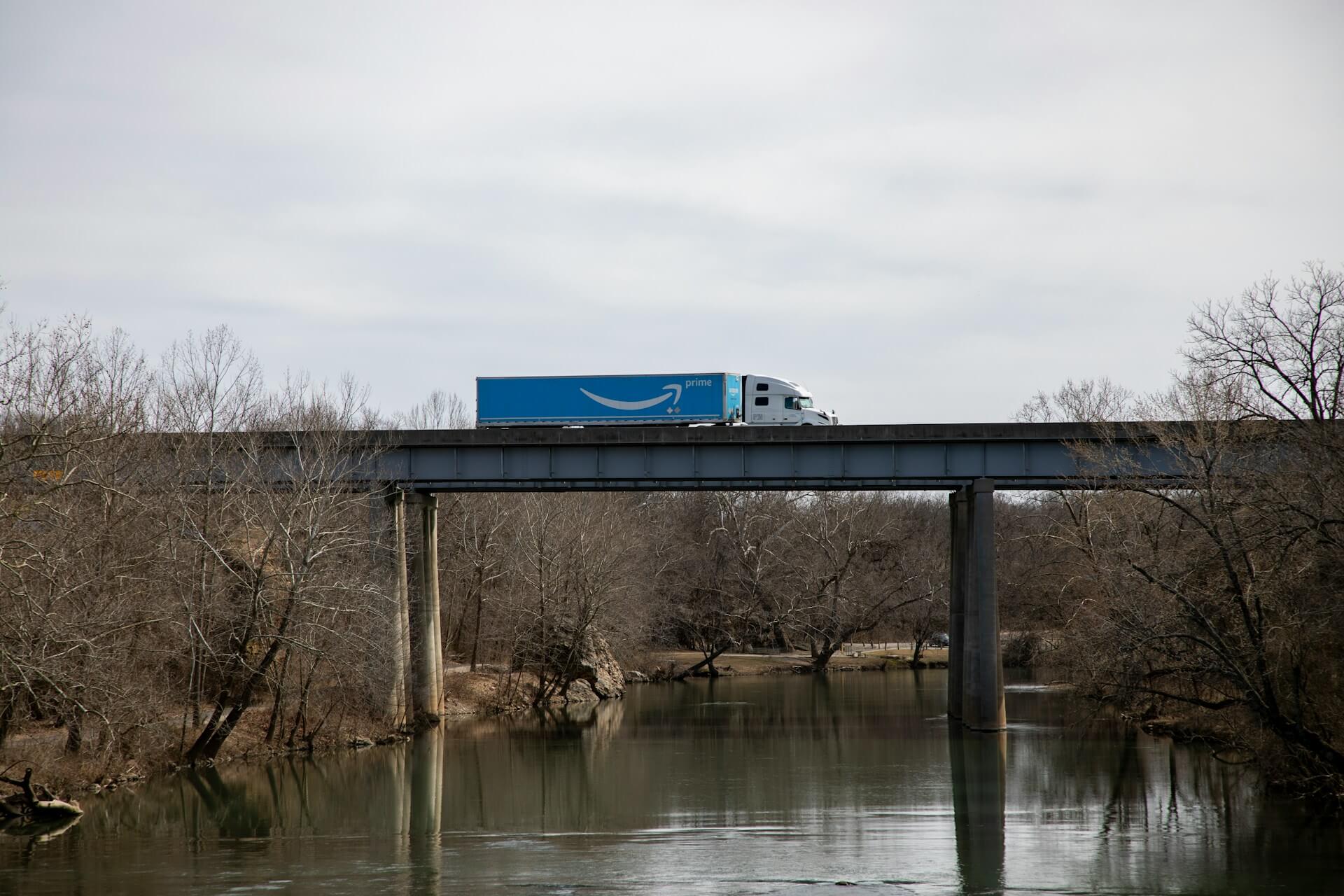
    truck on a bridge

    It’s no secret that the trucking industry is on the brink of a huge transformation with the imminent introduction of self-driving trucks. For the last decade or two, many have viewed autonomous trucks as a probable future invention that would launch at some point, but probably not in our lifetimes. 

    However, it does seem as though we are at the precipice of this intriguing new technology becoming a part of the transport industry. Like it or not, self-driving trucks are around the corner. 

    While we are not quite there yet, even the most pessimistic observer would have to concede that we are merely a few years away. As self-driving trucks gear up to hit the highways in greater numbers, the implications for truck parking businesses will be profound. 

    In this blog post, we shall consider the upcoming changes to self-driving trucks and how they will likely impact truck parking facilities and the broader trucking landscape.

    But first, how close are we in terms of actually using self-driving trucks – and has the technology reached a point where it is ready for launch? 

    Current State of Self-Driving Truck Technology

    Self-driving trucks are quickly advancing from mere concepts to tangible realities on our roads. Companies like Tesla, Waymo, and Daimler are at the forefront, pushing the boundaries of what’s possible with autonomous vehicle technology. 

    Tesla continues to refine its autopilot capabilities, aiming for a future where trucks navigate highways with minimal human intervention. Waymo, leveraging its experience in self-driving cars, has embarked on pilot projects to test the viability of autonomous trucks in real-world logistics operations. 

    Meanwhile, Daimler, traditionally a specialist in luxury rather than a tech pioneer, has advanced at an alarming speed after making the forward-thinking decision to collaborate with innovation hubs like Torc Robotics to improve the safety and reliability of their autonomous fleets. 

    As these technologies evolve, the integration of self-driving trucks into daily operations becomes not just possible but guaranteed. Make no mistake: the transport industry is very close to a dramatic shift that will radicalize truck parking demands and strategies.

    But how will self-driving trucks affect parking?

    Implications for Truck Parking Facilities

    As self-driving trucks become a common sight on our highways, the landscape of truck parking will inevitably change. The automation of truck fleets suggests a shift in how and where trucks rest. Traditional truck stops might evolve or give way to high-tech parking solutions designed specifically for autonomous vehicles.

    These new facilities will likely require sophisticated logistics systems to manage the inflow and outflow of trucks without human intervention. Additionally, the locations of these parking facilities may shift closer to major freight hubs or logistic centers to streamline the distribution processes further.

    Challenges and Opportunities

    While the transition to self-driving trucks presents exciting opportunities, it also brings its share of challenges. One glaring concern is cybersecurity; as truck parking lots become more technologically advanced, they will need more dependable security measures to prevent hacking and other cyber threats. Additionally, the cost of upgrading facilities to cater to autonomous trucks could be substantial. 

    However, these challenges also open doors for innovation in parking technology and management, offering business opportunities for those ready to invest in the future of automated trucking. But how do we prepare for those opportunities?

    Preparing for the Future

    Truck parking businesses need to start preparing now for the arrival of self-driving trucks. This preparation could involve partnering with technology developers to create integrated parking management systems or even redesigning parking layouts to accommodate autonomous trucks efficiently. 

    Participating in pilot projects could also provide valuable insights and give businesses a competitive edge by keeping ahead of potential regulatory changes.

    As the truck parking industry prepares for the arrival of self-driving trucks, here are a few additional changes we expect to see that build upon the transformations already discussed:

    • Integration of Advanced Technologies: Look for the widespread adoption of smart parking solutions that use AI to efficiently manage parking space allocation entry and exit processes.
    • Location Shifts: We anticipate a strategic relocation of truck parking facilities closer to urban centers and major logistic hubs to reduce travel distances for autonomous trucks and streamline logistics.
    • Design Innovations: Parking lot designs will evolve to specifically accommodate the unique needs of autonomous trucks, including provisions for electric truck charging stations and advanced maintenance facilities.
    • Enhanced Security Measures: The increased reliance on technology will necessitate more reliable security protocols, including enhanced surveillance and monitoring systems to protect autonomous trucks and their cargo.
    • Collaborative Operational Models: Expect an increase in public-private partnerships as a strategic move to expand parking infrastructure efficiently. This could potentially lead to mixed-use facilities that cater to both traditional and autonomous trucks.

    These anticipated developments demonstrate the need for truck parking businesses to adopt a proactive and adaptable strategy, ensuring they are well-prepared for the future landscape shaped by the integration of self-driving trucks.

    Bottom Line

    The launch of self-driving trucks will revolutionize the truck parking industry in ways we are only beginning to understand. By embracing this change and preparing for its impacts, truck parking businesses can not only survive but thrive. 

    As the industry evolves, Truck Parking Club remains committed to providing innovative and practical solutions that meet the needs of tomorrow’s trucking logistics. Our innovative Truck Parking app allows truckers to browse truck parking listings and reserve spots, taking the stress out of finding a space.

    Join Truck Parking Club today and ensure that your business is ready for the future of truck parking, where convenience meets modern technology at every turn.

    The information published herein is for general informational purposes only. Truck Parking Club does not make any representations or warranties about the completeness, reliability, legality, and accuracy of this information. Any reliance placed on such material is strictly at the user’s own risk. Truck Parking Club shall not be responsible for any losses or damages incurred in connection with the information published herein.